Hi, what do you want to do?






Curated OER
Summer: Getting the Bugs Out
Students study biodiversity while examining insects. They research insects that already exist and how they adapt to their environment.

Curated OER
High School Marine Science at its Best: Research Collaboration
Students formulate a more accurate understanding of the true nature of scientific research and the challenges and rewards of field investigations.

Curated OER
Taxonomy Project
Students act as a taxonomist and, given a certain situation, classify existing organisms.

Curated OER
Raindrops Keep Burning On My head
Students investigate the effects and causes of acid rain. They test pH of household items to familiarize themselves with pH scale and compare that information with acid rain solutions. They investigate impact of acid rain via internet...

Curated OER
Wetland Habitats
Eighth graders explore the program Alice and the Internet to research wetland habitats. In this habitat instructional activity students build their own Alice world that includes wetland habitats, food sources and ways to...

Curated OER
Riparian Review
High schoolers engage in the process of researching a riparian ecosystem. They conduct a field trip in order to obtain different types of data and work on measurement skills to analyze data to form a conclusion about the biotic factors...

Curated OER
Light My Fire ...Fly
Students examine fire flies. They measure the frequency of light stimulus used by communicating fire flies. Students explore the concept of organisms using light to communicate. Students film the fire flies and quantify the duration...

Curated OER
Dissolved Oxygen Lesson
Students investigate what dissolved oxygen is and why it is important to aquatic life and what factors influence levels of dissolved oxygen in a lake. They study how to use MS Excel to make charts to show trends and correlations.

Curated OER
Roaming Biomes
Students use the Internet to research the capabilities of earth-observation satellites. Using the information, they write a report on how remote-sensing technology is used to measure the impact of climate change. They identify the...

Curated OER
Estuarine Habitats
Sixth graders study the important habitats, flora, fauna, and physical factors of coastal habitats. They compare the aquatic habitats to terrestrial habitats by researching and completing tables with the information.

Curated OER
Biodiversity Debate
Ninth graders debate the positive aspects of dam construction. They discuss how a dam changes the ecosystem. In groups, 9th graders research and gather information for a debate. They state their position and write a report supporting it....

Curated OER
Micro-Ecosystems
Students create a sustainable, self-contained ecosystem in a ten-gallon aquarium.

Curated OER
Habitat Choice in Woodbugs
Students investigate woodbugs. In this scientific investigation lesson, students explore the steps scientists take when conducting an investigation using live specimens. Students explore habitat preferences for woodbugs in various...

Curated OER
The Important Role of Biomes
Travel the world from the comfort of your classroom with this unit on the Earth's biomes.

Curated OER
Modern Reptiles Concept Map
In this life science worksheet, students complete a concept map on modern reptiles. They answer 13 fill in the blank questions using words from the list.
University of Guelph
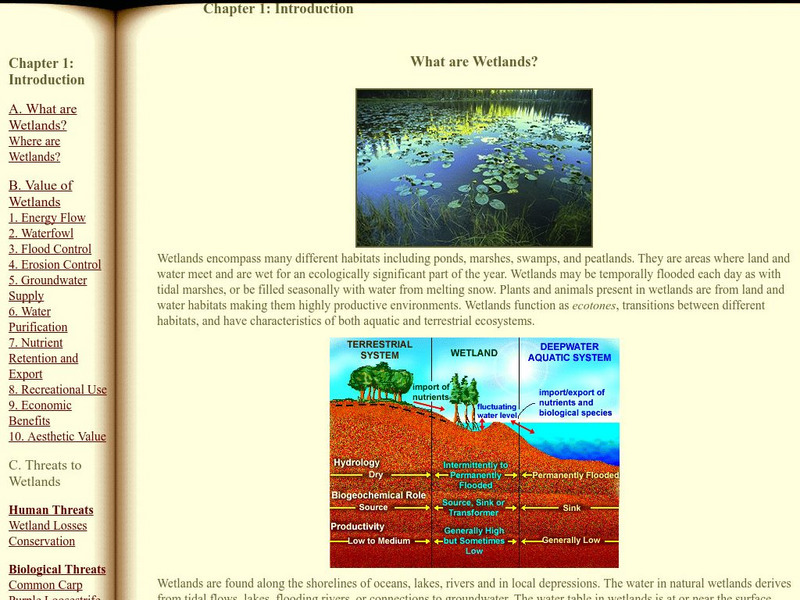
What Are Wetlands?
Wetlands are an important part of our ecosystem. They are often called the kidneys of the land. Learn about wetlands, where they are located, their value, and what threatens them.
Cornell Lab of Ornithology
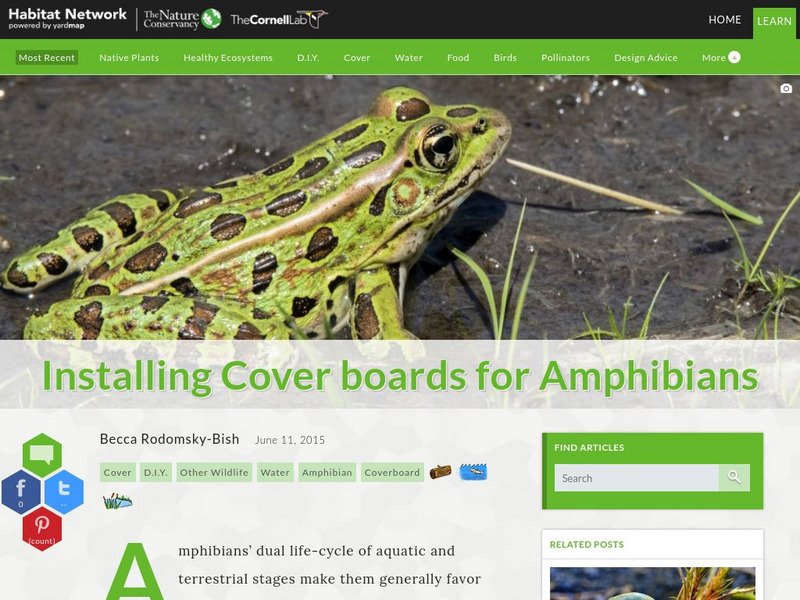
Habitat Network: Installing Cover Boards for Amphibians
Find out how to make a cover board for Amphibians' dual life-cycle of aquatic and terrestrial stages.
Other
Salamanders and Newts
Melissa Kaplan explains how to set up a tank for a salamander. She tells how to select a salamander and what kind of ailments to watch for.

The Wild Classroom
The Wild Classroom: Biomes
This excellent resource explores all of the biomes found on planet Earth! A side menu indicates the world's biomes and provides details on each. Colorful interactive maps, video clips, lesson plans, species profiles, and so much more...
Science Buddies
Science Buddies: Home Sweet Biome: How Do Plants Grow in Different Environments?
In this science fair project you will learn about biomes and how different climatic conditions affect plant growth. This can explain why some plants and animals are similar in different areas of the country, and in other parts they are not.
CK-12 Foundation
Ck 12: Earth Science: Flow of Matter in Ecosystems
[Free Registration/Login may be required to access all resource tools.] In this module, students will learn about the cycles of nature (water, carbon, nitrogen, and phosphorus) that support the flow of nutrient matter through an...
CK-12 Foundation
Ck 12: Life Science: 12.12 Biome
Learn how the biomes of the world are determined by their climate and ecosystem.