![America Dept. Of State: Outline of American Literature [Pdf] eBook](http://lessonplanet.com/content/resources/thumbnails/410155/large/bwluav9tywdpy2symdiwmduymc0yotc0ny0xzhf5cgiwlmpwzw.jpg?1589985629 "America Dept. Of State: Outline of American Literature [Pdf] eBook")
Other
America Dept. Of State: Outline of American Literature [Pdf]
This online book presents an overview of American literature chronologically. Eras and movements are explained and biographies of significant authors are provided. This is a good way to understand the background and influences of...

US National Archives
Nara: Charters of Freedom: Courage of the Founders:perilous Road to Independence
Primary source document, The Agreemnt of Secrecy, 1775, and an 1896 painting in the Old Raleigh Tavern, outlining and illustrating the strict rules of secrecy adopted by Congress to protect lives and the cause of American liberty, .
SMART Technologies
Smart: Causes of the Revolutionary War
Highlighting the domino effects that led to the American Revolution, this interactive SMART lesson uses videos, games, and other facts to help students learn about the war.
The History Cat
The History Cat: Countdown to Revolution
Begins with a description of the British system of mercantilism that was imposed on the American colonies along with the taxes levied through the Stamp Act and the Sugar Act. The Americans complained that it was taxation without...
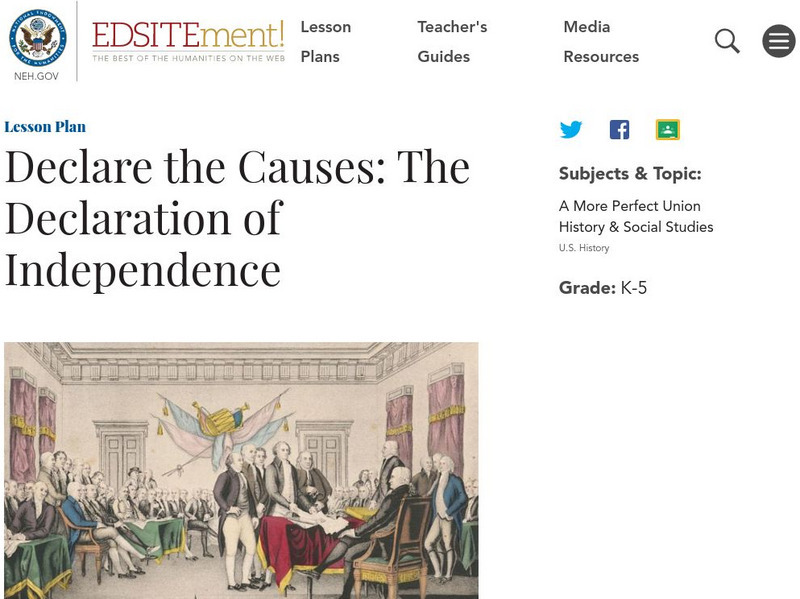
National Endowment for the Humanities
Neh: Edsit Ement: Declare the Causes
Offers lesson plans that guide students to understanding the structure of the Declaration of Independence. Throughout the course of the lesson plan, students will be working on writing their own declaration of grievances relative to...

Other
All the News? American Revolution & Maryland's Press
Explore this collection of digitized historical newspapers and broadsides from the 1760s about pre-Revolutionary topics. Requires Adobe Reader.
History of American Wars
History of American Wars: Revolutionary War Timeline
A timeline showing the events leading up to the Revolutionary War, beginning with unpopular legislation implemented under British rule. It follows with the reaction of the American colonists and continues in a cause and effect manner...
Digital History
Digital History: British Mercantilism and the Cost of Empire [Pdf]
Learn about the theory of mercantilism and how it affected the economies of the New England, Middle, and Southern colonies. Practice making a bar graph showing the value of exports to and imports from England between 1700 and 1774 with...
Wikimedia
Wikipedia: American Revolutionary War
This article on the American Revolutionary War looks at its causes, the phases of the war, naval warfare, the involvement of other countries, the Treaty of Paris, the different groups of combatants, and the impact of the war.
Internet History Sourcebooks Project
Fordham University: Modern History Sourcebook
A rich Fordham University site of primary source material that include full-text, and multimedia sites. There are additional study and research guides such as Modern History in the Movies.

Bill of Rights Institute
Bill of Rights Institute: John Dickinson
John Dickinson was called "The Penman of the American Revolution." During the 1760s and 1770s, he authored numerous important essays in defense of American rights, including The Late Regulations Respecting the British Colonies, the...
University of Groningen
American History: Documents: Causes/necessity of Arms
The complete text of the Declaration of the Causes and Necessity of Taking Up Arms, ratified July 6,1775.
University of Groningen
American History: Documents: John Dickenson's Letter 2 From a Farmer 1767 1768
This letter, from a farmer in 1767, addresses his conceerns regarding the Townshend Duties and their effect on the colonies as a whole.
Bill of Rights Institute
Bill of Rights Institute: James Otis
James Otis was called the most important American of the 1760s by John Adams. A trained lawyer and master of argument, James Otis was a leader of the Patriot movement in Boston in those years. Initially a prosecutor for the British...
Other
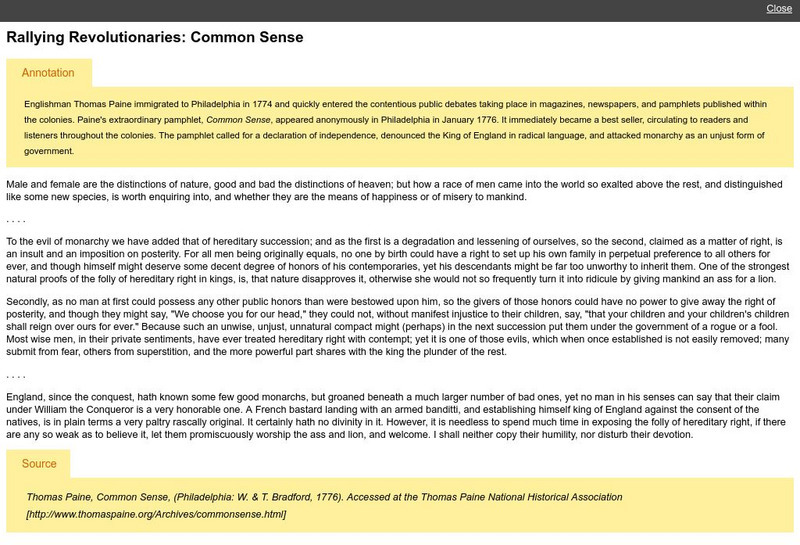
Object of History: Rallying Revolutionaries: "Common Sense"
Annotated excerpts from Thomas Paine's "Common Sense" that clearly demonstrate the writer's ability to persuade his American readers to separate from England.
iCivics
I Civics: Got Grievances?
Learn what economic, political, and social factors led to the writing of the Declaration of Independence and the American Revolution. In this lesson, students learn what caused the colonies to declare independence from Great Britain and...
Council for Economic Education
Econ Ed Link: Taxation Without Representation?
Check out this informative site to learn more about life in the colonies before the Revolutionary War. Find out why the colonists had issues with "taxation without representation." "You will work independently and in pairs to learn about...
Curated OER
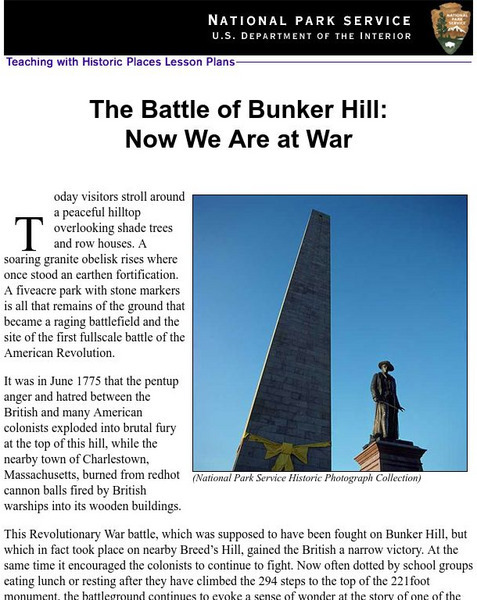
National Park Service: Now We Are at War
A good look at the impact of geography in regard to the Battle of Bunker/Breed's Hill. Site offers a great lesson plan put together by a Park Ranger from the battleground park.
PBS
Wnet: Thirteen: Independence: Boston Tea Party and Other Acts of Rebellion [Pdf]
A lesson plan from the producers of the 16-episode PBS series "Freedom: A History of US" that helps learners understand why the American colonists objected to taxation without representation. Includes activities that investigate the acts...
University of Groningen
American History: Presidents: Thomas Jefferson
Included here are Thomas Jefferson's two inaugural addresses and his State of the Nation speeches. You can follow Jefferson's increased distress concerning the young nation's treatment by European nations. Fascinating reading.
University of Groningen
American History: Presidents: James Madison
Included are James Madison's two inaugural addresses, his State of the Nation speeches, as well as other writings related to the Constitution. Of particular interest is his speech of 1812.
Bill of Rights Institute
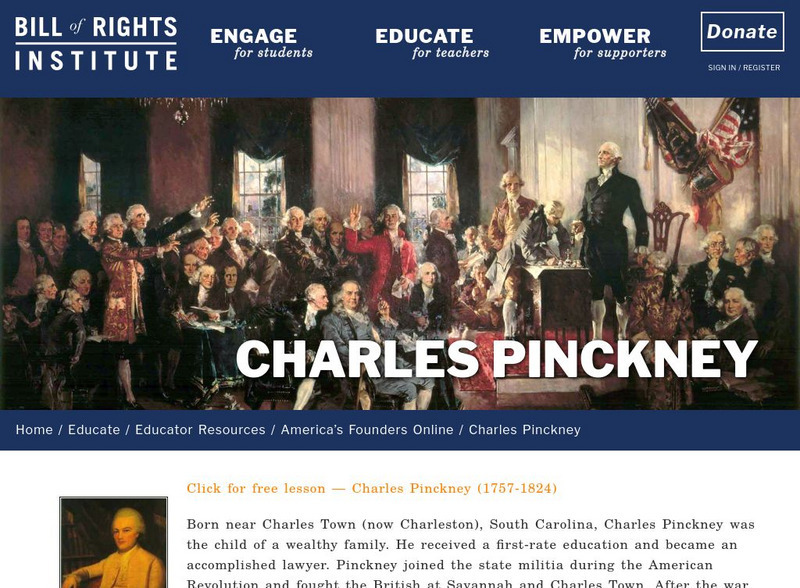
Bill of Rights Institute: Charles Pinckney
Born near Charles Town (now Charleston), South Carolina, Charles Pinckney was the child of a wealthy family. He received a first-rate education and became an accomplished lawyer. Pinckney joined the state militia during the American...

University of Groningen
American History: Documents: Excerpts From "The Fugitive Slave Act"
This site titled, "From Revolution to Reconstruction," provides excerpts from the text of the Fugitive Slave Act of 1850, part of the Compromise of 1850.
Independence Hall Association
U.s. History: Gabriel's Rebellion: Another View of Virginia
Gabriel Prosser, a skilled slave, planned a revolt as a way to carry out the ideals of the American Revolution and give freedom to slaves. Read about what his vision was, what group of white men might be helpful to his cause, and what...