Hi, what do you want to do?






Anti-Bullying Alliance
Anti-Bullying Lesson Plan
Wicked is not just a Tony Award winning broadway musical. It also makes for a strong base to teach character education, specifically anti-bullying. Scholars listen, discuss, role play, and show what they know through a group...

Curated OER
Student Opinion: How Impulsive Are You?
Sure to spark lively discussion in any Language Arts classroom, this article from The York Times asks the question, 'How much self-control do you have?'. Pupils begin by reading a short passage about a study on delayed gratification and...

Brain Parade
See.Touch.Learn.
Here is a great app that has tons of potential in helping your child or student with severe to moderate autism, or other intellectual disability, learn words and concepts using research-based methods. Children with autism or PDD NOS have...

Curated OER
Comma Splices and Fused Sentences
In these sentence correction worksheets, students read the sentences and determine if they contain comma splices or fused sentences.

University of Minnesota
Connect the Neurons!
Create a neuron frenzy as your pupils play the part of the neurons. An engaging lesson creates a human chain of neurons that pass cotton balls posing as neurotransmitters. Scholars learn about pre- and post-synapses as they complete...
Wisc-Online
Wisc Online: Psychology: Brain & Behaviour
Test your speed in this game reviewing brain and behavior terms and concepts.
PBS
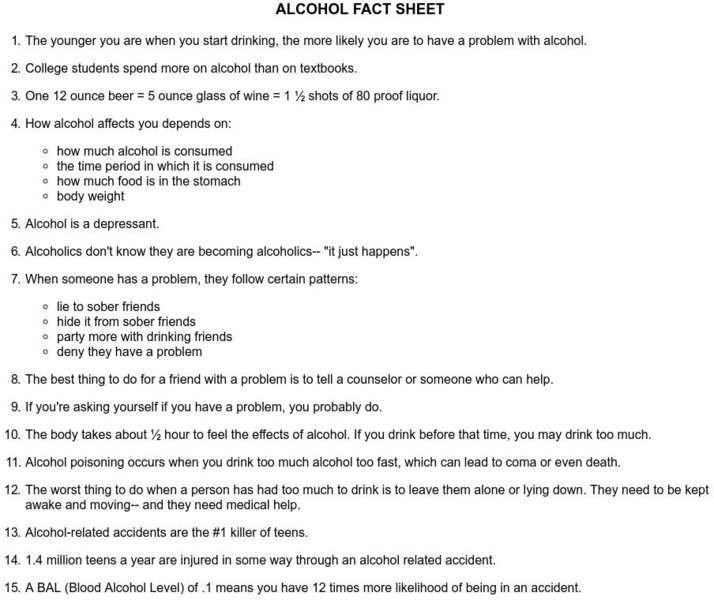
Pbs: Alcohol Fact Sheet
Here are over twenty facts about alcohol! Topics include alcohol's effect on your body, your brain, and your behavior, and facts about alcohol-related accidents and blood alcohol level (BAL).

Louisiana Department of Education
Louisiana Doe: Curriculum Hub: Ela Guidebooks: Teenage Brain: Impact on Behavior
Build your knowledge of the teen brain and its impact on behavior by demonstrating your level of agreement. This will help you prepare to read "The Teen Brain: Still Under Construction."
Other
Aaas Science News: Week of 2 24 14: How Dogs Know What You're Feeling
Article reports on groundbreaking research which looked at brain scans of dogs and discovered that, like humans, their brains have a voice processing center, which helps explain why dogs are so attuned to human emotions.