Hi, what do you want to do?





![Council for Economic Education: The Neolithic Agricultural Revolution [Pdf] Unknown Type](https://static.lp.lexp.cloud/images/attachment_defaults/resource/large/FPO-knovation.png "Council for Economic Education: The Neolithic Agricultural Revolution [Pdf] Unknown Type")
Other
Council for Economic Education: The Neolithic Agricultural Revolution [Pdf]
This source includes general information and the chronology of the Neolithic Agricultural Revolution, or the time of development of the first human communities. After learning about the revolution, read a brief short-story about a...
Other
Goteborg University: The Rise of Neolithic Agriculture [Pdf]
The Rise of Neolithic Agriculture examines reasons why the Neolithic converted to an agricultural people and why agriculture, though initially increasing the welfare of people's lives, deteriorated the quality of living.
Smart History
Smarthistory: The Neolithic Revolution
Website with photos and informational text on the Neolithic Revolution and the changes brought about by the way people lived. With links to additional resources.
C3 Teachers
C3 Teachers: Inquiries: Agriculture
A learning module on agriculture that includes three supporting questions accompanied by formative tasks and source materials, followed by a summative performance task. Topics covered include factors that led to the development of...

BBC
Bbc: H2g2: The Neolithic Revolution
A helpful summation of the key features of the agriculture revolution of the Neolithic Age: population growth, specialization, trade, security, government, and disease.
American Association for the Advancement of Science
American Association for Advancement of Science: The Slow Birth of Agriculture
An article which describes the slow process of crop cultivation. The author argues that crop cultivation and village life may not have been connected.
Other
Saudi Aramco World: Beginning of the End for Hunter Gatherers
Article details the remarkable archaeological discoveries in a region of Turkey where excavations at a Neolithic site point to a society in transition, from nomadic to agricultural.
Other
International World History: Agriculture and the Origins of Civilization
Read here about the Neolithic Revolution and the development of early Stone Age humans into an Agrarian society. Causes of the agrarian transformation are addressed as well as the domestication of plants and animals. The spread of the...
University of Chicago
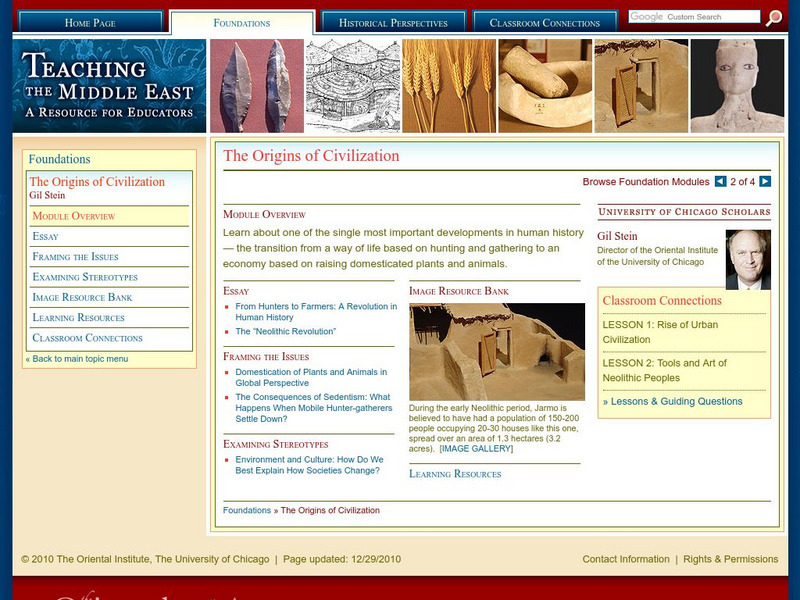
University of Chicago Library: Teaching the Middle East: Origins of Civilization
Learing module on the origins of civilization explains the chronology and environmental context of the so-called Neolithic revolution, the period when early civilizations in the Middle East arose and began to domesticate plants and animals.
Other
Libcom: Climate, Class, and the Neolithic Revolution
This is the first in a series of articles about food under global warming. This article takes a long view of the relationship between climate, agriculture, and class society.

Oswego City School District
Regents Prep: Global History: Neolithic Revolution
The Neolithic Revolution created a shift in how people lived. Humans began settling down into villages and establishing methods of agriculture and domesticating animals to relinquish the need for nomadic lifestyles. Read a short summary...
Other
H2 G2: Neolithic Revolution: How Farming Changed the World
Peruse this article featuring the ways discoveries and establishments of agriculture, government, social class, etc. during the Neolithic Revolution altered the future for all civilization.
University of Chicago
University of Chicago: Teach Middle East: Hunters to Farmers
An essay reviewing the history of the Neolithic Revolution where humans begin as nomadic hunters and gatherers and evolve into villages with domestic agriculture and animals.
Ohio History Central
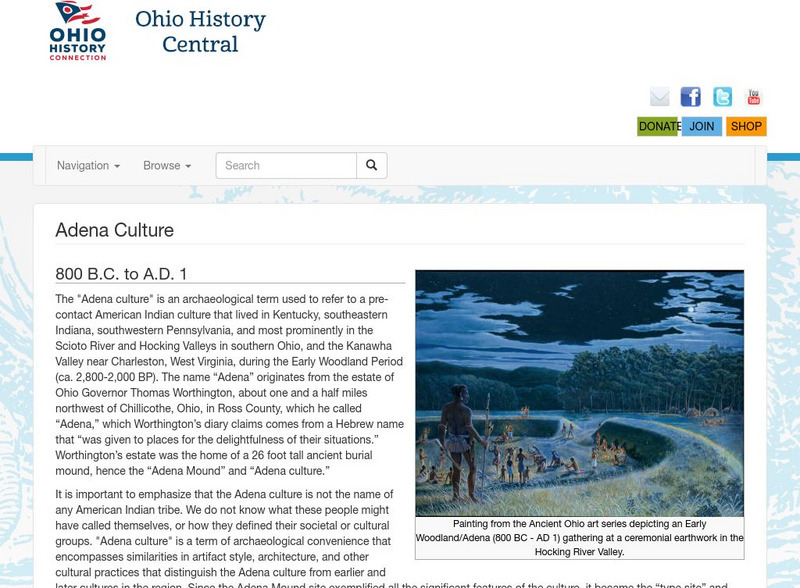
Ohio History Central: Adena Culture
Read this brief, but informative description of the Adena culture and the change resulting in the people's turning to agriculture as a way of life.

Khan Academy
Khan Academy: World History: Unit: Beginnings 600 Bce
This virtual course from Khan Academy is a series of video tutorials and practice links that follow the world's prehistory through 600 BCE.
Other
Science Magazine: Reading the Signs of Ancient Animal Domestication
An article which discusses the size of the first animals domesticated by humans about 10,000 years ago. The author reviewed a study in which it was suggested that size reduction evidence may not be the first sign of domestication....