Hi, what do you want to do?






New York State Education Department
TASC Transition Curriculum: Workshop 11
You'll C-E-R a difference in classroom achievement after using a helpful activity. Designed for economics, civics, government, and US history classes, participants practice using the CER model to craft arguments about primary and...

New York State Education Department
TASC Transition Curriculum: Workshop 5
Are video games sports? Pupils investigate this question as well as various nonfiction selections to learn more about claims and the support that defines them. All of the selections mimic the rigor on state tests and encourage close...

EngageNY
TASC Transition Curriculum: Workshop 15
What do a cheetah, Audi commercial, and air have in common? They're all topics of an engaging inquiry-based, hands-on workshop for educators about background knowledge, reading strategies, the CER model, and argumentative writing. The...

American Psychological Association
Teaching Is Fundamental
It's important for teachers to have a strong support system—especially in the first few years of their career. Help teachers' partners, spouses, and friends understand the most compassionate ways to provide emotional support with a...
Arizona State University
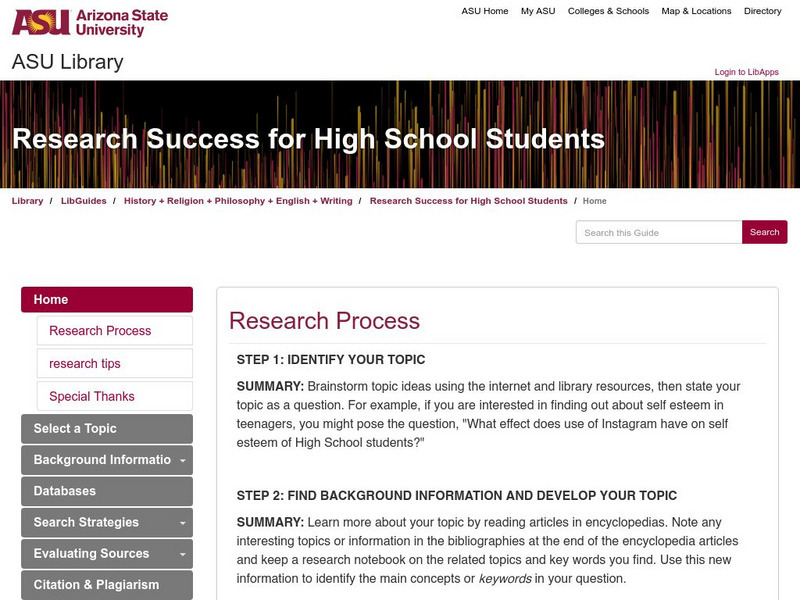
Arizona State U.: Research Success for High School Students: Evaluating Sources
A collection of resources for evaluating sources. Topics covered include knowing your sources, assessing whether a source is scholarly, the CRAAP Test (includes chart, worksheet, and website evaluation sheet), and how to identify fake news.

Stanford University
Sheg: Document Based History: Reading Like a Historian: Evaluating Sources
[Free Registration/Login Required] Are all historical sources equally trustworthy? How might the reliability of a historical document be affected by the circumstances under which it was created? In this activity, students sharpen their...
Other
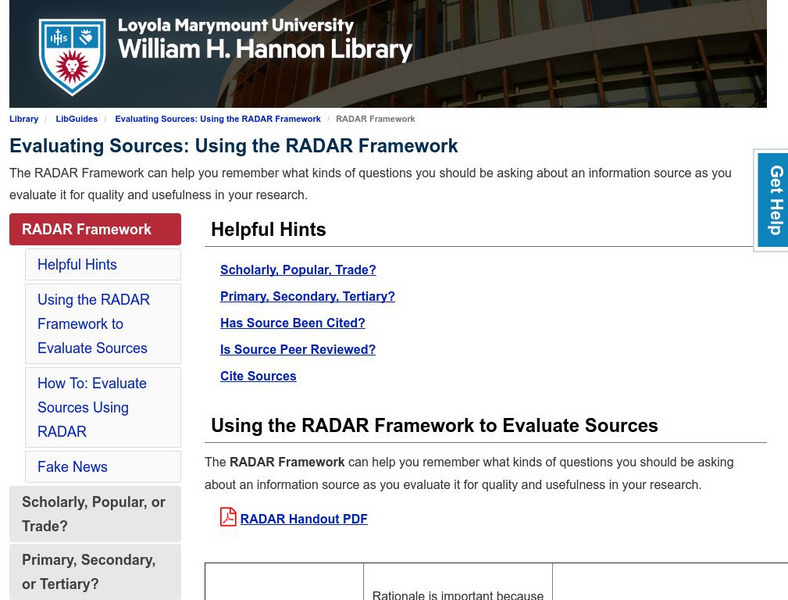
Loyola Marymount University: Evaluating Sources: Using the Radar Framework
The RADAR Framework can help you remember what kinds of questions you should be asking about an information source as you evaluate it for quality and usefulness in your research. The Framework can be downloaded in PDF format. Includes...
Online Writing Lab at Purdue University
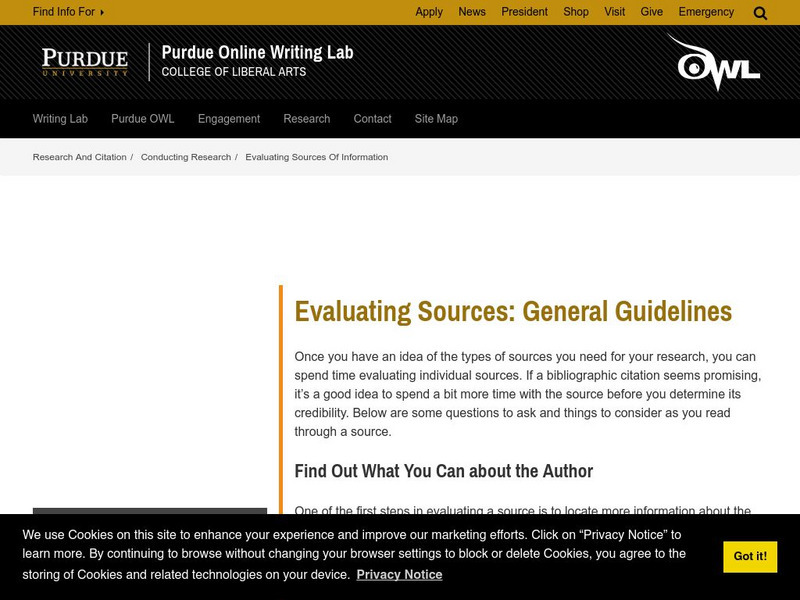
Purdue University Owl: Evaluating Sources: General Guidelines
This entry focuses on evaluating your sources while reading them, giving suggestions on what to look for when reading.

Lumen Learning
Lumen: Evaluating Sources: Introduction to Types of Sources
This is an introduction to evaluating sources and the types of sources available.
University of California
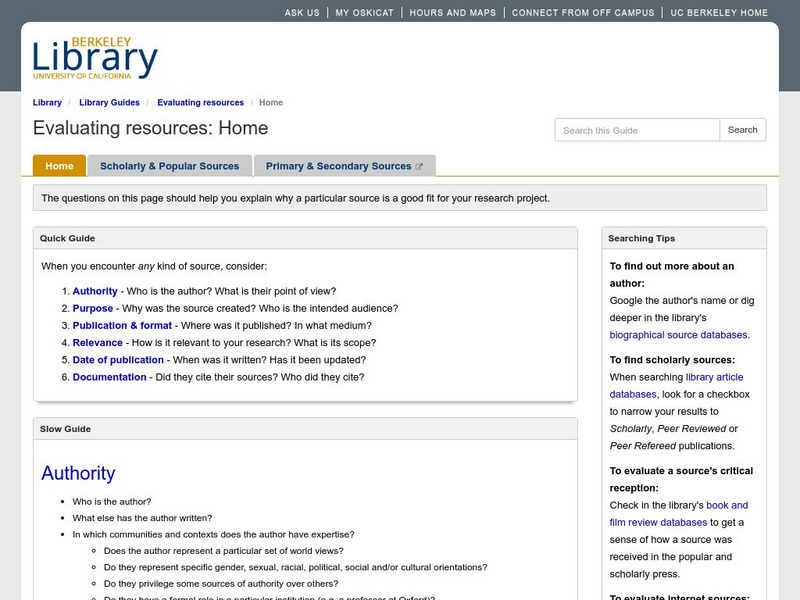
Uc Berkeley Library: Critical Evaluation of Resources
Questions to ask yourself when determining if a source is reliable. Discusses difference between primary and secondary source. List of reference sources and links to other sites that teach you how to evaluate sources....
Online Writing Lab at Purdue University
Purdue University Owl: Evaluating Sources: Overview
This entry explains the need for evaluation sources, especially internet sources. W.9-10.6 Techno

Lumen Learning
Lumen: Evaluating Sources: Introduction to Multimedia Sources
An introduction to methods of evaluating multimedia sources.
Lumen Learning
Lumen: Evaluating Sources: Craap Analysis of Multimedia Sources
This instructional activity focuses on evaluating multimedia sources using the CRAAP Analysis: Currency, relevance, authority, accuracy, and purpose. Click on the NEXT button on the bottom right for more information. SL.11-12.2...

Lumen Learning
Lumen: Evaluating Sources: Introduction to Online Sources
This is an introduction to evaluate methods to assess the quality of online sources. Click the next button on the right bottom.
Lumen Learning
Lumen: Evaluating Sources: Craap Analysis of Online Sources
This lesson focuses on evaluating online sources using the CRAAP Analysis: Currency, relevance, authority, accuracy, and purpose. A practice exercise is provided. SL.9-10.2 eval & integrate sources
Lumen Learning
Lumen: Evaluating Sources: Craap Analysis of Print Sources
This lesson focuses on evaluating print sources using CRAAP Analysis: Currency, relevance, authority, accuracy, and purpose. A practice exercise is included. W.9-10.8 Sources
Lumen Learning
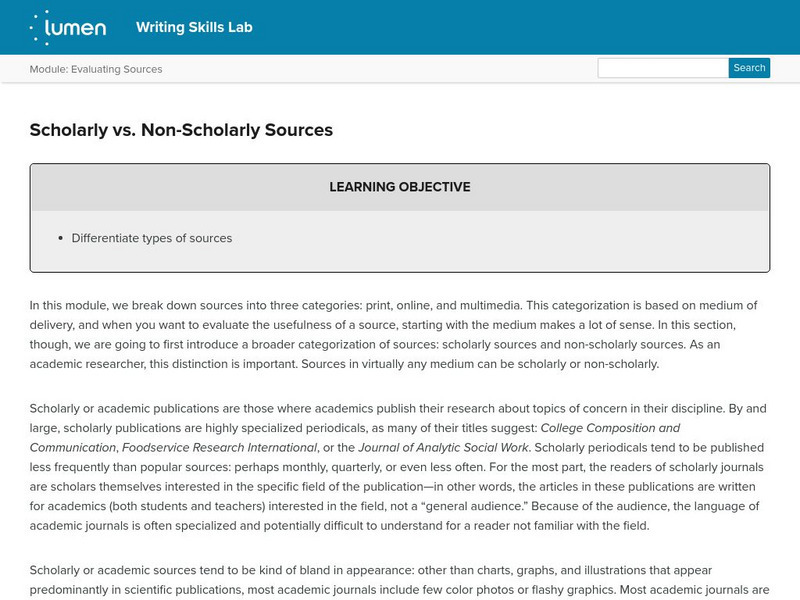
Lumen: Evaluating Sources: Scholarly vs. Non Scholarly Sources
This lesson focuses on types of sources including scholarly vs. non-scholarly sources and print, online, and multimedia.
Lumen Learning
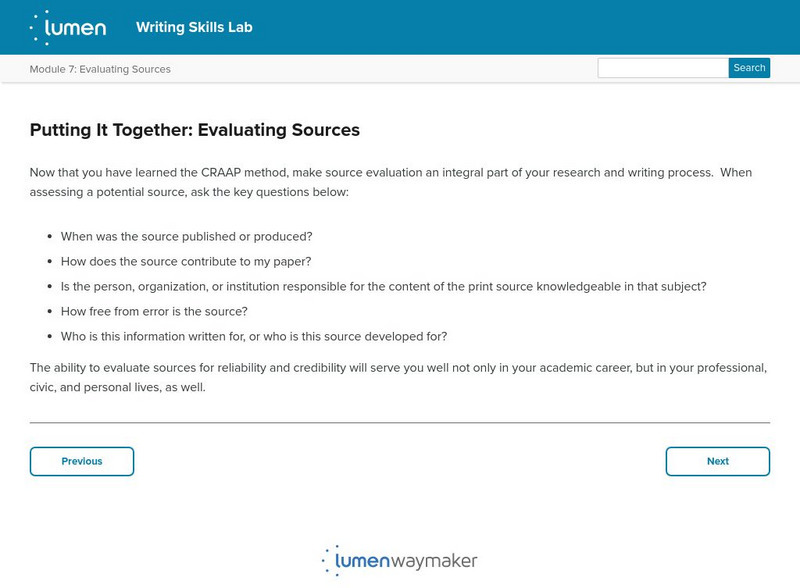
Lumen: Evaluating Sources: Putting It Together: Evaluating Sources
This is a summary of evaluating sources using the CAARP analysis method including questions to ask yourself about each source. W.9-10.8 Sources

New York Times
New York Times: Evaluating Sources in a 'Post Truth' World: Fake News
[Free Registration/Login Required] Need help determining fake news from real news? This seems to be a problem today. Find practical activities and questions to help navigate a media landscape in which it is increasingly difficult to tell...
TES Global
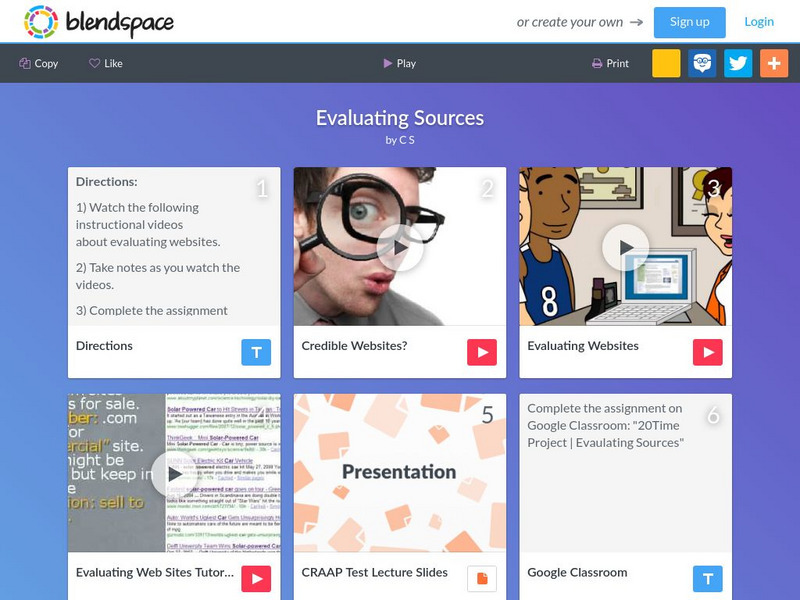
Blendspace: Evaluating Sources
A seven-part learning module with links to texts, videos, slides, and a quiz to use while learning how to evaluate research sources.

Other
Monash University Library: Evaluating Web Pages
Use this guide to learn how to evaluate web pages. This concise guide also addresses why evaluation is important. CCSS.ELA-Literacy.CCRA.R.7
Virtual Salt
Virtual Salt: Evaluating Internet Research Resources
This site by Virtual Salt offers a great deal of information on evaluating internet sources. Gives tips on what to look for when screening information for usefulness and reliability.
Texas Education Agency
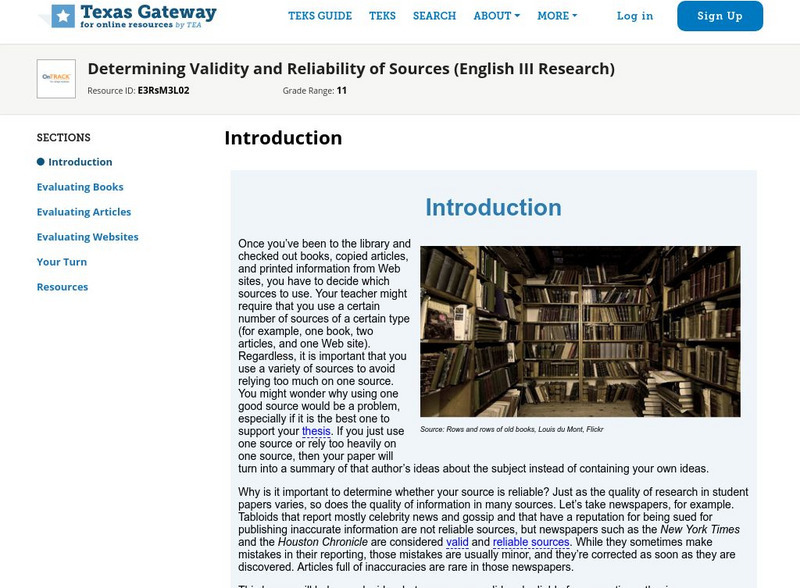
Texas Gateway: Determining Validity and Reliability of Sources
This lesson will help students decide which sources are valid and reliable for supporting a thesis. It discusses how to evaluate books, articles, websites, and more.
Lumen Learning
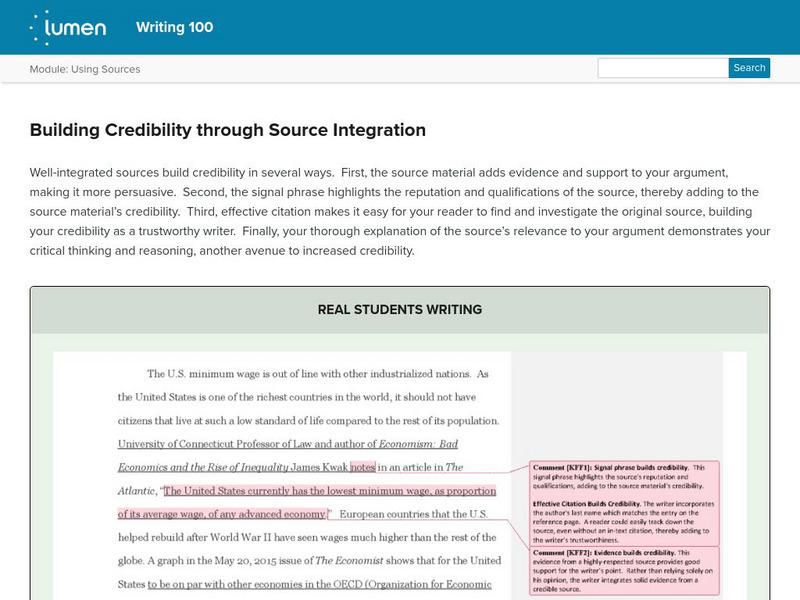
Lumen: Building Credibility Through Source Integration
Well-integrated sources build credibility in several ways: Source material adds evidence and support to your argument, the signal phrase highlights the reputation and qualifications of the source, and effective citation makes it easy for...