Hi, what do you want to do?






iCivics
I Civics: Mini Lesson: Filibusters
Students learn about filibusters and how and why senators use them, then they take a look at how news coverage of a filibuster can be transformed through neutral, positive, or negative framing.
Other
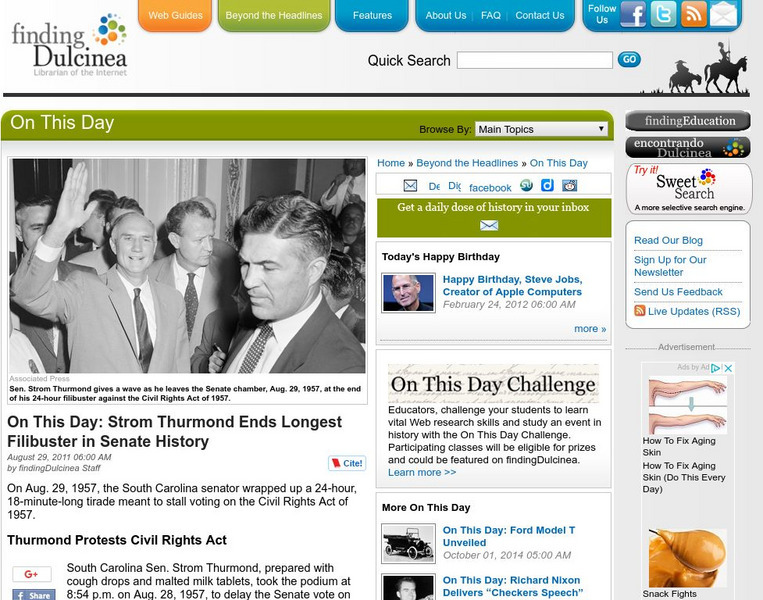
Finding Dulcina: Strom Thurmond Ends Longest Filibuster in Senate History
Read about Senator Strom Thurmond's epic filibuster in an attempt to forestall the passage of the Civil Rights Act of 1957. There is a brief biography of Thurmond and his political life, as well as information about the use of the...

Library of Congress
Loc: congress.gov: The Legislative Process: Senate Floor
Watch this video on the unique rules and procedures governing floor debate and amending in the Senate. A transcript is provided, along with a chart of the legislative process. [4:18]
This Nation
This nation.com: What Is a Filibuster?
This site answers the questions "What is a filibuster? Why are they permitted in the Senate but not the House? Can you do anything to stop one?" Good discussion of the term in the context of U.S. government.
Social Studies for Kids
Social Studies for Kids: The Filibuster
A filibuster is a simple parliamentary procedure used in the Senate to prevent a measure from being brought to a vote usually when one or more senators attempt to delay or block a vote on a bill by extending debate on the measure.
US Senate
Historical Minutes: An Era of Investigations: 1921 1940
Read these series of essays written by U.S. Senate historians that detail important events and people during the era of investigations in the Senate just before the Great Depression and continuing up to the entrance to World War II. The...

Northern Illinois University
Illinois Periodicals Online: Everett Dirksen and the 1964 Civil Rights Act
Read about the use of the filibuster in the U.S. Senate as a way to control legislation.In the discussion of the Civil Rights Act of 1964, the longest filibuster in history was launched as a way to keep the legislation from coming to a...
Other
Colorado College: A Brief History of the Civil Rights Act of 1964
A very good explanation of the problems and political machinations that happened behind the scenes in both the House of Representatives and Senate as the wording of the Civil Rights Act of 1964 was developed. See how the legislation was...
Other
National Council for the Social Studies: Selecting Supreme Court Justices
A panel discusses the questions of whether the Senate or President hold more power in selecting Supreme Court Justices, the impact of interest groups on the process, and whether changes need to be made to the confirmation process. Along...
CNN
Cnn: Gop Sets Up Showdown Over Alito
Some democrats in the Senate are discussing strategies for halting the confirmation of Samuel Alito for the U.S. Supreme Court. Read about the controversy and battle that is brewing in the Senate in this January, 2006, report. there is...
Other
Wasm: Anti Lynching Bill, 1918
Read the text of the Dyer Anti-Lynching Bill as it was presented to the House of Representatives in 1922. Its passage was thwarted by a filibuster in the Senate.
PBS
Wnet: Thirteen: Rise and Fall of Jim Crow: A National Struggle: Congress
This two-page segment of a larger PBS site about Jim Crow discusses the role of Congress over close to 100 years in first entrenching Jim Crow laws in the law of the land, and eventually, through the Civil Rights Act of 1965 and the...
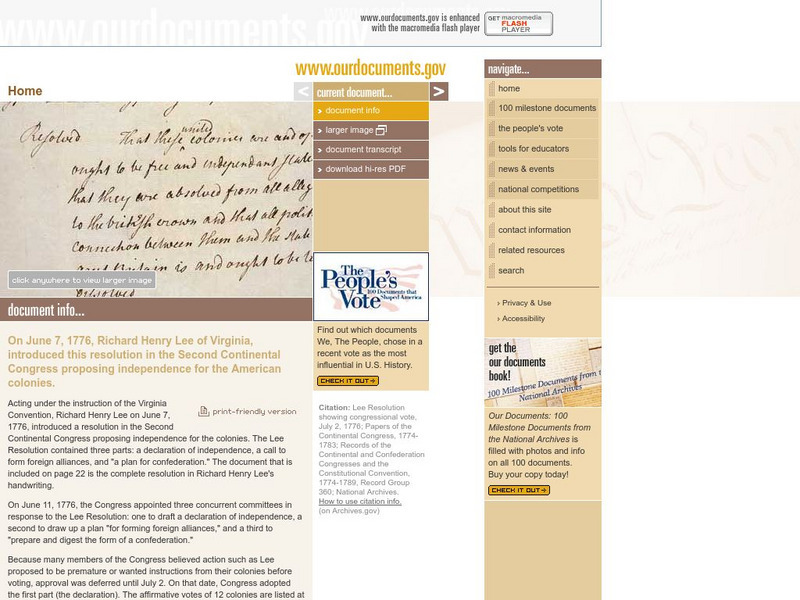
US National Archives
Our Documents: Civil Rights Act (1964)
Find an image of the Civil Rights Act of 1964, signed by President Lyndon Johnson on July 2, 1964. Read a brief description of how this life-changing legislation came to be.
Other
Naacp History: Anti Lynching Bill
After a brief summary of the background of anti-lynching legislation, read the text of the 1922 Anti-Lynching Bill. Although passed by the House of Repesentatives, it was filibustered by the Senate.
Curated OER
Cnn.com:change at the Supreme Court
CNN article providing detailed information on the Senate confirmation hearing of Samuel Alito who was sworn in as the 110th Supreme Court justice on January 31st, 2006.