Hi, what do you want to do?






BioEd Online
Bio Ed Online: Raw vs. Processed Food
In this lesson students will gain an understanding of what "processed" means. They will also distinguish between natural and processed foods, and learn about sources of some foods.

Science Buddies
Science Buddies: How Sweet It Is: Hummingbird Food Preferences
Do you like to watch hummingbirds? Have you ever wondered why there is specialty hummingbird food? What is it about the food that makes it so appealing? In this zoology science fair project, you will observe these remarkable creatures...

Other
Moms Team: Food Sources for Iron
Find a chart listing iron-rich foods and serving sizes. Includes foods from all food groups. Use this chart to keep track of your daily intake of iron.
US Food and Drug Administration
Fda: The Nutrition Facts Label
This colorful printable gives you a quick look at the key information you can find on the Nutrition Facts label.
Curated OER
Medieval and Renaissance Food: Sources, Recipes, and Articles
A large collection of references for researching the types of food people ate in medieval and Renaissance times, and how they prepared it.
Ohio State University
The Ohio State University: Vitamin C (Ascorbic Acid)
This website provided by Ohio State University answers several questions about vitamin C, its food sources, its function, and its role in keeping people healthy. Learn how to prepare foods, such a vegetables and fruits, so that they...
Other
Moms Team: Food Sources for Calcium
Here is a chart listing several calcium-rich foods (from all major food groups) and the amount of calcium they have (in micrograms) per serving. Use this chart to keep track of how much calcium you take in each day.
National Institutes of Health
Nih: Diet Rich in Foods With Vitamin E May Reduce Alzheimer's Disease Risk
Read about a 2002 medical study performed to assess the relationship between foods rich in vitamin E and Alzheimer's disease risk. This website summarizes the findings of this study and briefly introduces the purposes of other vitamin E...
PBS
Pbs Learning Media: Primary Source Set: Feed the Hungry With Food Stamp Programs
This collection uses primary sources to the history of food stamp programs.
US National Archives
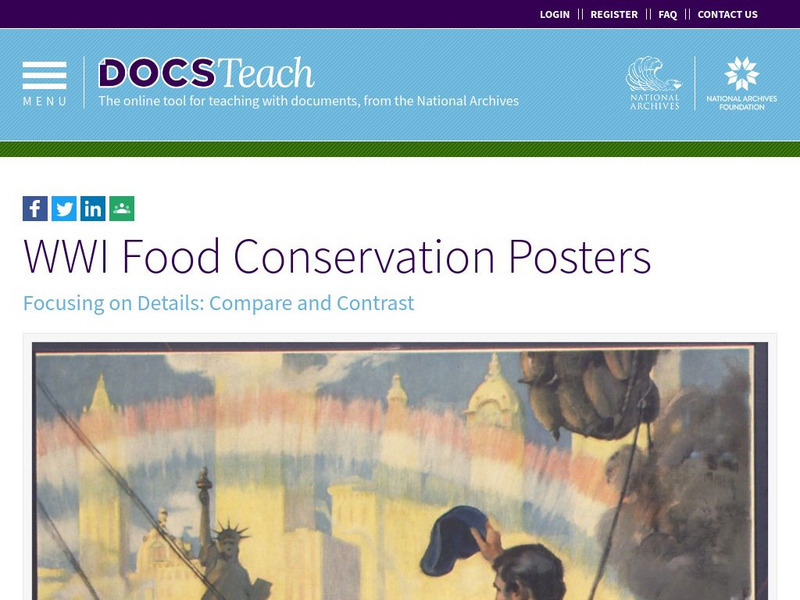
Docsteach: Compare Wwi Posters Urging Americans to Conserve Food for War Effort
Middle schoolers will speculate why the U. S. Food Administration created posters urging Americans to conserve wheat in multiple languages and what techniques the administration used to appeal to citizens.
Harvard University
Harvard School of Public Health: Nutrition Source: Food Pyramids and Plates
Answers to the question what should we eat, based on a pyramid-shaped diagram recommended by the Harvard School of Public Health. With lots of background information on the similarly shaped U.S. Department of Agriculture food guide...
Other
Virginia State Department of Agriculture/consumer Sciences: About Food Poisoning
This site about food poisoning discusses Staphylococcus Aureus - what it is, where the common sources of "staph" are, common symptoms, and what can be done to prevent contamination and infection.
Polk Brothers Foundation Center for Urban Education at DePaul University
De Paul University: Center for Urban Education: Plants and Food [Pdf]
"Plants and Food" is a one page, nonfiction passage about plant foods and the importance of knowing what plants are safe to eat and how to prevent food from spoiling. It is followed by questions which require students to provide evidence...

Library of Congress
Loc: Learning Page: Primary Source Set: Thanksgiving
A set of primary documents that reflect the Mayflower, Plymouth, Puritans, the first Thanksgiving, and legislation for the holiday.
Utah Education Network
Uen: Fat a Concentrated Energy Source
Through these lesson plans, students explore and discuss the role of dietary fat as an important energy source. In addition to providing detailed instructions for teachers, this website includes all the handouts and charts needed to...
Other
British Nutrition Foundation: Food a Fact of Life (11 14): Energy and Nutrients
Students learn about the energy and nutrient requirements of humans in this comprehensive tutorial. They will look at dietary sources of energy, what the human body needs, changes in those needs during life's stages, the energy required...
Other
British Nutrition Foundation: Food a Fact of Life: Dietary Fibre and Water
A collection of downloadable resources on the sources of dietary fiber, what it does, the benefits to human health, sources of our water intake, its role in our bodies, and fluid balance. Includes PowerPoints, reference materials, and...
Utah Education Network
Uen: Source Relay
Second graders will sort breakfast food items into sources in this activity.
Other
British Nutrition Foundation: Food a Fact of Life (11 16 Years): Micronutrients
This lengthy PowerPoint slideshow examines micronutrients which are nutrients needed in small amounts. It looks at water- and fat-soluble vitamins and at minerals, their sources, their functions, and the impact of deficiencies of these...
Curated OER
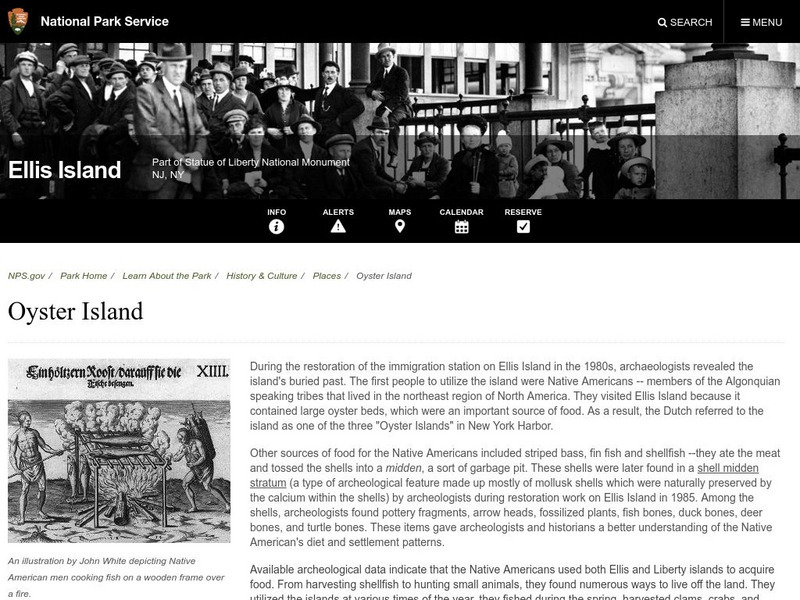
National Park Service: Ellis Island: Oyster Island
Before Ellis Island was an immigrant processing center, it was visited by Algonquin peoples to harvest the oyster beds, hence the name 'Oyster Island' which was given to it by the Dutch. Two other islands in the same area were also...
Friends of Algonquin Park
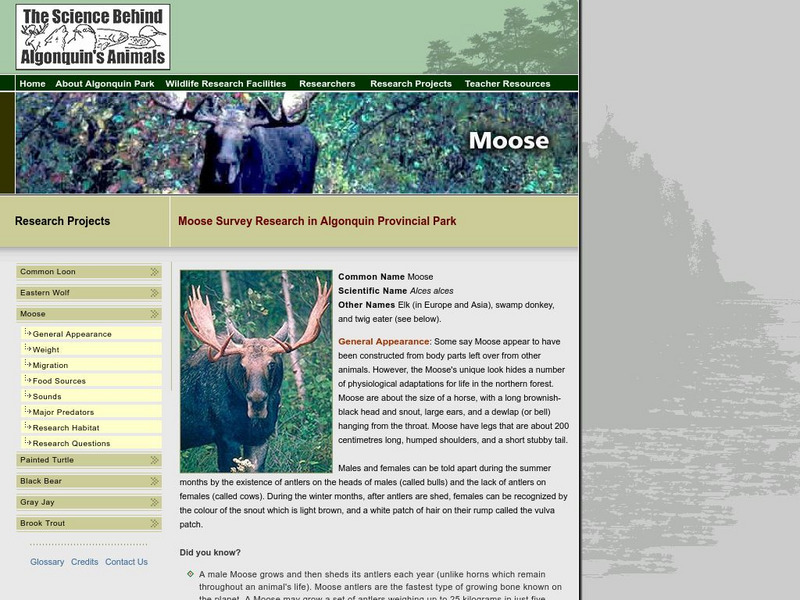
The Science Behind Algonquin's Animals: Moose
Information is provided on the moose, its general appearance, weight, migration, food sources, habitat, and major predators. This is excellent information for a student research project.
Friends of Algonquin Park
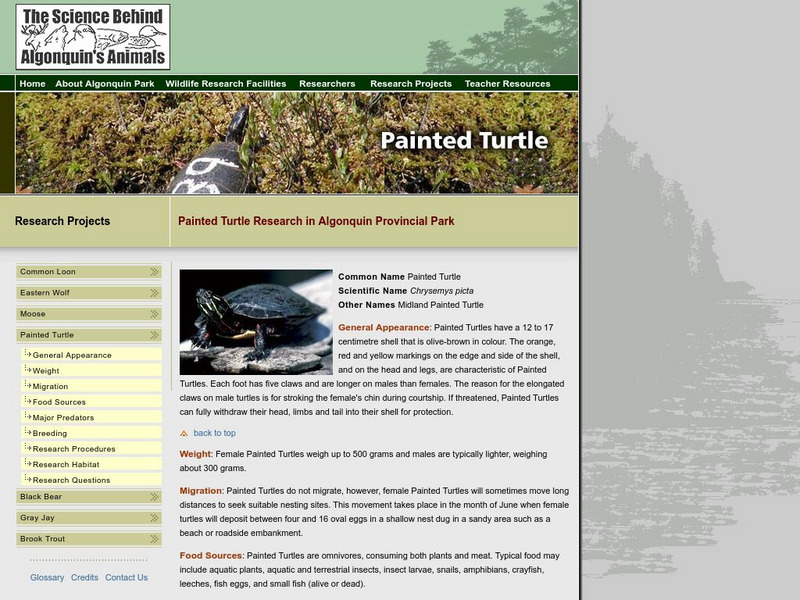
The Science Behind Algonquin's Animals: Painted Turtle
Excellent information is provided on the painted turtle's appearance, weight, migration, food sources, predators and breeding. Research questions provide the answers to many common questions such as how long they live.
Friends of Algonquin Park
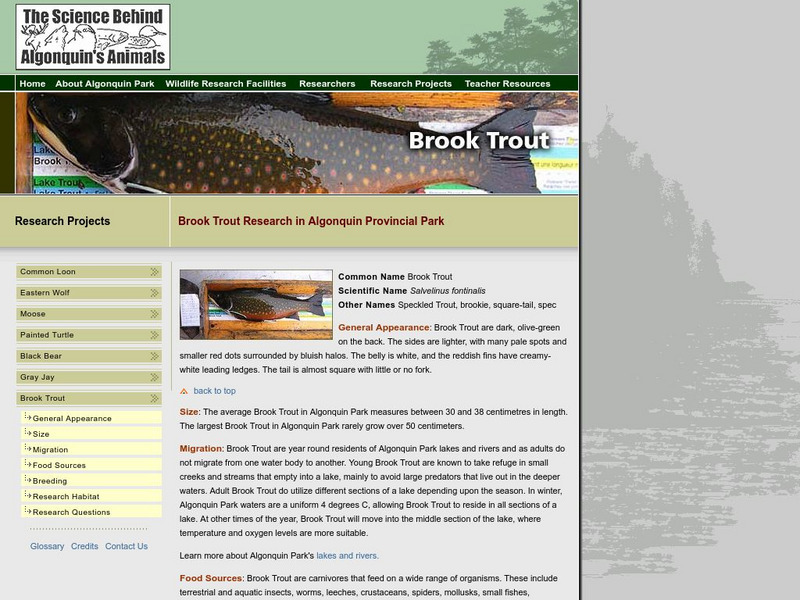
The Science Behind Algonquin's Animals: Brook Trout
Learn about the Brook Trout's appearance, size, migration, food sources and breeding as well as the answers to other interesting research questions. Included is a video showing the capturing and marking of a Brook Trout and an...
Stephen Byrne
History for Kids: Native American Food
Resource outlines the history of Native American food sources and details how various tribes throughout North America used the resources available to them.