Hi, what do you want to do?






University of Michigan
Michigan Sea Grant: Teaching Great Lakes Science: Fish Identification
In this activity, students examine the physical characteristics of fish that live in the Great Lakes and identify common features that help species to survive in that environment. Downloadable resources include a fish poster, fish family...
Science Education Resource Center at Carleton College
Serc: How Does the Temperature of the Great Lakes Change Over Time?
This activity allows students to use water surface temperature, bathymetric data, and weather data to look at trends in the water temperature of the Great Lakes.
Other
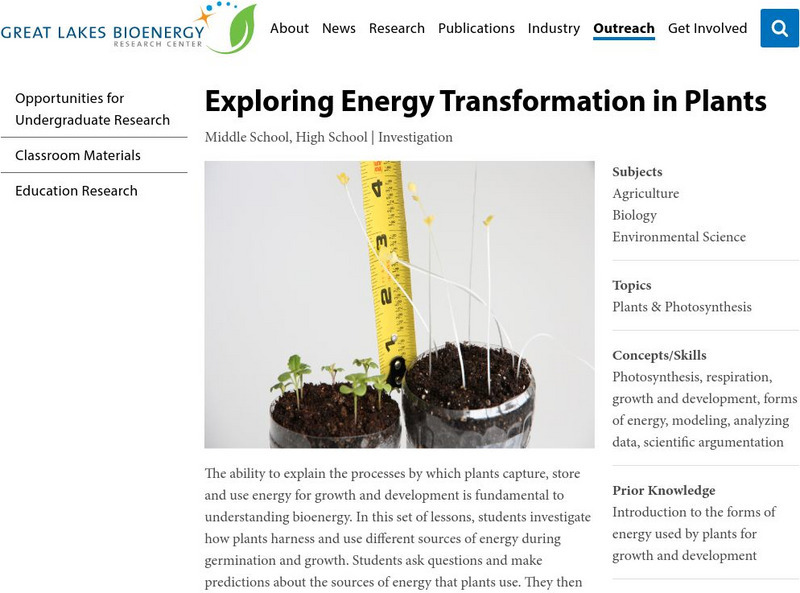
Great Lakes Bioenergy Research Ctr.: Exploring Energy Transformations in Plants
This set of lessons has students investigate how plants obtain energy from different sources to support their growth and development. Students conduct investigations, make predictions, and construct scientific explanations of the...

Utah STEM Foundation
Utah Stem Action Center: Salt Dissolved in Great Salt Lake
In this lesson, students will compare water from a fresh lake to water from the Great Salt Lake to begin to build a conceptual model for how salt dissolves in water. The lesson focuses on students using and developing models of molecules...
Utah STEM Foundation
Utah Stem Action Center: Great Salt Lake Is Changing
For this lesson, middle schoolers will explore the phenomenon of a shrinking lake and will develop and use models to understand why. Through a simulation game and exploration, students will learn about the effects of a shrinking lake and...
Utah STEM Foundation
Utah Stem Action Center: Great Salt Lake Ecosystem
This lesson plan provides an eight-day flow of educational activities in which students use the Great Salt Lake ecosystem to explore food webs and how changes in living and nonliving factors affect different populations.
Utah STEM Foundation
Utah Stem Action Center: Floating on the Great Salt Lake
Through exploring the phenomenon that it is easier to float on salt water than on fresh water, middle schoolers will develop a conceptual model for molecules and how the arrangement of molecules affects density.
Other
Ohio Dept. Of Education: Lesson Plan: Transportation Systems Grade Four
For this lesson unit, students learn about transportation systems, including the Great Lakes canal system, and how modes of transportation has changed over time with advancements in technology. There is a large student research component...
National Endowment for the Humanities
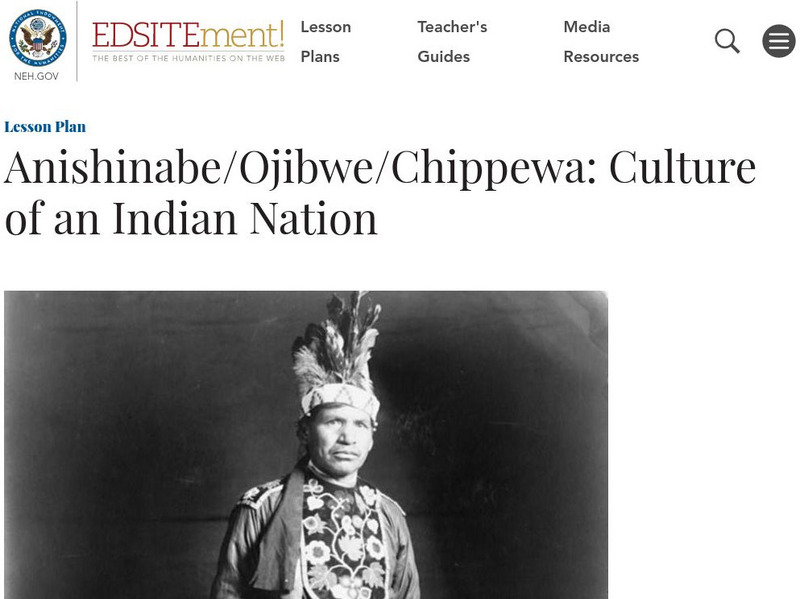
Neh: Edsit Ement: Anishinabe Ojibwe Chippewa: Culture
Though written for grades 3-5, this lesson plan can be easily changed to help students of all ages learn about the Chippewa people. Additional resources provide historical, cultural, and geographical facts concerning this Native American...
Utah STEM Foundation
Utah Stem Action Center: Pelicans on Gunnison Island
In this lesson plan, students will explore interactions between a population and the environment as they learn about why so many American white pelicans spend the spring and summer on Gunnison Island in the Great Salt Lake.
Utah Education Network
Uen: Nhmu: Cultural Clutter Tales in the Trash
Fourth graders list three or more types of evidence of prehistoric cultures that encouraged archaeologists to investigate the marshes around the Great Salt Lake.
Other popular searches
- Great Lakes Worksheet
- Great Lakes Biodiversity
- Great Lakes Map
- Label the Great Lakes
- Maps of Great Lakes
- The Great Lakes
- Michigan's Great Lakes
- Five Great Lakes
- Great Lakes Region
- Great Lakes Lesson Plans
- Traveling the Great Lakes
- Activities the Great Lakes