Hi, what do you want to do?






Pennsylvania State University
Penn State: Still More Plate Tectonics, the Great Smoky Mountains
The Great Smoky Mountain National Park of North Carolina and Tennessee includes 16 mountains over 6,000 feet (about 2,000 m) high, making this generally the highest region in North America east of the Mississippi River. Gatlinburg is a...
PBS
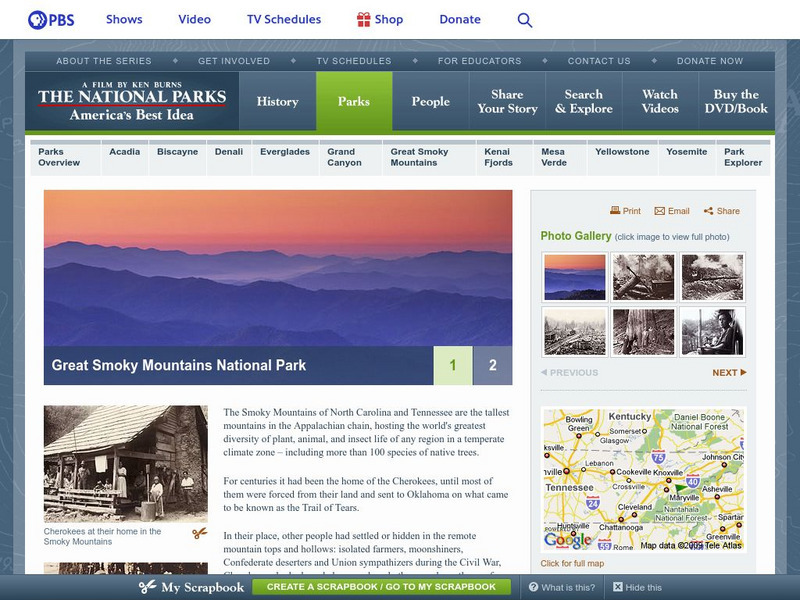
Pbs: The National Parks: Great Smokey Mountains National Park
Peruse this two page overview of the history of the Great Smokey Mountains National Park featured in a PBS documentary, while exploring the "hidden" stories of the minorities that helped to create this spectacular park.
Curated OER
National Park Service: Great Smoky Mountains
Visit "America's Most Visited National Park. "Provides maps, weather, and park activities.
Other
Smoky Mountain Convention & Visitors Bureau
Describes attractions and places to visit in the Smoky Mountains.
Science Education Resource Center at Carleton College
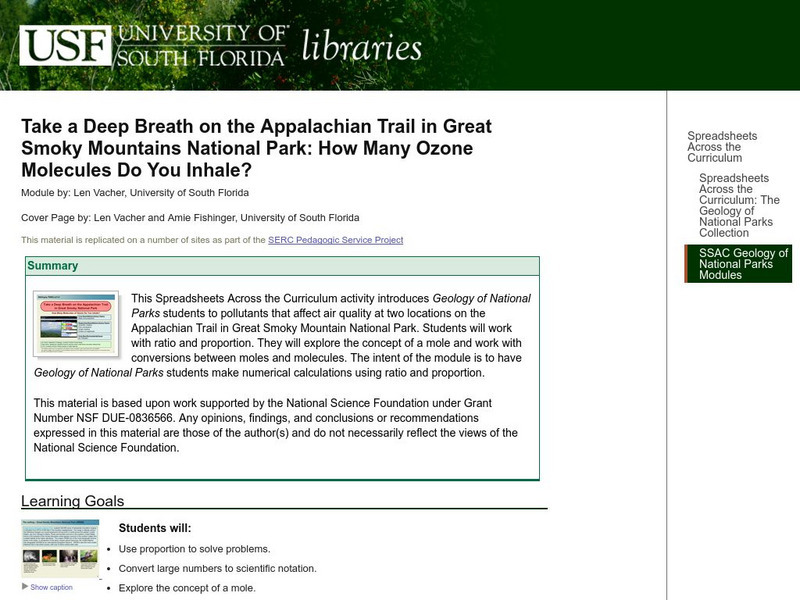
Serc: Take a Deep Breath on the Appalachian Trail
A lesson plan that includes a PowerPoint learning module for students. They will examine spreadsheet data on air quality in Great Smoky National Parks, and solve problems using ratio and proportion. The exercises will help them to...
Curated OER
Unesco: United States of America: Great Smoky Mountains National Park
Stretching over more than 200,000 ha, this exceptionally beautiful park is home to more than 3,500 plant species, including almost as many trees (130 natural species) as in all of Europe. Many endangered animal species are also found...
Tennessee History For Kids
Tennessee History for Kids: Museum of the Cherokee Indian
The Museum of the Cherokee Indian is in Cherokee, North Carolina. We strongly recommend you go there. Cherokee is directly across the Great Smoky Mountains from Gatlinburg. And if you want to learn about the Cherokees and their culture,...
Other
Gorp: Using Clouds to Forecast the Weather
This resource provides information on the four main types of clouds that form in the atmosphere. There are high clouds, middle clouds, low clouds and clouds with vertical development.