Hi, what do you want to do?





National Endowment for the Humanities
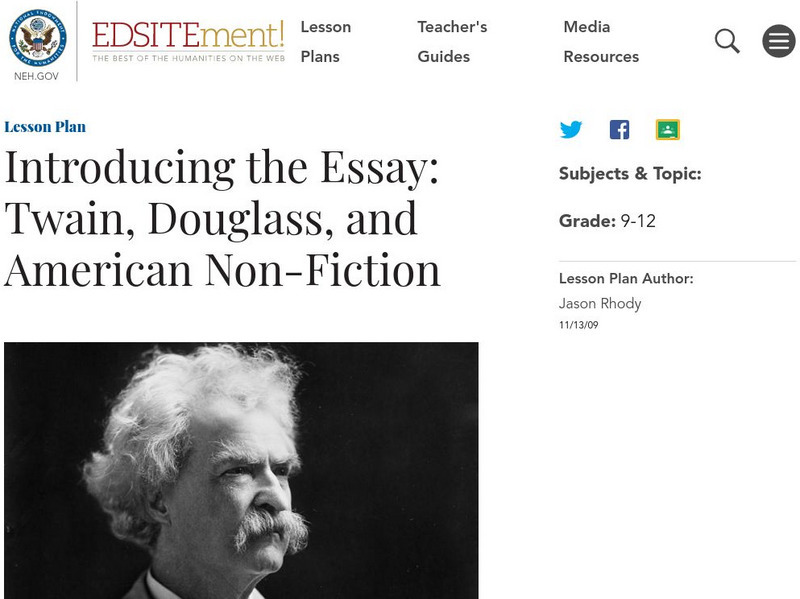
Neh: Edsit Ement: Introducing the Essay: Twain, Douglass and American Non Fiction
This lesson plan serves as an introduction to American literary non-fiction writing and focuses primarily on teaching some basic approaches to recognizing rhetorical strategies adopted for persuasive effect in essays and non-fiction. The...

PBS
Wnet: Thirteen: I Have a Metaphor
This lesson not only examines the message of Dr. King, but also the words themselves. This is a lesson in identifying the literary devices that he used in his "I Have a Dream" Speech. It will introduce the following literary devices:...

Sophia Learning
Sophia: Flashback
A seven-slide presentation introducing flashback and describing how to find it in a literary text. Examples are provided.
Sophia Learning
Sophia: Personification
Seven slides introducing and providing examples of personification. Slides also explain the purpose and impact of personification within a text, and examples come from "Rappaccini's Daughter" by Nathaniel Hawthorne.
Sophia Learning
Sophia: Alliteration
Notes introducing and providing examples of alliteration and the two types of alliteration, consonance and assonance. Notes can be both read and listened to.
Sophia Learning
Sophia: Symbolism
This lesson introduces symbols in fiction writing. This tutorial lesson shares a short slideshow with the lesson's content.
Sophia Learning
Sophia: Pun
This lesson introduces puns in writing. This tutorial lesson shares a short slideshow with the lesson's content.
Ted Nellen
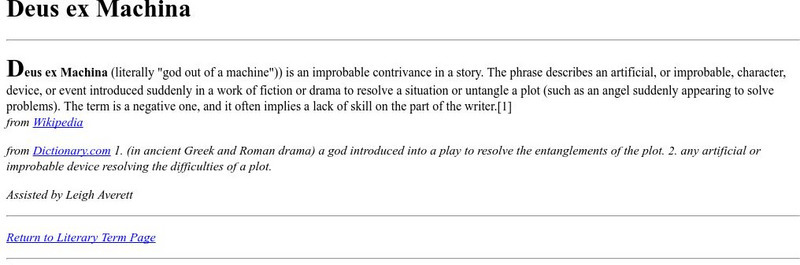
Cyber English (By Ted Nellen): Deus Ex Machina
This is a glossary entry for the term Deus ex Machina which literally means "god out of a machine." It is a negative reference to an author who uses a supernatural being like an angel to resolve a plot.