Hi, what do you want to do?





Other
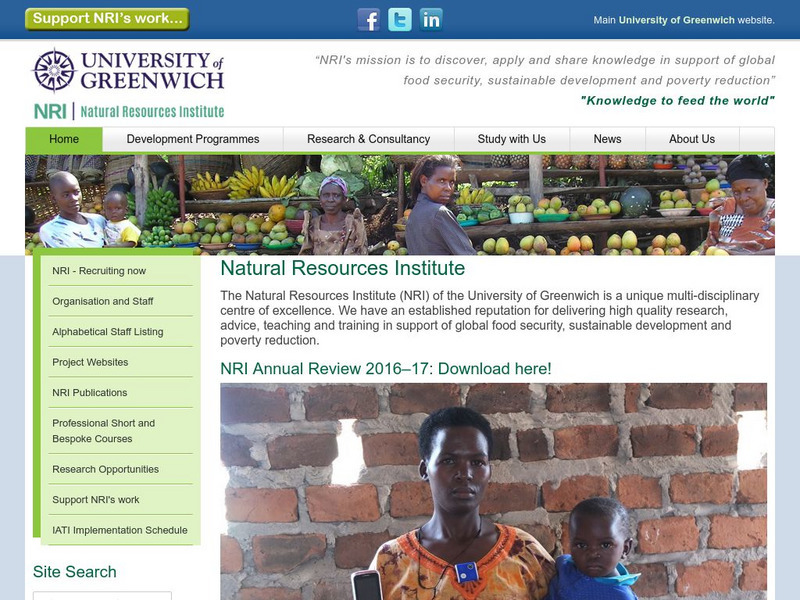
Natural Resources Institute
NRI is an organization that advances research and education for the management of natural and human resources. Find articles, links, and publications on this topic.

PBS
Pbs Learning Media: Sweaty T Shirts and Human Mate Choice
This video segment from Evolution: "Why Sex?" explores the "sweaty T-shirt experiment," which showed that humans may unconsciously be drawn toward a specific kind of genetic variation in a mate.
Edutopia
Edutopia: Goods and Services [Pdf]
A unit that teaches the difference between goods and services, the difference between producers and consumers, the difference between human, natural, and capital resources, and the difference between bartering/trading and buying/selling....
CK-12 Foundation
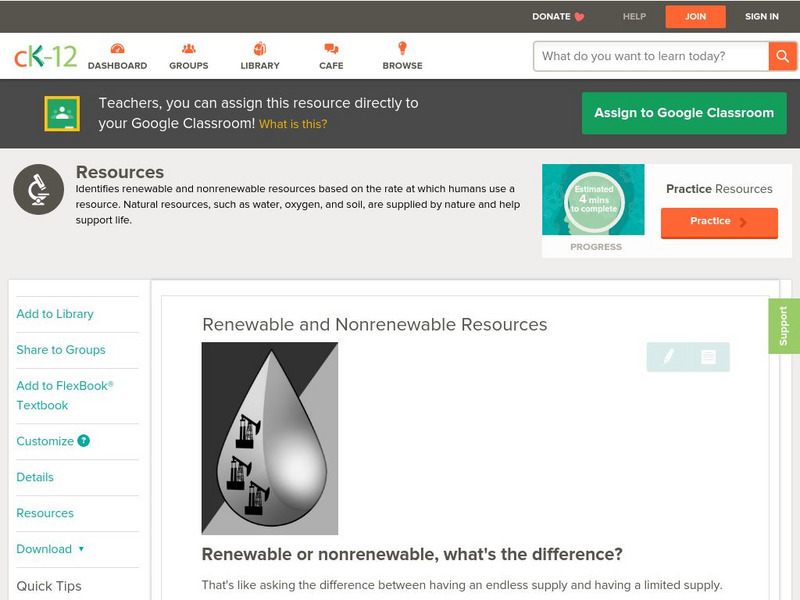
Ck 12: Biology: Renewable and Nonrenewable Resources
[Free Registration/Login may be required to access all resource tools.] Identifies renewable and nonrenewable resources based on the rate at which humans use a resource. Natural resources, such as water, oxygen, and soil, are supplied by...
Calisphere: University of California Libraries
University of California: Calisphere: Rich Resources
From Primary source images and informational text learn about the natural and human-driven resources and land use in California and how they have contributed to the growth of California.
Other
Scottish Natural Heritage: Riverbank Resource
Lesson plans designed to help students have an understanding of the natural and human world around a river. This site includes excellent lesson materials for teaching biodiversity.
Virginia Tech
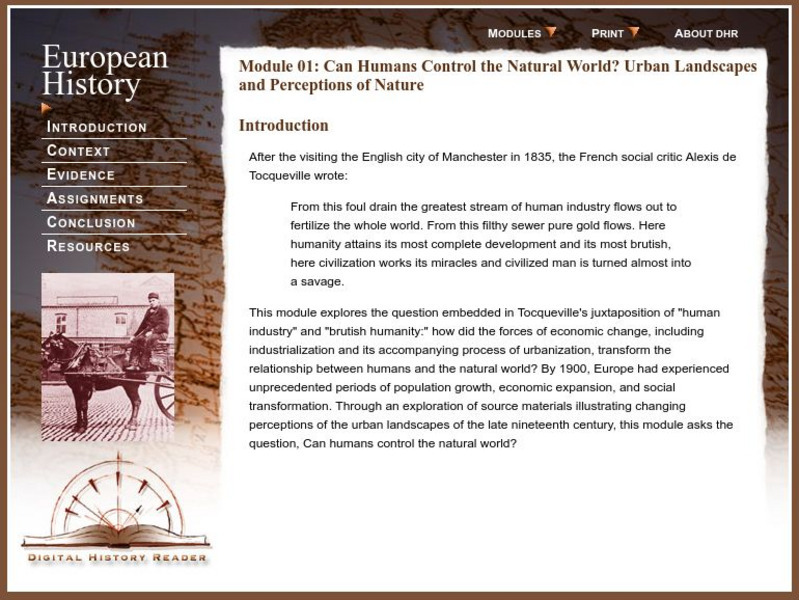
Digital History Reader: Can Humans Control the Natural World?
The course of industrialization and migration of society forced a shift within the natural world. Through context, writing assignments, reports, articles, visual materials, and bibliographical resources this unit dives into the question,...
Council for Economic Education
Econ Ed Link: Economic Spotter: Resources During Wwii
This is a lesson that deals with scarcity during WWII. Natural, human, and capital resources are discussed.

TeachEngineering
Teach Engineering: Environment
Through 10 lessons and more than 20 hands-on activities, students are introduced to the concept of an environment and the many interactions within it. As they learn about natural and human-made environments, as well as renewable and...
The World Bank
World Bank: Data Catalog
This resource provides statistical data on numerous categories for nearly every country in the world. A great tool for a comparative analysis. Human, natural, and capital resources are all included.
PBS
Pbs Learning Media: Historic Relationships Between Dogs and Humans
In this video segment from Nature, learn the history of the world's first domesticated animal, the dog. [7:34]

Scholastic
Scholastic: Study Jams! Science: Energy, Light and Sound: Natural Resources
A slideshow and a short quiz on natural resources, the difference between renewable and nonrenewable resources, and the impact humans have on the Earth's natural resources.
BioEd Online
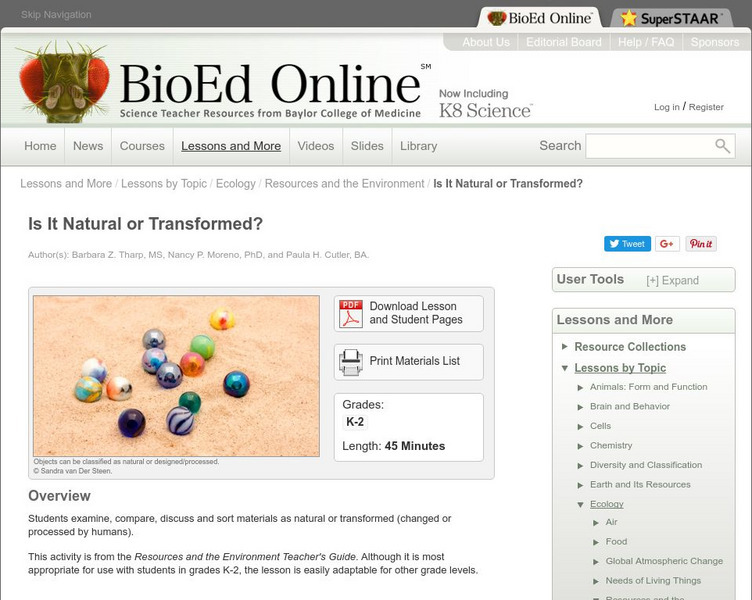
Bio Ed Online: Resources and the Environment: Is It Natural or Transformed?
In this activity, students learn about natural resources. They sort materials into two categories, whether it is natural or if it has been changed by humans.

Council for Economic Education
Econ Ed Link: Mystery Workers: Productive Resources
This website focuses on productive resources which are divided into three categories, natural, human, and capital.
Other
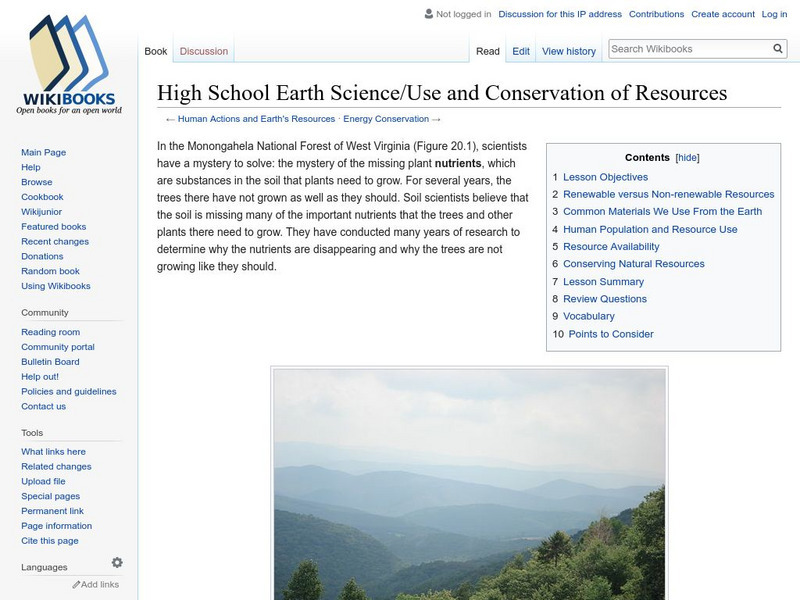
Wikibooks: High School Earth Science/use and Conservation of Resources
Begins with a description of a case of missing plant nutrients that have been affecting Monongahela National Forest in West Virginia. Lists some of the benefits to humans of the natural resources in such a park. Then explains the...
Council for Economic Education
Econ Ed Link: Economic Spotter: Resources During World War Ii
In World War II pennies were made of steel and zinc instead of copper and women were working at jobs that men had always been hired to do. Why? Because during war times, scarcity forces many things to change!
Council for Economic Education
Econ Ed Link: Music, Maestro, Please: Show Business and the Factors of Production
The city of Philadelphia, Pennsylvania recently opened a $300 million dollar center for the performing arts, the Kimmel Center. This lesson was developed for a special teacher workshop to incorporate economics and the arts to teach kids...

Utah Education Network
Uen: Utah History Encyclopedia: Great Salt Lake
This resource provides a natural and human history of the Great Salt Lake.
Council for Economic Education
Econ Ed Link: Those Golden Jeans
Check out this informative economics lesson plan designed to review the three productive resources--natural resources, human resources, and capital resources--needed to produce goods and services.

PBS
Pbs Nature Critter Guide: Llama
Learn more about llamas when you check out this resource. This site features a clear and concise picture of how these fascinating mammals live and what purpose they serve to other animals and humans.

PBS
Pbs Nature: Tiger
Learn about how and where tigers live when you explore this resource. You can also investigate how tigers communicate with each other, enemies, friends, and humans through this site.
Council for Economic Education
Econedlink: Scarcity Video and Quiz
This video teaches the concept of Scarcity and includes a quiz. The total resources of society, including natural resources, human resources, capital goods and entrepreneurship, are limited, causing scarcity to exist. [1:13]

National Geographic
National Geographic: Human Impacts on the Environment
Humans impact the physical environment in many ways: overpopulation, pollution, burning fossil fuels, and deforestation. Changes like these have triggered climate change, soil erosion, poor air quality, and undrinkable water. These...
Annenberg Foundation
Annenberg Learner: The Habitable Planet: Water Resources
Learn about water as a precious resource in danger of being depleted. Understand the roles that overuse and agricultural use play in the sustainability efforts of this essential resource. Includes video. [28:25]