Hi, what do you want to do?





US Department of State
Office of the Historian: The Neutrality Acts, 1930s
You can see by reading the descriptions of these three neutrality acts how determined some in Congress were to isolate the United States and keep it out of World War II.

Siteseen
Siteseen: American Historama: Neutrality Acts
Discover the terms of the Neutrality Acts banning arms and war materials to countries at war. These laws were designed to prevent the United States of America from being entangled in a possible foreign war.
ibiblio
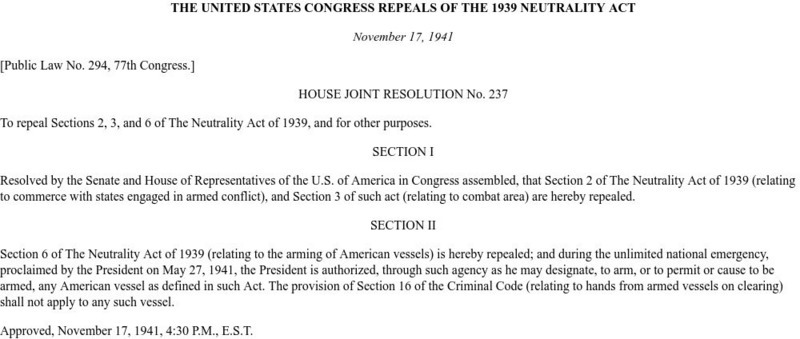
Ibiblio: Words of War: The u.s. Congress Repeals of the 1939 Neutrality Act
Contains the text of a joint resolution to repeal sections of the 1939 Neutrality Act.
ibiblio
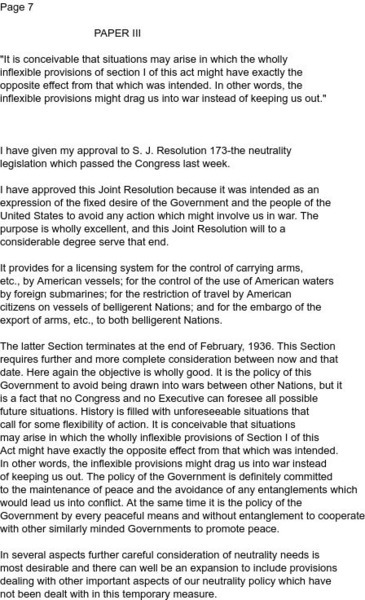
Ibiblio: World War Ii Resources: 1935 Neutrality Act
Text of Franklin Roosevelt's approval of the Neutrality Act of 1935, passed by the Congress in August, 1935. Read why Roosevelt thinks this act is a reasonable reflection of American foreign policy in the mid-1930s.
Simon Fraser University
Chem1 Virtual Textbook: Neutralization
Acting as an overview from the General Chemistry Virtual Textbook, this site explores neutralization in relation to acids and bases. Formulas and examples are also provided.
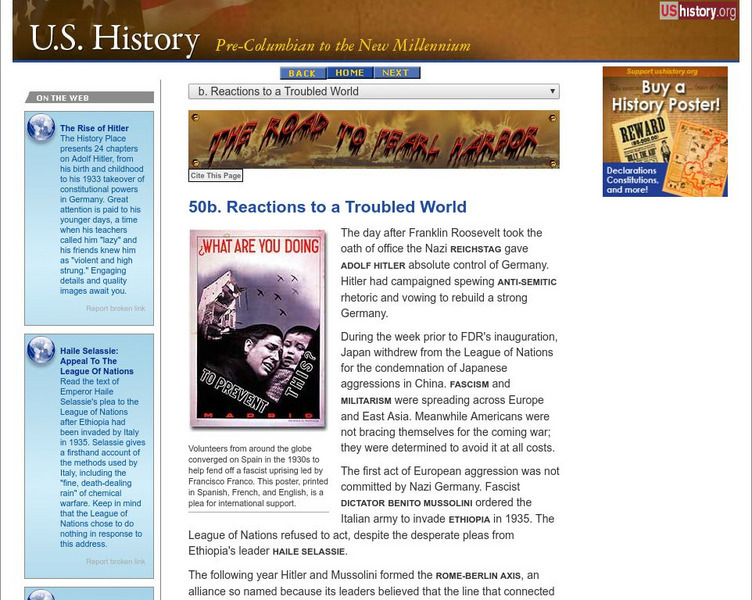
Independence Hall Association
U.s. History: Reactions to a Troubled World
Read about the rising militarism and fascism in Europe and Asia as dictators expanded their territories. See how the United States reacted with its series of three neutrality acts.

Library of Congress
Loc: Today in History: October 23: The Lend Lease Act
Information on the Lend-Lease Act which was signed on October 23, 1941. It discusses the repercussions of the signing of the act.
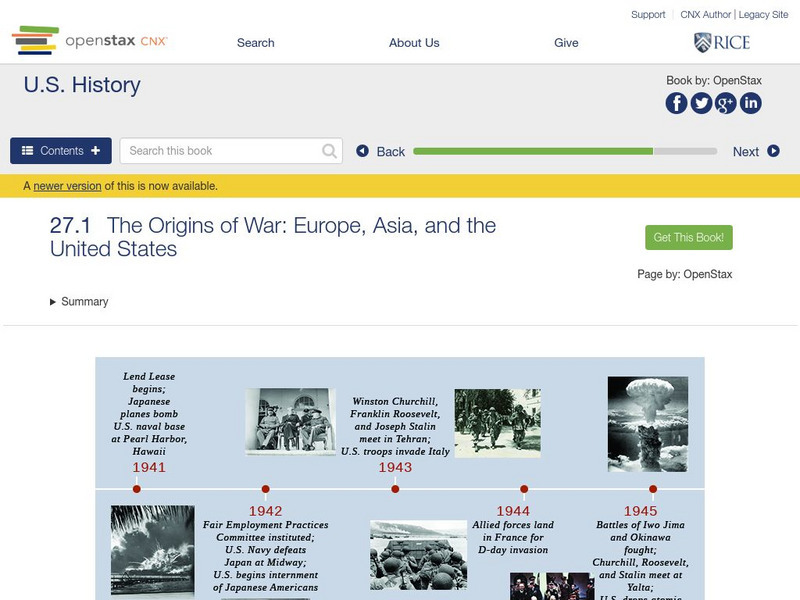
OpenStax
Open Stax: World War Ii 1941 1945: Origins of War: Europe, Asia and United States
Examines the conditions that fostered the rise of Fascism and Nazism, the events during the lead-up to the outbreak of war, and what Roosevelt did to help affected nations yet still keep the United States neutral.
University of Virginia
Miller Center at Uva: u.s. Presidents: Franklin Delano Roosevelt: Foreign Affairs
Scroll through this discussion of Franklin Roosevelt's attention to foreign policy during his several terms in office to "Confronting Germany and Japan" and "Descent into War." Here you will find out about the United States' position of...
US Senate
Historical Minutes: Merchants of Death
A review of the Senate hearings held by Senator Gerald Nye investigating the possibility that munitions manufacturers had forced the United States into World War I in order to increase their profits. Read how the course of these hearings...
Simon Fraser University
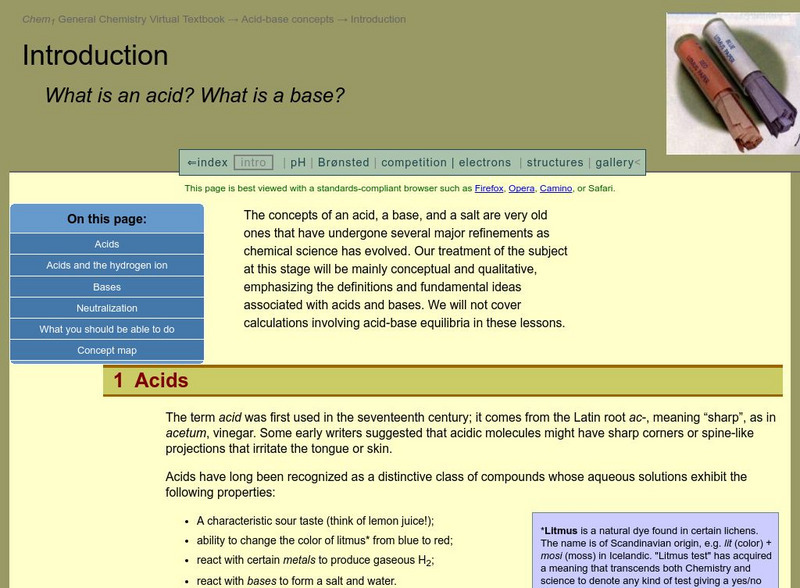
Chem1 Virtual Textbook: Bases
Acting as an overview from the General Chemistry Virtual Textbook, this site explores bases and their related characteristics. Several formulas are also provided.
![Digital History: Isolationists, Internationalists and Lend Lease [Pdf] Lesson Plan](https://static.lp.lexp.cloud/images/attachment_defaults/resource/large/FPO-knovation.png "Digital History: Isolationists, Internationalists and Lend Lease [Pdf] Lesson Plan")
Digital History
Digital History: Isolationists, Internationalists and Lend Lease [Pdf]
Read about the German incursion into France and the Low Countries and the bombing of Great Britain which caused much discussion in the United States. Should the US stay out of affairs in Europe, or intervene to help their long-time ally,...
US House of Representatives
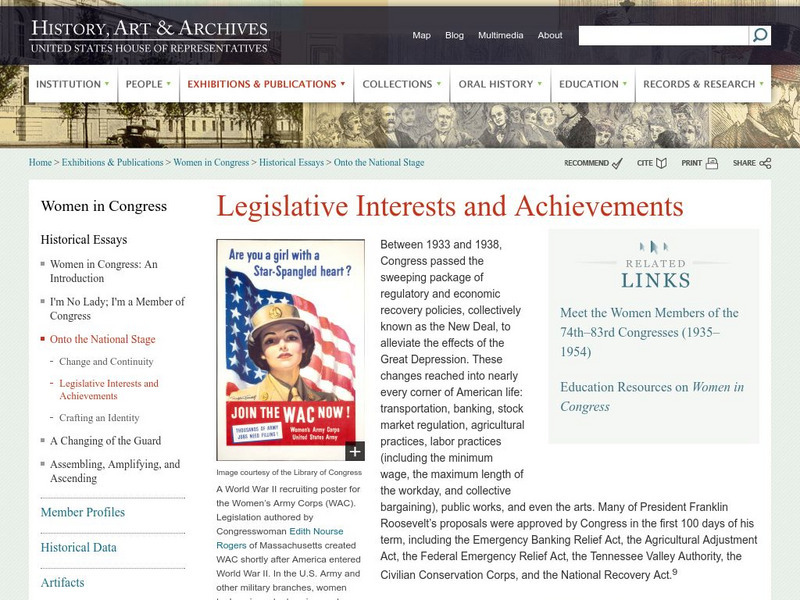
History, Art, and Archives: Legislative Interests and Achievements
Women in Congress had an impact on every critical piece of legislation during the Depression through the Cold War. Examine their impact in Congress during these decades in the following summary of legislative achievements.
George Washington University
The Eleanor Roosevelt Papers Project: Alfred M. Landon (1887 1987)
An interesting biography of Alf Landon, who ran for president against Franklin Roosevelt in 1936 even though he agreed with most of Roosevelt's positions and actions to pull the country out of the Great Depression. Read about his...
Digital History
Digital History: The Embargo of 1807
Thomas Jefferson tried to retain American neutrality in relations with France and Great Britain, who were at war with each other. Read about the Embargo Act and its effect on the American economy. See how other acts enacted in the...
US Department of State
Office of the Historian: The United States and the French Revolution
The French Revolution had political consequences in the United States. It forced us to adopt a clear foreign policy of neutrality and to pass legislation concerning immigration. Examine how Jefferson and Adams responded to the French...
Science Education Resource Center at Carleton College
Serc: Magic Paper
This lesson serves as an introduction to neutralization reactions. Students will observe that the goldenrod copy paper acts as an indicator changing colors and also that an acid can neutralize a base.
Independence Hall Association
U.s. History: The Arsenal of Democracy
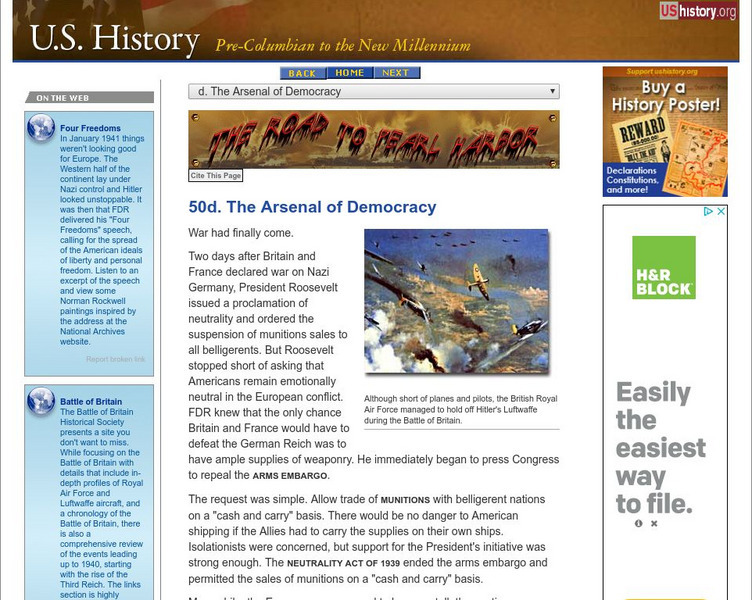
Although Americans remained isolationist in their thinking, President Roosevelt understood that the European allies needed help against the Germans. Read about the incremental ways America became involved in World War II in Europe...
Raleigh Charter High School
Mrs. Newmark's Page: March to War
Take this quiz to assess your knowledge on World War II history.
Independence Hall Association
U.s. History: Diplomatic Challenges in an Age of European War
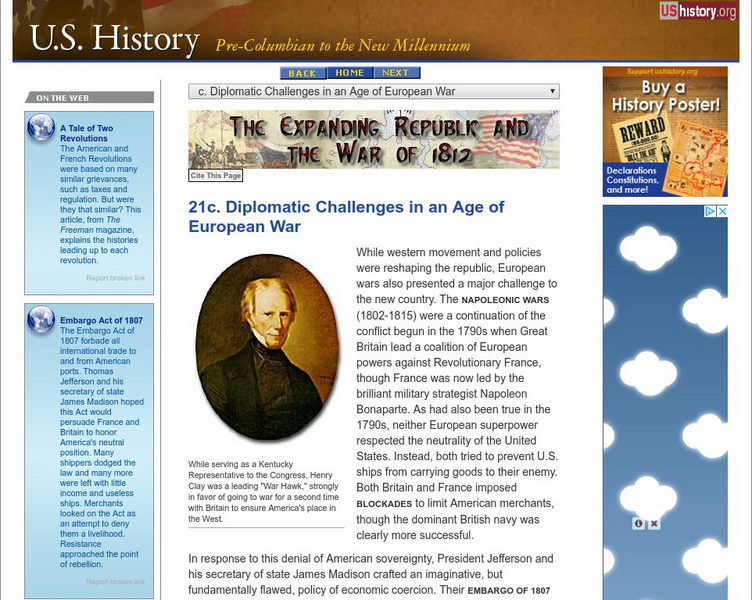
Both the British and French challenged American sovereignty and neutrality on the high seas. Read about the solution favored by Thomas Jefferson, but despised by the American shippers. See why this a cause of the War of 1812, along with...
Digital History
Digital History: Jeffersonians in Office [Pdf]
This is a great overview of both the Jefferson Administration and the Madison administration. Read about the Louisiana Purchase, trade problems, the War of 1812, and the downfall of the Federalists. A great resource. [pdf]

University of Virginia
Miller Center at Uva: u.s. Presidents: Martin Van Buren
Get the facts about the life and administraton of Martin Van Buren (1782-1862), the 8th President of the United States (1837-1841).

Khan Academy
Khan Academy: Ap Us History: 1890 1945: The United States in World War I
Discusses what triggered World War I, why the United States joined the war, and the impact the war had on life in the United States. Includes questions for students at end.

PBS
Pbs: American Experience: Fdr: Robert Dallek, Historian
An interview with Robert Hallek who discusses the foreign policy decisions made by Franklin Roosevelt prior to World War II. Read about the commitment Roosevelt made to Winston Churchill to fight against the Nazis in Europe.