Hi, what do you want to do?





Smithsonian Institution
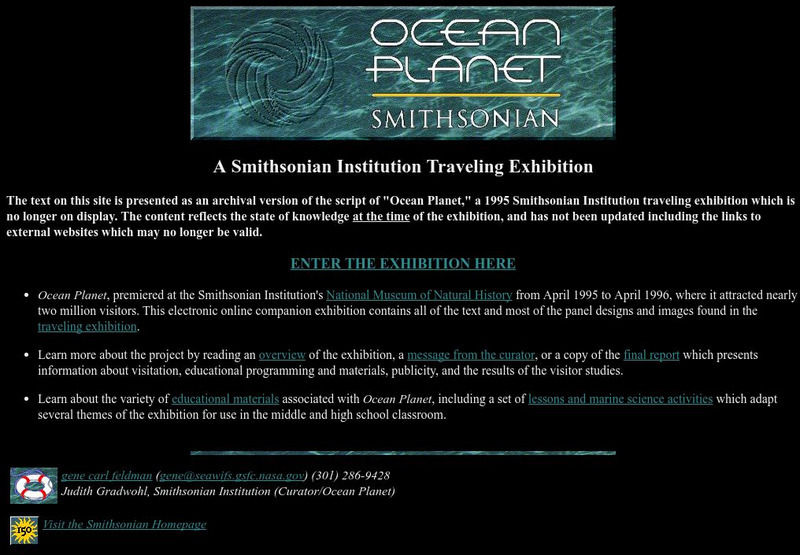
National Museum of Natural History: Ocean Planet
Detailed website that was a companion to a 1995 traveling exhibit of the Smithsonian. Links to lesson plans and other educational materials are at the bottom of the page. Enter the exhibition to explore the world of the ocean.
Tramline
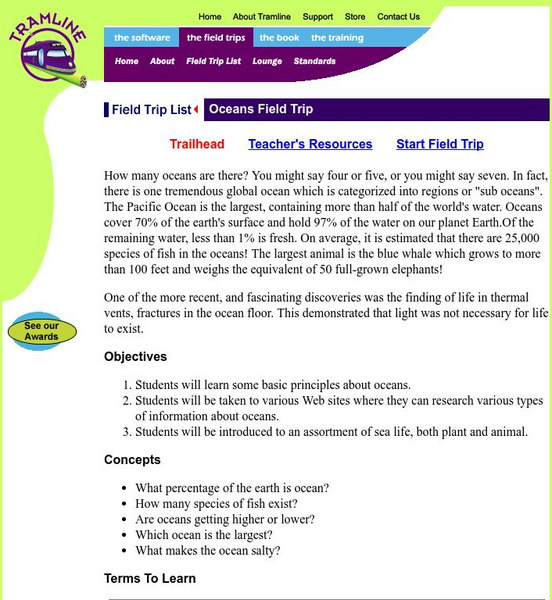
Tramline, Inc.: Virtual Ocean Field Trip
In this enchanting site, students will learn basic principles about oceans and will be introduced to an assortment of sea life, both plant and animal. Other interesting ocean links can be found on the teacher resource section of this link.

Princeton University
Mammals of North America: Dolphins and Porpoises
From the pages of "Mammals of North America," a field guide published by Princeton University Press, this website offers general descriptions of striped, blunt-nosed dolphins and porpoises. Detailed pictures and maps of habitat range are...
CK-12 Foundation
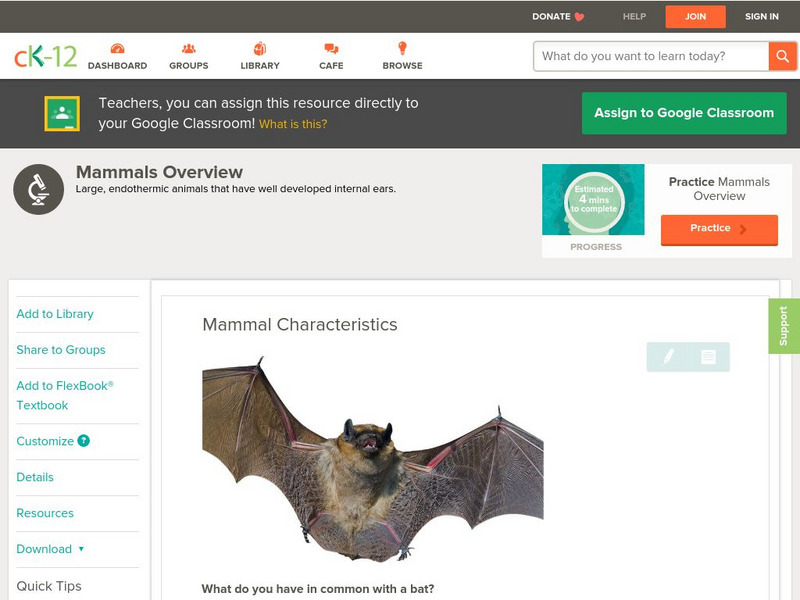
Ck 12: Life Science: Mammal Characteristics
[Free Registration/Login may be required to access all resource tools.] What is a mammal? They walk, run, swim, and fly. They live in the ocean, fly in the sky, walk on the prairies, and run in the savanna. There is a tremendous amount...
Other
Ocean Oasis: Field Guide
Ocean Oasis is a giant-screen film that depicts Mexico's Sea of Cortes and the Baja California desert. This companion site features much of the information the film has, such as beautiful images of animals, water, and land that have...
PBS
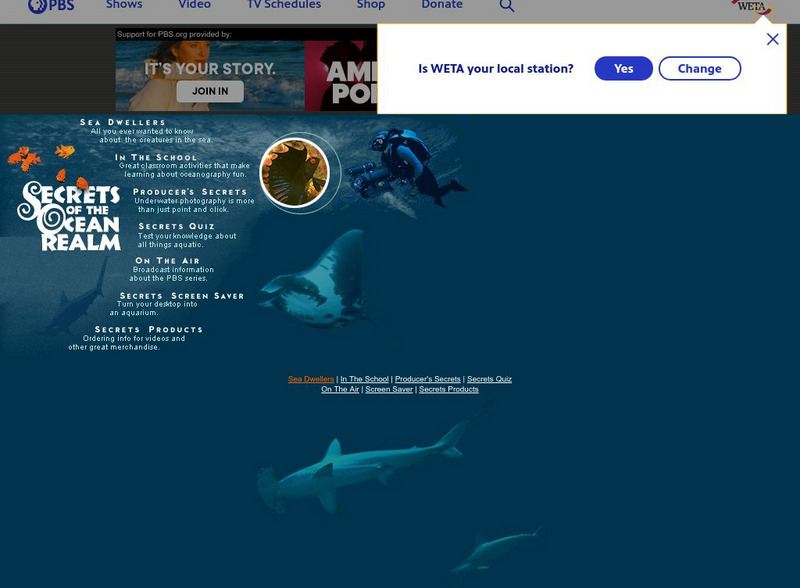
Pbs: Secrets of the Ocean Realm
At this site students can read about sea creatures and ocean plant life, and see pictures of each.
PBS
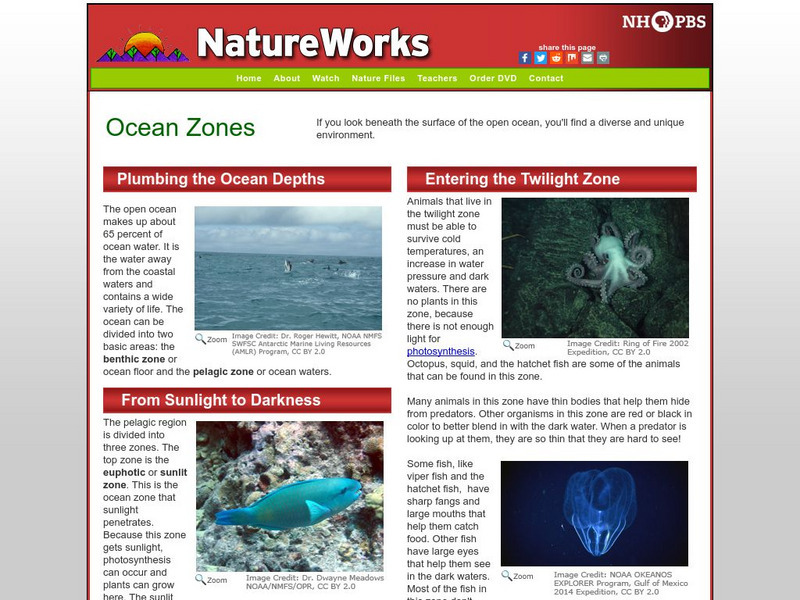
Nh Pbs: Nature Works: Ocean Zones
Discover more about the underocean environment at this site that surveys animals, environmental factors such as light and temperature, currents, animals, plants, and the like.
Science Buddies
Science Buddies: Harbor Porpoise Movement
In this project you can use archived satellite tracking data to learn about activity patterns of harbor porpoises. How far do they travel? Can you find patterns in the routes individual animals take? Can you correlate their route with...
NOAA
Noaa: Ocean Facts on Marine Mammals
The National Oceanic & Atmospheric Administration sponsors this introductory article and related links that tell why marine mammals are valued by the public for their great aesthetic, recreational and economic significance.
Exploring Nature
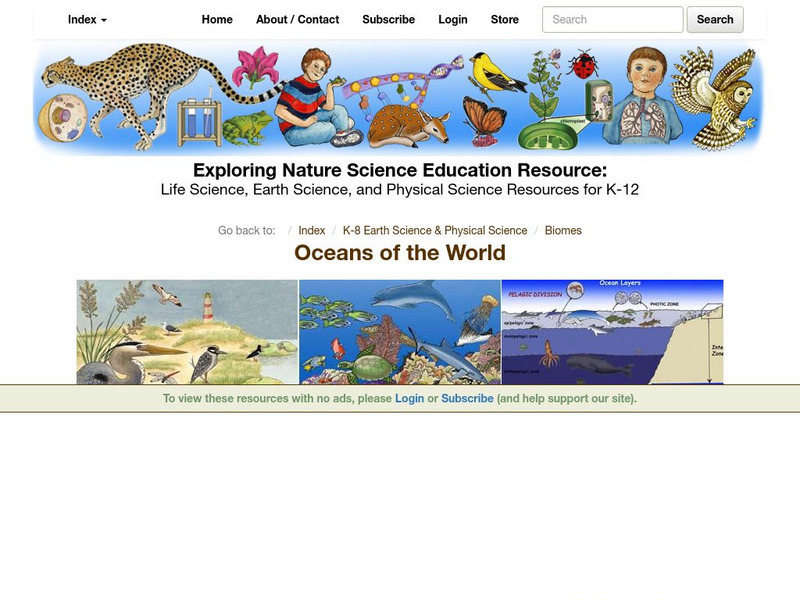
Exploring Nature Educational Resource: Oceans of the World
A set of illustrated fact pages, and some activity sheets, on coral reefs, tidal pools, and ocean ecosystems. Find maps, graphic organizers, and a movie link to tidal zones. Hyperlinks to specialized vocabulary words are also provided....
Science Buddies
Science Buddies: Harmful Algal Blooms in the Chesapeake Bay
Harmful algal blooms occur when algae, which form the base of the ocean food web, grow in massive numbers and produce toxic or harmful effects on people, fish, shellfish, marine mammals, and birds. In this project you will learn how to...
Texas Instruments
Texas Instruments: Jason: Pinniped Body Shape Conserving Warmth
From Shore to Sea: To survive in cold ocean environments an organism's body must be adapted to life under water. A body will cool very quickly when in contact with water. The body shape of an organism is one adaptation that helps to...

Smithsonian Institution
Smithsonian National Zoo
Here is the National Zoological Park right at our fingertips. Students will find many things to explore at this colorful and engaging site. Any study of animals will have a successful start here. Chances are students can catch their...

Ducksters
Ducksters: Dolphins
Kids learn how dolphins eat, sleep, and live together. Bottlenose dolphins and orcas travel the ocean in pods.

Ducksters
Ducksters: Blue Whale for Kids: Learn About the Giant Mammal.
What are blue whales? Kids find out about the largest mammal on earth that lives in the ocean.
Smithsonian Institution
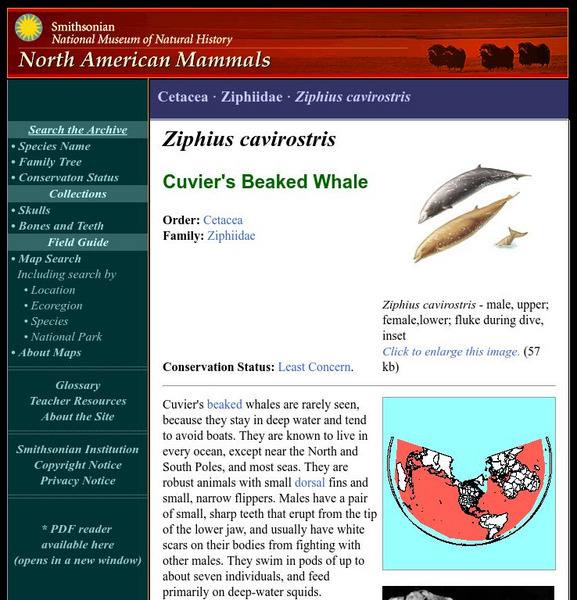
National Museum of Natural History: American Mammals: Cuvier's Beaked Whale
Cuvier's beaked whales are rarely seen because they stay in deep water and tend to avoid boats. They are known to live in every ocean, except near the North and South Poles, and most seas. Learn more about the Ziphius cavirostris, more...

American Museum of Natural History
American Museum of Natural History: Milstein Hall of Ocean Life
Tour the museum's famed exhibition hall dedicated to ocean life at this online recreation. Find videos, maps, species specimens, and images that let you experience many of the museum's resources on ocean life right from your desktop.
Smithsonian Institution
National Museum of Natural History: Ocean Portal: Life at the Poles
The poles of the earth are often grouped together, however, they are very different. This article is a companion to the exhibit at the Smithsonian. You will learn about adaptations that organisms must make and ways that we affect the...
San Diego State University
San Diego State University: Researching Research
This comprehensive unit site from the San Diego State University is geared towards seventh grade math and science students. "Students will chose a research project currently in progress and research it using traditional techniques, the...
Enchanted Learning
Enchanted Learning: Crafts for Kids
Choose from dozens of simple crafts including activities for the holidays, animal crafts and much more.
MarineBio Conservation Society
Marine Bio: Clymene Dolphin
Illustrated reference guide features useful information on the Clymene dolphin with facts on physical characteristics, behavior, range, habitat, diet, and conservation status.
MarineBio Conservation Society
Marine Bio: Fraser's Dolphins
Illustrated reference guide features useful information on Fraser's dolphins with facts on physical characteristics, behavior, range, habitat, diet, and conservation status.
MarineBio Conservation Society
Marine Bio: Heaviside's Dolphins
Illustrated reference guide features useful information on the Heaviside's dolphin with facts on physical characteristics, behavior, range, habitat, diet, and conservation status.
MarineBio Conservation Society
Marine Bio: Hourglass Dolphins
Illustrated reference tool features useful information on the hourglass dolphin with facts on physical characteristics, behavior, range, habitat, diet, and conservation status.