Hi, what do you want to do?






World Wildlife Fund for Nature
Wwf: Our Earth: Ecoregions: Habitats: Oceans
An introduction and overview of the ocean habitat, the largest habitat on Earth. Includes links to information about three animals that live in this habitat.
Read Works
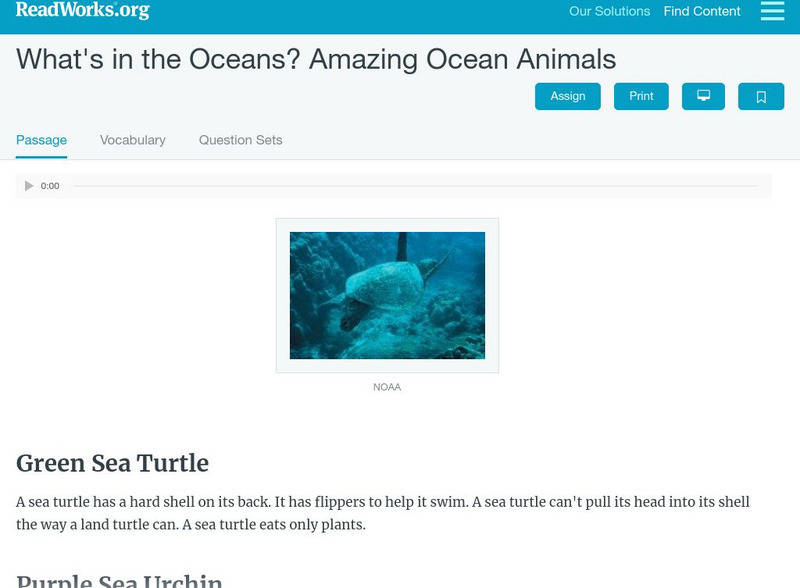
Read Works: What's in the Oceans? Amazing Ocean Animals
[Free Registration/Login Required] An informational text about some of the animals found in the ocean including: sea turtles, sea urchins, starfish, sea horses, and clownfish. A question sheet is available to help students build skills...

Australian Broadcasting Corporation
Australian Broadcasting Corporation: Oceans Alive: Jewels of the Sea
This site contains information on both animals and plants of the sea. View the large sea kelps and discover the animals that feed on the kelp.
A-Z Animals
A Z Animals: Reference: Habitats: Oceans
Learn about the ocean ecosystem, and how its characteristics affect the life within it.
Other
New England Aquarium: Climate Change and the Oceans
A series of videos accompanied by student activity sheets explore the impact of climate change on the ocean and the animals that live in and around it: sea turtles, jellies, whales, shore birds, lobsters, and coral.
Missouri Botanical Garden
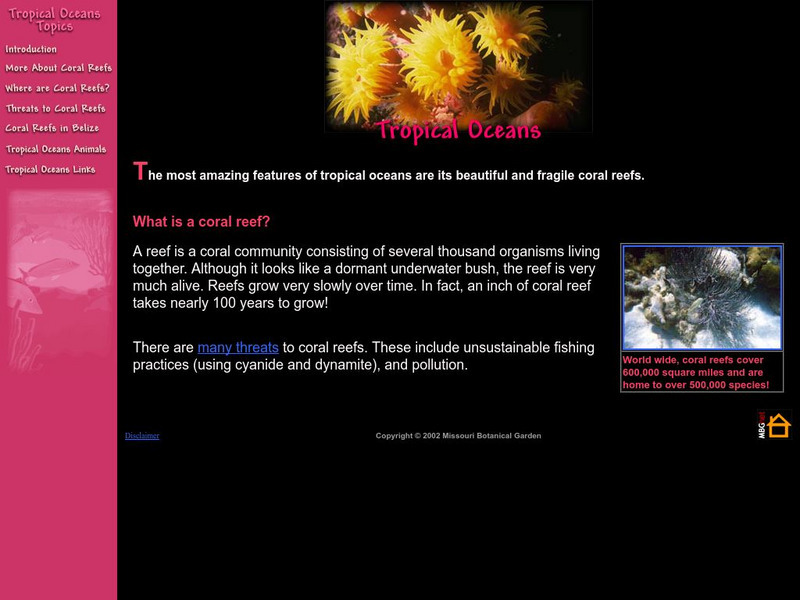
Missouri Botanical Garden: Tropical Oceans: Coral Reefs
An interesting site about coral reefs. It explores where the reefs are found, what the reefs are, animals that live in the reefs, and preservation of the reefs.
Missouri Botanical Garden
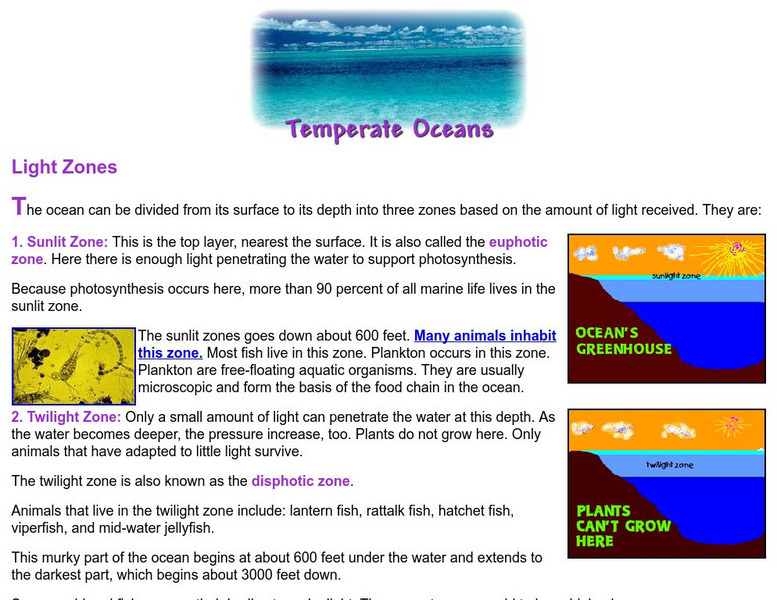
Missouri Botanical Garden: Temperate Oceans Light Zones
Discover the three zones in the ocean which are determined by the amount of light received from the sun. Pictures illustrate the three zones and there is a listing of the animals that live in each zone.
Other
Vocabulary Training Exercises
This site contains multiple vocabulary tests of 100 words each that drill word sets from animals to words of the soul. It also contains grammar quizzes and a personalized test generator.
Other
Ocean Oasis: Field Guide
Ocean Oasis is a giant-screen film that depicts Mexico's Sea of Cortes and the Baja California desert. This companion site features much of the information the film has, such as beautiful images of animals, water, and land that have...

National Geographic
National Geographic: Geostories: Tracking Animal Migrations
This interactive Geostory illustrates how animal tracking data helps us understand how individuals and populations move within local areas and migrate across oceans and continents.
Globio
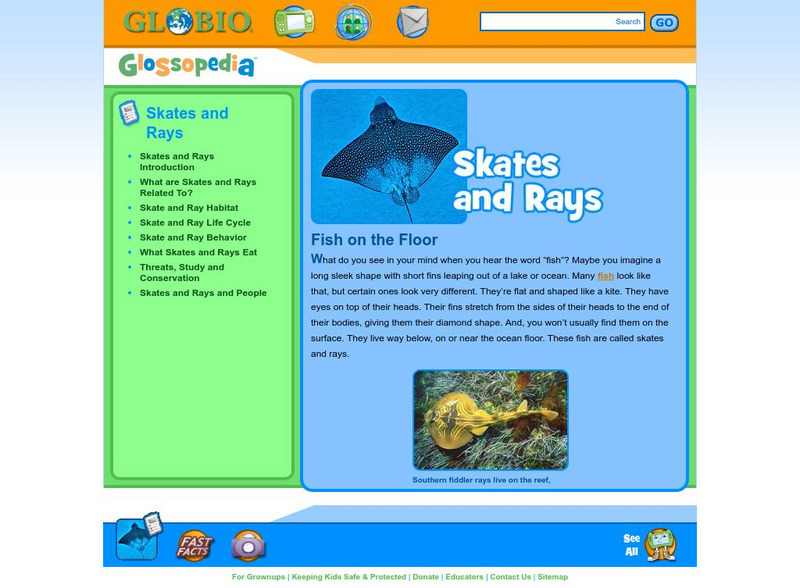
Glossopedia: Skates and Rays
There are more than five hundred different species of skates and rays in our oceans. Scientists say that these fish are closely related to sharks, sharing a common ancestor from around 400 million years ago. This article provides an...
The Wild Classroom
The Wild Classroom: Biomes of the World: Oceanic Pelagic Biome
Learn about the oceanic pelagic ecosystem. Find out about plants, animals, adaptations, and conservation efforts.

ClassFlow
Class Flow: Ecosystems
[Free Registration/Login Required] This flipchart explores the different ecosystems of the world, enhanced by embedded videos showing both the landscape and the plants and animals that can be found there.
Smithsonian Institution
National Museum of Natural History: Ocean Planet
Detailed website that was a companion to a 1995 traveling exhibit of the Smithsonian. Links to lesson plans and other educational materials are at the bottom of the page. Enter the exhibition to explore the world of the ocean.
PBS
Pbs Learning Media: Quest: Water Pollution Investigation
Water pollution is the contamination of water resources by harmful wastes or toxins. This type of pollution can be dangerous to animals and plant populations in and around lakes, rivers, polluted groundwater areas or oceans, and can pose...
NOAA
Noaa: Year of the Ocean, Kids and Teachers Corner
Great resources on a variety of ocean and environmental concerns, endangered plants and animals, climate and habitats, frequently asked questions and fact sheets.
Other
Georgia Perimeter College: The Permian Period
This resource provides basic information of the changes that took place during the Permian period as well as the animals that populated the Earth during this time.
The Franklin Institute
Missouri Botanical Garden: Ocean Facts
Click on all the links to find out many interesting facts about the ocean. Why is the ocean blue? Why is it salty? Where do most of the animals and plants live? Which ocean is the biggest? The deepest? How much of the Earth is covered by...
Wonderville Media
Wonderville: Ocean Habitats
Habitats are places where plants and animals live. There are many different habitats in the oceans of the world. Every plant and animal in the ocean prefers a particular habitat. Learn about Ocean Habitats in this well-constructed...
Science Struck
Science Struck: Understanding the Ocean Ecosystem
Describes the two organisms capable of photosynthesis in an ocean ecosystem, the different ocean zones and the plants and animals that live in them, some facts about the ocean, and the five oceans of the world.
PBS
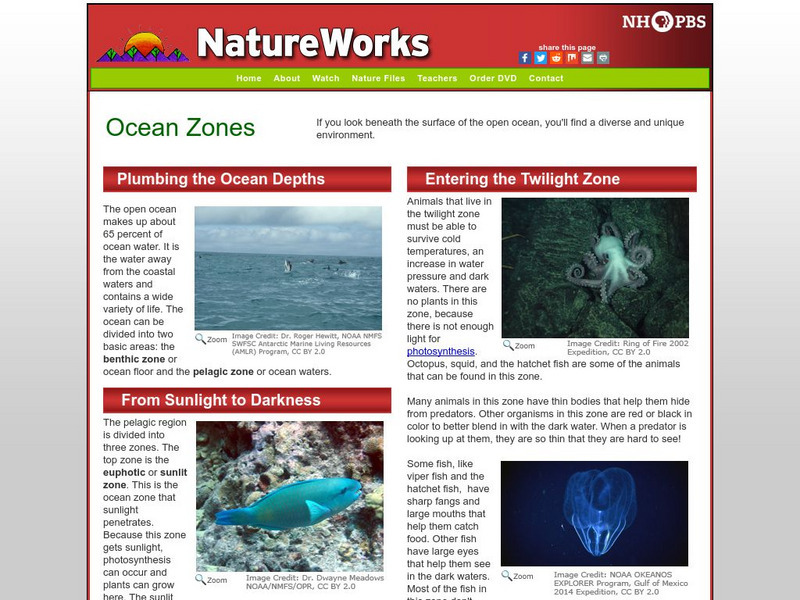
Nh Pbs: Nature Works: Ocean Zones
Discover more about the underocean environment at this site that surveys animals, environmental factors such as light and temperature, currents, animals, plants, and the like.
Science Struck
Science Struck: The Differences Between Benthic and Pelagic Zones
Learn the characteristics of these two oceanic zones and of the plants and animals that live in them.
Science Struck
Science Struck: Facts About the Marine Biome
Describes the characteristics of the marine biome, the plants and animals that live in each of the four ocean zones, coral reefs and estuaries, the climate of the marine biome, and the marine food web.

The Wild Classroom
The Wild Classroom: Biomes of the World: Coastal Ocean Biome
Learn about the coastal ecosystem. Find out about plants, animals, adaptations, and conservation efforts.