Hi, what do you want to do?






PBS
Pbs Learning Media: Energy in a Roller Coaster Ride
This interactive roller coaster ride produced for Teacher's Domain illustrates the relationship between potential and kinetic energy. As the coaster cars go up and down the hills and around the loop of the track, a pie chart shows...
Science Buddies
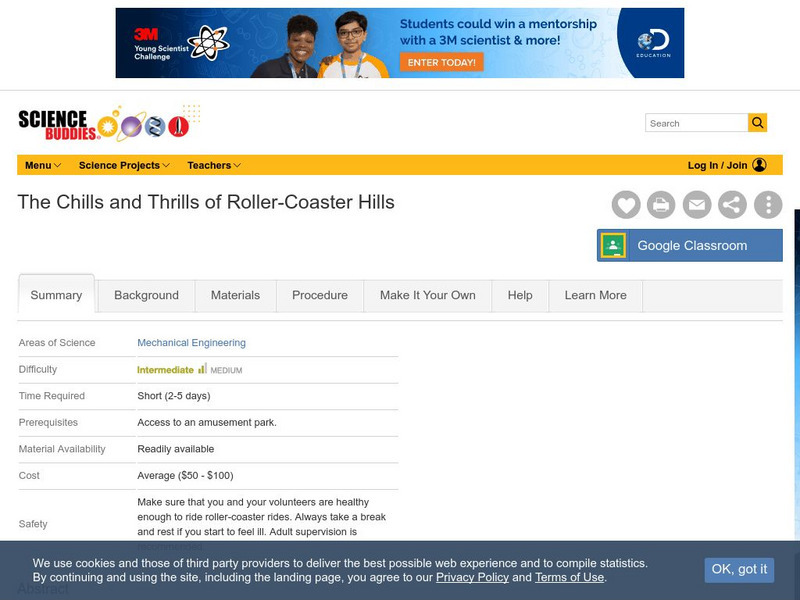
Science Buddies: The Chills and Thrills of Roller Coaster Hills
Lots of people enjoy roller coasters, but not many understand why they feel the strange excitement they do when riding them. In this science fair project, you will build and use an accelerometer to figure out and measure gravity-induced...
PBS
Pbs Learning Media: Centripetal Force: Roller Coaster Loops
This video segment explains centripetal force and illustrates how roller coasters rely on it to give you a thrilling ride. Includes background reading material and discussion questions. [4:40]
Physics Classroom
The Physics Classroom: Circular, Satellite, Rotational: Roller Coaster G Forces
Roller coaster rides are notorious for creating accelerations and g-forces. The magnitude and direction of normal force and gravity during the motion through a coaster's loop are depicted this animation.
Annenberg Foundation
Annenberg Learner: Amusement Park Physics: Roller Coaster
Learn about Newton's Laws of Physics, g-force, the causes of motion sickness, and more by reading about different rides at an amusement park.
Other
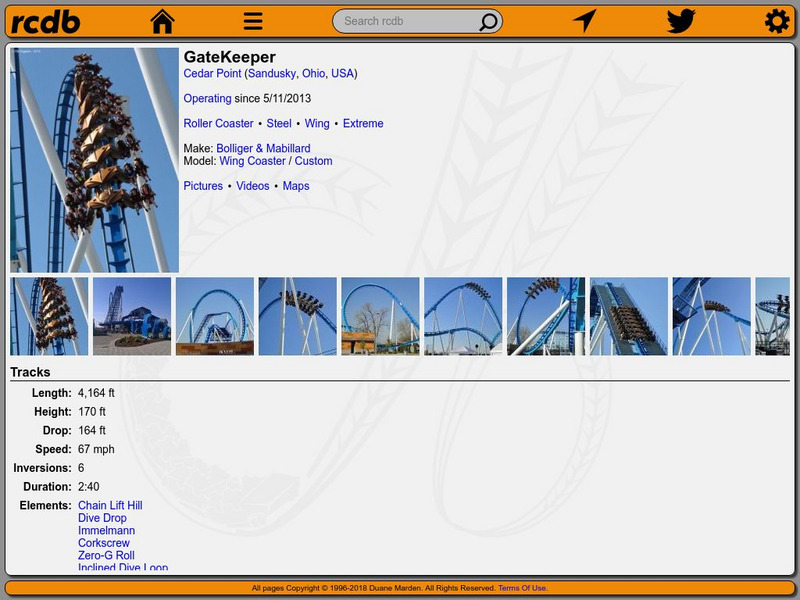
Roller Coaster Database: Cedar Point: Gatekeeper Roller Coaster
Learn the facts about the Gatekeeper roller coaster in Sandusky, Ohio. Includes information on the speed, height and materials used to create this popular ride.
Wikimedia
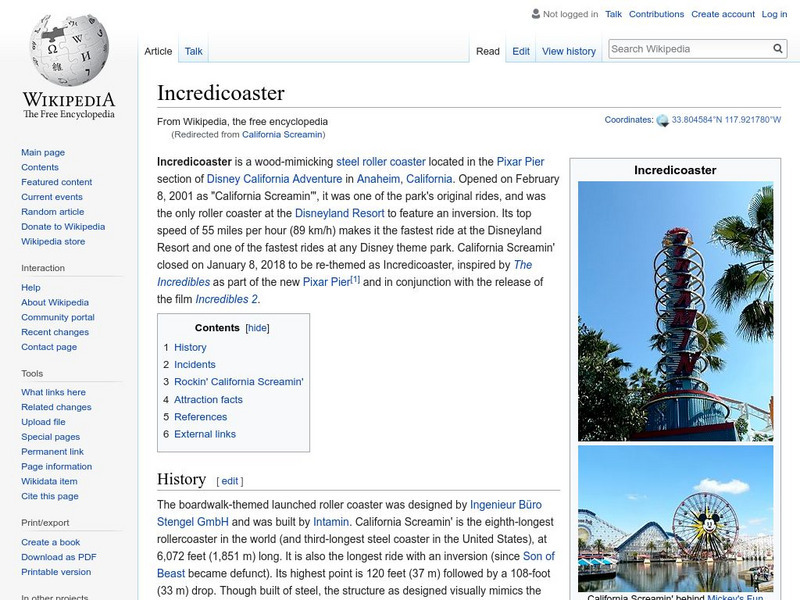
Wikipedia: California Screamin' Roller Coaster
This popular Disney roller coaster is made out of steel. Learn more facts about this popular amusement park ride, the fastest at any Disney theme park.

TED Talks
Ted: Ted Ed: How Roller Coasters Affect Your Body
Brian D. Avery investigates what roller coasters are doing to your body and how they've managed to get scarier and safer at the same time.
Read Works
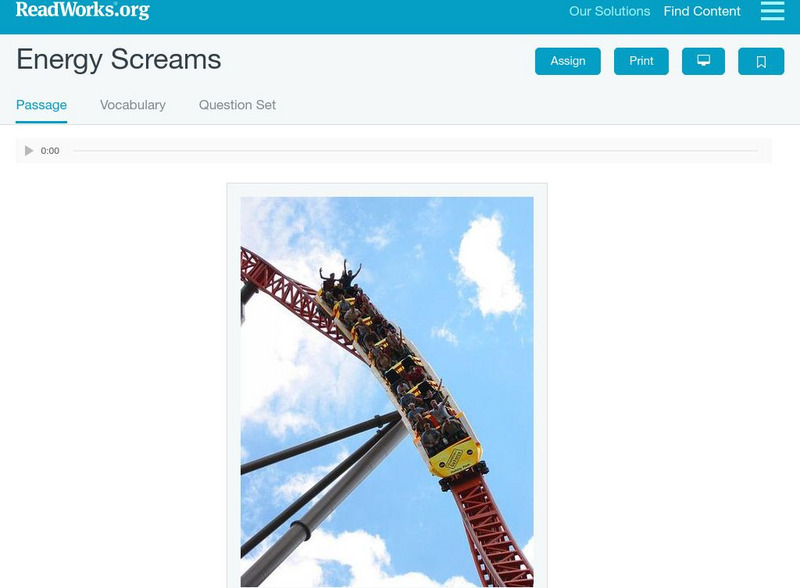
Read Works: Energy Screams
[Free Registration/Login Required] An informational text about potential and kinetic energy on a roller coaster.. A question sheet is available to help students build skills in reading comprehension.
Science Buddies
Science Buddies: Fear Factor: Using Pulse Rate to Measure Emotion
Do you remember a situation when you heart pounded, your breath rate shot up, and your palms got cold and clammy? Fear does that to us. Here's a science project based on roller coaster rides to see if heart rate is an accurate...
Other
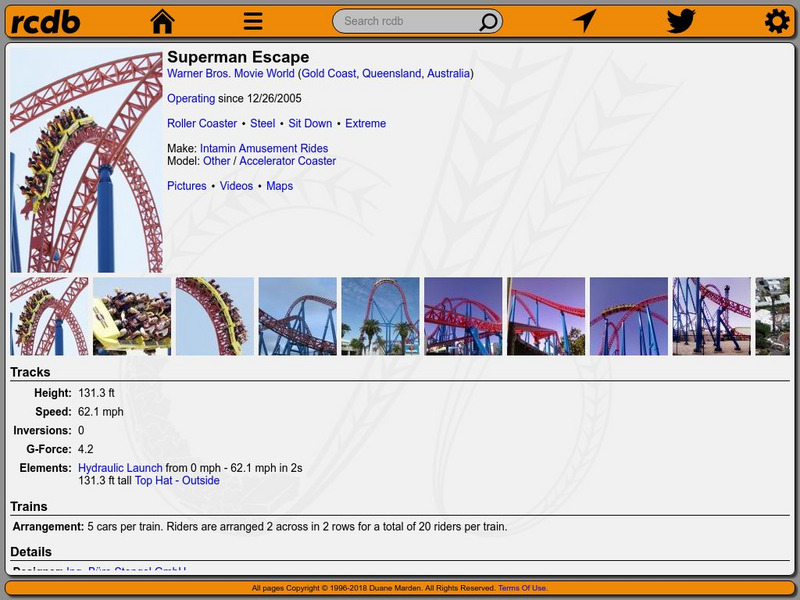
Roller Coaster Database: Superman Escape Roller Coaster
Find out when this amazing ride was built, how high it climbs and how fast it soars.
Science Buddies
Science Buddies: Converting Potential Energy to Kinetic Energy
If you'd like to investigate the physics of amusement park rides, then this project is for you. You'll build a roller coaster track for marbles using foam pipe insulation and masking tape, and see how much the marble's potential energy...
Other
The Coaster Guy: Six Flags: The Viper
Learn facts about this popular Six Flags roller coaster. Also includes a collection of images.

Annenberg Foundation
Annenberg Learner: Amusement Park Physics: The Principles of Free Fall
An article describing free fall principles in roller coaster rides. In addition to the explanation of free fall, an experiment is described that allows you to test free fall with a cup of water. Part of a larger presentation on roller...
TeachEngineering
Teach Engineering: Amusement Park Ride: Ups and Downs in Design
This unit has students design and build foam tubing roller coasters. The design process integrates energy concepts as they test and evaluate their designs that address the task as an engineer would. The goal is for students to understand...

Unite for Literacy
Unite for Literacy: Technology: Hold On!
A book about riding a rollercoaster. Book includes audio narration in nine additional languages with text in English.
Curated OER
May the Force Be With You
Students explore the science behind thrill rides, including the physics of a roller coaster, human emotions, and physiological effects on the body. A related article is accessible through free registration.