Hi, what do you want to do?





E-learning for Kids
E Learning for Kids: Science: Antarctica: What Is Position and Reference Point?
With all the snow and ice in Antarctica, it's easy to get lost. Help Tim find his way using a map and a compass.
E-learning for Kids
E Learning for Kids: Science: Antarctica: How Can We Hear Sounds?
James lives on Antarctica and loves the unique sounds he hears there. He is curious to know how it is possible that we hear sounds. Join him to help figure this out.
E-learning for Kids
E Learning for Kids: Science: Antarctica: How Are Sounds Useful to Us?
Paul is a researcher on Antarctica. The topic of his research is sounds. Identify which objects make sounds, and learn to recognize different sounds.
Other
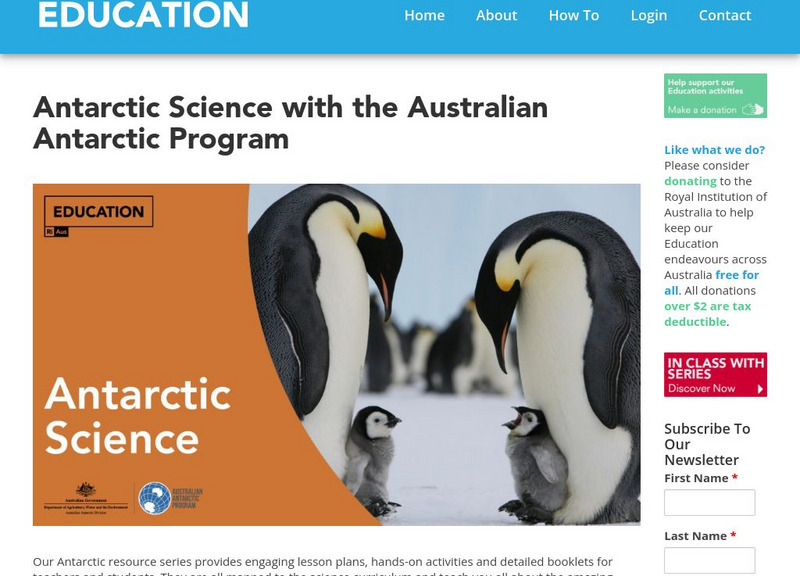
Commonwealth of Antarctica: Classroom Antarctica
The focus of this site is Antarctica. Designed for fifth- through eighth-grade students, this site contains detailed lesson plans, learning activities, digital images, and links to related resources.

CommonLit
Common Lit: What Is Antarctica?
CommonLit.org is a wonderful resource to use in a Language Arts classroom. Each story or article is accompanied by guided reading questions, assessment questions, and discussion questions. In addition, students can click on words to see...
E-learning for Kids
E Learning for Kids: Science: Antarctica Research Center: Describe Different Weather Patterns
This module provides informational text about weather. Students will learn about precipitation and storm fronts. Students will also learn about different types of storms, including the following: hurricanes, cyclones, and typhoons.
E-learning for Kids
E Learning for Kids: Science: Antarctica/ What Are the Different Parts of the Universe?
In this lesson, students learn about objects in the universe, including constellations, planets, meteors, asteroids, and comets.
E-learning for Kids
E Learning for Kids: Science: Antarctica: Describe the Life Cycle of Stars
Discover the stars with Peter. At his mom's research center, help Peter learn constellations and learn about characteristics of stars.
E-learning for Kids
E Learning for Kids: Science: Antarctica: What Is Distance?
Help curious Matt find out everything there is to know about determining distances.
E-learning for Kids
E Learning for Kids: Science: Antarctica: Penguins: What Is Motion?
What do you know about Emperor penguins? Ernie is researching them and their migration across the continent.
E-learning for Kids
E Learning for Kids: Science: Antarctica: Which Types of Sounds Do You Know?
For this lesson, students learn about the five senses, identify objects that make sound, and take a fun fact quiz at the end.
E-learning for Kids
E Learning for Kids: Science: Antarctica: When Were Cells First Discovered?
Students learn about the parts of a cell and how they were first discovered. Includes a fun fact quiz at the end.
E-learning for Kids
E Learning for Kids: Science: Antarctica Research Center: What Do Cells Do?
For this lesson, students learn about the specialization of cells to perform different functions, and how they are organized into tissues and organs in the human body.
E-learning for Kids
E Learning for Kids: Science: Antarctica: How Are Living Things Described?
Learn about the different levels of organization in living things, from cells to organisms.
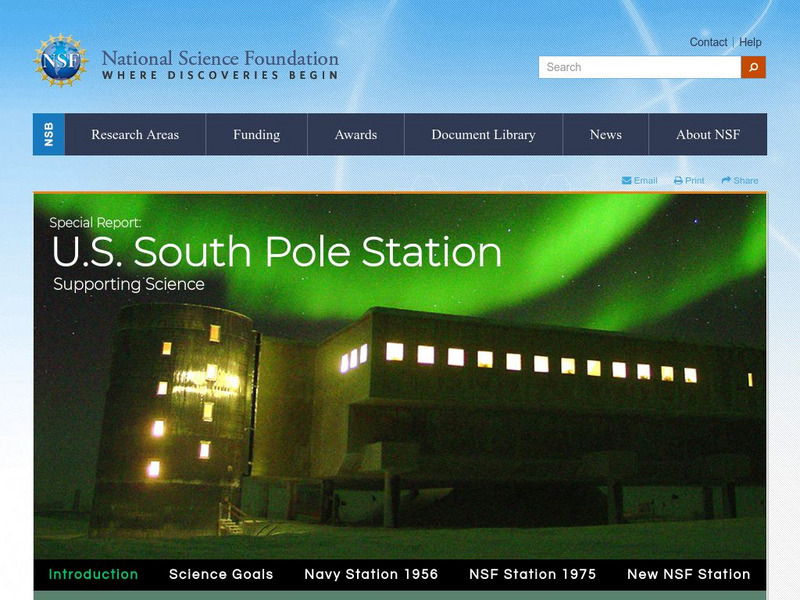
National Science Foundation
National Science Foundation: u.s. South Pole Station
The resource explores the National Science Foundation's Amundsen-Scott South Pole Station. The interactive activity consists of a video tour, illustrations, related resources, and a webcam.
E-learning for Kids
E Learning for Kids: Science: Nova Zembla: Why Do We Need Plants?
This module explores how plants help animals survive. Bobby is a scientist on Antarctica. He discovers many amazing uses of plants. Join him and help him learn.
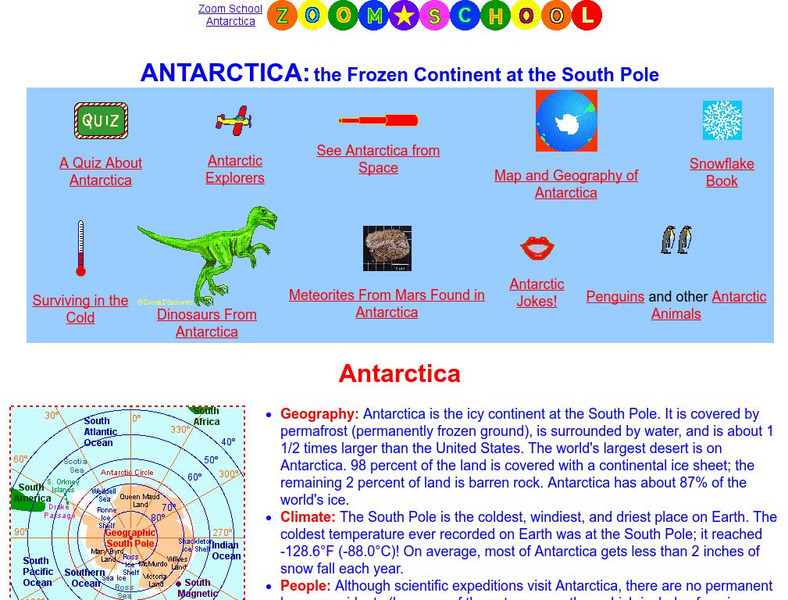
Enchanted Learning
Enchanted Learning: Zoom School: Antarctica
Learn some amazing facts about the coolest place on Earth, Antarctica. Explore a map and geography, science, animals, explorers, jokes, and more. Also contains a quiz to take.
Society for Science and the Public
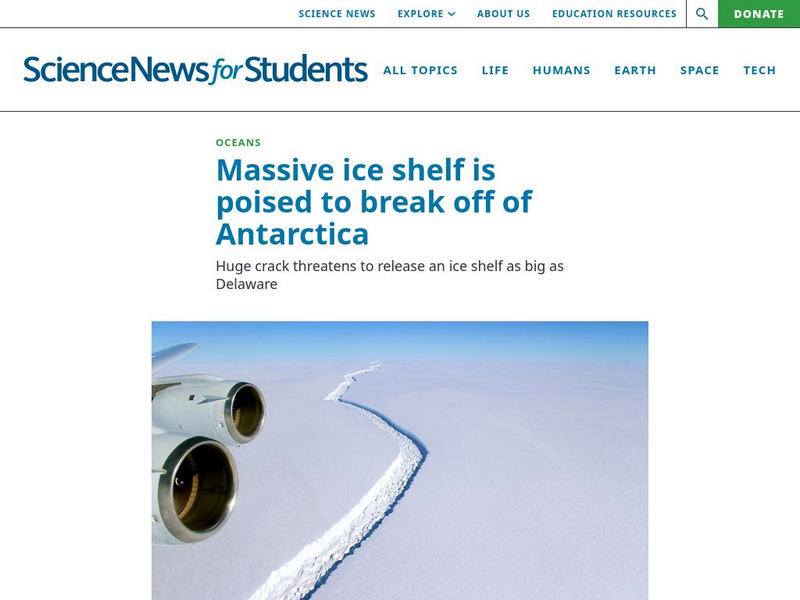
Science News for Students: Massive Ice Shelf Is Poised to Break Off of Antarctica
Uh oh! A fast-growing crack in Antarctica's Larsen C ice shelf could soon release a truly huge hunk of ice into the ocean.
Society for Science and the Public
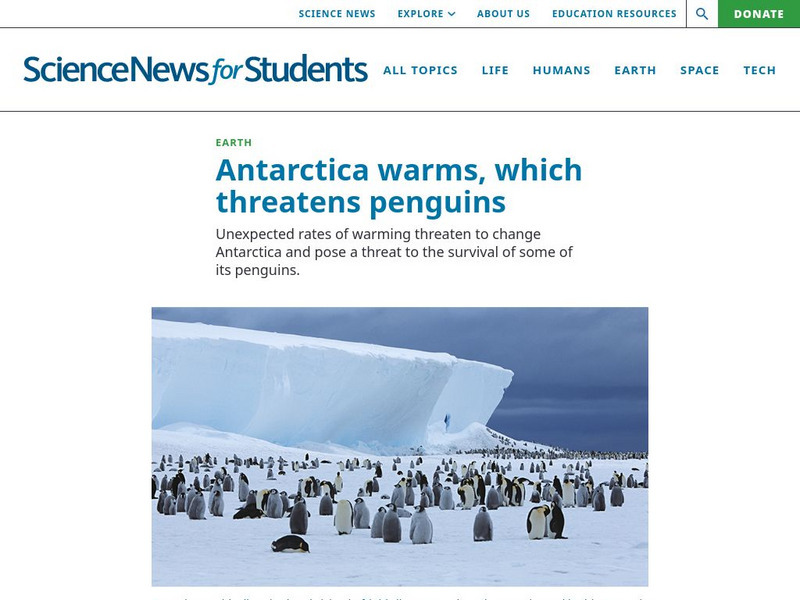
Science News for Students: Antarctica Warms, Which Threatens Penguins
Describes the threat of climate change in the Antarctica to emperor penguins by affecting the ice sheets where penguin breeding grounds are located.
Ohio State University
Echoes in the Ice: Exploration and Science in Antarctica
A website about Richard E. Byrd, Dr. Frederick A. Cook, and Sir Hubert Wilkins and Antarctica exploration.

Exploratorium
Exploratorium: Museum of Science, Art and Perception
This museum provides numerous online exhibits about everything from the science of sports to the Hubble Telescope. Each exhibit includes learning ideas, fun activities, articles, and learning games.

Penguin Science
Penguin Science: Penguins Marching Into the Classroom
Follow Adelie Penguin families as they raise their chicks. Daily pictures (November through January) from the penguin colony on Ross Island, Antarctica. are posted with data for students to keep a field journal. Inquiry classroom...
Other
The Antarctic Sun: News About Antarctica
Latest headline scientific news of theworkbeing done in the Antarctic, and stories of the peopleliving there.
Science Struck
Science Struck: Complete List of Ice Shelves in Antarctica
Explains what ice shelves are and provides a list with descriptions of the ice shelves in Antarctica.