Hi, what do you want to do?






EngageNY
TASC Transition Curriculum: Workshop 12
How can opinions slant facts? Workshop participants learn how to examine primary and secondary sources and identify the author's point of view. They also examine how visual art impacts the meaning and rhetoric of sources. Full of...

William & Mary
Inferential Reading Comprehension Considerations Packet
Don't forget to read between the lines! Educators learn tips and activities to help scholars learn to infer to increase reading comprehension. Activities suggested include think alouds, backwards words, and who's who. the packet includes...

New York State Education Department
TASC Transition Curriculum: Workshop 4
Why is it important to use precise language? Participants explore this question in the fourth activity in a series of 15 on effective instruction. Perfect for all content areas, the activity promotes appropriate language choice through...
ReadWriteThink
Read Write Think: The Day Jimmy's Boa Taught Cause and Effect
Contains plans for five lessons that teach about cause and effect relationships using Trinka Hakes Noble's books about Jimmy and his boa constrictor. In addition to objectives and standards, this instructional plan contains links to...
TES Global
Blendspace: Cause and Effect
This eleven-part Blendspace is designed to be used while teaching students how to analyze cause and effect. Links include reference sheets, a SMART Notebook Lesson, posters, practice worksheets, and guided practice opportunities.
University of South Florida
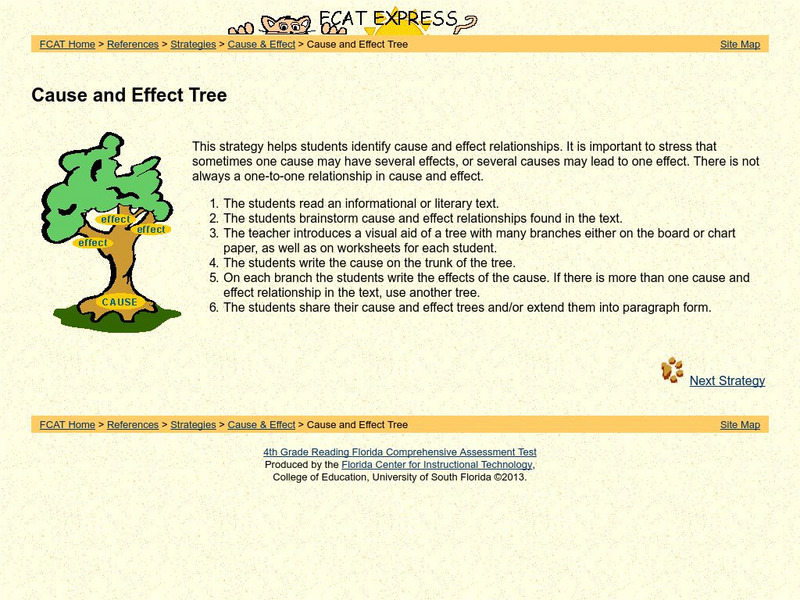
Fcat Express: Cause & Effect Tree
Strategy to help learners recognize cause and effect relationships provided by a standardized test preparation site intended for fourth grade. Includes simple instructions and a visual.
Read Works
Read Works: Grade 2: Three Lesson Unit: Cause and Effect
[Free Registration/Login Required] A series of three lesson plans designed to teach students to identify effects, causes, and the relationship between them. Lessons are based on the books Chrysanthemum by Kevin Henkes, Why Do You Cry?:...
![Fcat Express: Teaching Strategies (Reading) [Pdf] Study Guide](https://statictemp.lp.lexp.cloud/images/attachment_defaults/resource/large/FPO-knovation.png "Fcat Express: Teaching Strategies (Reading) [Pdf] Study Guide")
University of South Florida
Fcat Express: Teaching Strategies (Reading) [Pdf]
Printable, fifty-five page PDF file of a staff development manual containing strategies for teaching reading. Includes chapters on vocabulary, main ideas and supporting details, author's purpose, chronological order, plot and conflict...
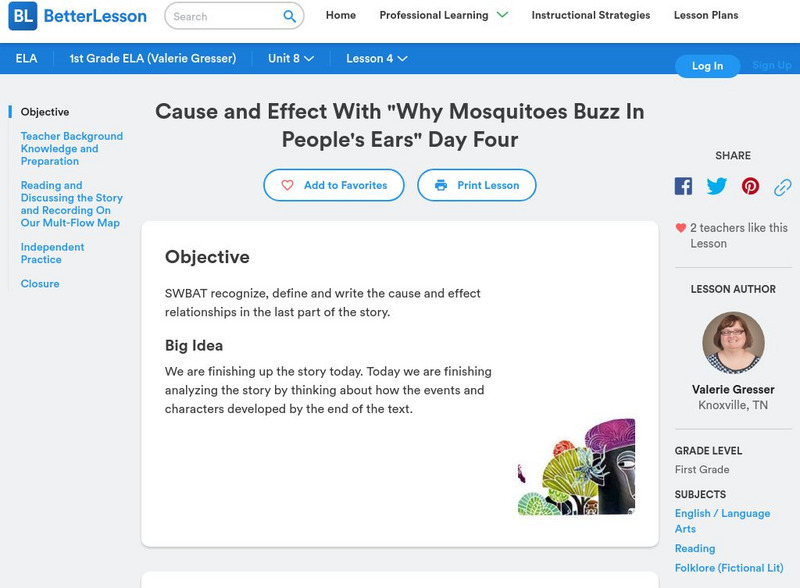
Better Lesson
Better Lesson: Cause & Effect With "Why Mosquitoes Buzz in People's Ears" Day 4
We are finishing up the story today. Today we are finishing analyzing the story by thinking about how the events and characters developed by the end of the text.
![Scholastic: So That's the Reason! [Pdf] Unknown Type](https://content.lessonplanet.com/knovation/original/32238-436f863b7c91b994bd9fe2e7c4a03769.jpg?1661264711 "Scholastic: So That's the Reason! [Pdf] Unknown Type")
Scholastic
Scholastic: So That's the Reason! [Pdf]
Simple, one-page printable worksheet to introduce your students to cause and effect. Gives one set example, and has space at the bottom to apply to any story you read.
Scholastic
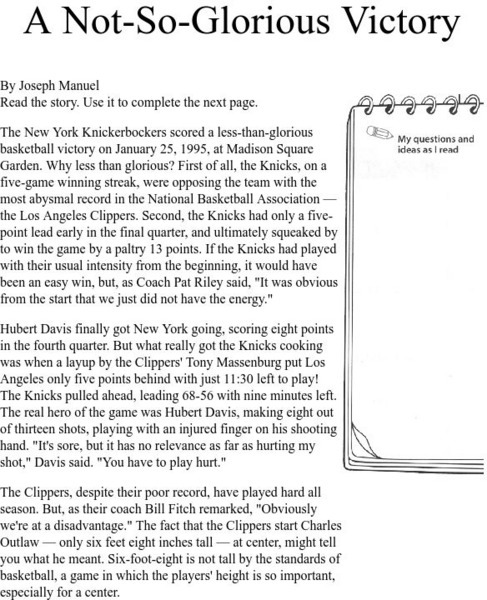
Scholastic: A Not So Glorious Victory
After reading "A Not-So-Glorious," Victory, which is included on this page, have your students practice identifying cause and effect using the printable worksheet.

ClassFlow
Class Flow: Herbie and Annabelle
[Free Registration/Login Required] This flipchart teaches the comprehension skill of cause and effect has web links to practice cause and effect, uses a word web to build background knowledge before reading the selection story and it...
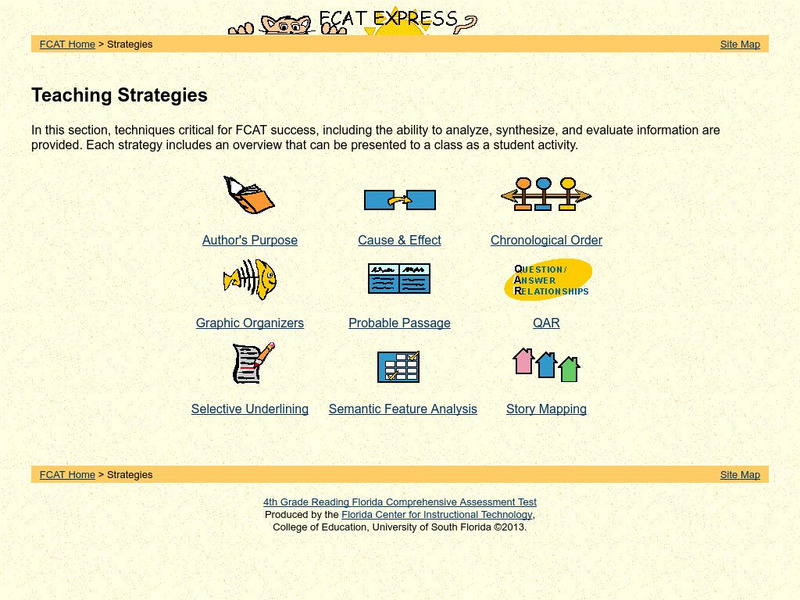
University of South Florida
Fcat Reading Grade 4: Teaching Strategies
This is a great resource that concentrates strategies and student activities in one place in an easy to use format, and can be navigated easily. Find great examples of probable passage, selective underlining, and semantic feature...
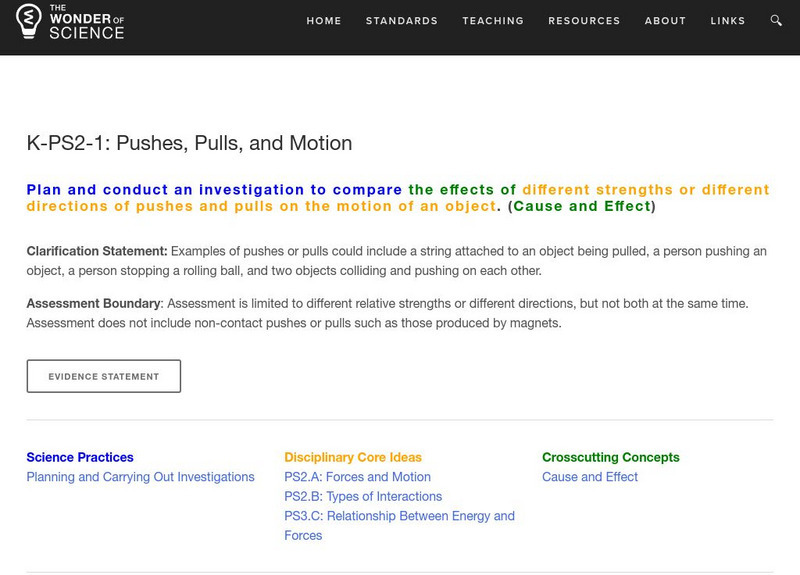
The Wonder of Science
The Wonder of Science: K Ps2 1: Pushes, Pulls, and Motion
Teaching students about pushes, pulls, and motion? Use this site to plan lessons for students to conduct investigations to compare the effects on the motion of an object when pushes or pulls come from different directions or strengths.
TeachEngineering
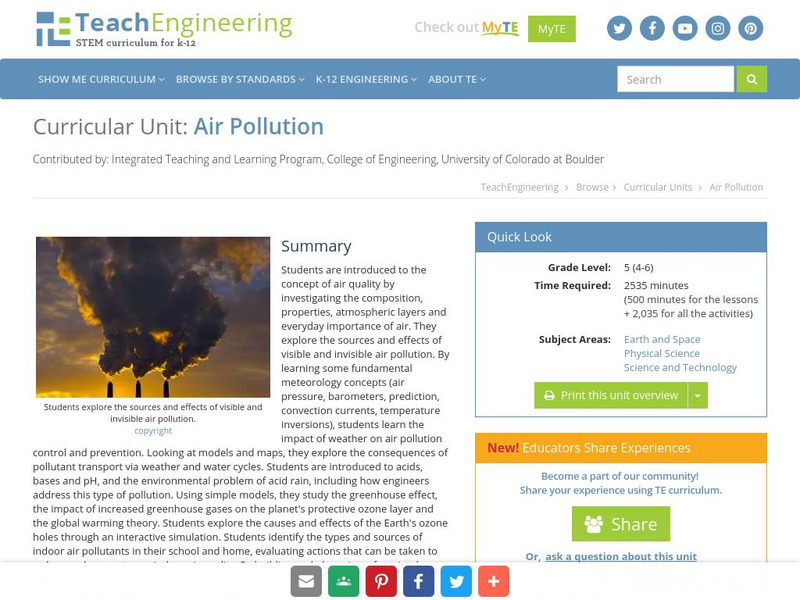
Teach Engineering: Air Pollution
Students are introduced to the concept of air quality by investigating the composition, properties, atmospheric layers and everyday importance of air. They explore the sources and effects of visible and invisible air pollution. By...

TeachEngineering
Teach Engineering: Environment
Through 10 lessons and more than 20 hands-on activities, students are introduced to the concept of an environment and the many interactions within it. As they learn about natural and human-made environments, as well as renewable and...
Daily Teaching Tools
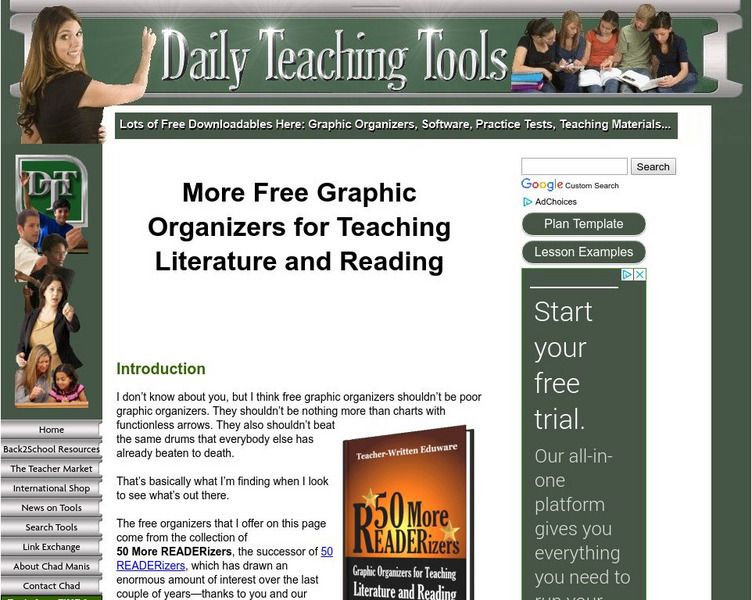
Daily Teaching Tools:more Graphic Organizers for Teaching Literature and Reading
This Daily Teaching Tools collection provides graphic organizers for teaching reading and literature. Elaborate graphic organizers are provided for the following: story maps, character study charts, making text connection maps, conflict...

Scholastic
Scholastic: Investigating Nonfiction Part 3: Independent and Guided Reading
This article provides tips for using nonfiction with guided reading and independent reading. The following strategies are shared: ways to help kids select "just right" nonfiction books; lessons to use with nonfiction in guided reading...

Daily Teaching Tools
Daily Teaching Tools: Test 9: Ben's Harmonica
This Daily Teaching Tools resource provides a reading assessment passage. This passage contains a brief biography about Ben Franklin and a few of his inventions.
TeachEngineering
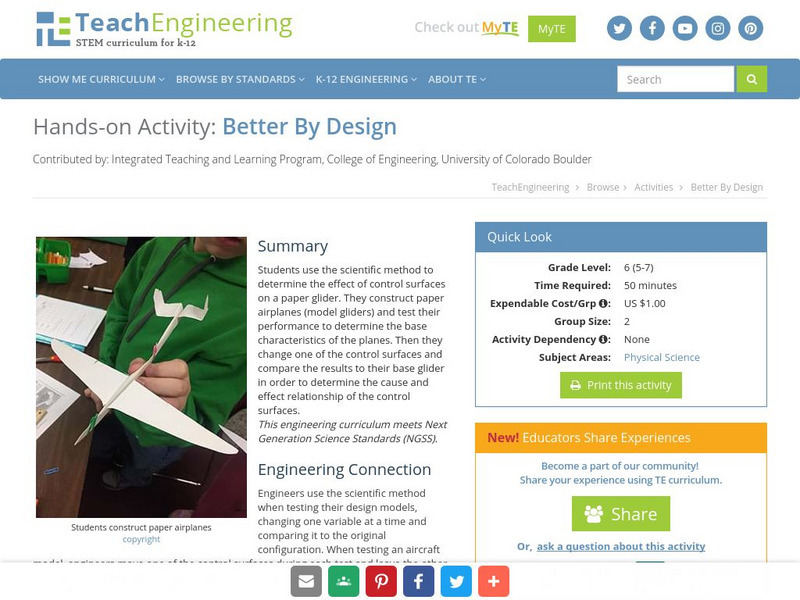
Teach Engineering: Better by Design
The purpose of this activity is to use a scientific method to determine the effect of control surfaces on a paper glider. The students will construct a paper airplane/glider and test its performance to determine the base characteristics...
TeachEngineering
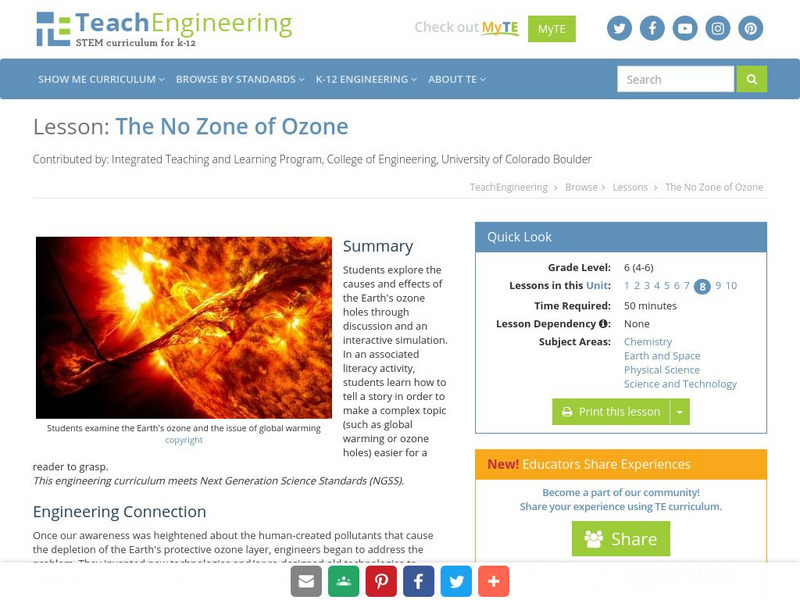
Teach Engineering: The No Zone of Ozone
Young scholars explore the causes and effects of the Earth's ozone holes through discussion and an interactive simulation. In an associated literacy activity, students learn how to tell a story in order to make a complex topic (such as...
TeachEngineering
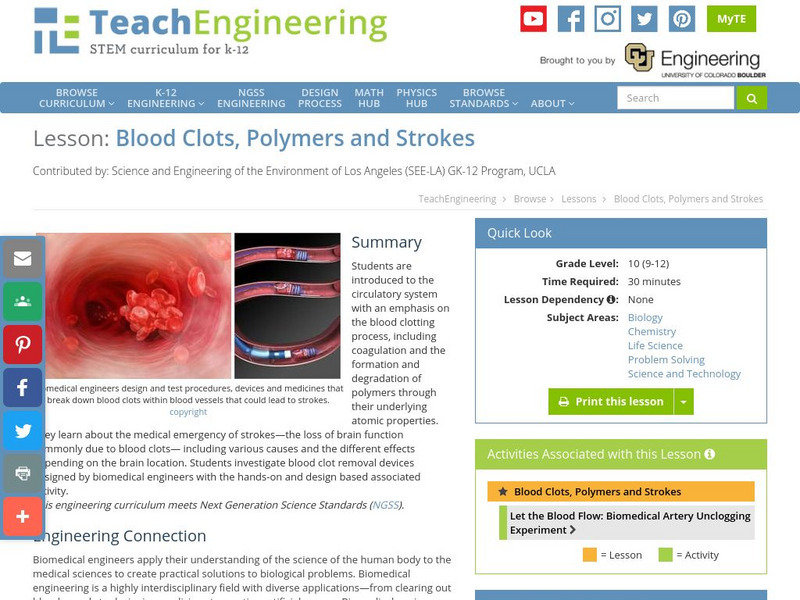
Teach Engineering: Blood Clots, Polymers and Strokes
Students are introduced to the circulatory system with an emphasis on the blood clotting process, including coagulation and the formation and degradation of polymers through their underlying atomic properties. They learn about the...

ReadWriteThink
Read Write Think: Sequence of Events Chart
A printable graphic organizer to help students sequence events and recognize cause and effect relationships within a story. Directions on how to use this graphic organizer as well as lists of teaching ideas and related resources are also...
Other
Nclr: The Essentials of Teaching Reading
Find out what the essentials are for teaching reading. This site provides vital information for teachers in developing the most successful reading program for their students.