Hi, what do you want to do?






Science Struck
Science Struck: Facts About the Aphotic (Midnight) Zone of the Ocean
The aphotic zone of the ocean receives less than one percent of sunlight penetration. It extends from between 200 to 1,000 m, or 660 to 3,300 ft, down to the seafloor. Learn about the characteristics of this zone and the adaptations the...
BBC
Bbc Future: Journey to the Centre of the Earth
Explore deep underground and deep in the ocean to discover what lies beneath the surface. Don't stop until the final destination: the core of the Earth.
Smithsonian Institution
National Museum of Natural History: Ocean Planet
Detailed website that was a companion to a 1995 traveling exhibit of the Smithsonian. Links to lesson plans and other educational materials are at the bottom of the page. Enter the exhibition to explore the world of the ocean.
CK-12 Foundation
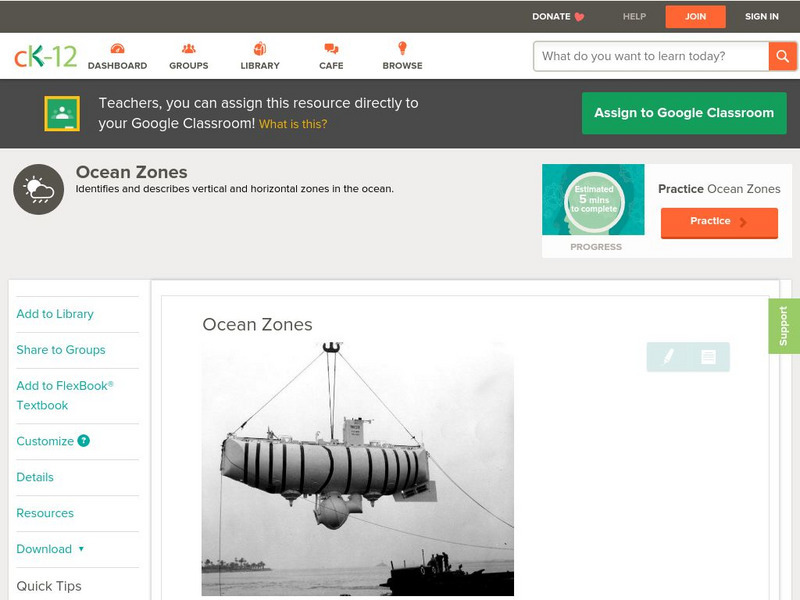
Ck 12: Earth Science: Ocean Zones
[Free Registration/Login may be required to access all resource tools.] Describes the different zones of the ocean.
CK-12 Foundation
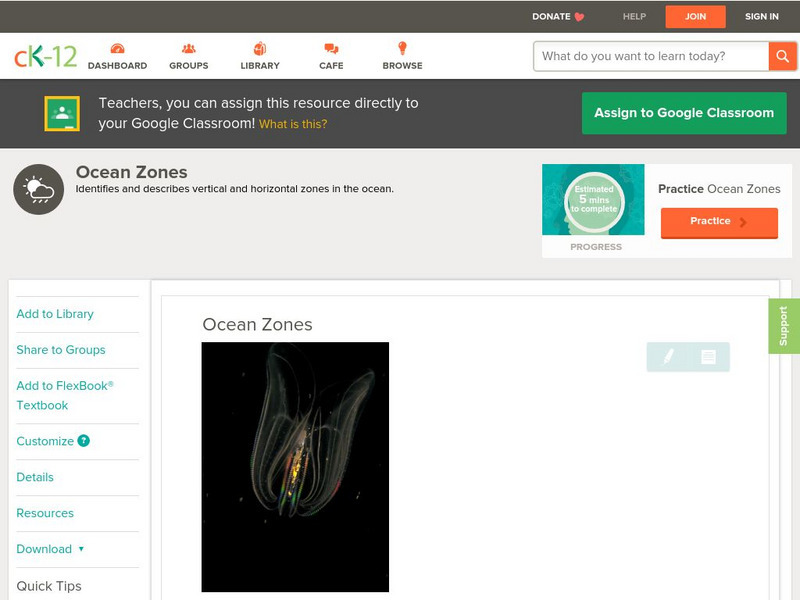
Ck 12: Earth Science: Ocean Zones
[Free Registration/Login may be required to access all resource tools.] Describes the different zones of the ocean.
Boise State University
Boise State University: Ocean Exploration: Abyssopelagic (Abyssal) Zone
Learn about the very cold, dark region of the ocean known as the abyss. Includes information on the origin of the name of this ocean zone, as well as information on its depth and animal life.
The Wild Classroom
The Wild Classroom: Biomes of the World: Oceanic Pelagic Biome
Learn about the oceanic pelagic ecosystem. Find out about plants, animals, adaptations, and conservation efforts.
Science Struck
Science Struck: Understanding the Ocean Ecosystem
Describes the two organisms capable of photosynthesis in an ocean ecosystem, the different ocean zones and the plants and animals that live in them, some facts about the ocean, and the five oceans of the world.
The Wild Classroom
The Wild Classroom: Biomes of the World: The Deep Sea Biome
Learn all about the abyssal ocean ecosystem. Find out about plants, animals, adaptations, and conservation efforts.
Science Education Resource Center at Carleton College
Serc: Light at the Bottom of the Deep, Dark Ocean?
What types of adaptations enable deep-sea fishes to survive and collect food in the darkness of the deep ocean? Interactive, hands-on lesson plan takes students on an exploration of deepwater adaptations by searching for Skittles in a...
Other
Moorland School: Earth Science Zone: The Structure of the Earth
Take a look at the Earth from the inside out. This site shows the different layers of the earth with an explanation of the rocks and materials in each layer. Includes a quiz on the structure of Earth.
Encyclopedia of Earth
Encyclopedia of Earth: Abyssal Zone
This in-depth resource discusses the abyssal zone of the ocean. Includes a diagram and many facts about this zone.

Alabama Learning Exchange
Alex: Diverse Life Forms of the Ocean
This lesson allows learners to view and draw conclusions on the importance of life in the ocean. It uses student created movies to explore what is going on, as well as identifying the zones and diverse life associated with the oceans....
Exploring Nature
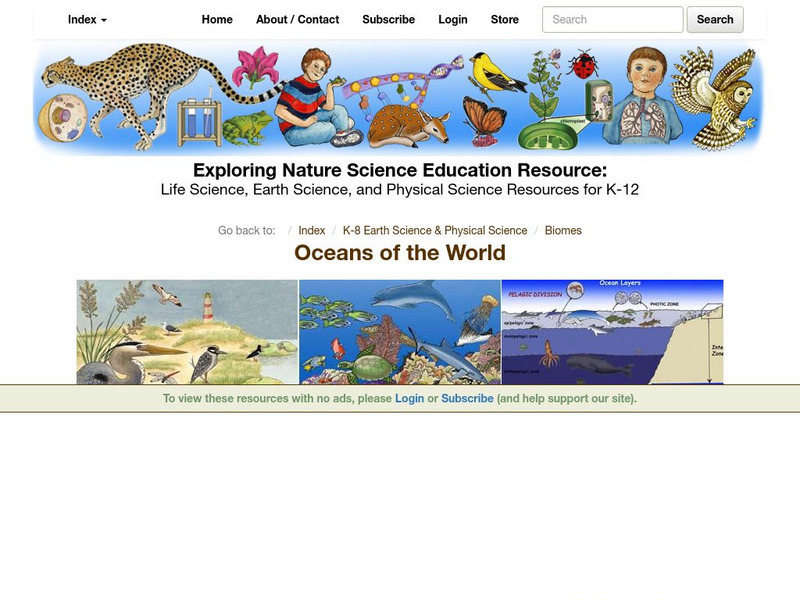
Exploring Nature Educational Resource: Oceans of the World
A set of illustrated fact pages, and some activity sheets, on coral reefs, tidal pools, and ocean ecosystems. Find maps, graphic organizers, and a movie link to tidal zones. Hyperlinks to specialized vocabulary words are also provided....
American Museum of Natural History
American Museum of Natural History: O Logy: Journey to Deep Sea Vents
Take a submersible down to the seafloor. As you descend, passing through the ocean's sunlight, twilight, and midnight zones, you can observe how temperature, pressure, and light levels change. When your submersible reaches the seafloor,...

The Wild Classroom
The Wild Classroom: Biomes of the World: Intertidal Zone
Learn about the intertidal ecosystem. Find out about plants, animals, adaptations, and conservation efforts.
Missouri Botanical Garden
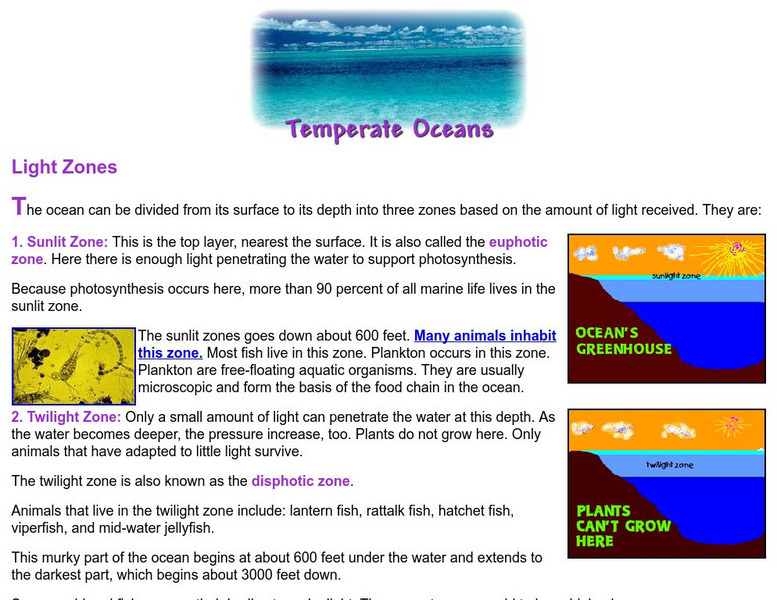
Missouri Botanical Garden: Temperate Oceans Light Zones
Discover the three zones in the ocean which are determined by the amount of light received from the sun. Pictures illustrate the three zones and there is a listing of the animals that live in each zone.
Science Struck
Science Struck: A Helpful Guide to Understand the Photic Zone
The photic zone is the upper layer of the ocean where sunlight can penetrate and support photosynthesis. This article explains the characteristics of this zone, the food chain that exists there, the adaptations of the plants and animals,...
Untamed Science
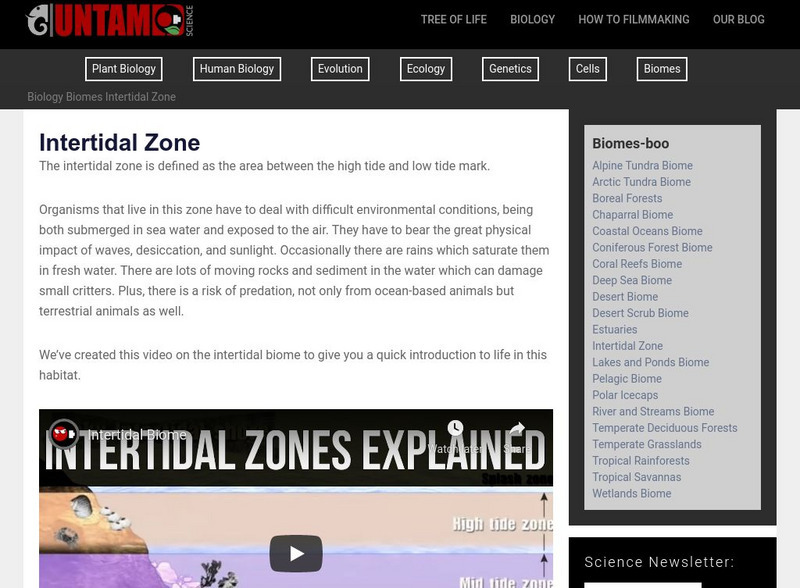
Untamed Science: Biology: World Biomes: Intertidal Zone: Aquatic Biome
Learn about the flora and fauna of the intertidal aquatic zone and the characteristics that describe this aquatic biome through reading and watching video clips. [6:42]
Science Buddies
Science Buddies: Timing the Tides
Have you ever been to a tide pool during low tide? Some intertidal animals in the low tide zone are left in a tiny pool of water when the tides go out. Other intertidal animals that live in high tide zones may be left to dry out during...
EL Education
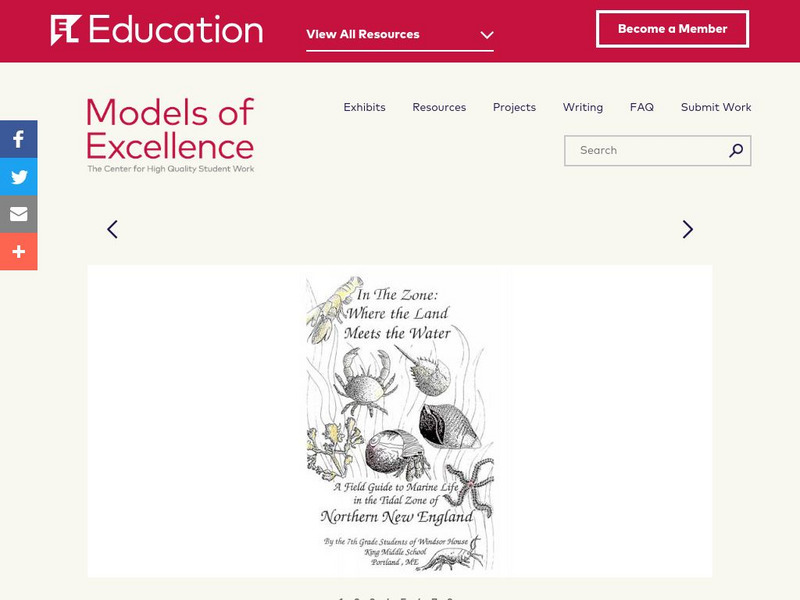
El Education: In the Zone: Where the Land Meets the Water
This field guide to the marine organisms of the intertidal zone of Casco Bay was created by 7th grade students in Portland, Maine, as part of a Learning Expedition called, "In the Zone." Students were engaged in scientific research at...
Museum of Science
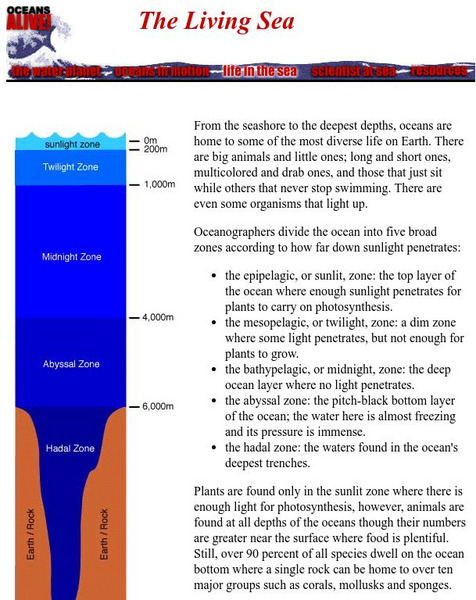
Museum of Science, Boston: Oceans Alive: The Living Sea
Find a scale model of the five principal ocean zones, along with additional information.
Other
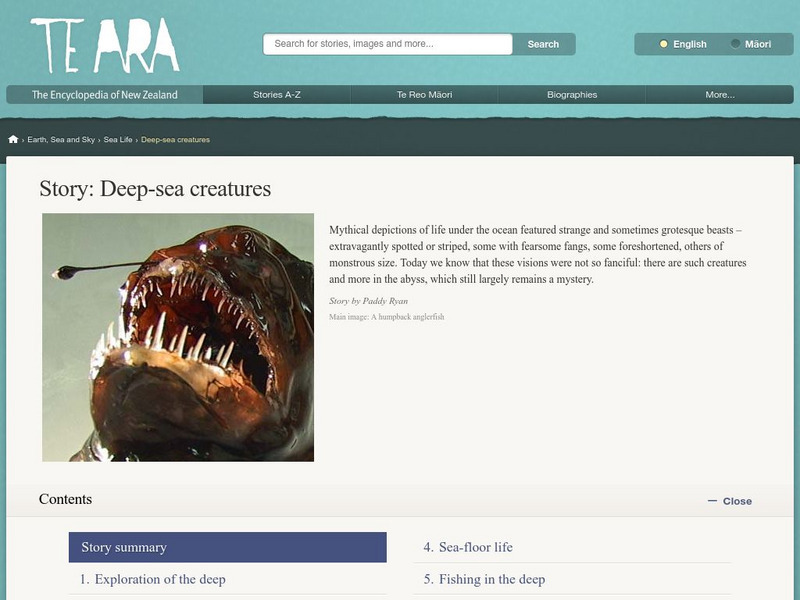
Encyclopedia of New Zealand: Deep Sea Creatures
Learn about the life forms that dwell deep in the ocean which is divided into four zones. These zones have similar life forms around the world.
American Museum of Natural History
American Museum of Natural History: O Logy: What's the Big Idea? Marine Biology
An introduction to key concepts about the ocean, its ecosystems, and zones. With interactive flash cards that open in new windows to help you learn more.