Hi, what do you want to do?





Incorporated Research Institutions for Seismology
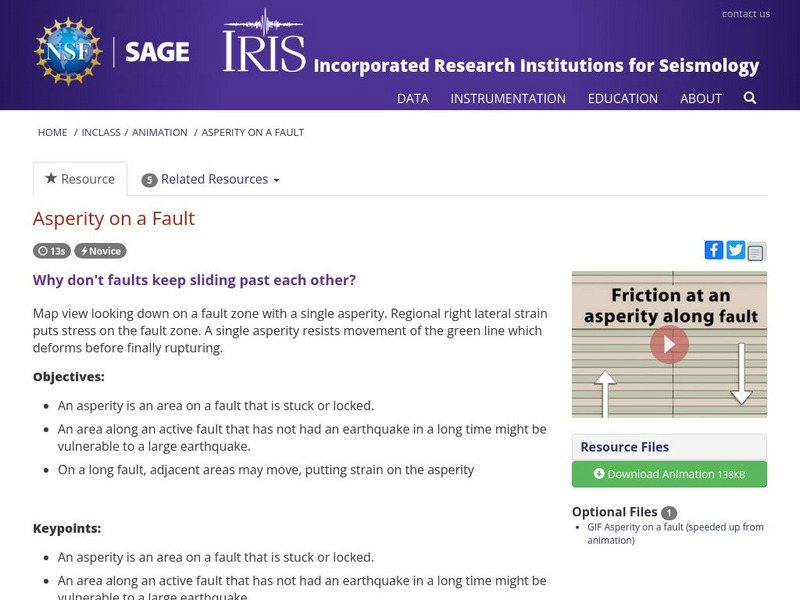
Iris: Asperity on a Fault
Find out why faults don't just keep sliding past each other. [0:14]
Incorporated Research Institutions for Seismology
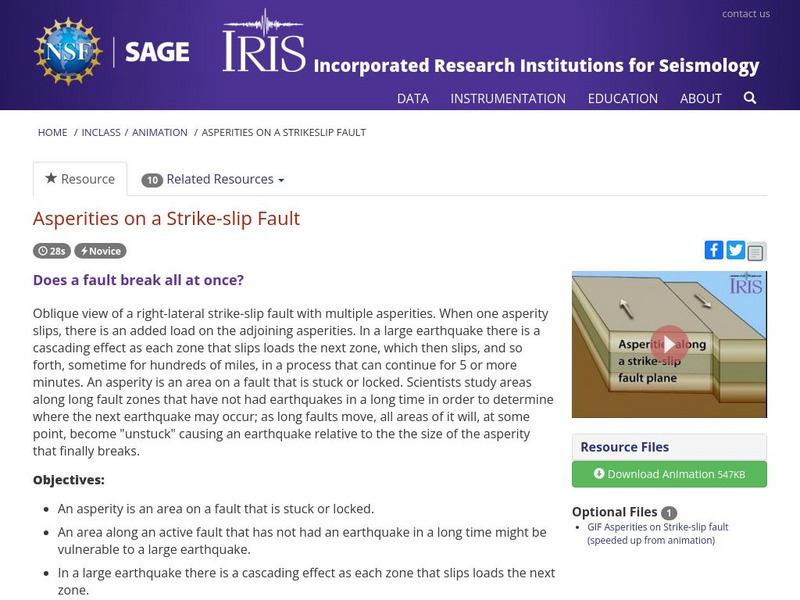
Iris: Asperities on a Strike Slip Fault
Oblique view of a right-lateral strike-slip fault with multiple asperities. [0:27]
Incorporated Research Institutions for Seismology
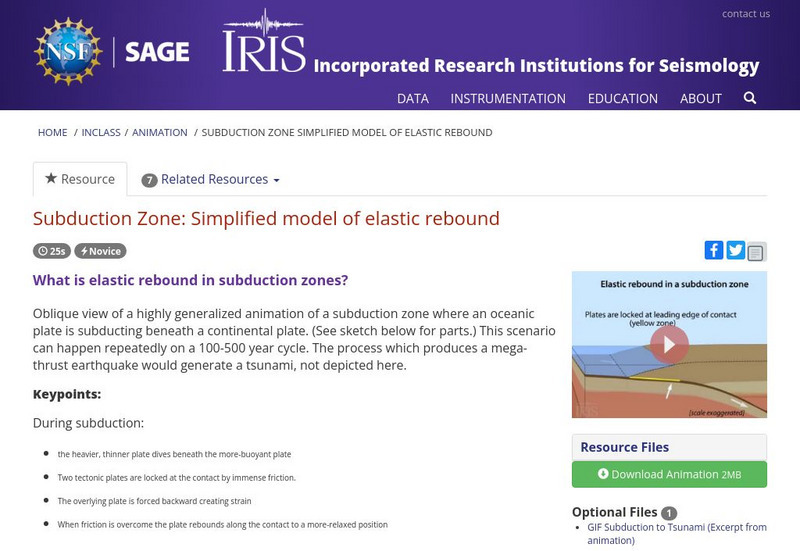
Iris: Subduction Zone: Simplified Model of Elastic Rebound
Oblique view of a highly generalized animation of a subduction zone where an oceanic plate is subducting beneath a continental plate. [0:27]
Next Vista for Learning
Next Vista for Learning: Reading a Fault Line
A video that helps you identify whether a fault is a normal or reverse fault. Video will teach students how to identify a foot wall and a hanging wall to help name the type of fault. [1:48]

Incorporated Research Institutions for Seismology
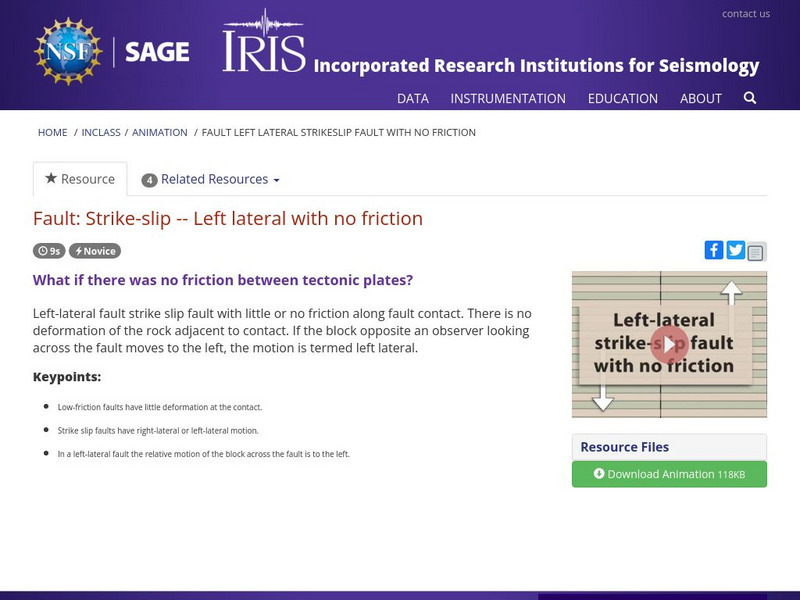
Iris: Fault: Left Lateral Strike Slip Fault With No Friction
Animation demonstrates left-lateral fault strike-slip fault with little or no friction along fault contact. [9]
Incorporated Research Institutions for Seismology
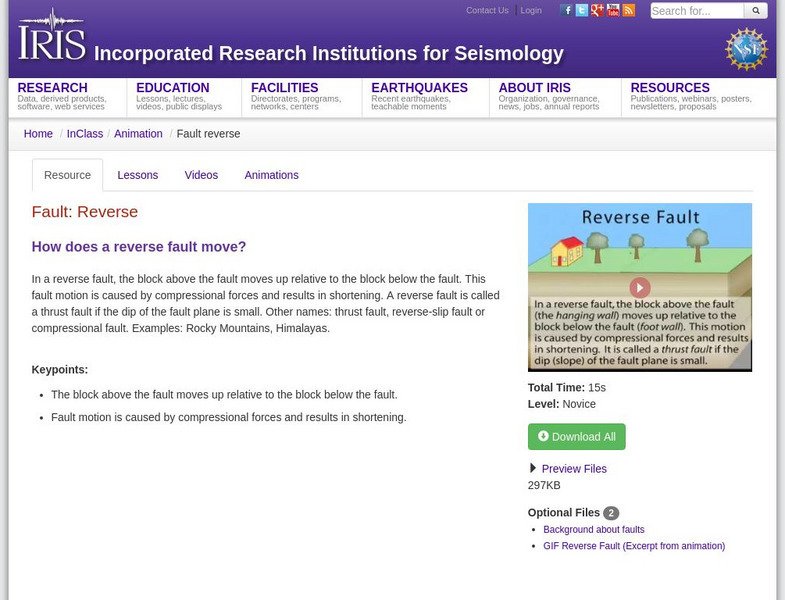
Iris: Xcerpt From Fault: Reverse
See a quick animation of a reverse fault.

Incorporated Research Institutions for Seismology
Iris: Fault: Right Lateral Strike Slip Fault With No Friction
See how a right-lateral fault functions. [0:12]
Incorporated Research Institutions for Seismology
Iris: Fault: Left Lateral Strike Slip Fault With No Friction
Find out what happens if there is no friction between tectonic plates. [0:10]