Hi, what do you want to do?






NASA
PACE -- Skies, Oceans, Life
PACE's advanced technologies will provide unprecedented insight into Earth's ocean and atmosphere, which impact our everyday lives by regulating climate and making our planet habitable. Our oceans teem with life,...
NASA
How El Niño Impacts Marine Plant Life
El Niño years can have a big impact on the littlest plants in the ocean, and NASA scientists are studying the relationship between the two. Ocean color maps, based on a month's worth of satellite data, show El Niño's impact on...
Visual Learning Systems
Protists: Plant-like Protists
The diverse groups of microorganisms in the Kingdom Protista are illustrated in this video. Microscopic views compare the main categories of protists. the different phyla of algae are also discussed. Other terminology includes: protozoa,...
Visual Learning Systems
Microscopic Life: Protists
Upon viewing the Microscopic Life video series, students will be able to do the following: Understand that only during the past few hundred years have people been able to see and study very small life forms, generally referred to as...
Science360
Scientists virtually unwrap a 1500-year-old scroll! NSF Science Now 36.
In this episode, we discover a protein that could someday eliminate malaria, learn about microbes battling it out in Antarctica, explore super Wi-Fi that uses UHF channels and virtually unwrap a 1500-year-old scroll.
Science360
NSF Science Now: Episode 36
In this week's episode, we discover a protein that could someday eliminate malaria, learn about microbes battling it out in Antarctica, explore super Wi-Fi that uses UHF channels and virtually unwrap a 1500-year-old scroll.
Visual Learning Systems
Exploring Marine Biomes: Ocean Zones
Upon viewing the Exploring Marine Biomes video series, students will be able to do the following: Explain that oceans cover about 70% of Earth's surface. List some of the reasons oceans are important to the planet and to living things: -...

Nature Conservancy
Coastal Peru: The Amazing Biodiversity of a Coastal Ecosystem
Peru's coastal ecosystem is only one of the country's amazing features. But travelers don't need passports, expensive plane tickets, or heavy suitcases to examine the biodiversity of coastal Peru. Armed with a field trip log and graphic...

Deep Look
From Drifter to Dynamo: The Story of Plankton
Even the smallest living things have a large impact. An informative video lesson presents an introduction to types of plankton and their roles in the ocean. The narrator explains how plankton impacts the ocean ecosystem and beyond.

SciShow
3 Extreme Climate Fixes
Could clouds be the key to slowing climate change? Cirrus clouds trap more heat than other clouds, thus keeping the Earth warmer; if scientists can get rid of them, the Earth might cool down. An eye-opening video delves into three...

Crash Course Kids
Home Sweet Habitat
Why can't a polar bear live in the desert? Because the bear's food source lives in the habitat in which it thrives. This is the focus of a video that explains why certain animals live in specific habitats.

PBS
Pbs Learning Media: Mystery Beneath the Ice Phytoplankton and Krill
Travel along on the research vessel Polarstern to learn about the Arctic ecosystem. Scientists will describe the relationship between annual variations in sea ice and the krill population which is fundamental to the Antarctic food web....
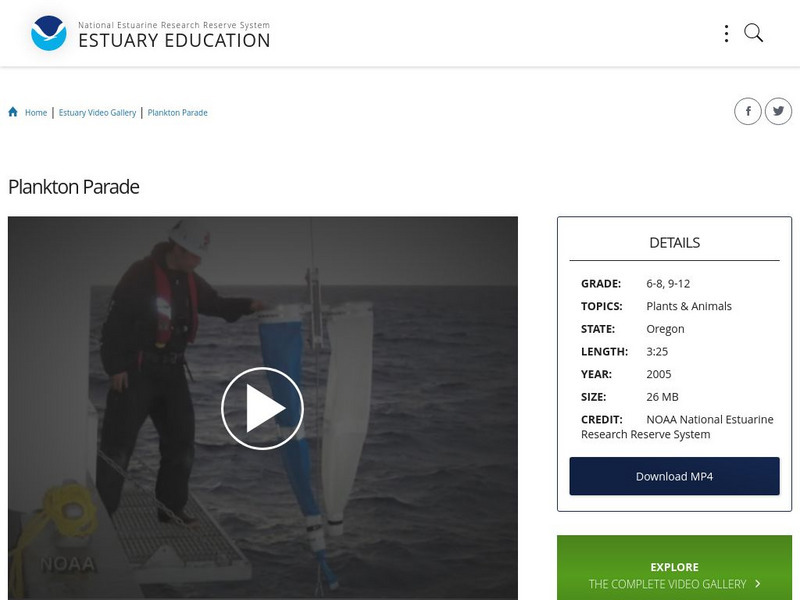
NOAA
Noaa: Estuary Education: Plankton Parade
Students learn about the importance of zooplankton and phytoplankton, and why different plankton species are the basis of the estuary food web. [3:25]
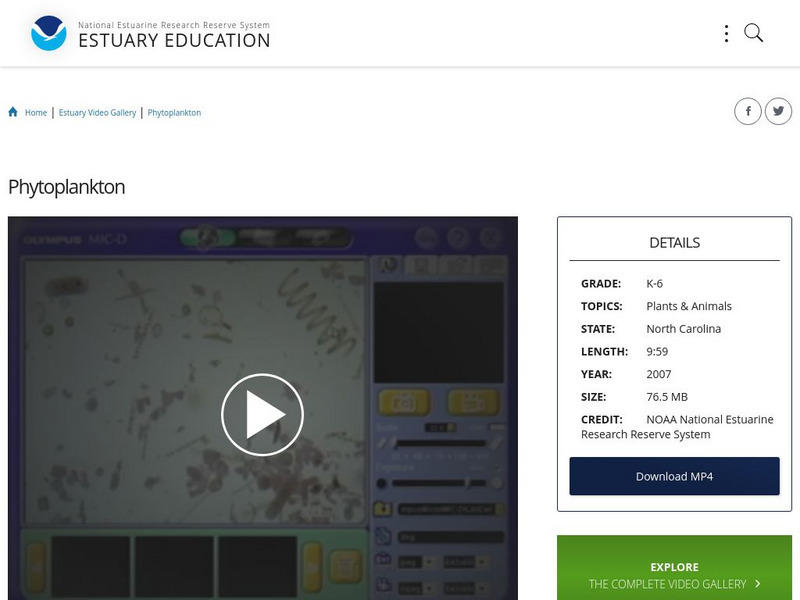
NOAA
Noaa: Estuary Education: Phytoplankton
Young students learn about plankton (in particular phytoplankton) and why it is vital to life on this planet. [9:59]