Hi, what do you want to do?






Curated OER
Microbial Universe - Part 2
Part two begins right where part one left off: discussing the potential for infections from microbes. Treatment of diseases is covered as well as the steps taken to prevent infection. New bacteria and viruses continue to develop, but not...

PBS
Pbs Learning Media: Cave Formation: Kane Cave
This video segment adapted from NOVA describes a simple experiment that confirmed the idea that microbes can accelerate the biogeochemical process of cave formation. [4:12]
PBS
Pbs Learning Media: Caves: Extreme Conditions for Life
This video segment adapted from NOVA raises the provocative idea that if life can exist in the most extreme environments on Earth, such as in dark, toxic caves, then perhaps living things can also survive in harsh environments on other...
PBS
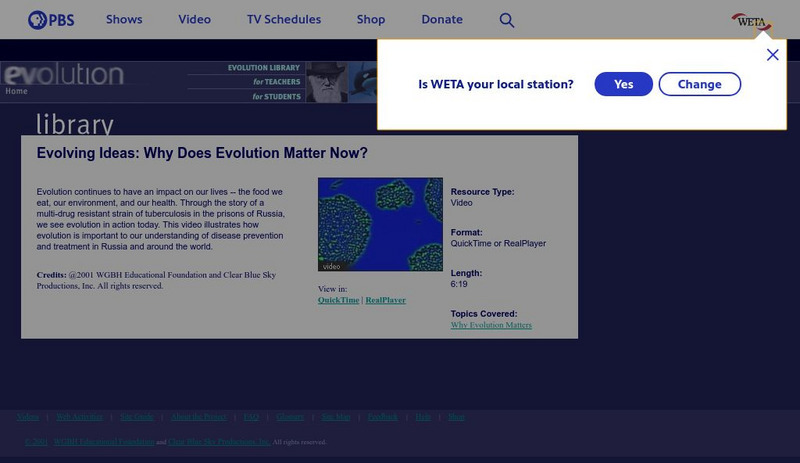
Pbs: Teachers' Domain: Evolving Ideas: Why Does Evolution Matter Now?
In this video from Evolution, an exploration of multi-drug resistant tuberculosis in the Russian prison system highlights one reason it is important to understand evolution.
PBS
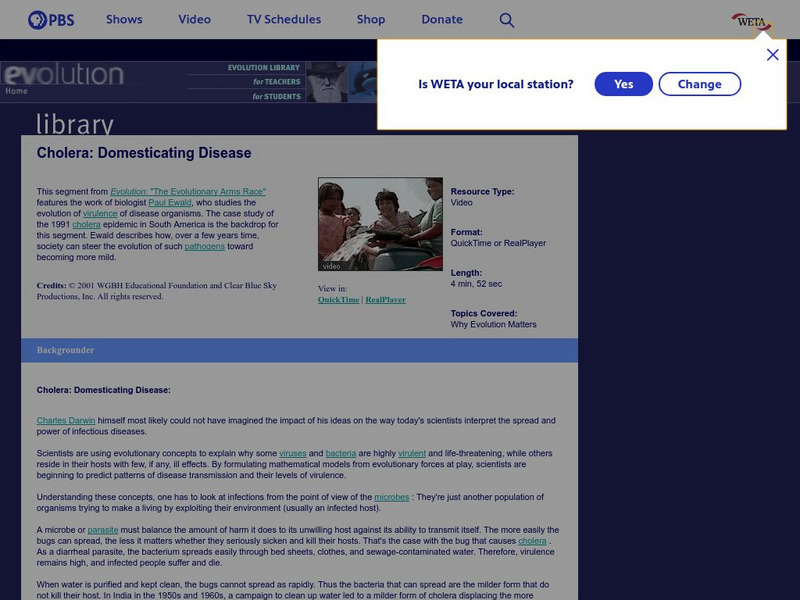
Pbs Teachers: Cholera: Domesticating Disease
Discover how scientists are beginning to predict patterns of disease transmission and levels of virulence. Explore how society can steer the evolution of microorganisms to weaken them.
PBS
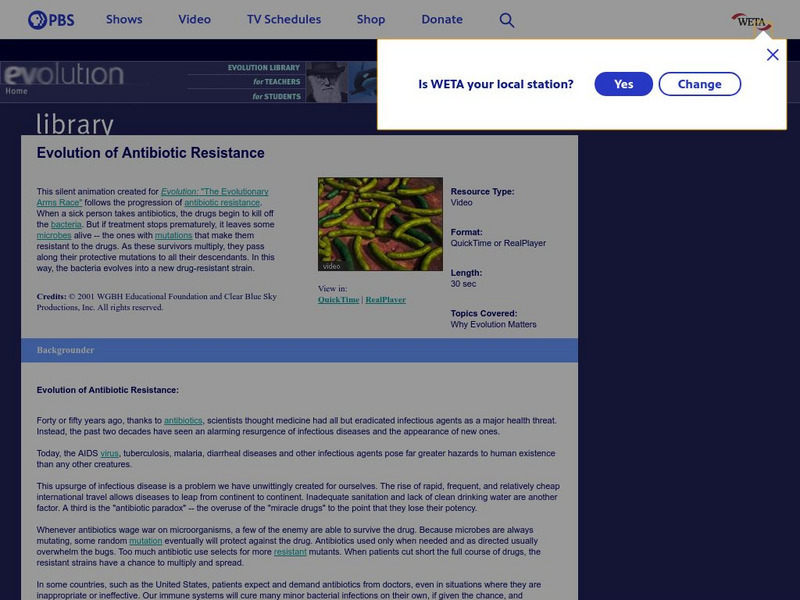
Pbs Teachers: Evolution of Antibiotic Resistance
Explore how antibiotics help some sick people. Discover what happens when patients cut short their full course of antibiotic drugs.
National Science Foundation
National Science Foundation: Green Revolution: Microbes
In Bruce Logan's lab at Penn State University, researchers are working on developing microbial fuel cells (MFCs) that can generate electricity while treating wastewater. They are also researching methods to increase power generation from...
Minute Earth
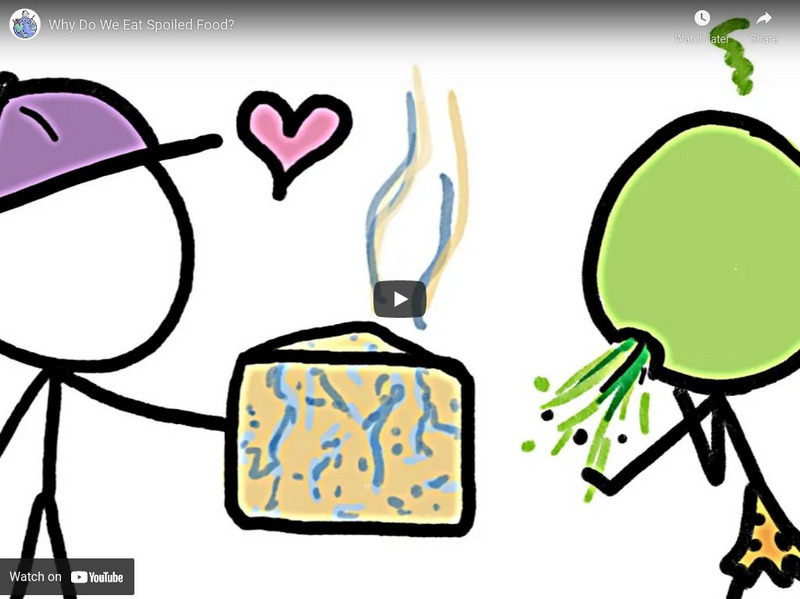
Minute Earth: Why Do We Eat Spoiled Food?
This video provides a brief explanation of the microbes that live in the foods we love. [3:19]
Crash Course
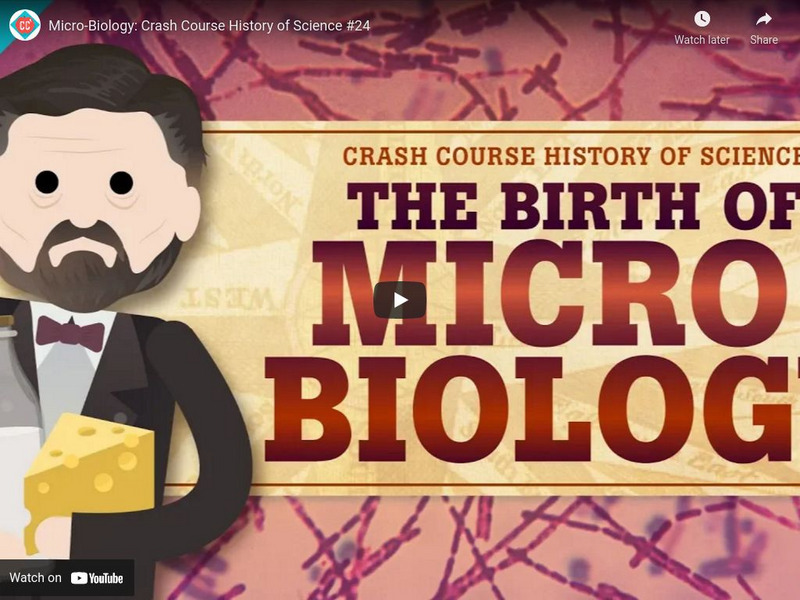
Crash Course History of Science #24: Micro Biology
It's all about the SUPER TINY in this episode of Crash Course: History of Science. In it, Hank Green talks about germ theory, John Snow (the other one), pasteurization, and why following our senses isn't always the worst idea. [12:11]
PBS
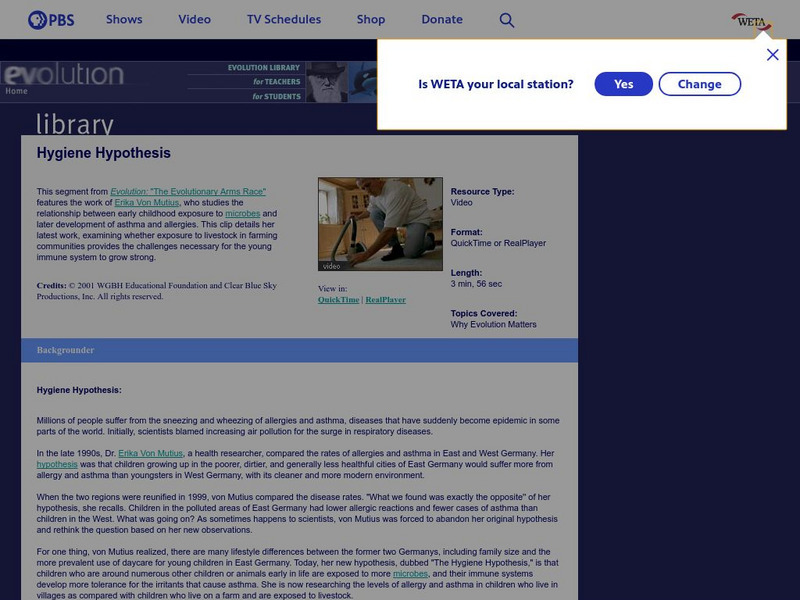
Pbs Teachers: Hygiene Hypothesis
Determine whether childhood exposure to livestock provides the challenges necessary for the young immune system to grow strong enough to later fight off asthma and allergies. Discover how the modern trend toward "supercleanliness" can...
Science Friday Initiative
Science Friday: Exploring the Wild Life of Our Bodies
Biologist Rob Dunn explains how the organisms that share our world have shaped us. [17 mins. 39]
Sophia Learning
Sophia: Microbes: Viruses: Lesson 2
This lesson explains the existence and importance viruses. It is 2 of 4 in the series titled "Microbes: Viruses."
Science Friday Initiative
Science Friday: Microbes Benefit More Than Just the Gut
Sinuses, too, are healthier when populated by a diverse colony of bugs.
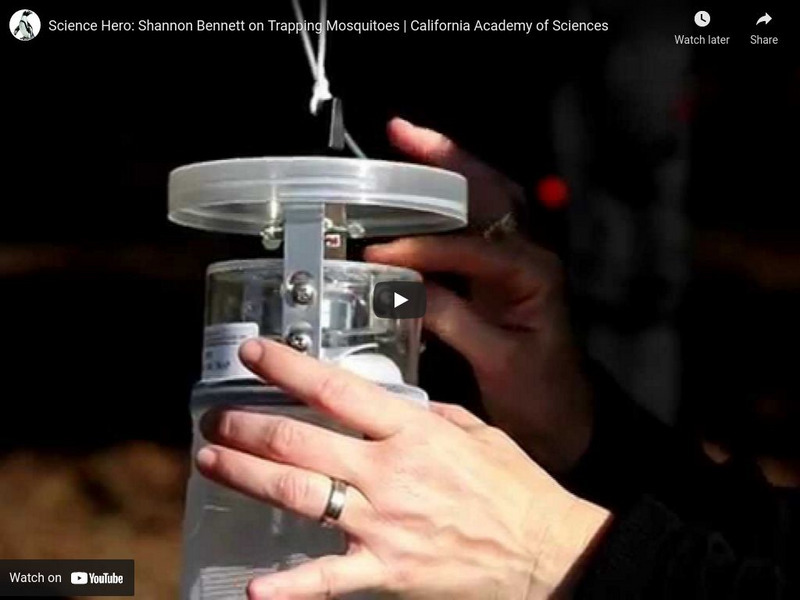
California Academy of Sciences
Ca Academy of Sciences: Science Heroes: Shannon Bennett, Trapping Mosquitos
Shannon Bennett studies infectious diseases that can be transmitted from animals to humans. While invisible to the naked eye, these microbes have a major impact on global human health, which is why the race is on to understand how they...