Hi, what do you want to do?






Khan Academy
Khan Academy: Constitutional Compromises: The Three Fifths Compromise
This video lesson from Khan Academy discusses the Three-Fifths Compromise, a compromise that was agreed upon at the Constitutional Convention. This lesson is intended for students taking high school or college level American Government...
Gilder Lehrman Institute of American History
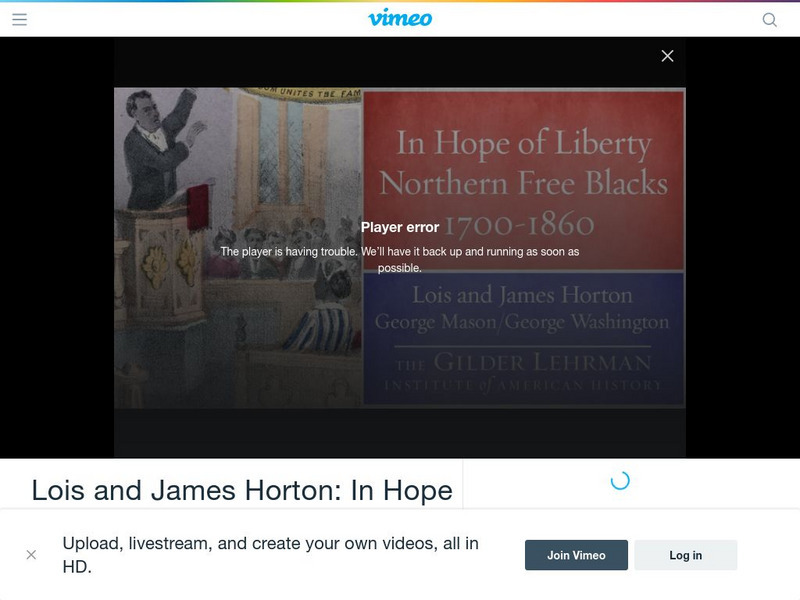
Gilder Lehrman Institute: In Hope of Liberty: Northern Free Blacks
Authors and professors James and Lois Horton, present their book, "In Hope of Liberty: Culture, Community and Protest Among Northern Free Blacks, 1700-1860." Black Bostonians gave the authors an understanding of slavery and community of...

PBS
Pbs Learning Media: Looking for Lincoln: Lincoln's Growth and Change
Would Reconstruction have been different had Abraham Lincoln lived to oversee it? Lincoln's views on slavery throughout his presidency are examined in this video segment. [2:57]
PBS
Pbs Learning Media: Looking for Lincoln: The Road to Emancipation
What changed Lincoln's mind about slavery? Examine President Abraham Lincoln's mixed motivations for issuing the Emancipation Proclamation. [4:38]
PBS
Pbs Learning Media: Ex Slave Frederick Douglass Joins the Abolitionists
Watch this video clip to learn about the contributions of former slave, writer and orator, Frederick Douglass, to the abolitionist movement. [3:59] Supplemental materials for both students and teachers are included.
PBS
Pbs Learning Media: The Dred Scott Decision: The Abolitionists
Learn about the 1857 Supreme Court's Dred Scott decision that had the potential to legalize slavery everywhere in the United States. [2:57]
PBS
Pbs Learning Media: Frederick Douglass Reacts: The Abolitionists
In 1833, Frederick Douglass was sent to a slave breaker in Maryland to be beaten back into submission. Watch this video segment to see how after six months of beatings, Douglass stood up to him and fought back. [2:58]
PBS
Pbs Learning Media: Why We Made the Abolitionists
The makers of American Experience: "The Abolitionists" describe why the film was made and also the legacy of abolition, and the diversity of ordinary men and women who played a role in abolishing slavery in the U.S. [2:58]
Center For Civic Education
60 Second Civics: George Mason and Slavery
George Mason was a slaveholder, but he came to believe that slavery was wrong. [1 min. 4 secs.]
Center For Civic Education
60 Second Civics: Washington and Jefferson on Slavery
Washington and Jefferson were opposed to slavery, but both were slaveholders. We examine their positions on slavery in this episode. [1 min. 2 secs.]
Center For Civic Education
60 Second Civics: James Madison on Slavery
James Madison was consistently opposed to slavery throughout his life. [55 secs.]
Center For Civic Education
60 Second Civics: Slavery and the Potential of American Decline
George Mason was strongly opposed to slavery and expressed his opposition throughout his life. He felt slavery would destroy the new nation. [1 min. 28 secs.]
Center For Civic Education
60 Second Civics: That Slow Poison
Unlike George Washington, George Mason never freed his slaves. He condemned slavery, but was unable to fully realize his own principles. [1 min. 11 secs.]
Center For Civic Education
60 Second Civics: Northerners Opposed to Slavery
Free blacks were kidnapped from New York streets and sold into slavery. Some colonists were outraged. [1 min. 7 secs.]
Center For Civic Education
60 Second Civics: Madison and Slavery
James Madison didn't always live up to his ideals. Take slavery, for example. [1 min. 12 secs.]
Center For Civic Education
60 Second Civics: Madison's Fears About Slavery
Slavery wasn't good for anybody. But Madison hoped that banning importation of slaves after 1808 would diminish the slave trade. [1 min. 4 secs.]
Center For Civic Education
60 Second Civics: Slavery as a Threat to the Union
James Madison thought that slavery was a threat to the Union. He was right. [1 min. 4 secs.]
PBS
Pbs Learning Media: Crash Course History: Election of 1860 and Road to Disunion
In this Crash Course video with John Green, we learn about the election of 1860, escalating conflict between the North and South over the issue of slavery, violent confrontations in Kansas, the Kansas-Nebraska Act, the unpopularity of...
Center For Civic Education
60 Second Civics: We the People Lesson 1 Part 6: Prosperity and Slavery
American colonists in the 1770s worked hard and lived well. But there was one serious problem that would result a century later in civil war: slavery.
Center For Civic Education
60 Second Civics:how Were the People Living in the Colonies Different?
American colonists in the 1770s worked hard and lived well. But there was one serious problem that would result a century later in civil war: slavery.
Center For Civic Education
60 Second Civics: The Issue of Slavery at the Philadelphia Convention
On today's 60-Second Civics, we learn about the issue of slavery at the Philadelphia Convention.
Center For Civic Education
60 Second Civics: Episode 347: Slavery and the Constitution Part 3
We continue our discussion of how slavery affected state and national powers.
Penguin Publishing
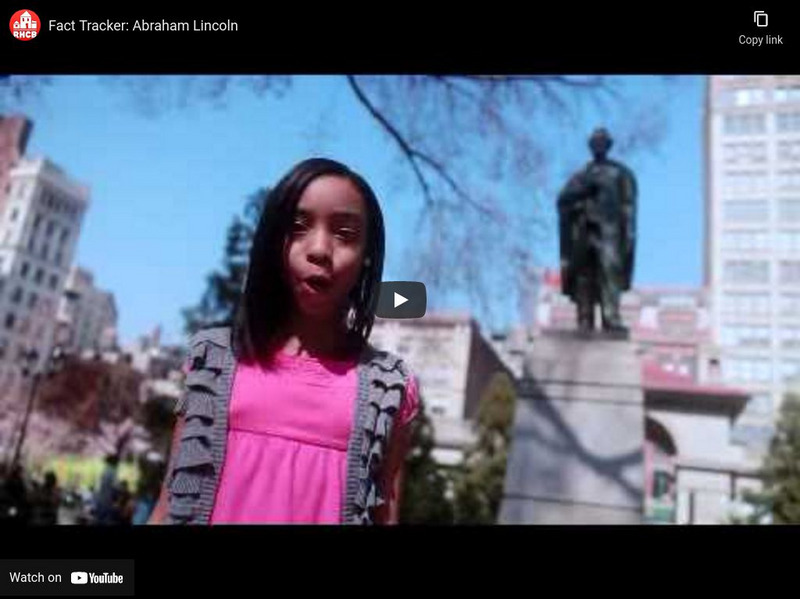
Penguin Random House: Rh Kids: Fact Tracker: Abraham Lincoln
This video checks information included in the fiction book entitled Magic Tree House #47: Abe Lincoln at Last! by Mary Pope Osborne. The book Fact Tracker: Abraham Lincoln, the nonfiction companion written by Will Osborne and Mary Pope...
NPR: National Public Radio
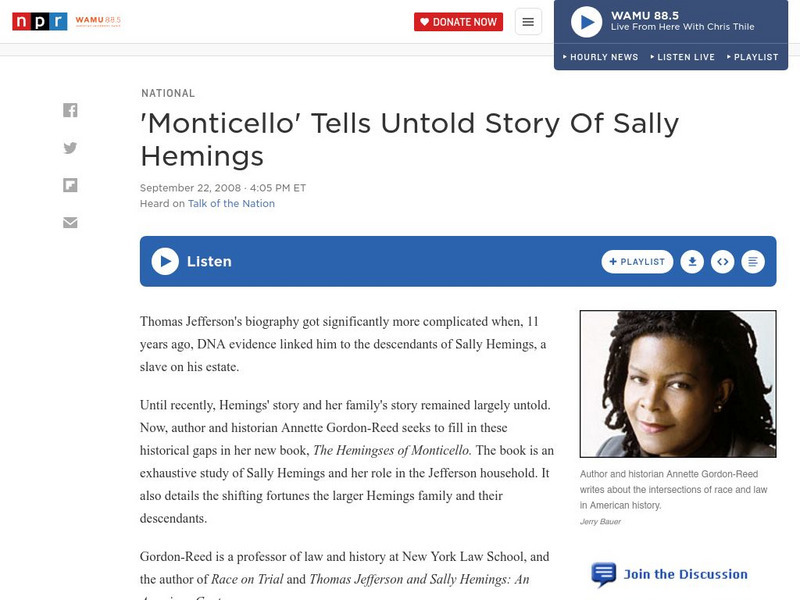
Npr: "The Hemingses of Monticello" Tells the Untold Story of Sally Hemmings
Contains an audio and written account of the story of Sally Hemings, a slave on Thomas Jefferson's estate. NPR provides an excerpt from the book "The Hemingses of Monticello: An American Family" by Annette Gordon-Reed.