Hi, what do you want to do?





Crash Course
Crash Course Kids 13.1: The Great Escape
Do you know how many people have been to the moon? Only 12! Part of the reason it's so few is because of how difficult it is to escape Earth and get into space in the first place. In this episode of Crash Course Kids, Sabrina talks about...
Crash Course
Crash Course Kids 13.2: Over (To) the Moon
Do you want to be an astronaut? Would you like to someday walk on the moon? Well, you better learn a little about gravity so you can escape from Earth and head into space. Today, Sabrina chats with us about what it takes to get to the...
Crash Course
Crash Course Astronomy #11: The Earth
Phil starts the planet-by-planet tour of the solar system right here at home, Earth. [10:14]
Crash Course
Crash Course Astronomy #22: The Oort Cloud
Now that we're done with the planets, asteroid belt, and comets, we're heading to the outskirts of the solar system. Out past Neptune are vast reservoirs of icy bodies that can become comets if they get poked into the inner solar system....

PBS
Pbs: Nova: Plasma Rockets
Offers a look at the downsides of slow space travel and how it might be possible for astronauts, using plasma-rocket technology, to make an "express voyage" to Mars in two weeks, rather than two-and-a-half years. [6:38]
NPR: National Public Radio
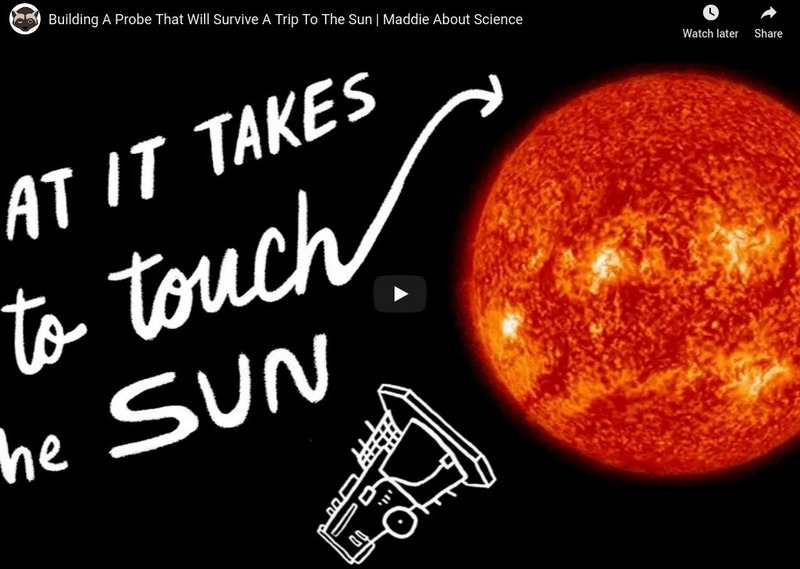
Npr Videos: Skunk Bear: Building a Probe That Will Survive a Trip to the Sun
The Parker Solar Probe is going to go closer to the sun than any spacecraft has come before. It will take seven years to fly 93 million miles to reach the sun's corona, its outermost atmosphere. The probe will withstand temperatures up...

Reading Rockets
Reading Rockets: Author Interviews: Buzz Aldrin
Mechanical engineer, U.S. Air Force pilot, decorated war veteran, graduate of MIT with a PhD in Astronautics, Gemini 12 and Apollo 11 astronaut, inventor, Presidential Medal of Freedom awardee, author of books for children, teens and...
PBS
Pbs Learning Media: What Is Astrobiology?
In this video from the Science and Technology Chat series, learn about astrobiology, an interdisciplinary field that uses biology, astronomy, and geology to study the origins of life on Earth and to search for possible life on other...
Science Friday Initiative
Science Friday: Massive "Phoenix Cluster" Supersizes Star Creation
Astronomers have found a massive galaxy cluster that's making stars at a record pace.

Science Friday Initiative
Science Friday: Restructuring Space Flight
This week, President Obama rolled out details of how changing budgets and changing priorities will affect NASA. We'll talk about the future of the agency, including plans for a larger role for private business in space flight.
Science Friday Initiative
Science Friday: Living and Working in Space
Last week scientists reported definite signs of water hidden in darkened craters on the moon. Does that find change human plans for the exploration of space? Should it?

Science Friday Initiative
Science Friday: Should Humans Return to the Moon?
NASA plans to return humans to the moon by 2020, but a review committee is weighing other options.
Science Friday Initiative
Science Friday: Tattoos of Science
In which we attempt to help one listener figure out the best tattoos to get to celebrate the history of space exploration.
Science Friday Initiative
Science Friday: Space X Craft to Head to Space Station
The first privately built spacecraft could dock at the International Space Station this year.
Science Friday Initiative
Science Friday: Summer Sky Forecast
We'll give you a heads-up on what to watch for in your summer stargazing.
Science Friday Initiative
Science Friday: Space Debris
Last week, two satellites collided in orbit around Earth. We'll check in on the after-effects of that collision, and talk about what the lingering debris from the crash means for future space missions.

Science Friday Initiative
Science Friday: Summer Sky Guide
Summer nights are made for stargazing. We'll get a guide to what to look for in the skies in the months ahead.

Science Friday Initiative
Science Friday: Space X Launch Successful
Last weekend, private space transportation company SpaceX successfully launched a payload into orbit. We'll talk with Elon Musk, the company's founder, about the launch of the Falcon 1 and what's next for the company.

Science Friday Initiative
Science Friday: Countdown to Mars
The latest mission to Mars, Mars Phoenix, is scheduled to touch down on the Red Planet this coming Sunday. We'll talk about the mission and what the scientists behind it hope to achieve.

PBS
Pbs Teachers: Real Scientists: Nasa Jpl Researcher
Discover what a cryobot is, and learn how engineers may one day use cryobots to explore frozen planets or moons.

Science Friday Initiative
Science Friday: Are We There Yet? Voyager 1 Finally Answers "Yes"
Scientists announced this week that Voyager has finally reached interstellar space.
California Academy of Sciences
California Academy of Sciences: Sentinel Mission
The non-profit B612 Foundation aims to build, launch, and operate the first privately funded deep space mission-a space telescope in orbit around the Sun that will map the inner Solar System in search of asteroids that could impact Earth.
Science Friday Initiative
Science Friday: Space X Dragon May Ferry Astronauts by 2015
After a successful cargo run to the space station, SpaceX is preparing the Dragon capsule for crew.
Science Friday Initiative
Science Friday: With Budget Cuts Looming, Is Science a Lame Duck?
If Congress fails to act, some $15 billion will be cut from science funding in January 2013.