Hi, what do you want to do?






Curated OER
Creature Features
Young scholars examine why certain animals live in only specific places throughout the world. Using animals, they classify them based on their characteristics and identify their basic needs. They also observe and compare the life cycles...

Curated OER
Signs of the Seasons
Learners closely observe the natural world, record data, and notice patterns as the seasons unfold, they build a deeper understanding of seasonal change! The definition of phonology is the focus of this lesson and how it changes...

Curated OER
Candy DNA Model Lesson
Students explore DNA structure using materials such as Twizzlers, small colored gumdrops and/or toothpicks.

Curated OER
Exploring the Sun's Role in Living Systems
Young scholars create graphic organizer webs that illustrate their thinking about seasonal physical and biological changes caused by changes in sunlight. They identify the central role of sunlight in living systems.

Curated OER
Survival Features
Third graders identify features of producers, herbivores and carnivores. They discuss the features that aid in survival for those animals. They organize animals into categories to complete the lesson.

Curated OER
Ecology - Ecosystem
Third graders research ecosystems, the work of ecologists, John Muir's contribution to the environment and an endangered species of their choice. They read books, participate in discussions, and write reports.

Curated OER
Night Creatures of the Kalahari
Students conduct an experiment to demonstrate how fruit fly populations are controlled by spiders. They observe a variety of environments with fruit flies and spiders and consider how vital spiders are to controlling the insect population.

Curated OER
"Habitats"
Learners complete a unit of lessons on animals and animal conservation. They observe a square meter of ground outside the school, set up a model environment, analyze an owl pellet, grow bread mold, and explore various websites.

Curated OER
Forests, Deserts, & Grasslands
Third graders complete activities to become familiar with the content and vocabulary related to biomes and ecosystems in order to mainstream into the classroom.

Curated OER
Earth Day Trash Survey Unit
Students develop an action plan to prevent trash from becoming a problem in the future.
TeachEngineering
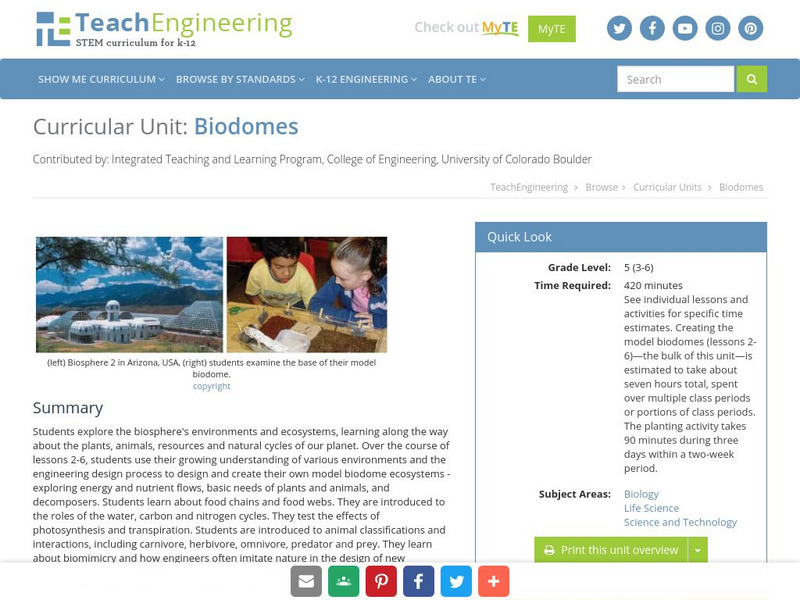
Teach Engineering: Biodomes
Students explore the biosphere's environments and ecosystems, learning along the way about the plants, animals, resources and natural cycles of our planet. Over the course of lessons 2-6, students use their growing understanding of...

SMART Technologies
Smart: Energy Flow in an Ecosystem
Students learn about Abiotic and Biotic Factors and how they affect the ecosystem in which an animal might live in.

American Museum of Natural History
American Museum of Natural History: O Logy: Stuff to Do: Web of Life Game
Fun, interactive game that helps students identify interrelationships in an ecosystem. For six or more players.
TeachEngineering
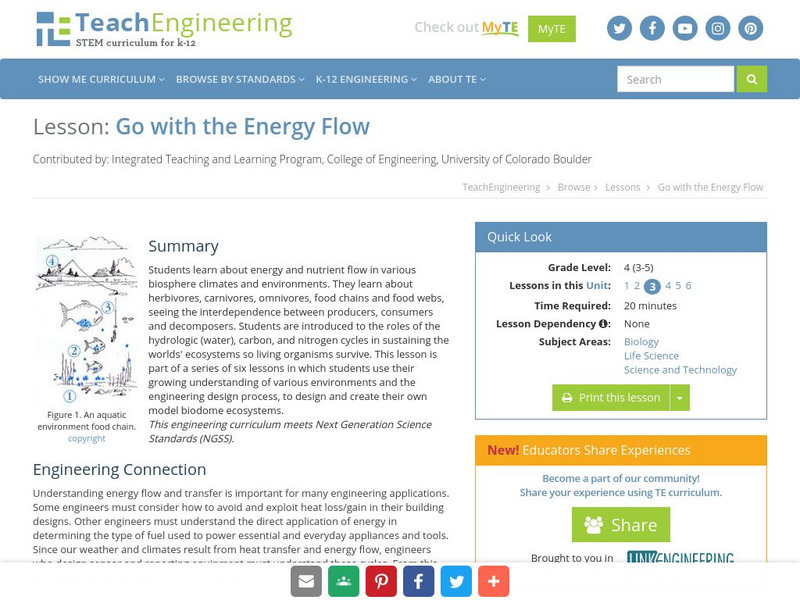
Teach Engineering: Go With the Energy Flow
Students learn about energy and nutrient flow in various biosphere climates and environments. They learn about herbivores, carnivores, omnivores, food chains and food webs, seeing the interdependence between producers, consumers and...

BioEd Online
Bio Ed Online: Bio Build Up
This activity allows learners to make a simple model food chain and observe how toxic chemicals can become concentrated in the bodies of consumers at the top of the chain.

TeachEngineering
Teach Engineering: Got Energy? Spinning a Food Web
Students learn about energy flow in food webs, including the roles of the sun, producers, consumers and decomposers in the energy cycle. They model a food web and create diagrams of food webs using their own drawings and/or images from...

PBS
Idaho Ptv: Science Trek: Food Web
A comprehensive overview of food webs. Includes three videos: a half-hour show, a video short, and a short video where an expert answers children's questions. Other features of the site include facts, links, games and activities, a...
Planet Pals
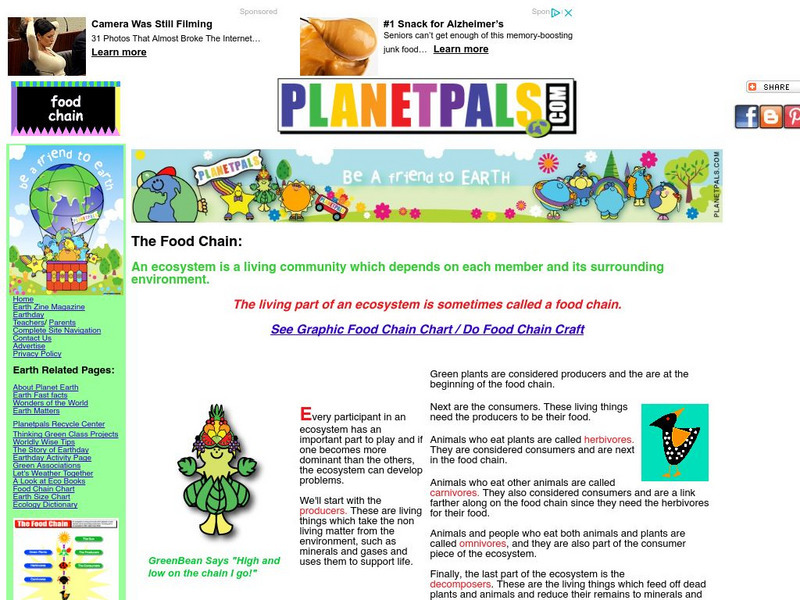
Planet Pals: The Food Chain
Omnivores, herbivores and carnivores are waiting for you. The food chain comes to life at this friendly site.
SMART Technologies
Smart: Animal Ecosystems, Adaptations and Food Chains
This unit contains interactive lessons on animal ecosystems, animal classification, adaptations, and food chains.

Sheppard Software
Sheppard Software: Parts of the Food Chain: Producers, Consumers, Decomposers
Learn how scientists classify different types of organisms in an ecosystem or in a food chain by their role and function as either a producer, a consumer, or a decomposer. Then play a game that tests your understanding of these important...

Ducksters
Ducksters: Science for Kids: Food Chain and Web
Kids learn about the food chain and food web. How energy cycles and transfers through living organisms.

Geography 4 kids
Geography4 kids.com: Another Link in the Food Chain
Understand how the food chain works within ecosystems.
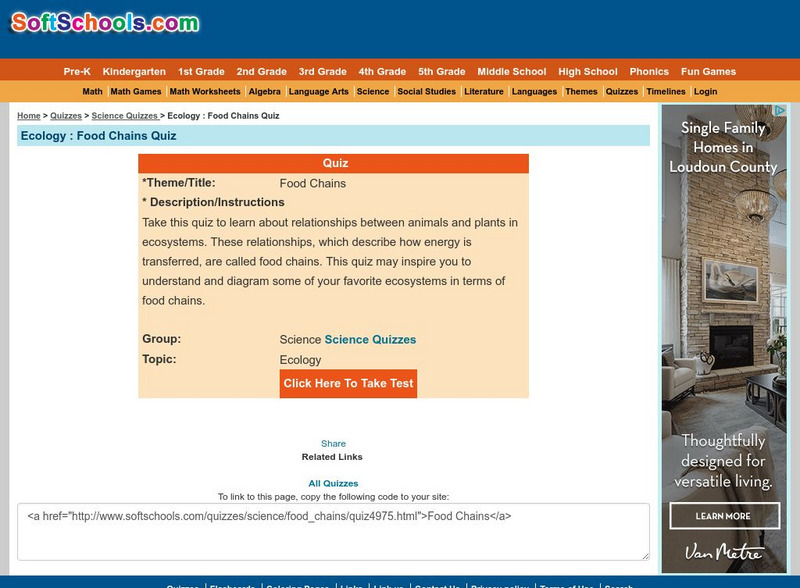
Soft Schools
Soft Schools: Food Chains Quiz
Take an interactive quiz over food chains. After completing the quiz, check your score, and then revisit any incorrect question for further review.
Project Britain
Primary Homework Help: Food Chains Quiz
Brush up on food chain vocabulary before taking this interactive quiz. Check the box for the correct answers throughout the assessment.