Hi, what do you want to do?





Center for Innovation in Engineering and Science Education, Stevens Institute of Technology
Ciese Collaborative Projects: Down the Drain: How Much Water Do You Use?
How much water do you use everyday? Find out in this engaging investigation, where you compare your water usage with your classmates and other people around the world. An exploration filled with lots of math and science that students are...
Friends of Algonquin Park
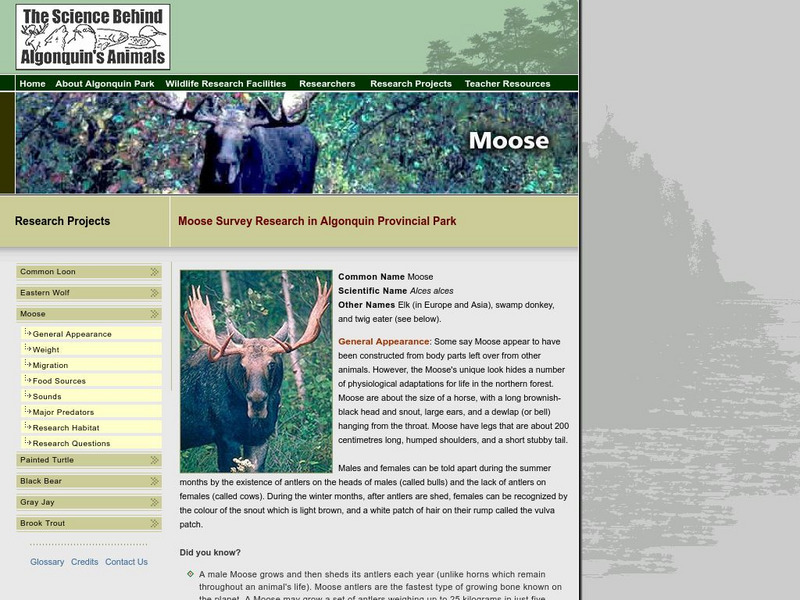
The Science Behind Algonquin's Animals: Moose
Information is provided on the moose, its general appearance, weight, migration, food sources, habitat, and major predators. This is excellent information for a student research project.
Other
Global Grocery List Project: Homepage
At this site from the Global Grocery List Project, students collect data on the prices of common grocery items and submit their findings. They can then compare the data they collected to data from students around the world. There are...

Alabama Learning Exchange
Alex: I'm So Crushed
In this activity, students will have an opportunity to solve a mystery. They will discover why a soda can collapses during a demonstration due to the effects of changes in temperature and atmospheric pressure. Students will gain further...
Friends of Algonquin Park
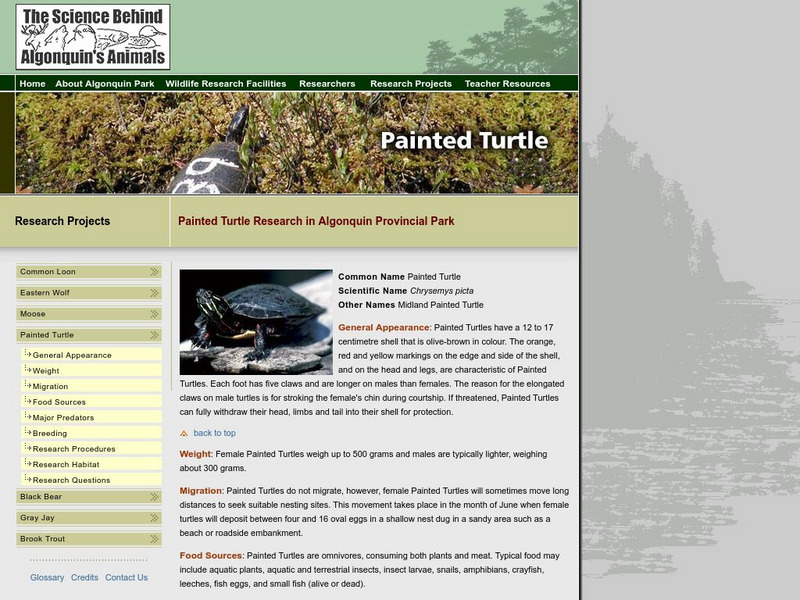
The Science Behind Algonquin's Animals: Painted Turtle
Excellent information is provided on the painted turtle's appearance, weight, migration, food sources, predators and breeding. Research questions provide the answers to many common questions such as how long they live.
Friends of Algonquin Park
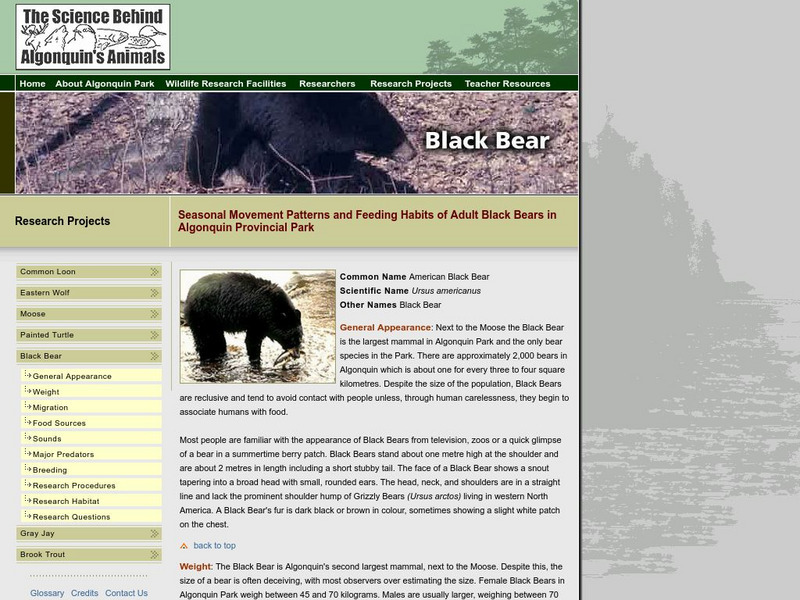
The Science Behind Algonquin's Animals: Black Bear
Known as the American Black Bear or commonly the Black Bear, information is detailed on its appearance, weight, migration patterns, food sources, major predators and breeding. This is an excellent resource for the student researcher.

Writing Fix
Writing Fix: Unlikely Diary Keepers
The writer will assume the role of a living creature (like an arthropod) or an abstraction (like a fraction). Writers will do research on what they have chosen as their roles, and learn new facts about these roles. The writer will...

Curated OER
The Science Behind Algonquin's Animals: Moose
Information is provided on the moose, its general appearance, weight, migration, food sources, habitat, and major predators. This is excellent information for a student research project.
Other
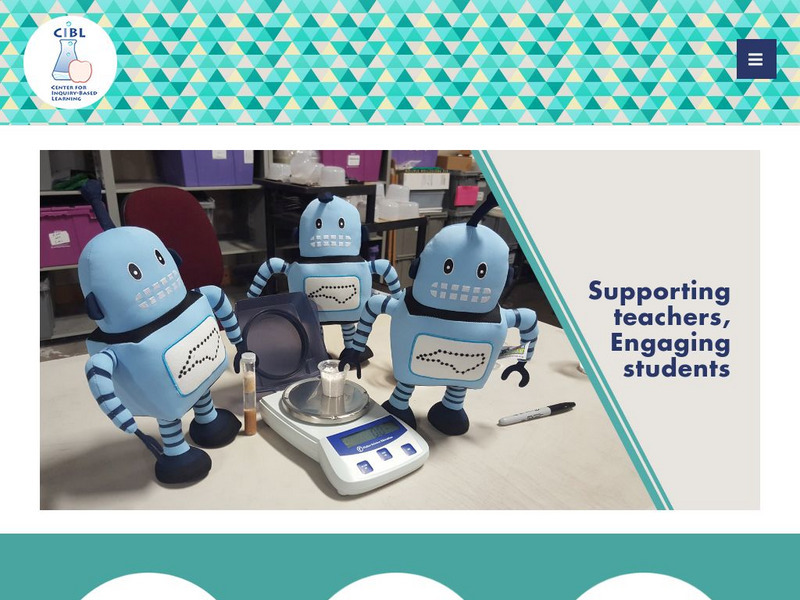
Duke: Center for Inquiry Based Learning
Duke University has established the Center for Inquiry-Based Learning. It serves to enhance math and science lessons. Click on Resources for good examples of Inquiry-based lesson plans.
The Field Museum
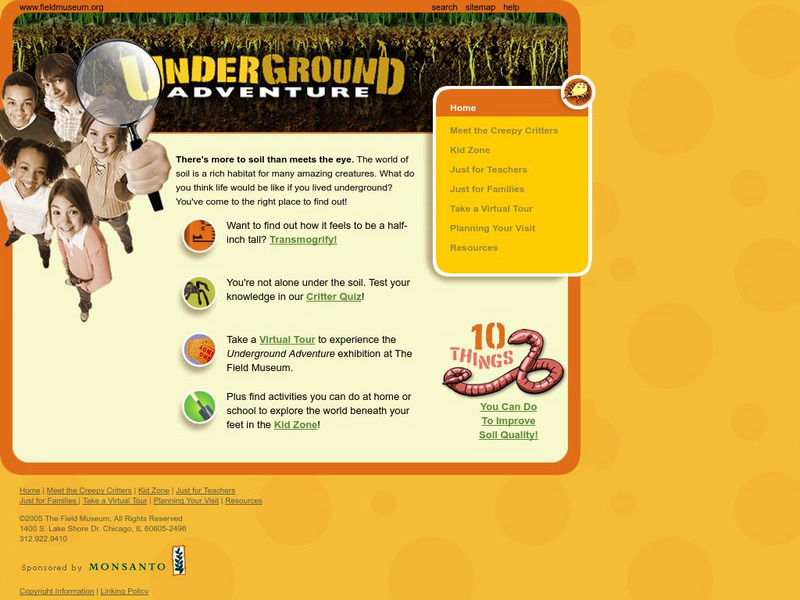
Field Museum: Exhibits: Underground Adventure
The Chicago Field Museum provides a comprehensive soil education project covering topics such as soil structure and organisms living underground. Students can use the site for research or do the full-blown project, where they establish a...

Alabama Learning Exchange
Alex: Digital Slideshows: Power Point for the Novice
Students will learn how to use presentation software to enhance learning. Student-created digital slideshow presentations can span the curriculum. Each student will prepare a presentation in one of the following curriculum areas:...

Alabama Learning Exchange
Alex: 3,2,1 Spinoff
As part of the study of Space, the students will do research on and create a podcast/vodcast about spinoffs developed from space exploration. In groups, students will use various websites to acquire information about technological...

International Reading Association
Reading Online: Electronic Classroom: A Web Quest for Because of Winn Dixie
This site includes an excellent WebQuest related to Kate DiCamillo's book, Because of Winn-Dixie. Vocabulary exercises, story frames, story pyramids, social studies, and science links are part of this WebQuest for students. As this is an...

Alabama Learning Exchange
Alex: Time Flies
This lesson plan is one of the first in a unit on telling time which addresses the following content areas: language arts, math, science, social studies, and technology. Learners will read several resource books to gather information....

Alabama Learning Exchange
Alex: Beyond the Earth Part Ii
A continuation of Beyond the Earth Part I. As part of a unit on the solar system, students will choose a component of the solar system to research. Students may use a variety of resources such as the Internet, books, and reference...
CPALMS
Florida State University Cpalms: Florida Students: Do You Need Me to Repeat That?
Learn how repeated trials during experimentation leads to more reliable results.
National Center for Ecological Analysis and Synthesis, University of California Santa Barbara
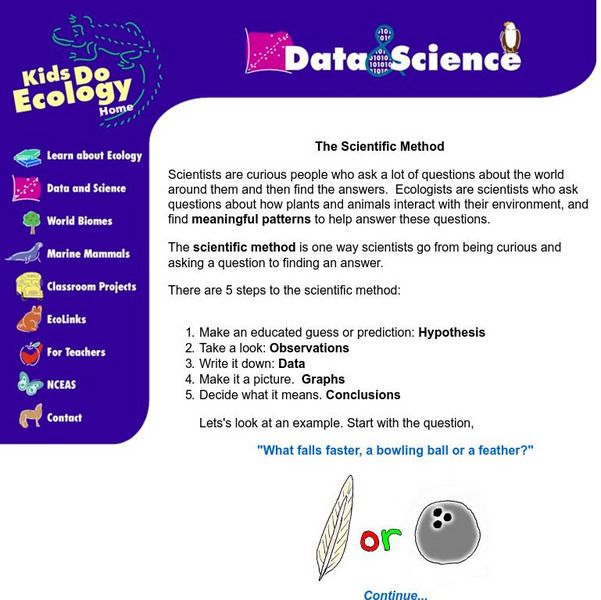
Nceas: Scientific Method
This concise site from NCEAS contains an explanation of the scientific method along with a basic example of the scientific method in action.
Discovery Education
Discovery Education: Habitats of the World
This site has a lesson to use to start a unit on biomes and animal habitats. This plan incorporates grasslands, temperate forests, tropical rainforests, deserts, polar ice regions, and tidepools.
EL Education
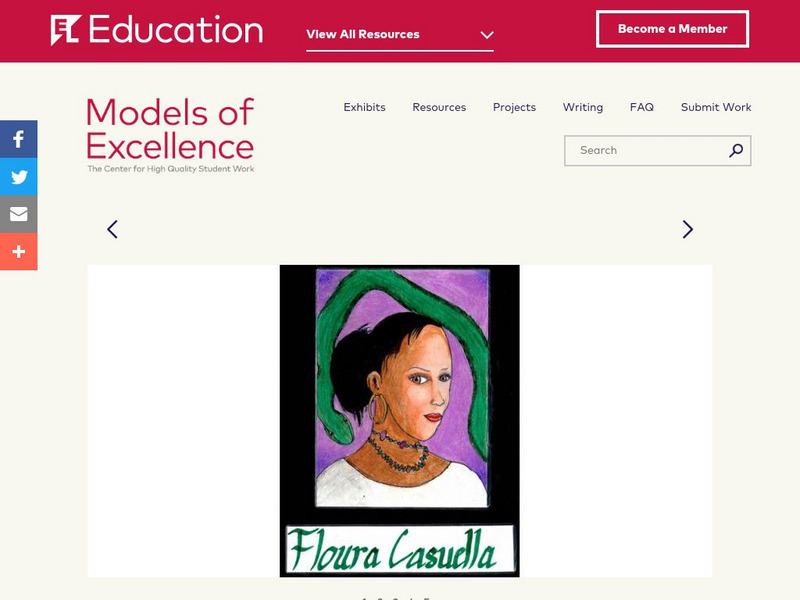
El Education: Floura Casuella
A 5th/6th grade student in Shutesbury, Massachusetts created this character file as part of a Learning expedition on local scientists. Students were engaged in a survey-style study of all of the fields that are considered the hard...
EL Education
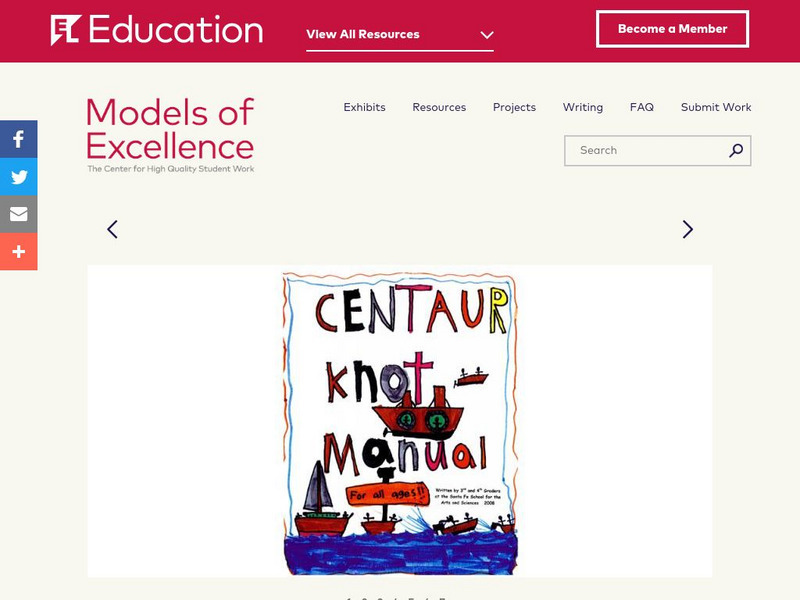
El Education: Centaur Knot Manual
3rd and 4th grade students from the Santa Fe School for the Arts and Sciences in Santa Fe, New Mexico, created this book of knots as part of a learning expedition on sailing. As one part of their expedition, students studied different...

Alabama Learning Exchange
Alex: "Ridin' Along in My Automobile"
Students will research prices of used cars to discover how automobiles lose their value over time. Students will create a chart to record their information, use their chart to graph their data, and find measures of central tendency of...