Hi, what do you want to do?






American Museum of Natural History
American Museum of Natural History: O Logy: Stuff to Do: Web of Life Game
Fun, interactive game that helps students identify interrelationships in an ecosystem. For six or more players.
Science and Mathematics Initiative for Learning Enhancement (SMILE)
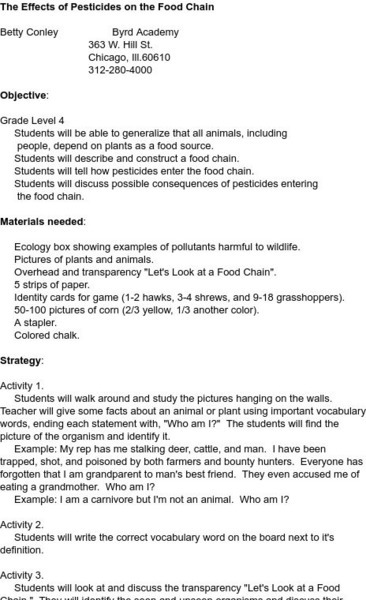
Smile: The Effects of Pesticides on the Food Chain
Lesson plan to construct and explain a food chain. Includes games and activities to teach and reinforce concepts.
PBS
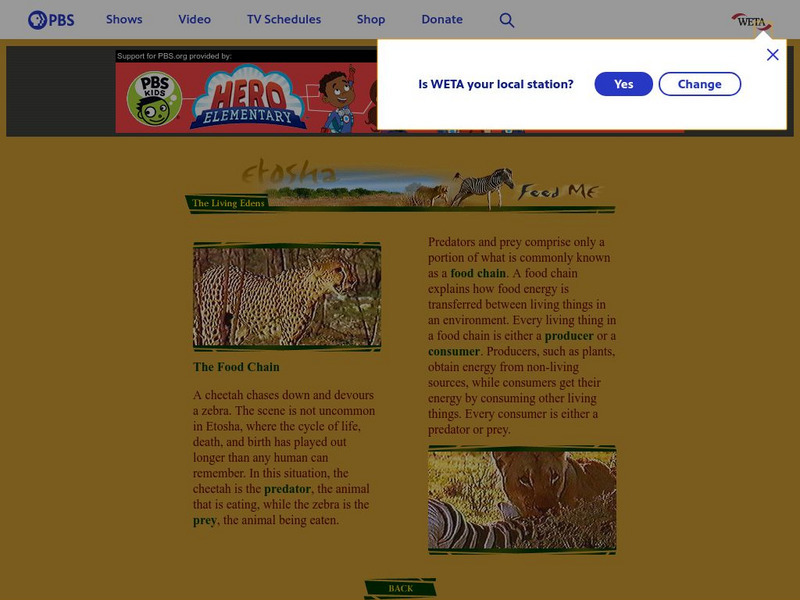
Pbs: The Living Edens: The Food Chain
PBS site provides some basic information on the food chain.

ClassFlow
Class Flow: Food Chain
[Free Registration/Login Required] This flipchart reviews various food chains.

ClassFlow
Class Flow: Food Chains
[Free Registration/Login Required] This flipchart allows students to identify and manipulate food chains.
Other
Explore Learning: Food Chain Gizmo
In this ecosystem consisting of hawks, snakes, rabbits and grass, the population of each species can be studied as part of a food chain. Disease can be introduced for any species, and the number of animals can be increased or decreased...

ClassFlow
Class Flow: Food Chains
[Free Registration/Login Required] Through this flipchart students will be able to summarize and organize simple food chains.

Science Struck
Science Struck: Decomposers in the Ocean: Role and Examples
Describes five different types of decomposers that feed on decaying organic matter in the oceans and that are at the bottom of the ocean food chain.
Other
Kidwings: Virtual Owl Pellet Dissection
A complete lesson on owl pellets. Students can read information, watch a tutorial, and use their computer mouse to complete a dissection simulation right there on the screen.
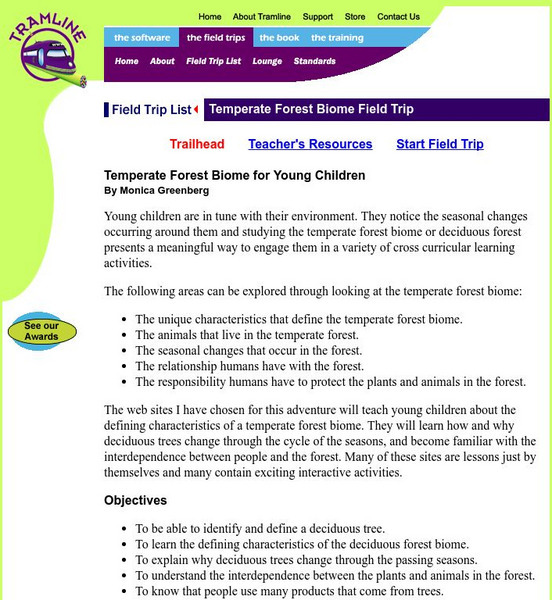
Tramline
Virtual Field Trip: Temperate Forest Biome
Travel with your students on a Virtual Field Trip to learn about Temperate Forest Biomes. You will also discover many informative and interactive websites.
Science Struck
Science Struck: Examples of Tertiary Consumers
Explains what is meant by a tertiary consumer in a food chain and provides examples.
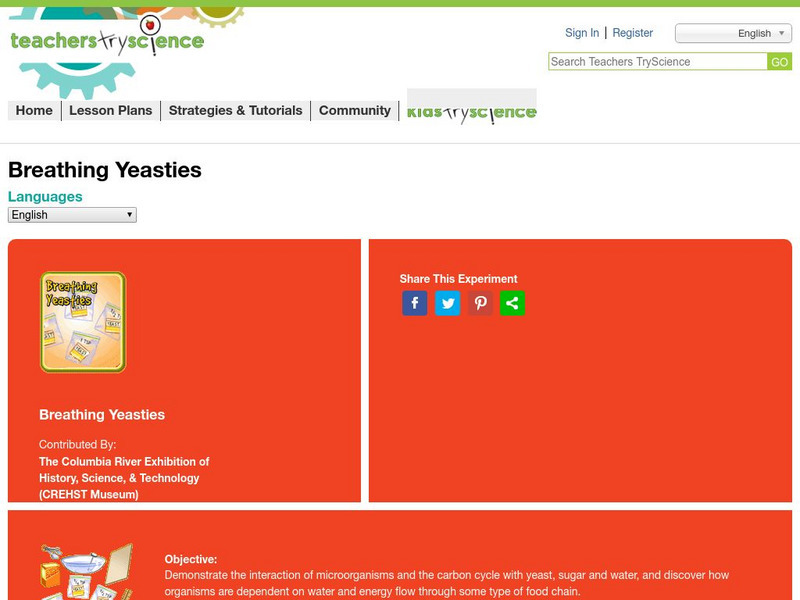
Teachers TryScience
Teachers Try Science: Breathing Yeasties
See how combining yeast, sugar, and water can demonstrate the carbon cycle and show how microorganisms work in the food chain.
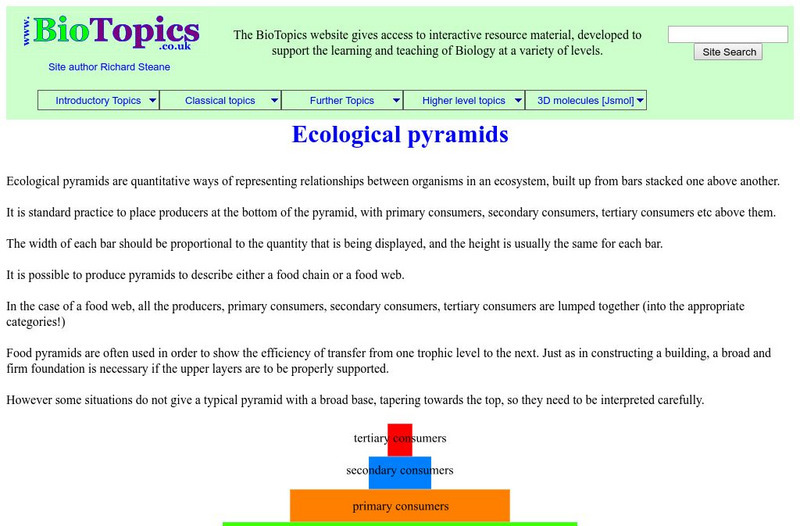
Bio Topics
Bio Topics: Ecological Pyramids
A colorful tutorial about ecological pyramids. Read the information, and then check your understanding with some questions and answers about the topic.
E-learning for Kids
E Learning for Kids: Science: South Africa: How Do Organisms Get Their Energy?
Join Ellen on her trip to the Kaap De Goede Hoop in South Africa, and learn more about plants, animals, and energy.
Mocomi & Anibrain Digital Technologies
Mocomi: What Is an Ecosystem?
Learn about ecosystems, how they work, codependency, and food chains.

BBC
Bbc Schools: Living Things: Food Chains Quiz
How are animals and plants linked? What is the difference between a producer and consumer? How is a predator different from prey? Take this food chain quiz to find out the answers to these questions and more. Links allow you to convert...
Planet Pals
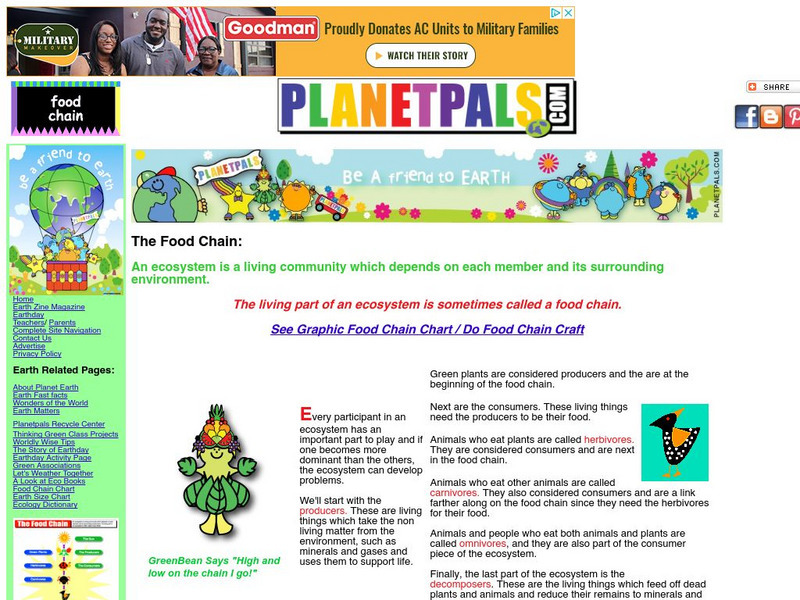
Planet Pals: Producers
This colorful site examines the food chain and delves into an explanation of what producers are and where they fit in an overall ecosystem.
Thomas Jefferson National Accelerator Facility
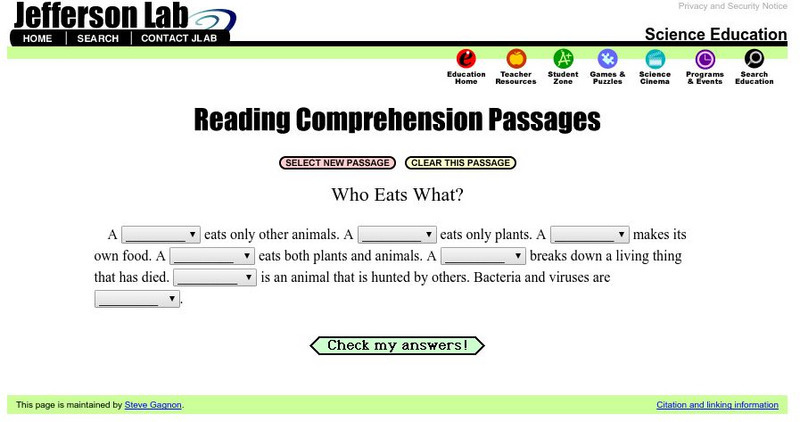
Jefferson Lab: Reading Passages: Who Eats What
Read and fill in the blanks of this passage explaining who eats what. Each blank has a dropdown menu with choices. When you finish, click CHECK MY ANSWERS. If you pick a wrong answer, the right answer will be displayed along with your...
Bill Nye
Bill Nye: Planaria Fishing
In this tutorial, Bill Nye explains how to catch planeria, small carnivorous worms that live in ponds. In addition, he explains their role in the environment.