Hi, what do you want to do?






Oxfam
Oxfam: Cool Planet: Brazil People and Society
A look at the people who make up Brazil including their history, living conditions, culture, sports, and more.
Adventure Learning Foundation
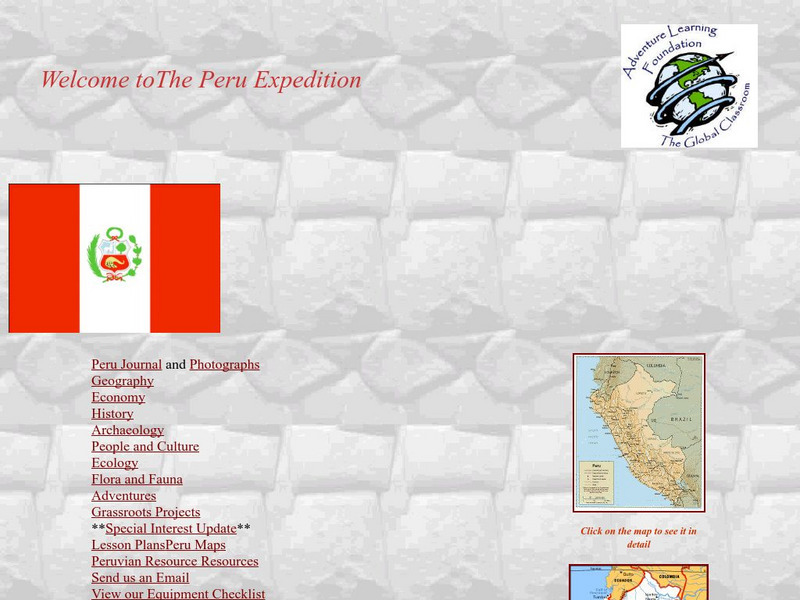
Adventure Learning Foundation: Peru Expedition
Thorough, informative site about the country of Peru. Click here to learn all about Peru.
Lonely Planet
Lonely Planet: Caracas Travel Guide
A quick overview of the city of Caracas, the capital of Venezuela. Click on the map and the links on the left for more in-depth information and photos.
Independence Hall Association
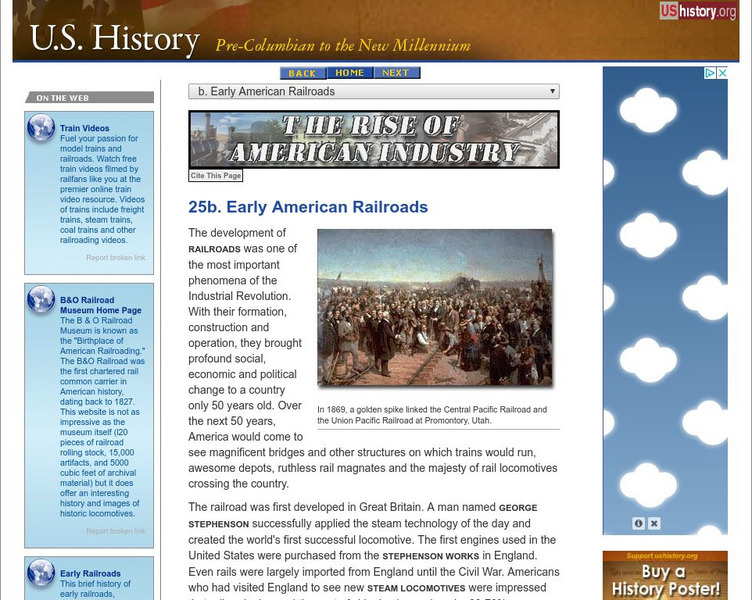
U.s. History: Early American Railroads
Read about the growth of railroads throughout the eastern part of the United States, which greatly reduced transportation costs. See why there was opposition to railroads from many groups. Be sure to look at the stereograph of the...

A&E Television
History.com: Amerigo Vespucci
Amerigo Vespucci was an Italian-born merchant and explorer who took part in early voyages to the New World on behalf of Spain around the late 15th century. By that time, the Vikings had established settlements in present-day North...

National Geographic Kids
National Geographic Kids: Peru
Welcome to Peru! Follow this interactive overview of the country's history, geography, people, government, nature, and more. A map and video are included.
Smithsonian Institution
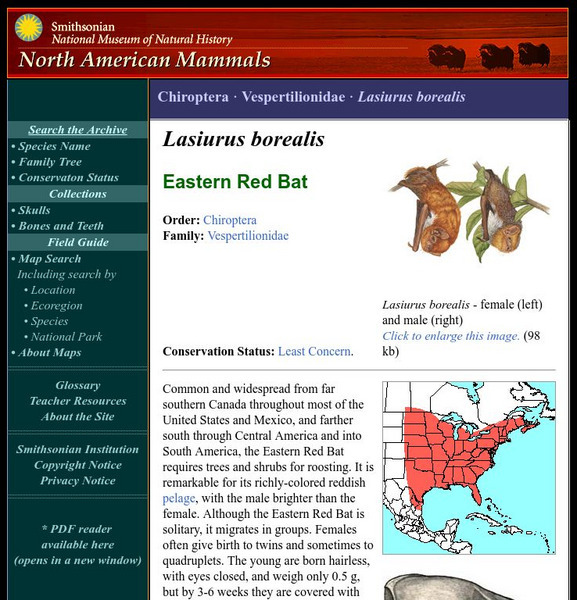
National Museum of Natural History: American Mammals: Eastern Red Bat
Common and widespread from far southern Canada throughout most of the United States and Mexico, and farther south through Central America and into South America, the Eastern Red Bat requires trees and shrubs for roosting. It is...
Smithsonian Institution
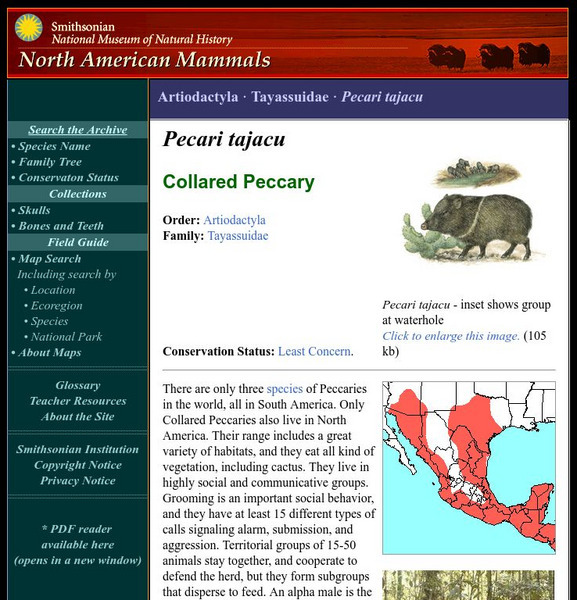
National Museum of Natural History: American Mammals: Collared Peccary
There are only three species of Peccaries in the world, all in South America. Only Collared Peccaries also live in North America. Learn more about the Pecari tajacu, more commonly known as a Collared Peccary, in this easy-to-read species...
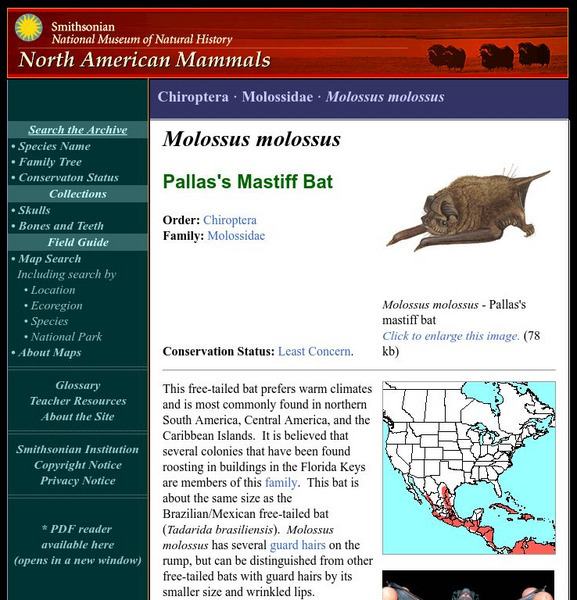
Smithsonian Institution
National Museum of Natural History: American Mammals: Pallas's Mastiff Bat
This free-tailed bat prefers warm climates and is most commonly found in northern South America, Central America, and the Caribbean Islands. It is believed that several colonies that have been found roosting in buildings in the Florida...

Ducksters
Ducksters: Geography for Kids: Uruguay
Kids learn about the geography and history of Uruguay. The history, capital, flag, climate, terrain, people, economy, and population are explored on this site.

Ducksters
Ducksters: Geography for Kids: Suriname
Kids study the geography and history of Suriname. Included on this site is the history, capital, flag, climate, terrain, people, economy, and population of Suriname.
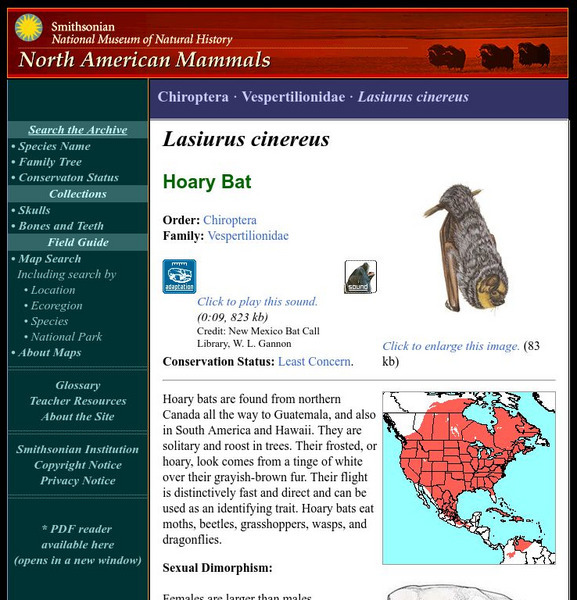
Smithsonian Institution
National Museum of Natural History: American Mammals: Hoary Bat
Hoary bats are found from northern Canada all the way to Guatemala, and also in South America and Hawaii. They are solitary and roost in trees. Learn more about the Lasiurus cinereus, more commonly known as a Hoary Bat, in this...
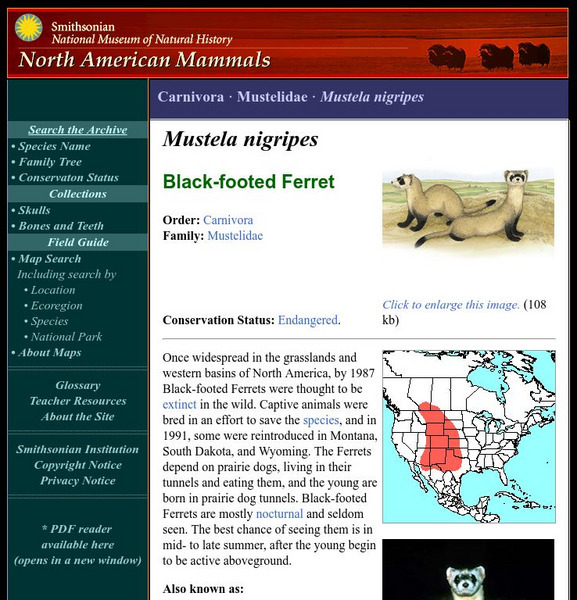
Smithsonian Institution
National Museum of Natural History: American Mammals: Black Footed Ferret
Once widespread in the grasslands and western basins of North America, by 1987 Black-footed Ferrets were thought to be extinct in the wild. Captive animals were bred in an effort to save the species, and in 1991, some were reintroduced...
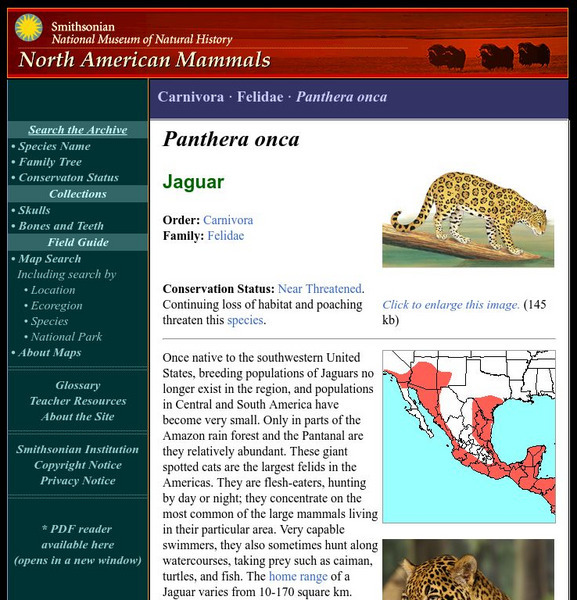
Smithsonian Institution
National Museum of Natural History: American Mammals: Jaguar
Once native to the southwestern United States, breeding populations of Jaguars no longer exist in the region, and populations in Central and South America have become very small. Only in parts of the Amazon rainforest and the Pantanal...
National Geographic Kids
National Geographic Kids: Ecuador
Click-through facts-and-photo file about Ecuador's geography, nature, history, people and culture, and government. Includes a map of the country that pinpoints its South American location.
Other
Brazil
Great resource for studying Brazil. Site contains general information about the country, interesting facts, information about the five regions, and resources for teachers.

Ducksters
Ducksters: Geography for Kids: Ecuador
On this website, students will explore the history, capital, flag, climate, terrain, people, economy, and population of Ecuador.

Ducksters
Ducksters: Geography for Kids: Guyana
Investigate the history, capital, flag, climate, terrain, people, economy, and population of Guyana on this website.

Ducksters
Ducksters: Geography for Kids: Argentina
Investigate the history, capital, flag, climate, terrain, people, economy, and population of Argentina on this website.

Ducksters
Ducksters: Geography for Kids: Brazil
On this website, the history, capital, flag, climate, terrain, people, economy, and population of Brazil is discussed.
Smithsonian Institution
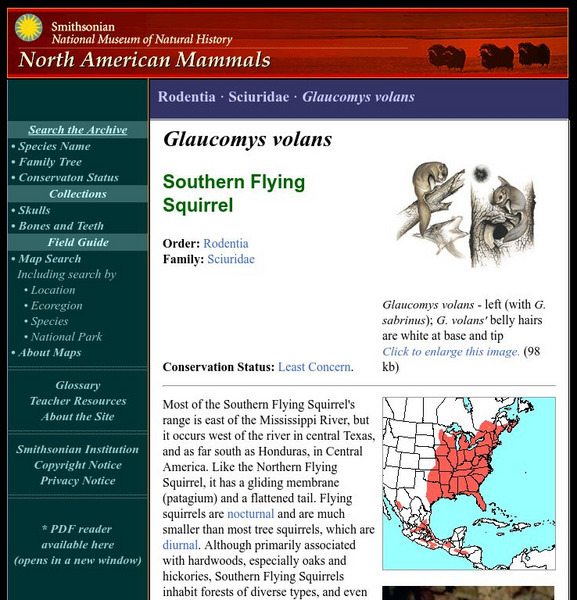
National Museum of Natural History: American Mammals: Southern Flying Squirrel
Most of the Southern Flying Squirrel's range is east of the Mississippi River, but it occurs west of the river in central Texas, and as far south as Honduras, in Central America. Like the Northern Flying Squirrel, it has a gliding...