Hi, what do you want to do?






Curated OER
The Chesapeake Bay in Captain John Smith's Time
When Captain John Smith visited the Chesapeake Bay in the summer of 1608, what types of animals and habitats did he encounter? Your young historians will analyze primary source documents to answer this question, as well as compare...

Science Matters
Ecosystem Pre-Assessment
Test scholars' knowledge of ecosystems with a 20-question pre-assessment. Assessment challenges learners to answer multiple choice questions, read diagrams, and complete charts.

Science Matters
Post-Assessment
Twenty questions make up an assessment designed to test super scientists' knowledge of ecosystems. Scholars answer multiple-choice and short-answer questions about organisms, food chains, energy flow, and more.

Oklahoma State University
Hairy Heredity
Young scholars learn that heredity comes down to the flip of a coin with this cross-curricular math and science lesson. Using smiley faces as a model, students toss coins to determine which dominant or recessive traits...

Serendip
Structure and Function of Cells, Organs and Organ Systems
Cells of different organs have unique cell functions. Learn how cell functions vary depending on their roles in the body using an inquiry-based activity. Scholars analyze the cell structure to make comparisons to its functions, allowing...

Annenberg Foundation
Annenberg Learner: The Habitable Planet: Unit 9: Biodiversity Decline
This is an extensive learning module on biodiversity and its decline. It looks at ways biodiversity is threatened, the possibility of another mass extinction, the causes and consequences of habitat loss, factors that drive biodiversity...
University of Manchester
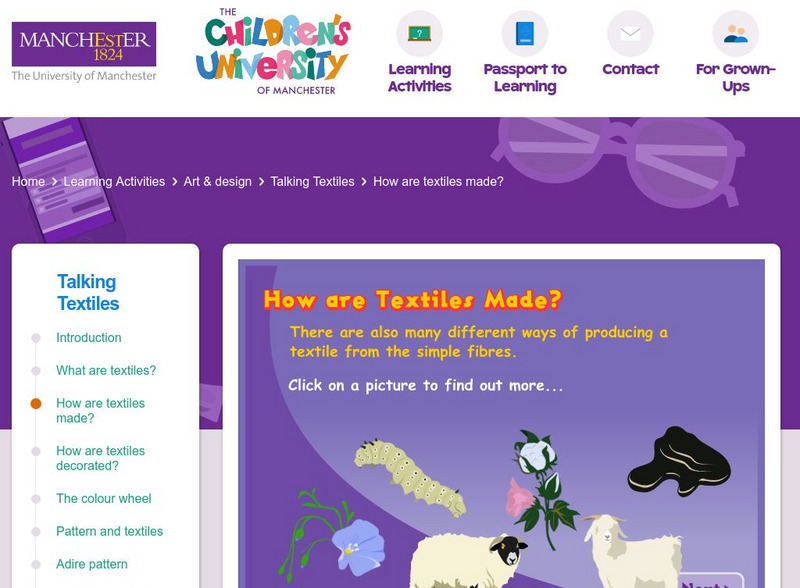
Children's University of Manchester: Talking Textiles: How Are Textiles Made?
Interactive exploration of textiles and cloth derived from plants, animals, and petrochemicals.