Hi, what do you want to do?






PBS
Nova: World in the Balance: Human Population and Global Trends
A companion site to Nova's film that examines "human populations and environments." Find some fascinating facts in the interactive slide shows "Human Numbers Through Time," and "Global Trends Quiz."

PBS
Pbs Learning Media: Crash Course Ecology: Human Population Growth
Hank is here to tell us the specifics of why and how human population growth has happened over the past hundred and fifty years or so, and how those specifics relate to ecology. [10:53]
Other
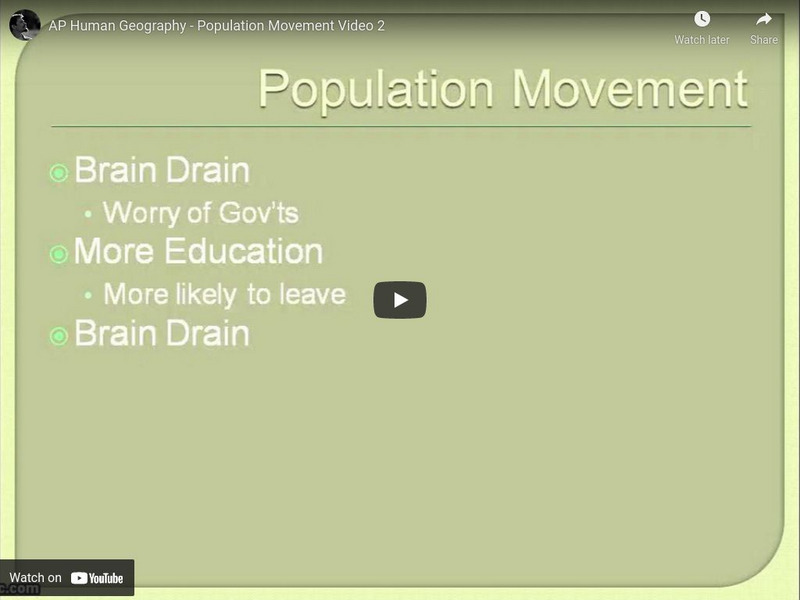
Population Movement Video 2
A teacher-created Geography lesson on population movement. He discusses the push and pull factors that drive people to leave a place and move to a new place, and how some migrations are voluntary, while others are involuntary or forced....
Other
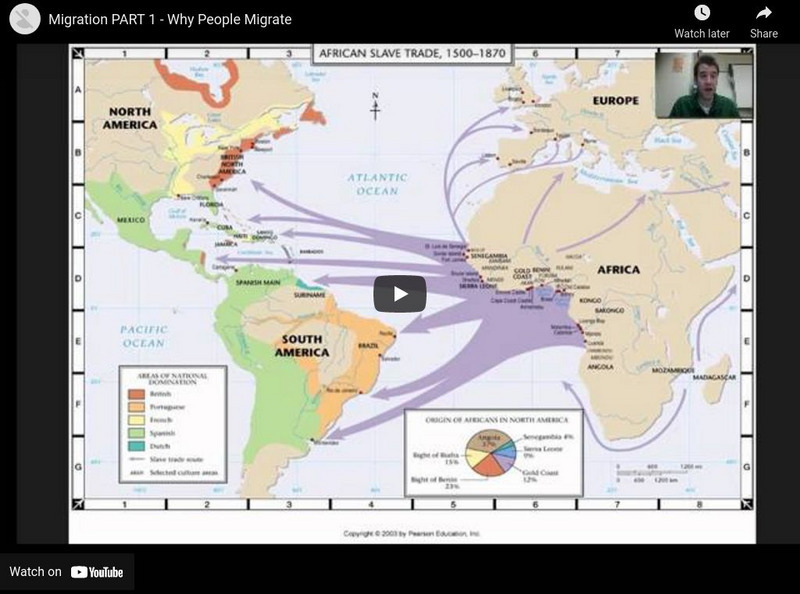
Michael Kauls: Migration Part 1 Why People Migrate
A teacher-created video that focuses on the push and pull factors and intervening obstacles that impact upon why people migrate. [12:49]

Other
Youtube: Population Distribution & Density
Where do most people live? What do nations do in an effort to understand their own population distribution? This short video introduces the concepts of population distribution and density. [1:04]
Other
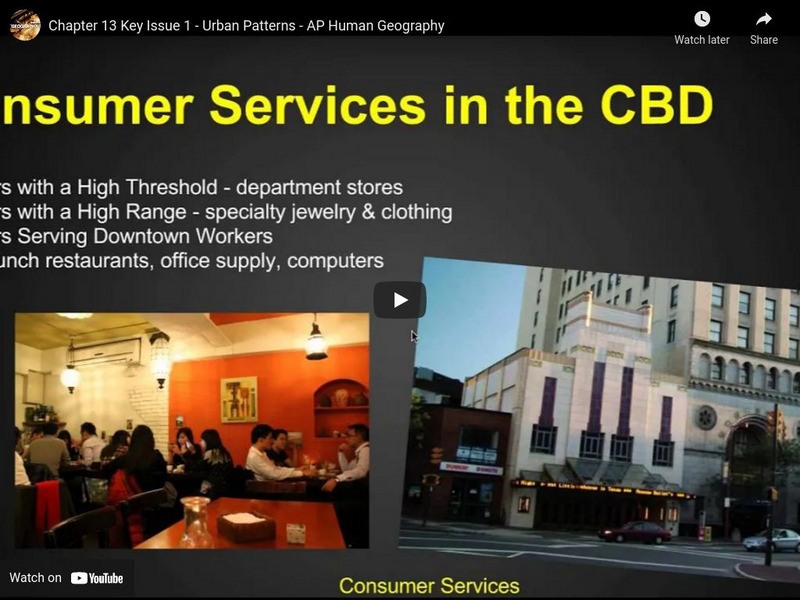
Mr. Mac Alpine: Patterns of Human Geography, Part 1
Mr. MacAlpine explains the patterns of human settlement and population distribution in Canada and the world, as well as some of the factors that contribute to population density. [15:48]
NPR: National Public Radio
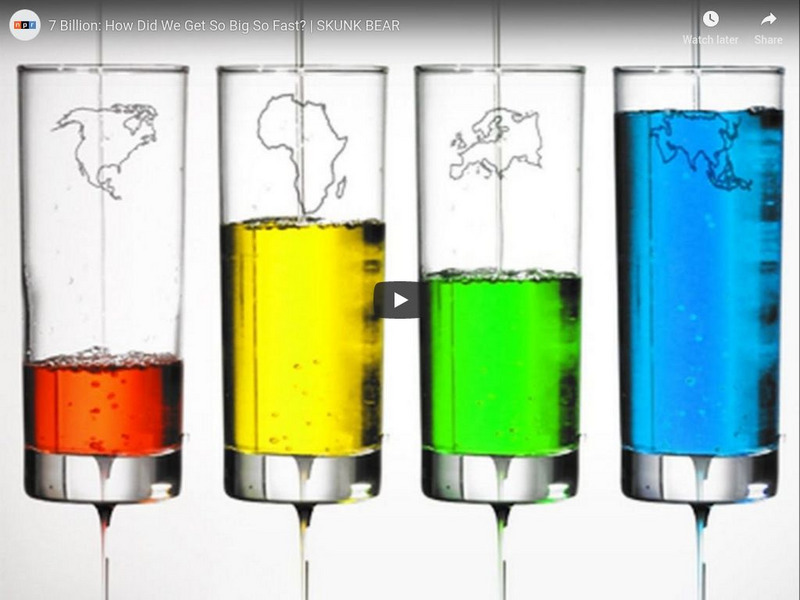
Npr Videos: Skunk Bear: 7 Billion: How Did We Get So Big So Fast?
Just over two centuries ago in 1804, the global population was 1 billion. But better medicine and improved agriculture resulted in higher life expectancy for children, dramatically increasing the world population, especially in the West....
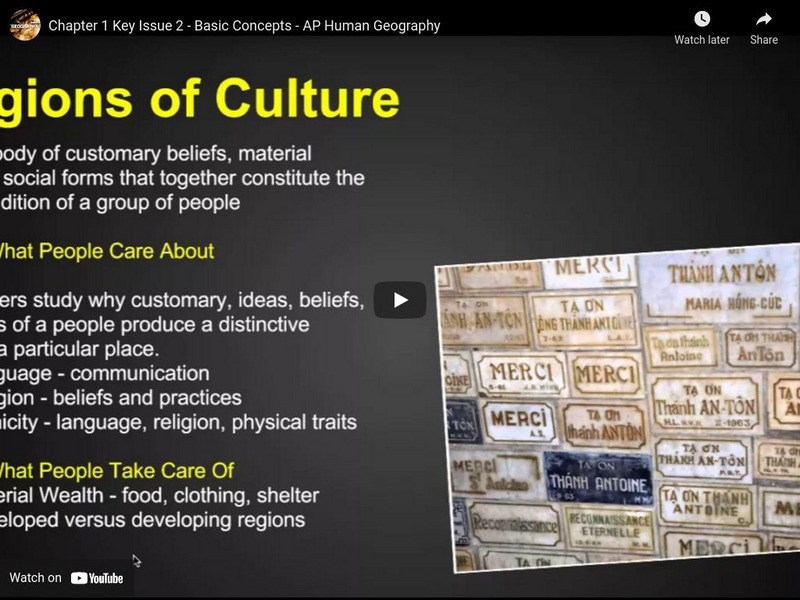
Other
Youtube: Mr. Mac Alpine: Patterns of Human Geography, Part 2
Mr. MacAlpine explains how geographers compare the standard of living in various countries around the world, using living standard, literacy, gross domestic product and human development index. [8:38]