Hi, what do you want to do?






Physics Girl
How I broke a wine glass with my VOICE (using science!)
If you sing at a wine glass at its exact resonant frequency, you can break the glass without the help of a speaker! Learn the physics behind that.
Next Animation Studio
Graphene offers possibility of low-cost desalination
Scientists at MIT have developed a water desalination technology using graphene that offers a low-cost alternative to existing technologies. Engineers introduced pores measuring 1 billionth of a meter into the graphene, enabling it to...
Massachusetts Institute of Technology
Mit: Science Out Loud: Engineering River Cleanups
Figuring ways to clean up contaminated waters is a huge challenge. But luckily, a simple piece of plastic that mimics fish fat can help! [3:05]

Massachusetts Institute of Technology
Mit: Science Out Loud: The Physics of Skydiving
When you fall thousands of feet from the sky, it seems like something strange is happening with the laws of physics. Turns out, everything relies on a simple force - DRAG! Watch these MIT students demonstrate fun moves while skydiving!...
Massachusetts Institute of Technology
Mit: Science Out Loud: What Is a Fractal?
Fractals are complex, never-ending patterns created by repeating mathematical equations. Yuliya, an undergrad in Math at MIT, delves into their mysterious properties and how they can be found in technology and nature. [4:12]
Massachusetts Institute of Technology
Mit: Science Out Loud: Creating Invisibility Cloaks
It's not just movie magic - invisibility cloaks could be feasible, just by manipulating the crazy ways that light bounces, bends, and mixes! Prashanth and Maria take you behind the physics of light and how an invisible cloak could...
Massachusetts Institute of Technology
Mit: Science Out Loud: What Is a Semi Conductor
Semiconductors are in everything from your cell phone to rockets. But what exactly are they, and what makes them so special? Find out from Jamie, a Ph.D. student in Electrical Engineering and Computer Science at MIT. [4:45]
Crash Course
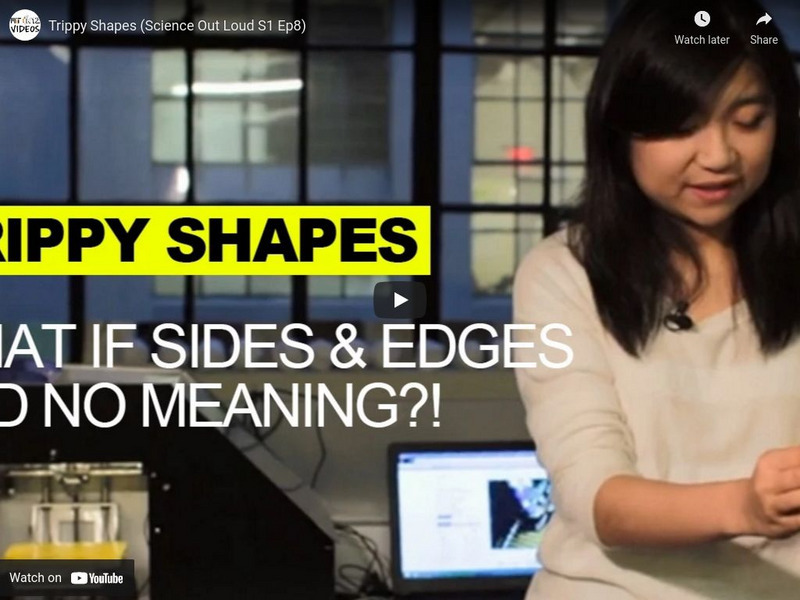
Crash Course: Trippy Shapes
In school, you learn about shapes with sides and edges - but there are weird shapes out there (beyond our 3 dimensions) that defy our normal idea of geometry. QuanQuan and Jenny explain, knit, and 3D print their way through trippy...
University of Massachusetts
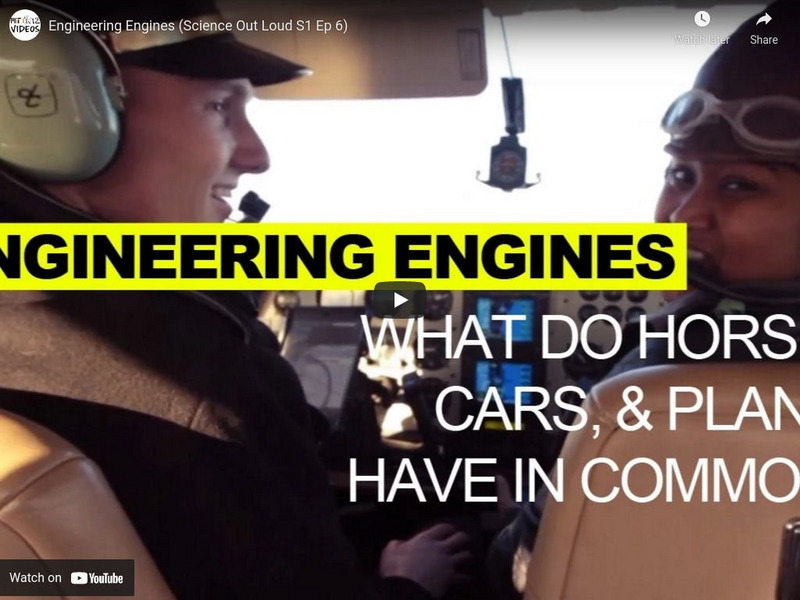
Science Out Loud: What Do Horses, Cars, & Planes Have in Common?
Ever wondered what horsepower really means, and what horses have to do with other modes of transportation? Luke and Abhi take us behind how engines work in machines all around us, including the surprising ways that they're all related!...
Massachusetts Institute of Technology
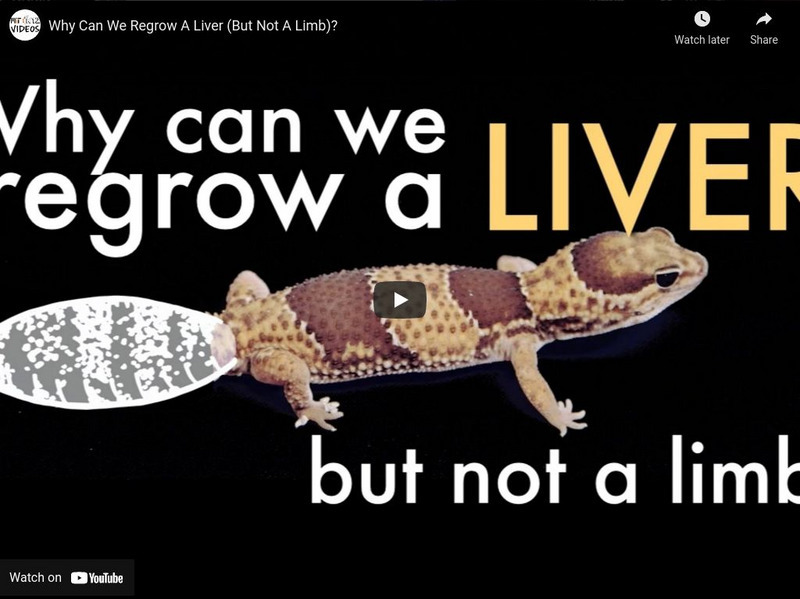
Mit: Science Out Loud: Why Can We Regrow a Liver but Not a Limb?
Unlike lizards, humans can't regrow limbs. But we can kinda-sorta regenerate our livers. Ceri, an undergrad in Biology and Comparative Media Studies at MIT, explains how and why. [4:06]

Massachusetts Institute of Technology
Mit: #Ask Mit: Could You Make a Robot With Feelings?
"Could you make a robot with feelings?" Find out the answer from Dr. Goren Gordon. [3:11]
Other
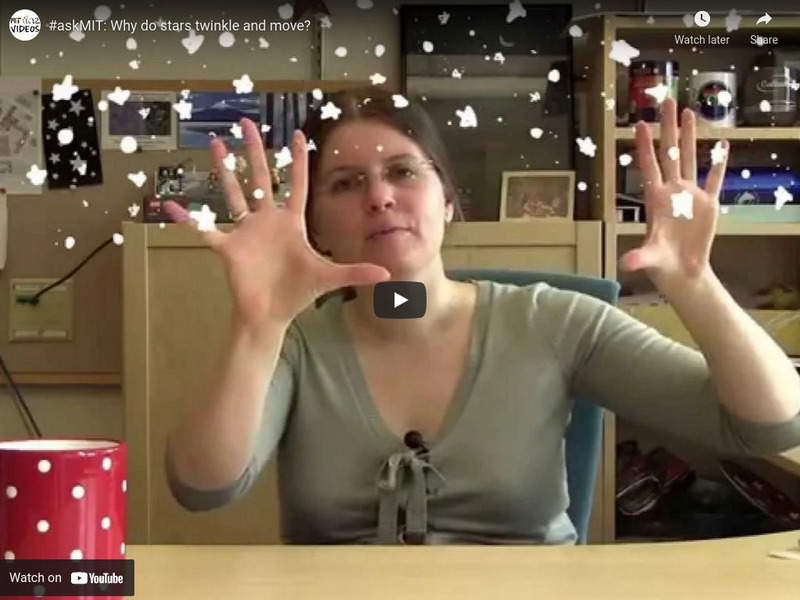
Mitk12 Videos: #Ask Mit: Why Do Stars Twinkle and Move?
Astronomer and MIT professor Anna Frebel answers the questions, "Why do stars twinkle instead of shine steady?" and "Do stars move at night or do they just look like they do because of the earth spinning?" [3:01]

Other
Mitk12 Videos: #Ask Mit: How Hot Is the Core of Venus?
MIT professor and astronomer, Anna Frebel explains, "How hot is the core of Venus?" [1:01]

Other
Mitk12 Videos: #Ask Mit: Could You Make a Unicorn by Crossing Dna?
Biologist, Dr. Sera Thornton entertains the question, "Is there any way to make a unicorn by crossing DNA?" [2:46]
Other
Mitk12 Videos: #Ask Mit: Could We Engineer Ourselves to Need Less Oxygen?
MIT biologist, Dr. Nathaniel Schafheimer answers the question, "Could we engineer ourselves to need less oxygen someday?" [2:58]
Massachusetts Institute of Technology
Mit: #Ask Mit: What Does the Future of Nuclear Science Look Like?
Senior reactor operator at the MIT Research Nuclear Reactor, Sarah Don discusses what the future of nuclear science looks like. [2:00]
Other
Mitk12 Videos: #Ask Mit: Why Don't We Use All of Our Brain Cells?
"Why don't we use all our brain cells and what do we do with the ones we don't use?" Find out from Hannah Iaccarino, a graduate student in Brain and Cognitive Sciences at MIT and a researcher at the Picower Institute for Learning and...
Other
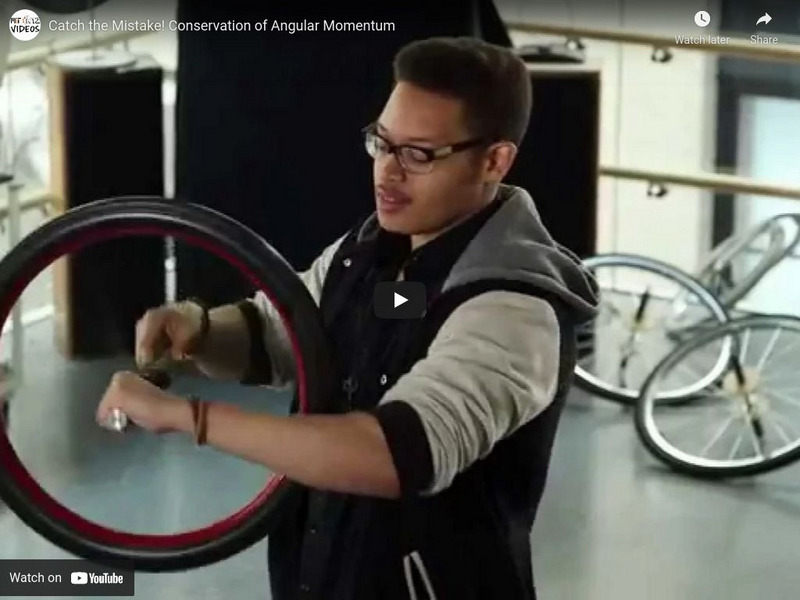
Mitk12 Videos: Mit Physics Demos: Conservation of Angular Momentum
Watch as Ryan spins a bike wheel where nothing crazy happens. But something weird happens when he flips it over. Learn about the conservation of angular momentum in this demonstration. [2:15]

Other
Mitk12 Videos: Mit Physics Demos: Exploding Wire & Ohm's Law
When Natalia flips a switch, a huge explosion happens- watch and learn as she shows and explains Ohm's law. [2:24]
Crash Course
Crash Course: The Incredible, Smellable Science of Your Farts
Behind every fart (and poop) is an army of gut bacteria undergoing some crazy (and crazy useful) biochemistry. Learn what they have in common with beer brewing, and why we'd want to know about this science anyway. [4:53]

Massachusetts Institute of Technology
Mit: Science Out Loud: Solving Biology's Mysteries With Plants
Some of the most powerful and useful things in our world come from plants. Who knew they could help us unlock some of the biology's mysteries - all using an approach of mapping biological pathways! [3:55]
Crash Course
Crash Course:why Do We Have Snot?
This video discusses the reasons that the body produces "snot".