Hi, what do you want to do?






SciShow
Earth's Not-So-Juicy Center
Hank takes us on a journey to center of the Earth to explain both how the solid core formed and why it is so important for life as we know it.
SciShow
Victorian Pseudosciences: Solving Murders with Eyeballs
In the 1800s, Wilhelm Kühne created an image of a window from the eyes of a rabbit. Was this technology applicable to humans? Hosted by: Michael Aranda
SciShow
4 Real Inventions Inspired by Science Fiction
Where science fiction becomes science fact - that is the place Hank is exploring in today's episode of SciShow. Many inventions we use today were first imagined in stories that described fantastical futures. Hank talks...
SciShow
Its True The Sun Really Does Flash Green
The mythical green flash at sunset isn't actually a myth! Stefan explains why it happens, and how you can see it.
SciShow
Earth's Not-So-Juicy Center
Hank takes us on a journey to center of the Earth to explain both how the solid core formed and why it is so important for life as we know it.
Curated Video
Jules Verne for Kids | Bedtime History
Learn about the world-famous French author whose interest in science, technology, and adventure wrote books like 20,000 Leagues Under the Sea and became a founder of the genre that became known as "science fiction."
Curated Video
Ray Bradbury
Awarded a Pulitzer Prize Special Citation, recognizing a lifetime of influential literary works, Ray Bradbury wrote from a desire to “live forever”. Through sci fi, fantasy, horror and mystery to themes of death, loneliness and the dark...
Curated Video
The Golden Age of Sci_Fi Literature
Coinciding with the Machine Age, the Golden Age of Sci-Fi Literature saw American authors combine factual science with fantastical fiction to take readers into the farthest reaches of the imagination.
PBS
The Evolution of Science Fiction (Feat. Lindsay Ellis)
Correction: At 1:49, we accidentally said that Mary Shelley's Frankenstein was published in 1918, when it was published in 1818. We regret the error -- thanks to Stephen Pershing for catching this! Stories, tales, and myths from all...
Other
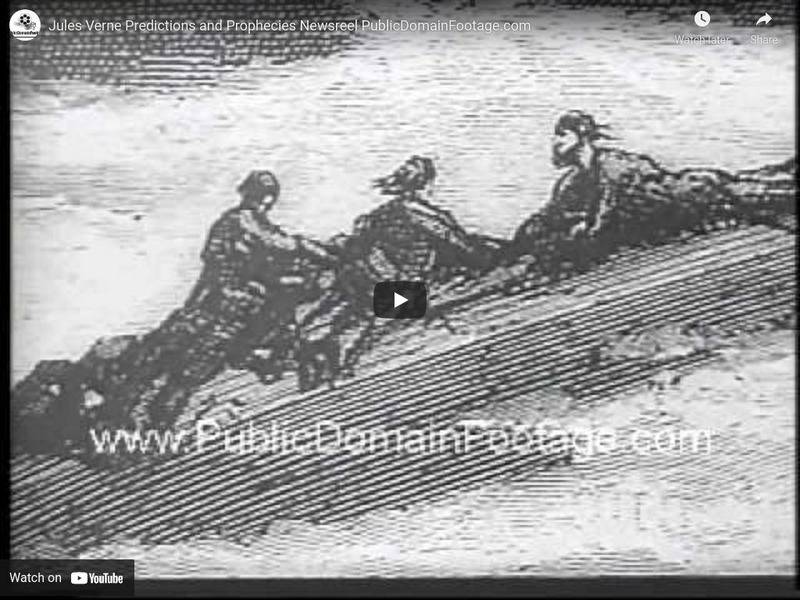
Youtube: Jules Verne Predictions
This newsreel footage discusses the inventions that were foreshadowed in the writings of science fiction author Jules Verne. [1:57]