Hi, what do you want to do?






Curated Video
Understanding Current Resistance and Potential Difference in Electrical Circuits
This video lecture explains the concepts of resistance, current, and potential difference in an electrical circuit. The lecturer defines what resistance is and how it affects energy consumption in a circuit. The video also teaches how to...
Science Buddies
Basic Circuits Kit: Conductors and Insulators
This video shows how to use a few simple materials (lightbulb, batteries, and alligator clips) to create a circuit to light up a lightbulb. From there, the video shows how to use the circuit to experiment and determine if various...
Curated Video
Series Circuits: Resistance, Current, and Potential Difference
This is a lecture video on series circuits, which explains the difference between series circuits and parallel circuits. The video looks at how resistance, current, and potential difference vary in a series circuit. It discusses how the...
Curated Video
Understanding Parallel Circuits
This is a lecture video on parallel circuits. The video explains the difference between parallel circuits and series circuits and then focuses on investigating parallel circuits in more detail. The video describes how the current flows...
Visual Learning Systems
Introduction to Resistance and Electric Circuits
This video explains the concept of resistance in the flow of electric charge. It also discusses how resistance is utilized in devices like light bulbs and toasters, where electricity is converted into heat and light through the use of...
University of Virginia
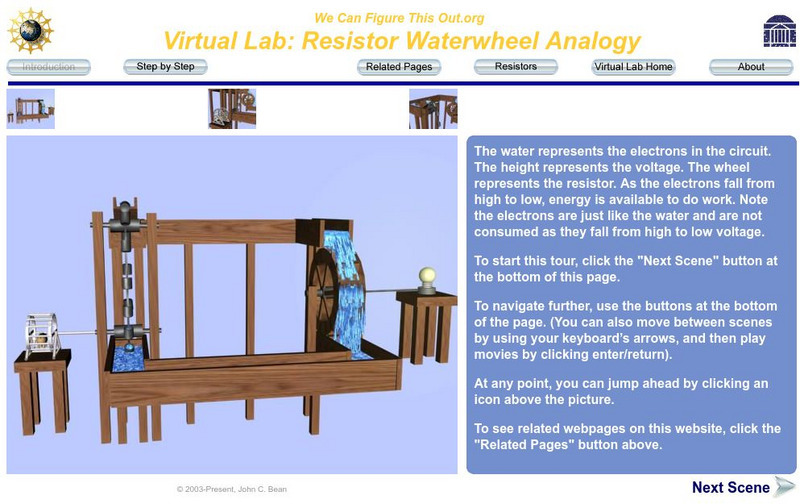
Uva Virtual Lab: Resistor Waterwheel Analogy
These videos will increase comprehension of how a resistor works by comparing it to a waterwheel.
University of Virginia
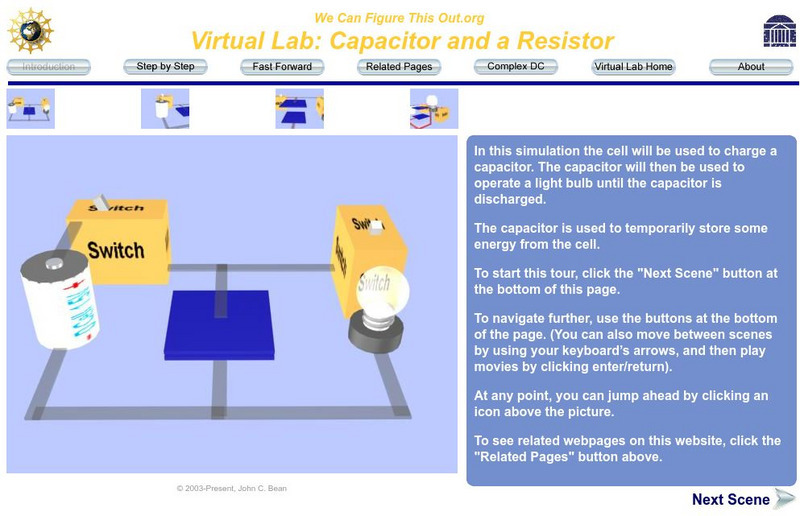
Uva Virtual Lab: Capacitor and a Resistor
In this simulation the cell will be used to charge a capacitor. The capacitor will then be used to operate a light bulb until the capacitor is discharged.

Khan Academy
Khan Academy: Electricity and Magnetism: Circuits (Part 4)
Analyzes a more complicated resistance problem. [7:06]

Khan Academy
Khan Academy: Electricity and Magnetism: Circuits (Part 2)
A discussion of how resistors work in a series. [11:07]

Khan Academy
Khan Academy: Resistance: Pencil Resistor
A pencil causes a change in the deflection, similar to the effect of adding an electromagnet. Why? Watch this video as a pencil is used in a circuit as a resistor! [1:03]

University of Virginia
Uva Virtual Lab: Capacitors and Resistors in Parallel
In this simulation, the cell will be used to charge a capacitor. The capacitor will then be used to operate two light bulbs until the capacitor is discharged.
Other
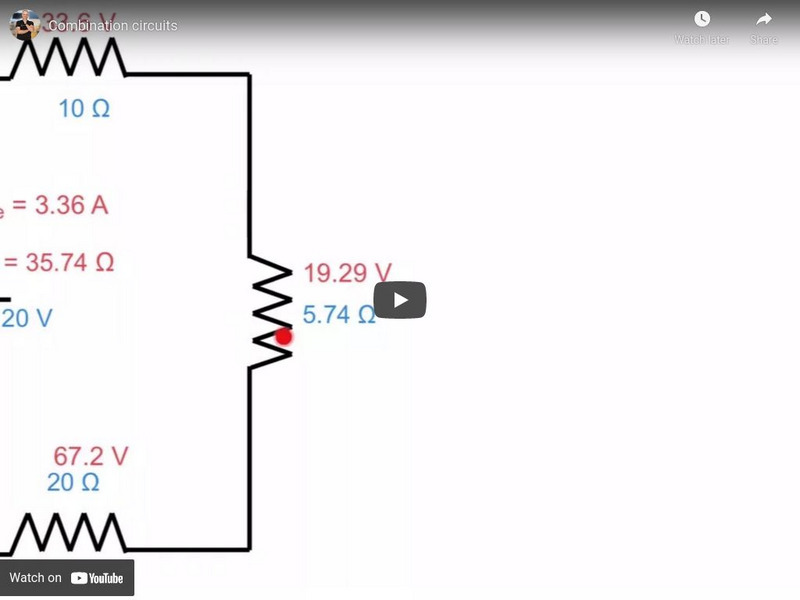
The Electric Academy: Combination Circuits
Combination circuits can seem daunting at first. If you remember the rules of series and parallel circuits you'll be just fine. This video demonstrates how to make calculations about power and resistance in a mixed circuit. [10:23]

Khan Academy
Khan Academy: Question 2 Ab: 2015 Ap Physics 1 Free Response
See a worked example of question 2ab: 2015 AP Physics 1 free response.

Khan Academy
Khan Academy: Electric Power
In this video, David from Khan Academy derives the formula to find the power used by a resistor. [10:42]