Hi, what do you want to do?






Hip Hughes History
The Constitutional Convention Explained in One Minute
Get a super condensed primer on the Constitutional Convention held in 1787 to replace the Articles of Confederation with the new stronger US Constitution.
Mr. Beat
The Differences Between the North and South Before the Civil War
Mr. Beat teaches a geography lesson to help explain what caused the American Civil War.
TMW Media
The fascinating history of Pirate Ships
We’re traveling to the oldest city in the US and we’ll find that it’s as active as ever. We can’t visit St. Augustine without letting you sample a drink from the Fountain of Youth! We show you the very spot where the city’s history...
Cerebellum
The American Civil War And Reconstruction: 1862-1869 - Post Civil War Laws And Constitutional Amendments
American democracy has a lineage of written records that we can trace to show the development of our nation, and how each document builds on those before it to make our foundation of freedom stronger. This video looks at the 13th...
Cerebellum
Colonization Of North America: Spanish Settlements - Pirates! Spanish Settlements In New Mexico
Chronicles the exploits of Cortes, De Soto, and Coronado; and Spanish incursions into South & Central America, Mexico and the American Southwest. This video looks at pirates who tried to intercept Spanish ships bringing home a bounty of...
Cerebellum
Colonization Of North America: Spanish Settlements - Introduction And Background
Chronicles the exploits of Cortes, De Soto, and Coronado; and Spanish incursions into South & Central America, Mexico and the American Southwest. This video introduces the context of Spanish exploration of North America and their...
Other
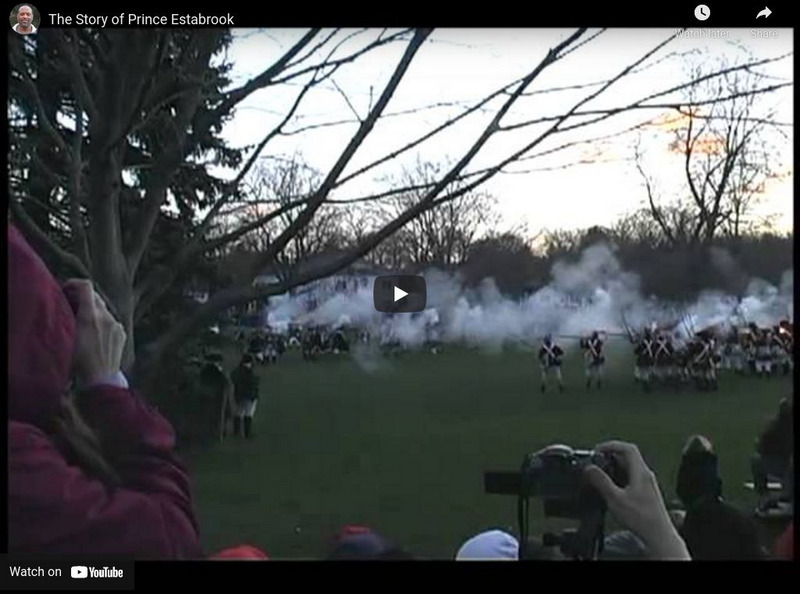
Kevin Brooks: Youtube: The Story of Prince Estabrook
Prince Estabrook was a man who was enslaved in the the northern colonies of the United States in the 18th century, as well as a Minuteman in theRevolutionary War. This video describes his enslavement and military career. [10:23]
Khan Academy
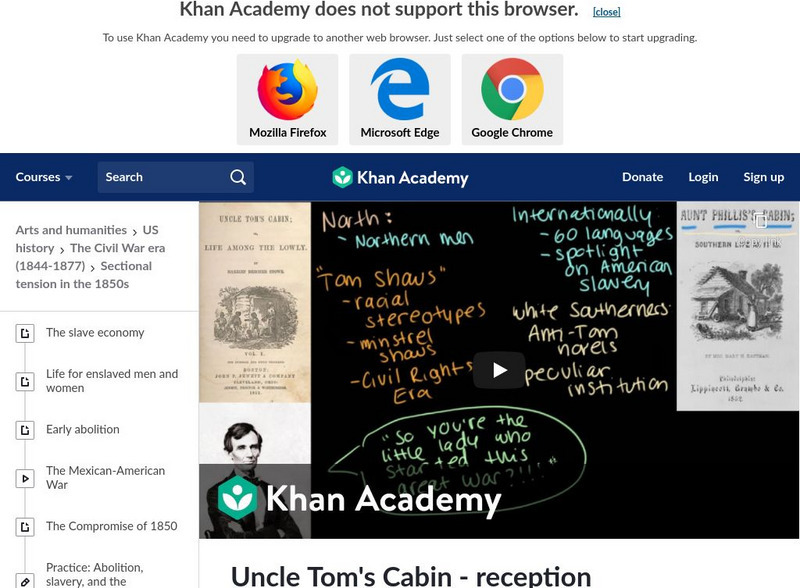
Khan Academy: Uncle Tom's Cabin Reception and Significance
How did Northerners, Southerners, and the international community receive Harriet Beecher Stowe's abolitionist novel? Kim and Becca discuss the reception and far-reaching consequences of the novel Uncle Tom's Cabin. [7:09]

Khan Academy
Khan Academy: Us History: 1754 1800: Constitutional Compromises: Three Fifths
During the Constitution Convention, the Framers made several compromises, including the method for counting enslaved Africans for the purposes of the population (the Three-Fifths Compromise) and the end of the international slave trade....

A&E Television
History.com: History Shorts: Who Built the White House?
The White House is one of the great patriotic symbols of America, but its construction history gets into the darkest parts of the nation's past. Watch this video [1:00] to learn about it.
Encyclopedia Britannica
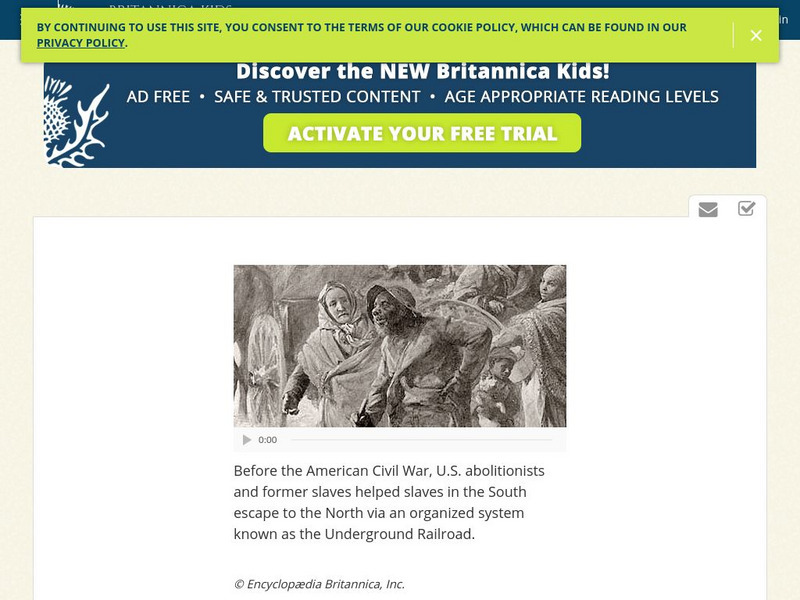
Encyclopedia Britannica: Britannica Kids: Underground Railroad
Learn how abolitionists and former slaves helped slaves in the South escape to the North via an organized system known as the Underground Railroad via this video encyclopedia entry. [3:28]
Other
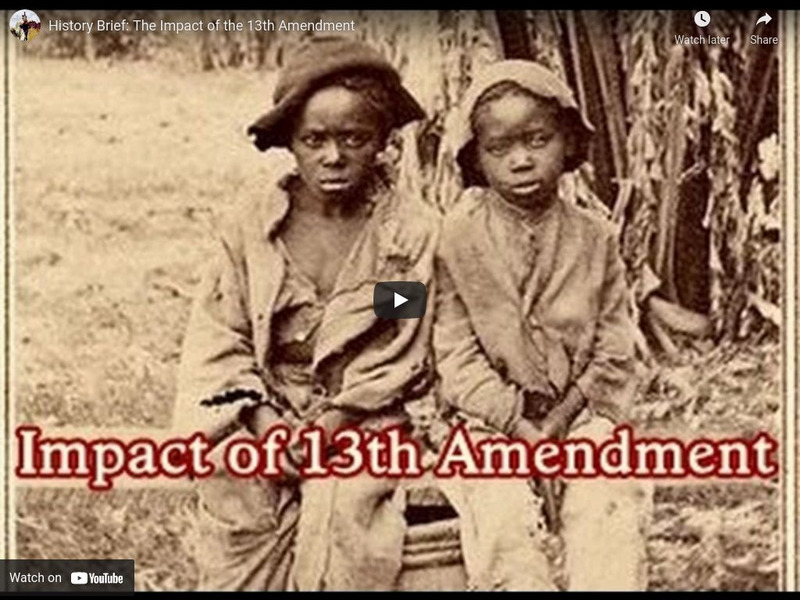
Reading Through History: History Brief: The Impact of the 13th Amendment
This video examines the impact of the 13th Amendment to the U.S. Constitution. On December 6, 1865, the 13th Amendment, abolishing slavery in the United States, became law. How did former slaves react to their newfound freedom? [2:52]

A&E Television
History.com: The Underground Railroad
At this site from the History Channel, you can read about the famous people and places associated with the Underground Railroad, "the term used to describe a network of persons who helped escaped slaves on their way to freedom."