Hi, what do you want to do?






FuseSchool
Hydrolysis & How It Is Used To Make Soaps
Learn the basics about making soaps using hydrolysis. What are the methods and techniques used to make soaps? What is hydrolysis? Find out more in this video!
Professor Dave Explains
Expressing Concentration by Mass Percent
We know how to express solution concentration in terms of molarity and molality, but the common public also needs to communicate concentration for certain reasons, and they don't really know about moles and things like that. What do they...
Curated Video
Acids and Alkalis: Understanding pH and Indicators
The video discusses acids and alkalis, the pH scale, and indicators. It explains what acids and alkalis are in terms of the ions they form when dissolved in water, and how their concentrations can be measured using the pH scale. The...
Professor Dave Explains
Neutralization Reactions
We know about acids and bases, and we know about acid-base reactions, so what is a neutralization reaction?
Curated Video
Introduction to Acids, Bases, and Neutralization Reactions
The video provides an explanation of acids, bases, and neutralization. It begins by discussing the character difference between acids and bases and how they react together to neutralize each other. The video also covers the general...
Curated Video
Exothermic and Endothermic Reactions: Experiments and Definitions
The video is a lecture presentation on exothermic and endothermic reactions. The presenter explains the definitions of these reactions and demonstrates two experiments to determine whether a reaction is exothermic or endothermic. The...
Curated Video
The Importance of Sodium
Sodium plays a crucial role in our daily lives. Learn about its history, chemical properties, and the importance of maintaining a balanced intake for our overall health and well-being.
FuseSchool
Acid-Base Titration
Learn the basics about acid-base titration as part of the soluble salts topic within the overall 'acids and bases' topic.
FuseSchool
Strong and Weak Alkali's
An acid is a substance that will dissociate in water to give a proton (or H+ ion) and a conjugate base. An acid is considered to be strong if dissociation nears 100%, and weak if dissociation is usually less than 1%. In this lesson, we...
Curated Video
Ions and Ionic Compounds
The program offers a brief review of ions. Students will learn what determines the charge on an ion and how ionic bonds are formed. Viewers will come to understand that ionic bonds form due to electrostatic attraction between two ions...
FuseSchool
How To Balance Equations - Part 2
Continue learning about balancing equations, as a part of chemical calculations. The law of conservation of mass states that no atoms are lost or made during a chemical reaction. There are different ways of arranging the atoms. Chemical...
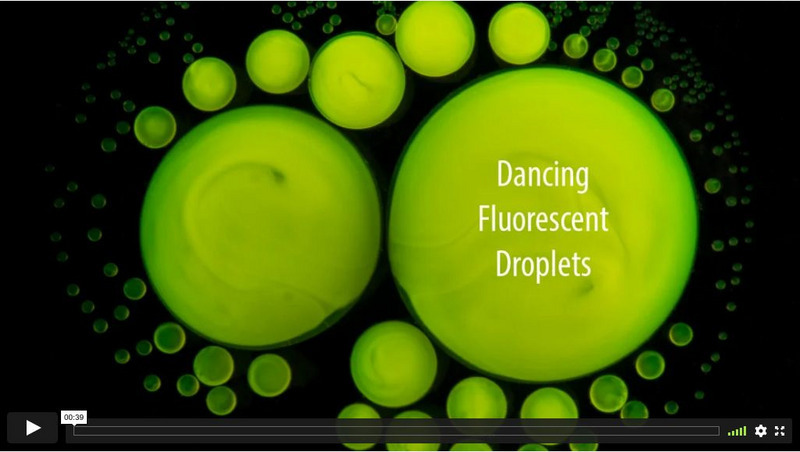
Beautiful Chemistry
Vimeo: Beautiful Chemistry: Beautiful Reactions: Dancing Fluorescent Droplets
We mixed the oily chemicals inside fluorescent sticks, then added sodium hydroxide (NaOH) solution to the mixture, which was inspired by Mr. Theodore Gray's Mad Science 2. What we got was something interesting: colorful fluorescent...

Khan Academy
Khan Academy: Acid Base Properties of Salts
This video shows examples of different kinds of neutralization reactions and analyzes the pH of the resulting salt solution. [7:32]