Hi, what do you want to do?






Makematic
The Monroe Doctrine
In 1823, President James Monroe redefined U.S. foreign policy with a three-paragraph addition to his State of the Union address. The Monroe Doctrine ultimately led to a new era of U.S. imperialism.
Makematic
Causes of the Spanish-American War
Between 1895 and 1898, as Cuban revolutionaries fought for independence, a number of social, economic and political factors drove the United States and Spain to the brink of war.
Gilder Lehrman Institute of American History
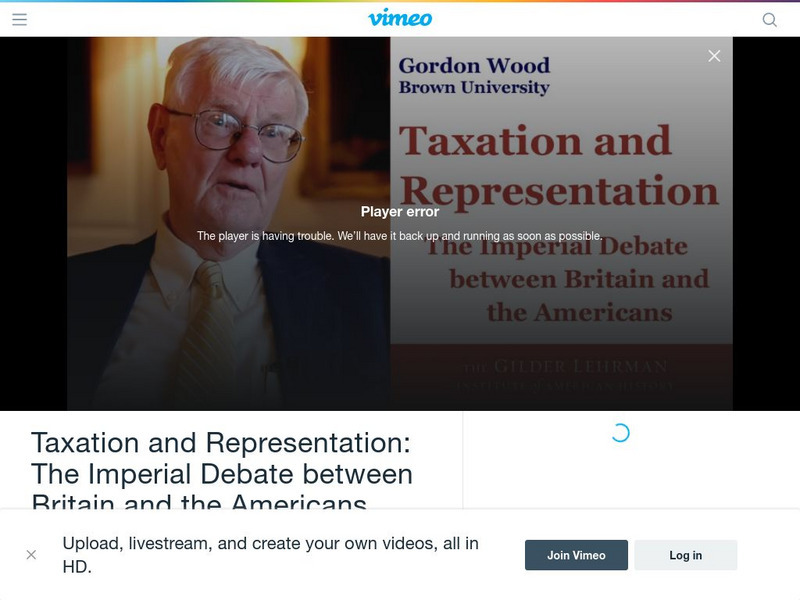
Gilder Lehrman Institute: Taxation and Representation
"Taxation and Representation: The Imperial Debate between Britain and the Americans," presented by Gordon Wood, is focused on the United States around the time of the Boston Tea Party. The public in the U.S. wanted to be represented in...
Gilder Lehrman Institute of American History
Gilder Lehrman Institute: History Now: American History and the World
[Free Registration/Login Required] Thomas Bender presents a documentary tying together American history with the world. He discusses the development of United States nationalism, globalization, and economics during the discovery of the...
Gilder Lehrman Institute of American History
Gilder Lehrman Institute: History Now: Russian American Diplomacy During the Civil War
[Free Registration/Login Required] Historian Norman Saul addresses a crowd discussing why Russia was interested and supportive of the Civil War in America. Russia was also facing unrest over serfdom similar to the conflict over slavery...