Hi, what do you want to do?






PBS
How Evolution Works (And How We Figured It Out)
As a scientific concept, evolution was revolutionary when it was first introduced. With the help of all three of our hosts and the Smithsonian National Museum of Natural History’s new Deep Time Hall, we’ll try to explain how evolution...
Bozeman Science
Unit 2 Review - Speciation
Paul Andersen reviews the major concepts within the second unit of the new AP Biology framework. He starts by describing how life is organized into three domains. He explains how the history of life on the planet is...
Bozeman Science
Microevolution
Paul Andersen defines microevolution as any change in the frequency of the allele pool. He then explains the five mechanisms of evolution; small sample size, non-random mating, mutations, gene flow and natural selection.
Bozeman Science
Stickleback Evolution
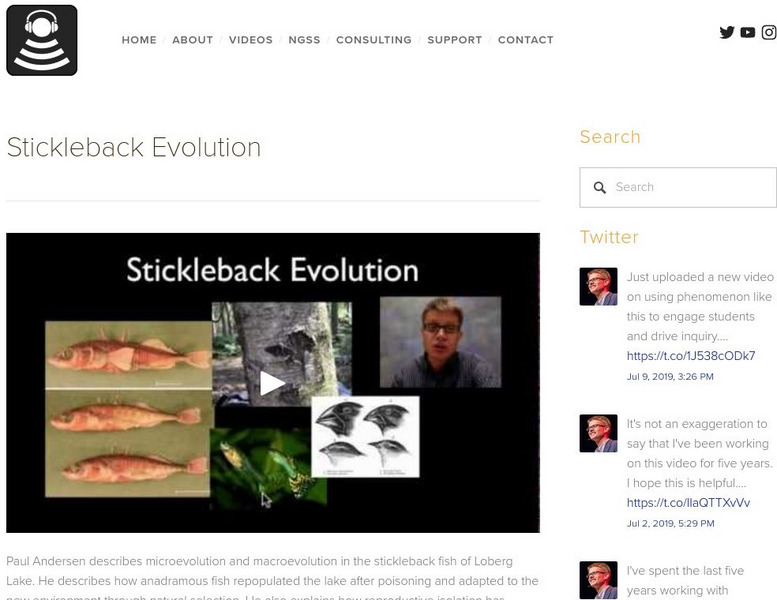
Paul Andersen describes microevolution and macroevolution in the stickleback fish of Loberg Lake. He describes how anadramous fish repopulated the lake after poisoning and adapted to the new environment through natural selection. He...
Bozeman Science
Bozeman Science: Stickleback Evolution
Paul Andersen describes microevolution and macroevolution in the stickleback fish of Loberg Lake. He describes how anadramous fish repopulated the lake after poisoning and adapted to the new environment through natural selection. He also...
Bozeman Science
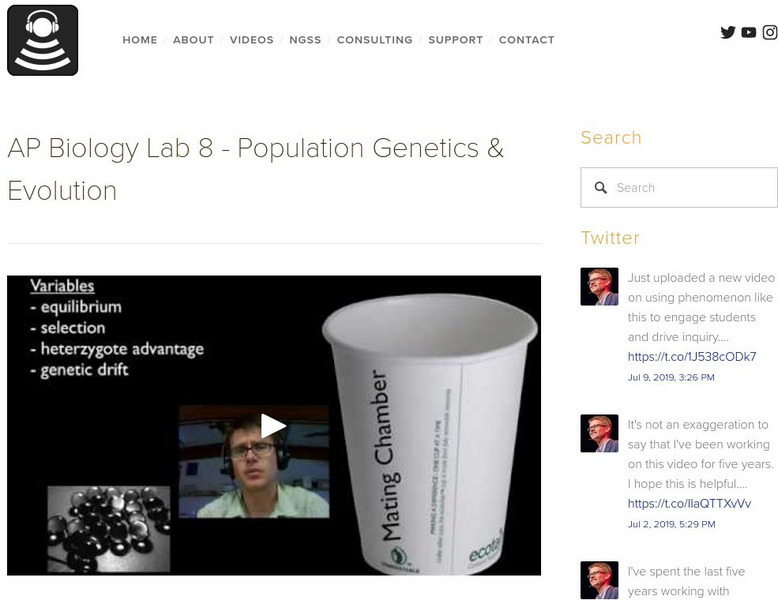
Bozeman Science: Ap Biology Lab 8 Population Genetics & Evolution
Mr. Andersen explains Hardy-Weinberg equilibrium and describes the bead lab. [6:00]

Bozeman Science
Bozeman Science: Microevolution
Paul Andersen defines microevolution as any change in the frequency of the allele pool. He then explains the five mechanisms of evolution; small sample size, non-random mating, mutations, gene flow and natural selection.