Hi, what do you want to do?






Curated Video
Solving Systems of Linear Equations Using the Addition Elimination Method
In this video, the teacher explains how to solve a system of linear equations using the addition elimination method. They demonstrate the process step by step and provide examples to illustrate the concept. By following this method,...

Virtual Nerd
Virtual Nerd: How Do You Graph a System of Equations
In this video lesson students learn how to graph a system of equations that has no solution.
Sophia Learning
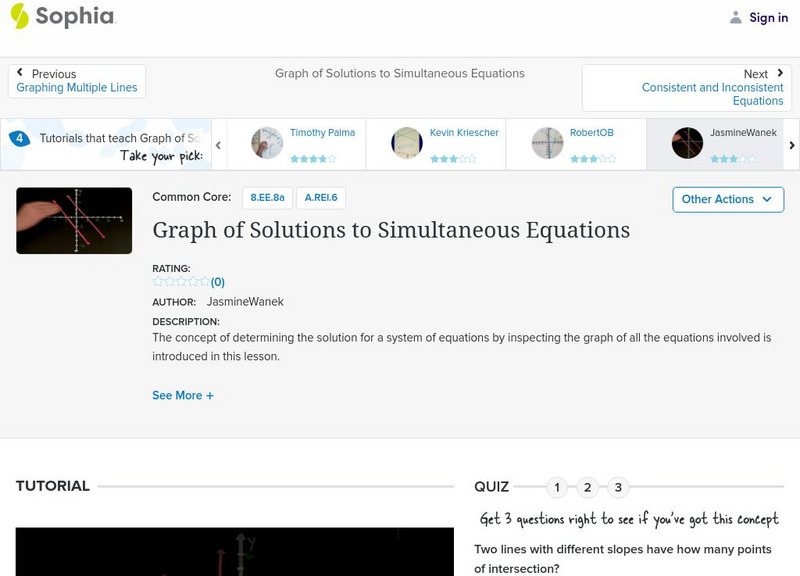
Sophia: Graph of Solutions to Simultaneous Equations
This website provides a tutorial video for students to learn how to determine the number of solutions a system of equation has by examining the graph of the system. After reviewing the video tutorial students can then attempt practice...
Sophia Learning
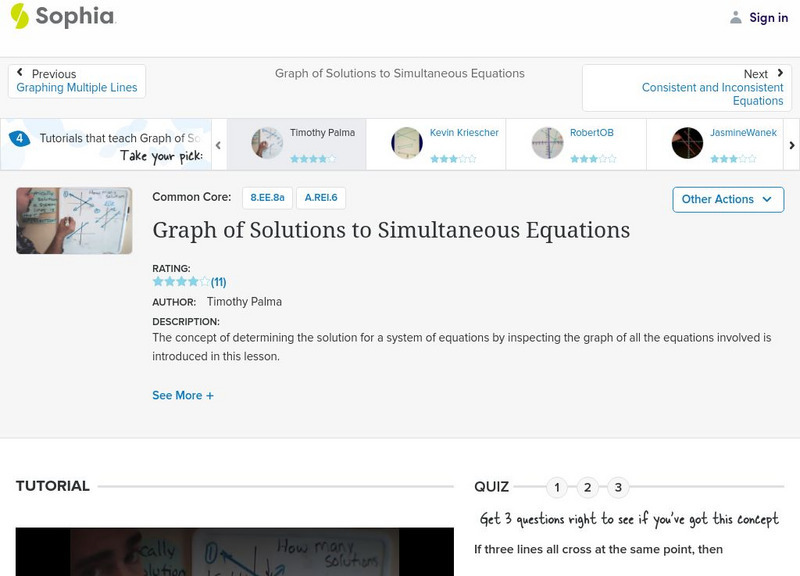
Sophia: Graph of Solutions to Simultaneous Equations
This website provides a tutorial video for students to learn how to determine the number of solutions a system of equation has by examining the graph of the system. After reviewing the video tutorial students can then attempt practice...

Khan Academy
Khan Academy: Graphically Solving Systems
In this video lesson students learn to solve systems of equations by the graphing method. After graphing, students then determine the number of solutions the system has by looking at the intersection of the lines.
Bozeman Science
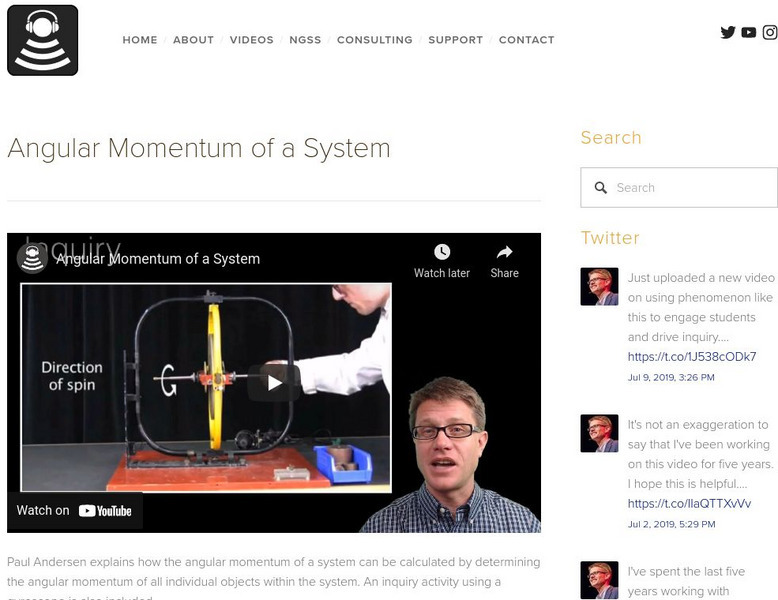
Bozeman Science: Angular Momentum of a System
In the following video Paul Andersen explains how the angular momentum of a system can be calculated by determining the angular momentum of all individual objects within the system. [6:34]
Bozeman Science
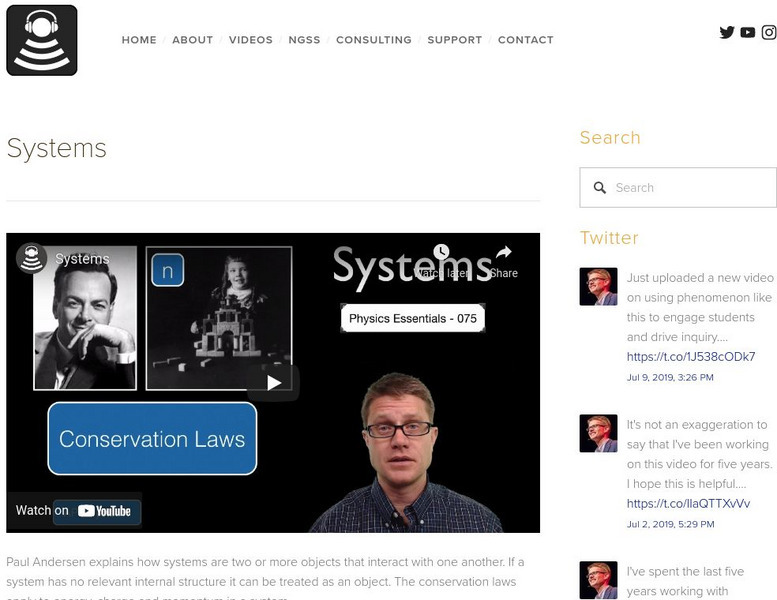
Bozeman Science: Systems
The following video narrated by Paul Andersen explains how systems are two or more objects that interact with one another. If a system has no relevant internal structure it can be treated as an object. The conservation laws apply to...
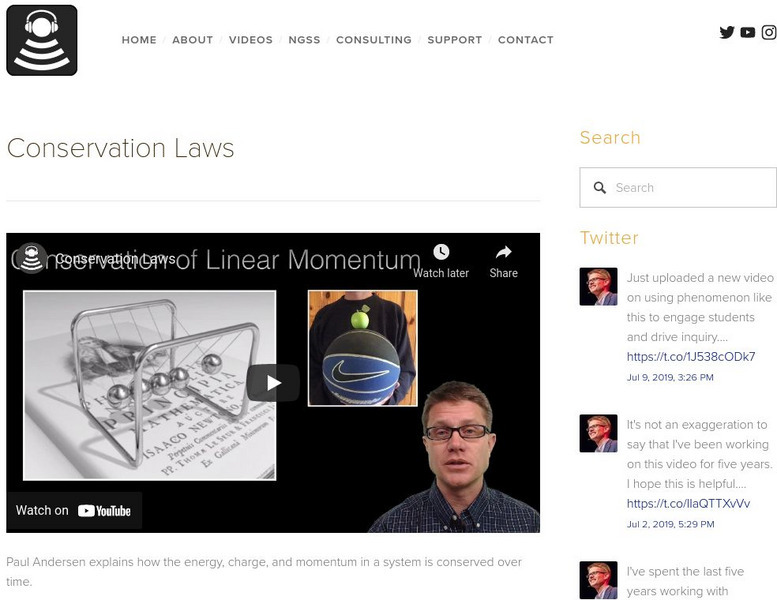
Bozeman Science
Bozeman Science: Conservation Laws
The following video narrated by Paul Andersen explains how the energy, charge, and momentum in a system is conserved over time. [4:53]
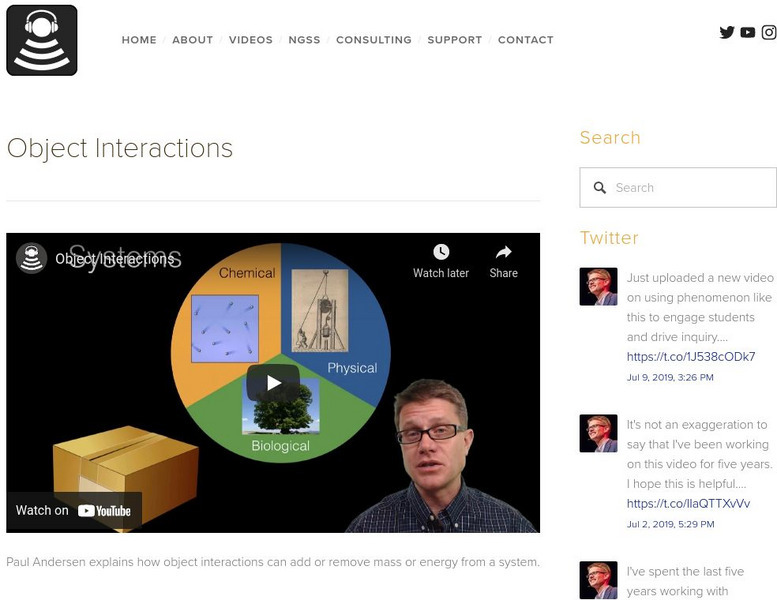
Bozeman Science
Bozeman Science: Object Interactions
The following video narrated by Paul Andersen explains how object interactions can add or remove mass or energy from a system. [2:14]
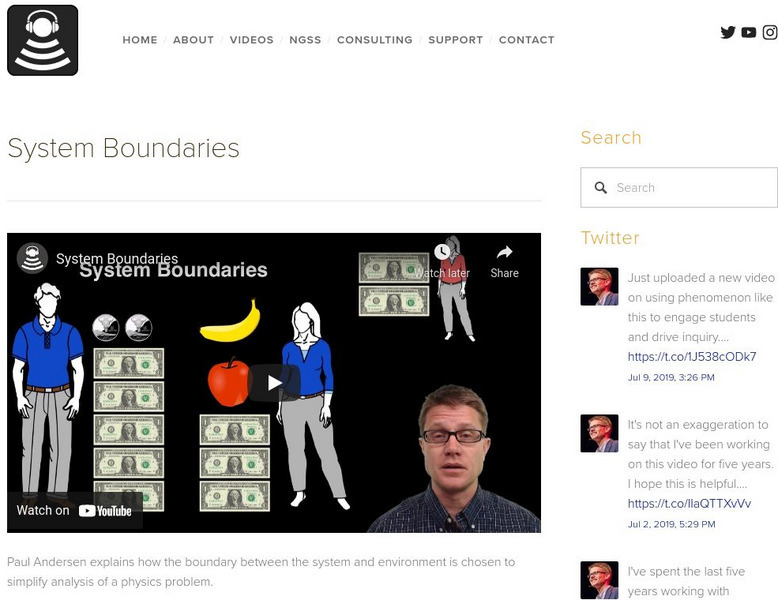
Bozeman Science
Bozeman Science: System Boundaries
In this video Paul Andersen explains how the boundary between the system and environment is chosen to simplify analysis of a physics problem. [3:13]
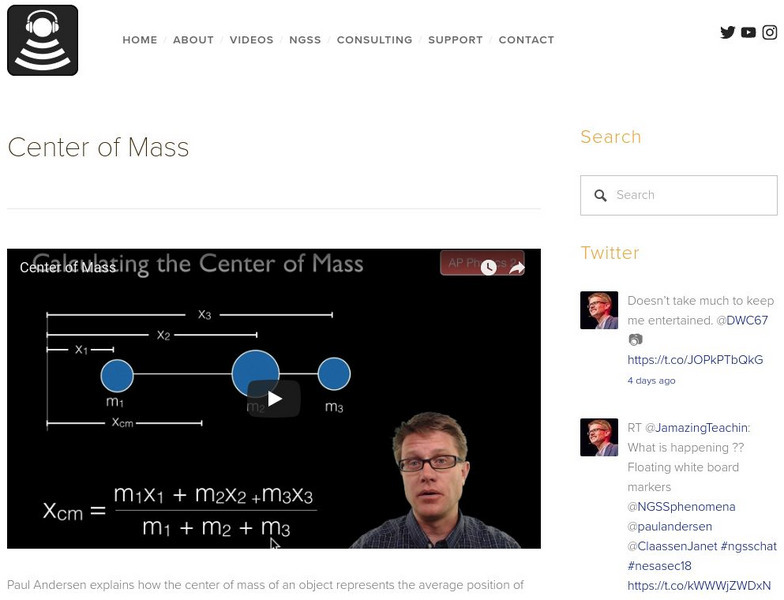
Bozeman Science
Bozeman Science: Center of Mass
In the following video Paul Andersen explains how the center of mass of an object represents the average position of matter in an object. The center of mass of a system is a combination of all the objects within the system. As long as no...
Bozeman Science
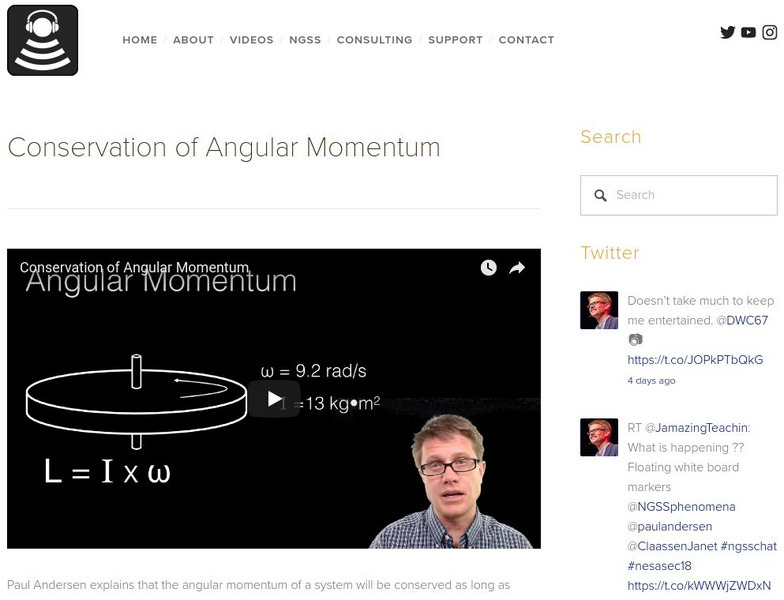
Bozeman Science: Conservation of Angular Momentum
In the following video Paul Andersen explains that the angular momentum of a system will be conserved as long as there is no net external torque. Both point objects and extended objects are covered along with several examples. [5:38]
Sophia Learning
Sophia: Adapting Cr Processes to Workplace Rules: Lesson 3
At the end of this tutorial, the learner will understand ways to perform conflict resolution processes within the context or rules and requirements of a workplace. It is 3 of 3 in the series titled "Adapting CR Processes to Workplace...

Planet Nutshell
Planet Nutshell: Math Shorts: Solving Simultaneous Linear Equations
Planet Nutshell Math Shorts provide animated videos that explain various math topics. On this site students learn about simultaneous linear equations.

Khan Academy
Khan Academy: Solutions to Systems: Independent and Dependent Systems
Students watch a video tutorial to learn the difference between an independent and dependent system of equations.

Khan Academy
Khan Academy: Yoga Plans: Super Yoga Plans Basic Variables and Equations
Students explore the basics of systems of equations by looking at two yoga plans to determine which is a better deal.

Khan Academy
Khan Academy: Yoga Plans: Super Yoga Plans Solving Systems by Elimination
Students explore a systems of equations problem that can be solved by using the elimination method to solve for the number of sessions at which both plans cost the same.

Khan Academy
Khan Academy: Yoga Plans: Super Yoga Plans Solving Systems by Substitution
This video is a continuation of our Yoga plan debate by determining where the lines representing the two plans intersect. Students use the substitution method to solve a system of equations.

Khan Academy
Khan Academy: Thinking About Solutions to Systems
Students explore systems of equations by looking at the number of possible solutions of a system.
Bozeman Science
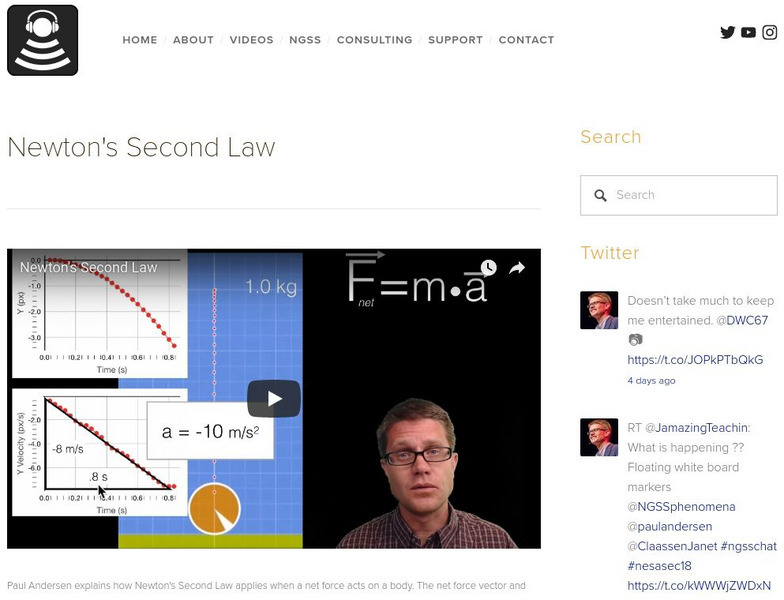
Bozeman Science: Newton's Second Law
In the following video Paul Andersen explains how Newton's Second Law applies when a net force acts on a body. The net force vector and the acceleration vector will act in the same direction. If an object acts on another object in a...
Bozeman Science
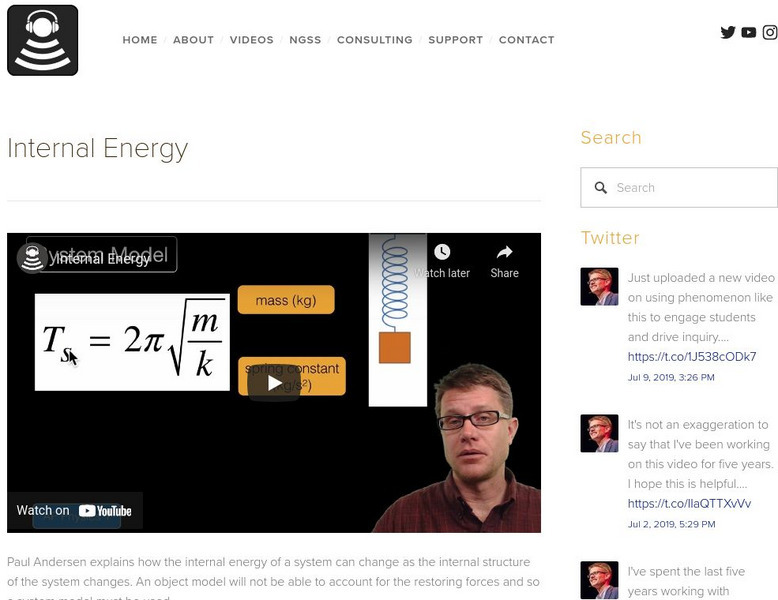
Bozeman Science: Internal Energy
In the following video Paul Andersen explains how the internal energy of a system can change as the internal structure of the system changes. An object model will not be able to account for the restoring forces and so a system model must...
PBS
Pbs Learning Media: Scientist Profile: Game Designer
Microsoft game designer David Ortiz discusses the math and science that go into creating video games. Xbox game designer David Ortiz wanted to be a professional football player or a doctor when he was a boy. Once he got to college, he...
PBS
Pbs Learning Media: Career Connections: Network Architect
Network architects do much more than connect wires. Hear from one who continues to look towards the future! [3:04]
PBS
Pbs Learning Media: Technology Dissection
What happens when you combine "technology" and "dissection?" At the McWane Science Center in Birmingham, AL, kids find out, by taking apart electronic gadgets to learn how they work. Kids can then put them back together or make new...