Hi, what do you want to do?






Curated Video
Ice skating
Smooth surfaces, like ice rinks, have less friction than rough surfaces.
<
br/>
The world around us - Investigating forces - What make
s
things stop?
Learning Points
Smooth surfaces, like ice...
<
br/>
The world around us - Investigating forces - What make
s
things stop?
Learning Points
Smooth surfaces, like ice...
Curated Video
The Science of Ice Skating: Balancing on Blades
Explore the fascinating science behind ice skating with Mac Lesggy and Gwendal. Discover how the design of ice skates, from the edges of the blades to the pressure they exert, allows skaters to glide effortlessly on the ice. Learn...
Science360
Snake locomotion (2)
How do snakes move? A mathematician unlocks the secret to how snakes move forward.
Science360
Snake Locomotion
How do snakes move? A mathematician unlocks the secret to how snakes move forward.
National Science Foundation
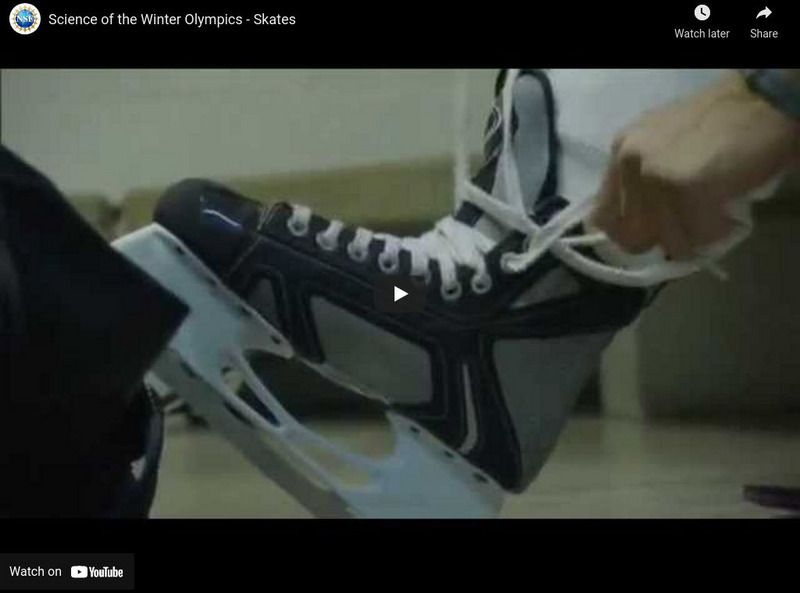
National Science Foundation: Science of the Winter Olympics: Science of Skates
The ice skates worn by hockey players, figure skaters and speed skaters are vastly different from what were once used. Melissa Hines, the Director of the Cornell University Center for Materials Research, and Sam Colbeck, a retired...

National Science Foundation
National Science Foundation: Science of the Winter Olympics: Science of Skates
The science behind the design of ice skates and their blades is explained. [5:54]