Hi, what do you want to do?





Bozeman Science
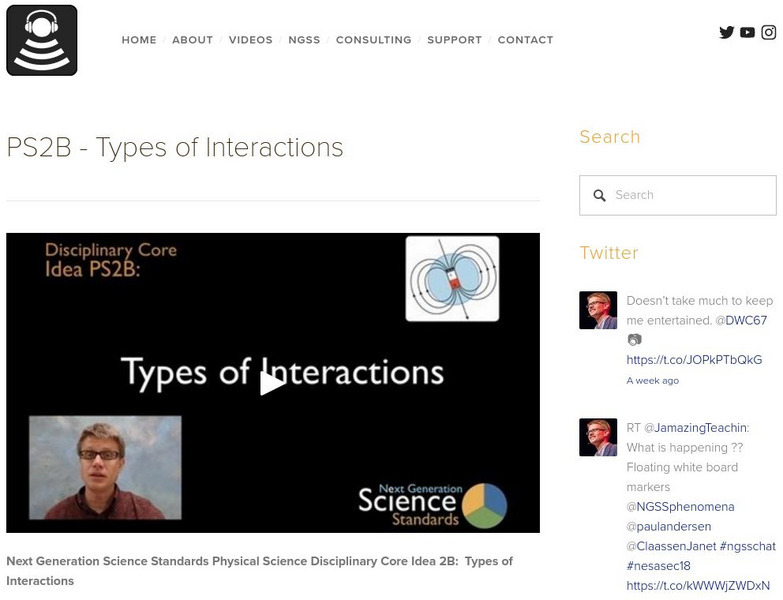
Bozeman Science: Types of Interactions
Paul Andersen explains how objects interact when touching and at a distance. Electromagnetic forces are very important when objects are touching and fields explain both electromagnetic and gravitational forces. The strong and weak...
Bozeman Science
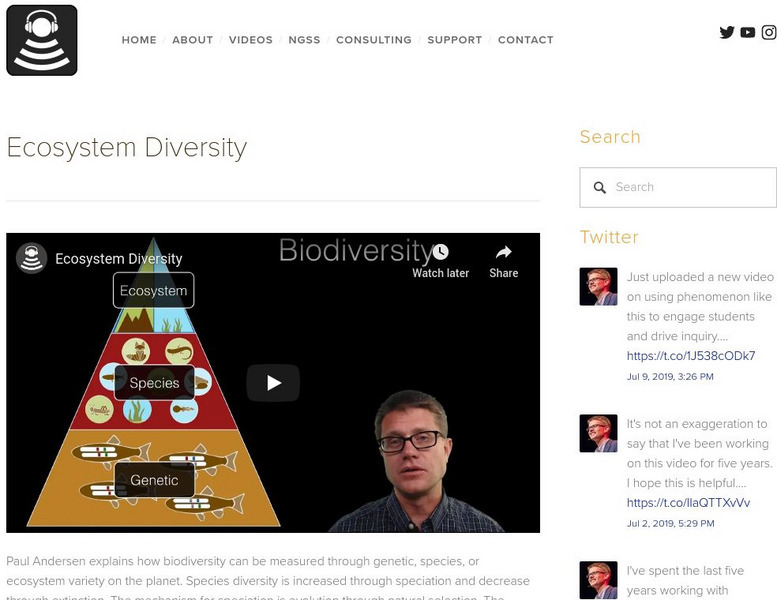
Bozeman Science: Ecosystem Diversity
Paul Andersen explains how biodiversity can be measured through genetic, species, or ecosystem variety on the planet. Species diversity is increased through speciation and decrease through extinction. The mechanism for speciation is...
Bozeman Science
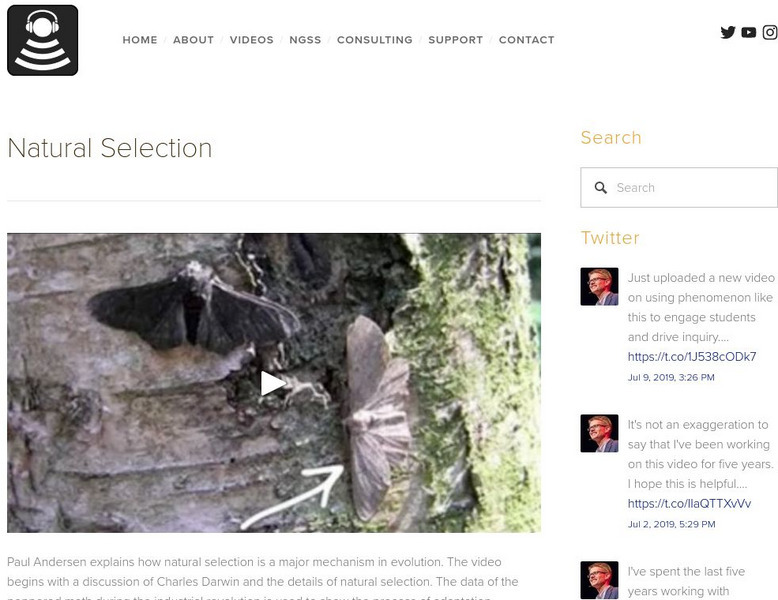
Bozeman Science: Natural Selection
Paul Andersen explains how natural selection is a major mechanism in evolution. The video begins with a discussion of Charles Darwin and the details of natural selection. The data of the peppered moth during the industrial revolution is...
Bozeman Science
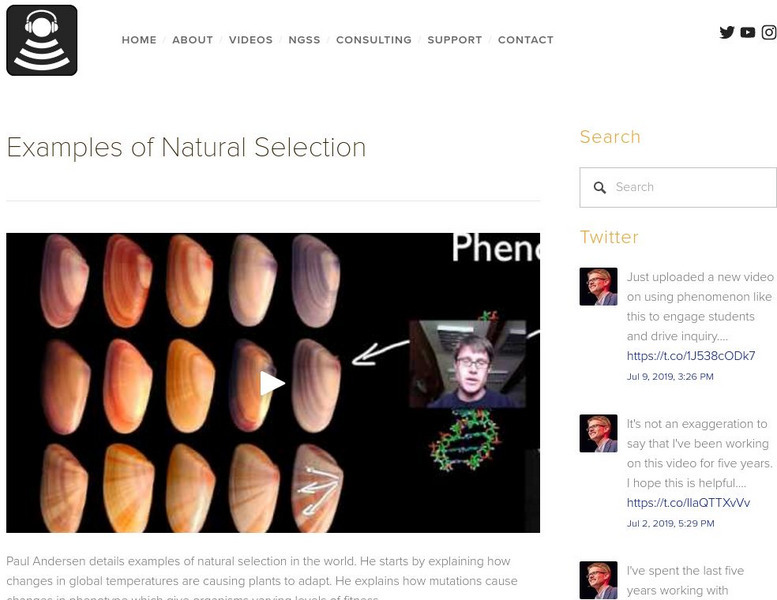
Bozeman Science: Examples of Natural Selection
Paul Andersen details examples of natural selection in the world. He starts by explaining how changes in global temperatures are causing plants to adapt. He explains how mutations cause changes in phenotype which give organisms varying...
Bozeman Science
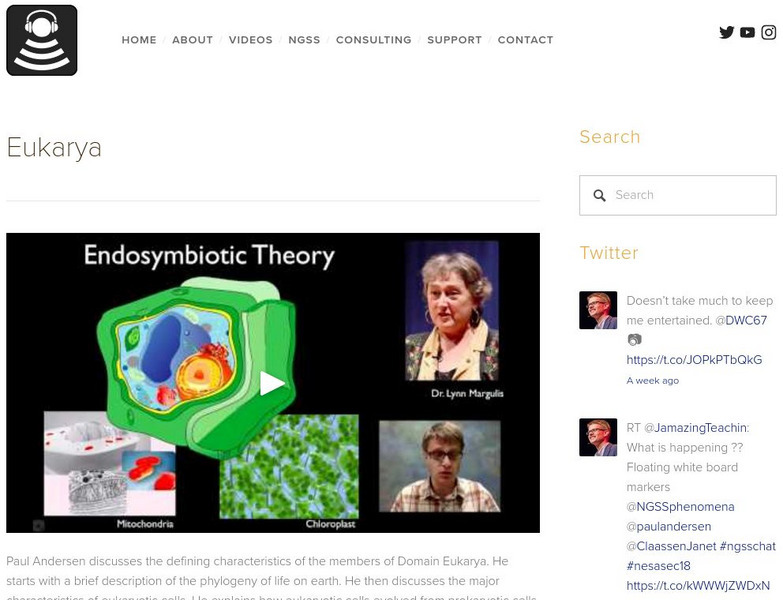
Bozeman Science: Eukarya
Paul Andersen discusses the defining characteristics of the members of Domain Eukarya. He starts with a brief description of the phylogeny of life on earth. He then discusses the major characteristics of eukaryotic cells. He explains how...
Bozeman Science
Bozeman Science: Finding Stomata
Paul Andersen shows you how to find stomata in a dicot and monocot leaf using finger nail polish and transparent tape. A microscope is required to actually see the stomata.
Bozeman Science
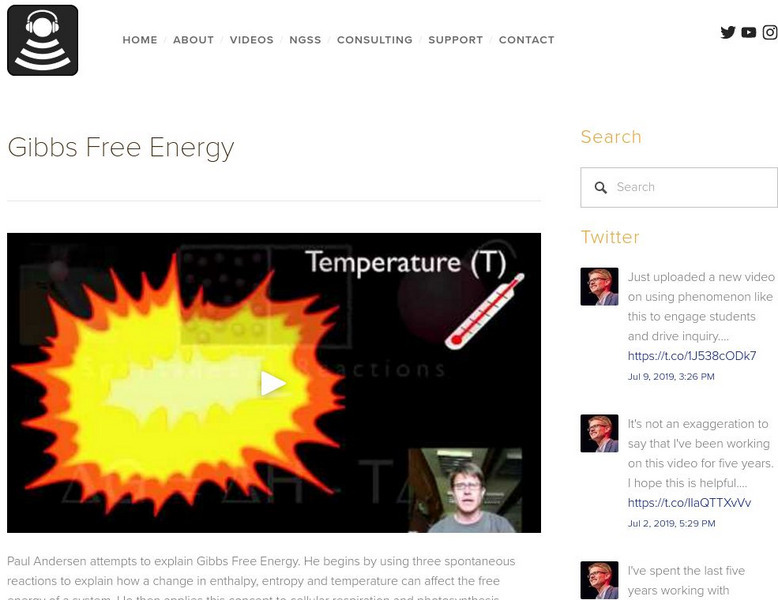
Bozeman Science: Gibbs Free Energy
Paul Andersen attempts to explain Gibbs Free Energy. He begins by using three spontaneous reactions to explain how a change in enthalpy, entropy and temperature can affect the free energy of a system. He then applies this concept to...
Bozeman Science
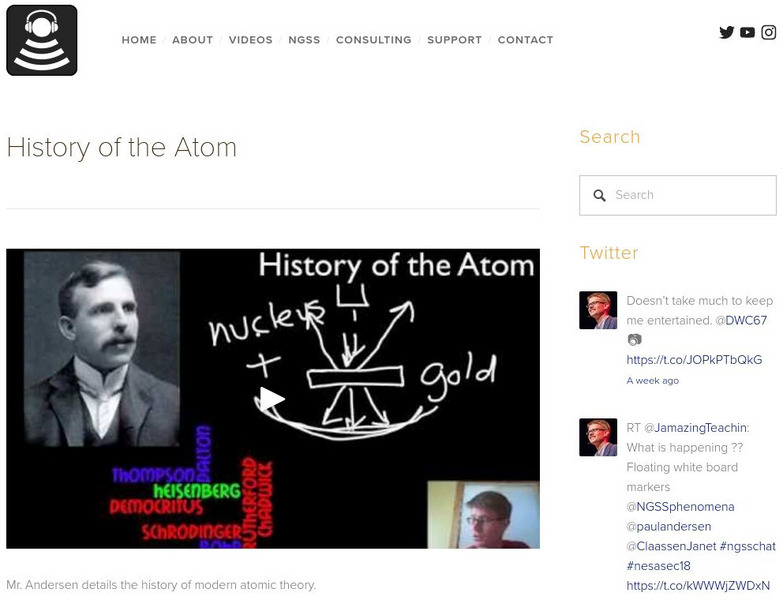
Bozeman Science: History of the Atom
Mr. Andersen details the history of modern atomic theory.
Bozeman Science
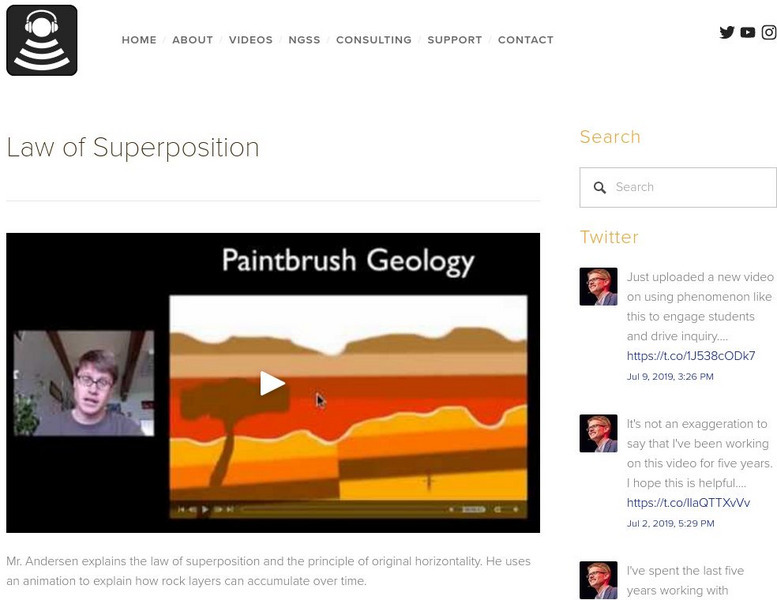
Bozeman Science: Law of Superposition
Mr. Andersen explains the law of superposition and the principle of original horizontality. He uses an animation to explain how rock layers can accumulate over time.
Bozeman Science
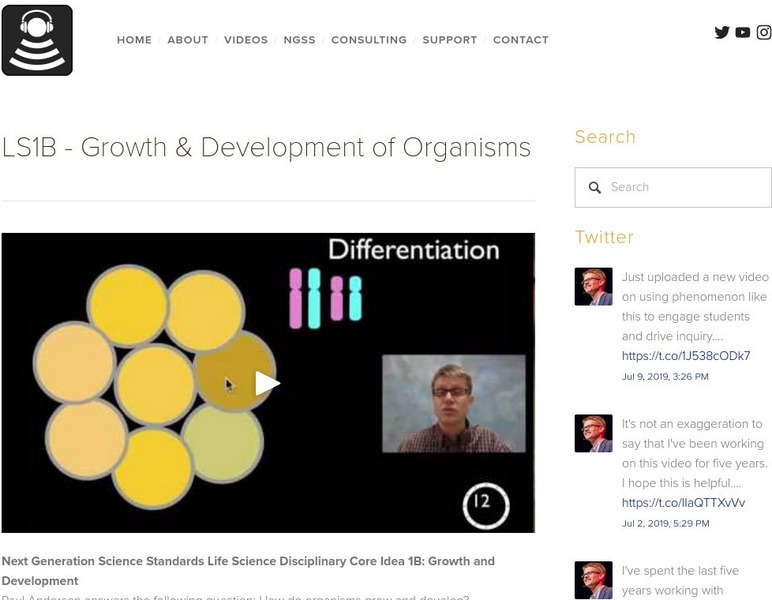
Bozeman Science: Growth & Development of Organisms
Paul Andersen answers the following question: How do organisms grow and develop?

Bozeman Science
Bozeman Science: Inheritance of Traits
In this video, Paul Andersen explains the importance of DNA is organisms. DNA contains the blueprint for each organisms. The DNA codes for the mRNA which creates proteins. The DNA also is the unit of inheritance which is passed from...
Bozeman Science
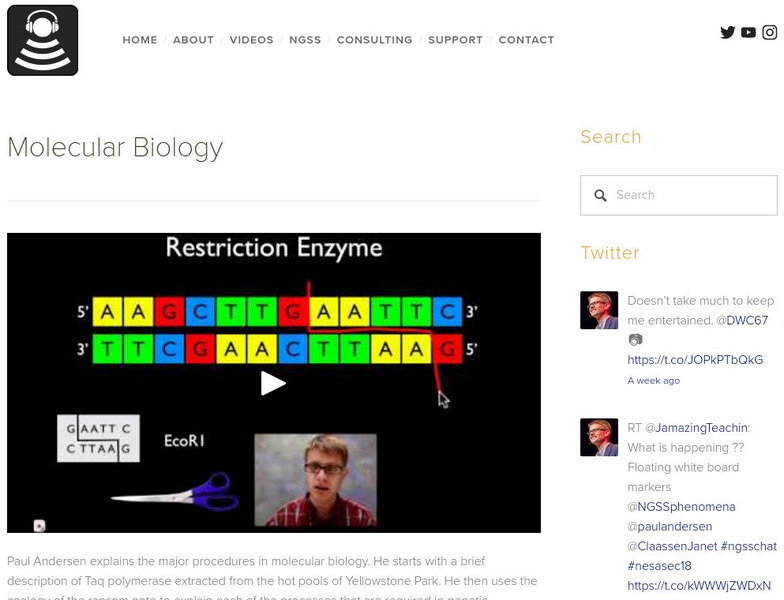
Bozeman Science: Molecular Biology
Paul Andersen explains the major procedures in molecular biology. He starts with a brief description of Taq polymerase extracted from the hot pools of Yellowstone Park. He then uses the analogy of the ransom note to explain each of the...
Bozeman Science
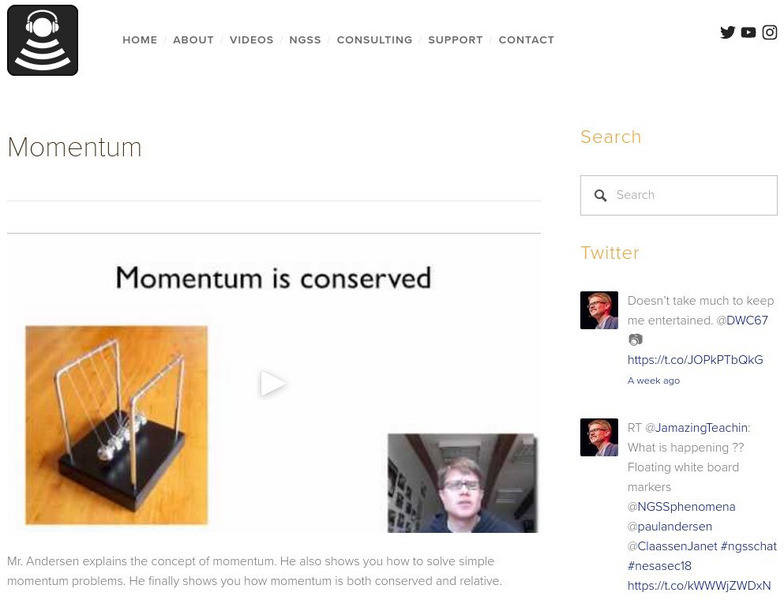
Bozeman Science: Momentum
Mr. Andersen explains the concept of momentum. He also shows you how to solve simple momentum problems. He finally shows you how momentum is both conserved and relative.
Bozeman Science
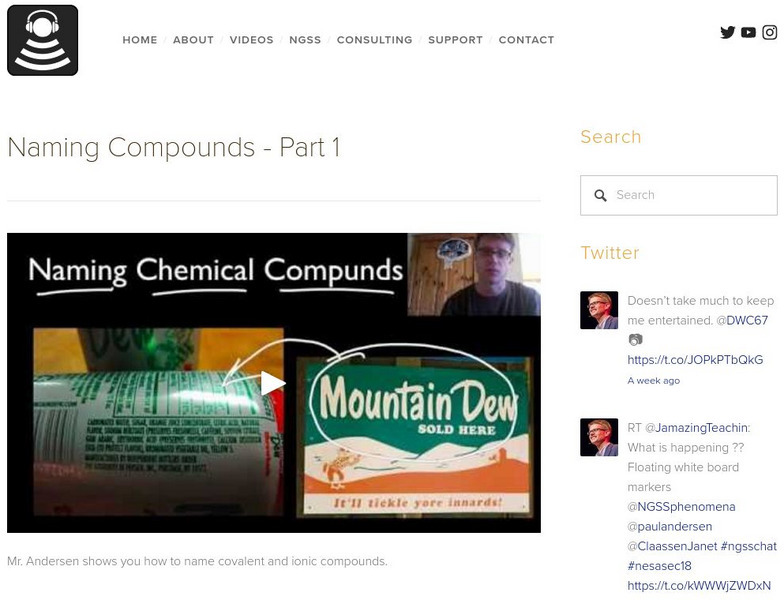
Bozeman Science: Naming Compounds Part 1
Mr. Andersen shows you how to name covalent and ionic compounds.
Bozeman Science
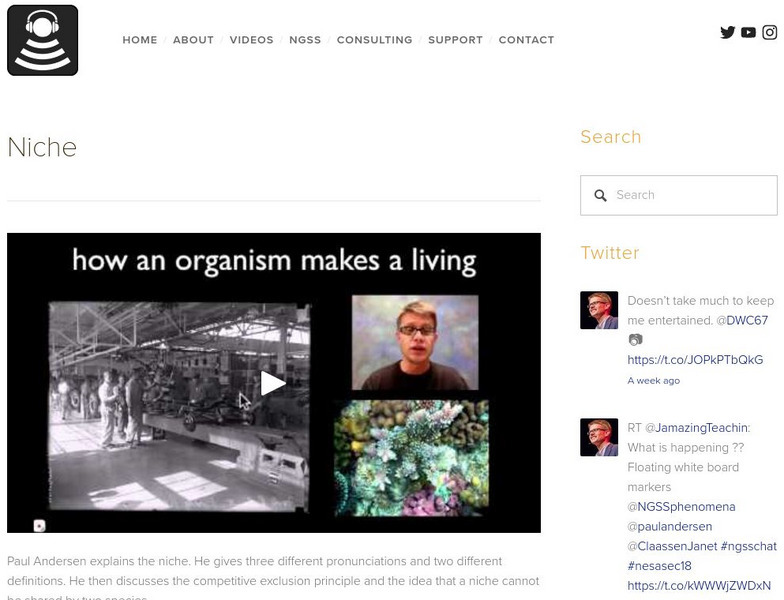
Bozeman Science: Niche
Paul Andersen explains the niche. He gives three different pronunciations and two different definitions. He then discusses the competitive exclusion principle and the idea that a niche cannot be shared by two species.
Bozeman Science
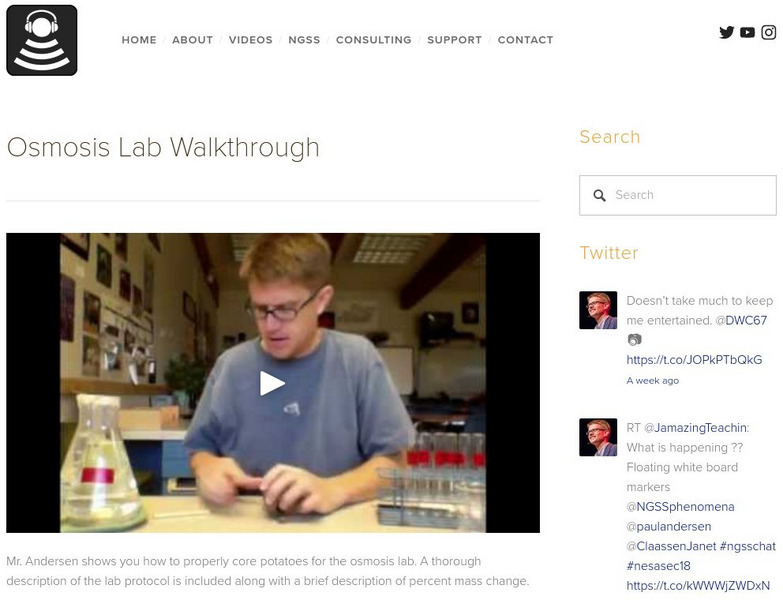
Bozeman Science: Osmosis Lab Walkthrough
Mr. Andersen shows you how to properly core potatoes for the osmosis lab. A thorough description of the lab protocol is included along with a brief description of percent mass change.
Bozeman Science
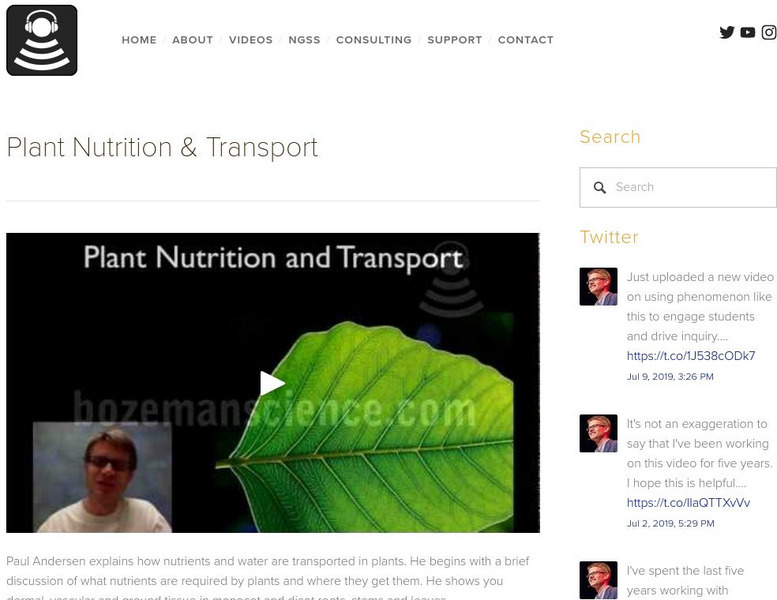
Bozeman Science: Plant Nutrition & Transport
Paul Andersen explains how nutrients and water are transported in plants. He begins with a brief discussion of what nutrients are required by plants and where they get them. He shows you dermal, vascular and ground tissue in monocot and...
Bozeman Science
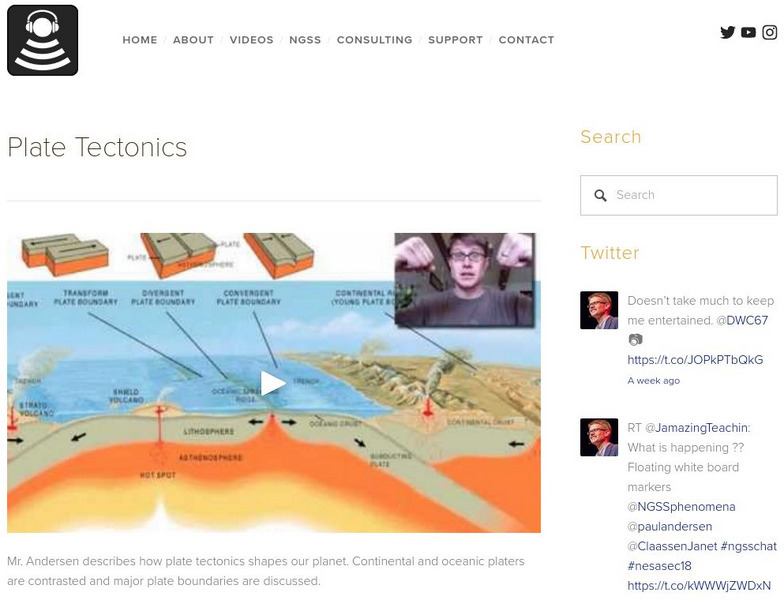
Bozeman Science: Plate Tectonics
Mr. Andersen describes how plate tectonics shapes our planet. Continental and oceanic platers are contrasted and major plate boundaries are discussed.
Bozeman Science
Bozeman Science: Properties of Matter
Mr. Andersen surveys properties of matter. A brief discussion of Archimede's Principle, Charles Law, Boyle's Law, and viscosity is included.
Bozeman Science
Bozeman Science: Chemical Reactions
Chemical Reactions In this video, Paul Andersen explains how chemical reactions progress as bonds are broken and reformed reformed. He explains the difference between changes in state and changes in molecules. He discussed collision...
Bozeman Science
Bozeman Science: Definitions of Energy
In this video, Paul Andersen attempts to explain the age old questions - What is Energy? Even though it comes in many forms one of the defining characteristics of energy is that it is conserved over time. He then explains that all energy...
Bozeman Science
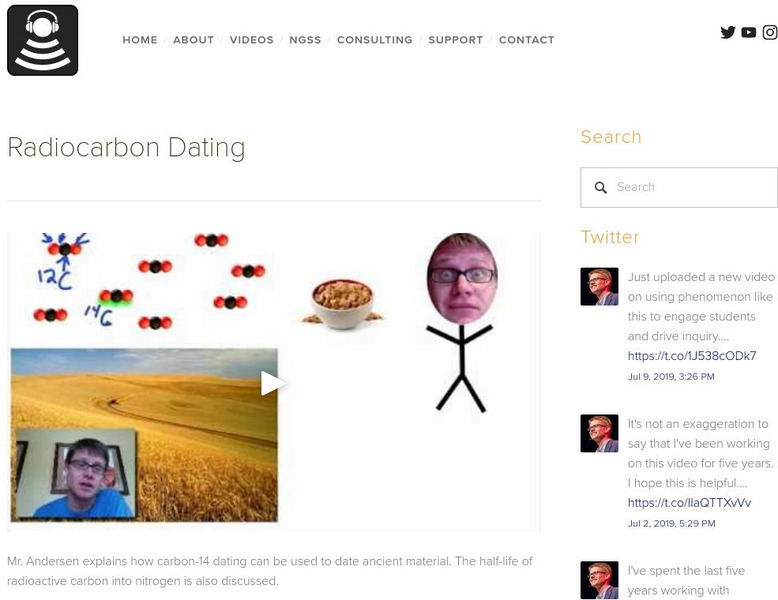
Bozeman Science: Radiocarbon Dating
Mr. Andersen explains how carbon-14 dating can be used to date ancient material. The half-life of radioactive carbon into nitrogen is also discussed.

Bozeman Science
Bozeman Science: Scale, Proportion & Quantity
Paul Andersen explains the importance of scale in science and engineering. The Universe varies in size along three scales: size, timespan, and energy. Many phenomenon are too small and fast, or two large and slow to observe.
Bozeman Science
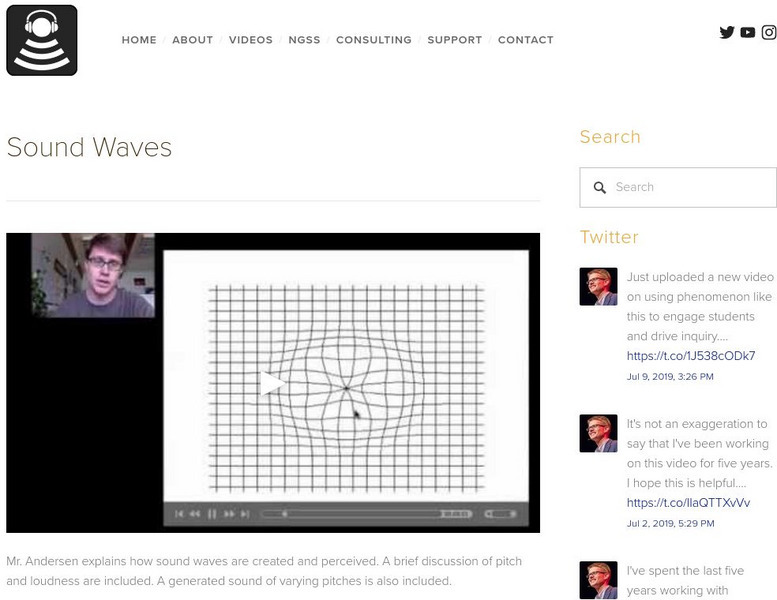
Bozeman Science: Sound Waves
Mr. Andersen explains how sound waves are created and perceived. A brief discussion of pitch and loudness are included. A generated sound of varying pitches is also included.