Hi, what do you want to do?






Curated Video
The Science of Temperature Perception
Find out how our brains detect temperature changes and why we sometimes feel pain when we come into contact with safe levels of hot and cold.
National Parks Service
Rim Fire
The 2013 Rim Fire was, at the time, the largest forest fire in California history, and the largest fire in Yosemite history. Burning 400 square miles, the speed and size of the fire was unprecedented. As these unnaturally large fires...
Science360
Smoke fuse
Smoke from a candle makes a ""fuse"" that relights it. Parts needed: 1 Candle, 1 Lighter.
Let's Tute
Chemical Properties of Carbon Compounds: Combustion Reactions
In this video, the teacher explains the chemical properties of carbon compounds, focusing on combustion reactions. These reactions release heat and light and are classified into complete and incomplete combustion. The video also explains...
The March of Time
MOT: 1938: Nazi persecution of the German Jewish population
Newspaper headline for Kristallnacht / night, crowd saluting Hitler as he salutes back, house burning, soldiers destroying jewish property, forcing jewish families to leave their homes.
Curated Video
The Science and Power of Fire
This video provides a concise explanation of what fire is, how it is formed through a chemical reaction, and its various uses and effects. It highlights the importance of fire for survival, its historical significance, and how it can be...
FuseSchool
Complete & Incomplete Combustion
Learn the basics about Combustion and Incomplete combustion. Complete combustion releases more energy than incomplete combustion. How? Why? Find out more in this video!
FuseSchool
Combustion & Incomplete Combustion
Learn the basics about Combustion and Incomplete combustion. Complete combustion releases more energy than incomplete combustion. How? Why? Find out more in this video!
Curated Video
Coal
This live-action video program is about coal The program is designed to reinforce and support a student's comprehension and retention of the term through use of video footage, photographs, diagrams and colorful, animated graphics and...
FuseSchool
Uses Of Polymers
Learn the basics about the uses of polymers, as a part of organic chemistry. Learn about PVC and PTFE. Different polymers have their specific uses and also problems associated with polymers. Polymers are long chain organic molecules made...
FuseSchool
Burning Fossil Fuels and Climate Change
Learn the basics about climate change and how burning fossil fuels adds extra carbon dioxide to the atmosphere, and how this then leads to climate change. Fossil fuels, like oil, coal and natural gas, are the remains of living things...
FuseSchool
Acid rain
Learn the basics about Acid Rain. What causes acid rain? Find out more in this video!
Let's Tute
Waste Management and Disposal Techniques
This video discusses the various methods of waste management, including transportation, treatment, and disposal. It also touches upon the importance of proper waste management in maintaining a clean and safe environment. Additionally, it...
FuseSchool
Climate change and the enhanced greenhouse effect
Climate change and the enhanced greenhouse effect | Environmental Chemistry | FuseSchool
Weird History
How a 1921 Mob Destroyed America's Richest Black Neighborhood
"What happened in Tulsa, Oklahoma, in 1921? A mob of 10,000 whites descended on Greenwood, the richest black neighborhood in America, after a black teenager on his way to a blacks-only bathroom stepped on the foot of a white elevator...
Healthcare Triage
Exercise is NOT the Key to Weight Loss
Last week I talked about the many ways exercise is awesome. This week I want to focus on one way it's not. Weight loss. Sorry, but that's the topic of this week's Healthcare Triage.
Visual Learning Systems
Examples of Environmental Problems
In this educational video, we delve into the pressing environmental issues of pollution, global warming, and extinction. We explore the concept of pollution, its various forms, and how it contaminates our air, water, and land. Discover...
PBS
What If We Burned All The World's Fossil Fuels?
We have enough fossil fuels to make Earth intolerably hot & wet, so we'll have to choose to not burn them all.
Visual Learning Systems
The Atmosphere: Upper Layers of the Atmosphere
Students will learn about the different layers of the atmosphere. The changes in the atmosphere are explained using examples of contemporary environmental conditions brought about by human behavior. The oxygen cycle and the carbon cycle...
Curated Video
Understanding Idioms: Don't Burn Your Bridges
In this video, the teacher explains the meaning of the idiom "to burn bridges" using context clues. The lesson emphasizes that idioms cannot be understood by looking at the literal meaning of each word, and instead, learners should rely...
The Backyard Scientist
Can a Magnesium fire be put out?
Ive always been curious to what happens if you light one of these whole blocks of magnesium on fire. I remember spending hours in boyscouts trying to shave off as much as I could!

Steve Spangler Science
Burning Money - Sick Science! #030
If you douse a dollar bill in alcohol, you can light it with a flame and it won't burn up! Perhaps you can use this as a demonstration during a chemistry unit when discussing properties of matter or combustion. It's sure to ignite...
Science Friday Initiative
Science Friday: 3 D Up in Flames
Humans are thought to have mastered controlled fire in the middle of the Paleolithic era. Half a million years later, engineers Tadd Truscott and Dale Tree, of Brigham Young University, are trying to quantify it. Using high speed cameras...
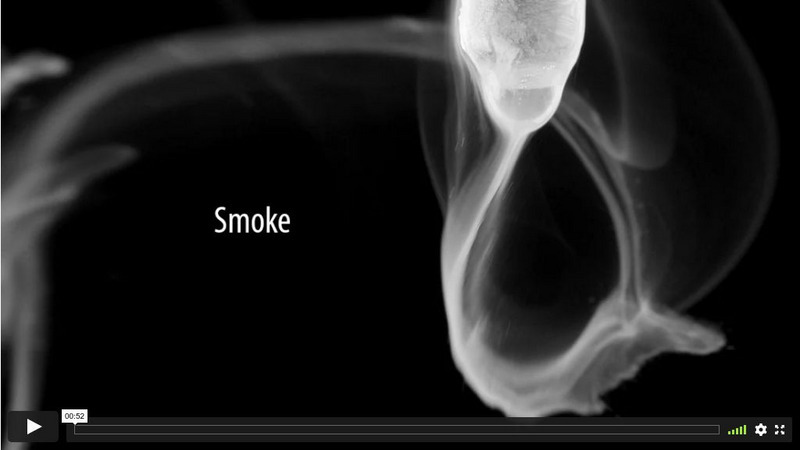
Beautiful Chemistry
Vimeo: Beautiful Chemistry: Beautiful Reactions: Smoke
We showed 3 different kinds of smoke in this video: the black smoke of candle soot darkening a sheet of transparent glass, the smoke from incense burning, and the ammonium chloride smoke formed when hydrogen chloride gas and ammonia gas...