Hi, what do you want to do?






ProCon
Cuba Embargo
President John F. Kennedy bought 1,200 Cuban cigars the night before he enacted the Cuban trade embargo in 1962. Should the United States maintain the embargo? Using the website, pupils explore the topic to prepare for a class debate or...
Digital History
Digital History: The State of Black America in 1960
A brief description of the cultural environment for Black Americans in the 1960's.
University of Virginia
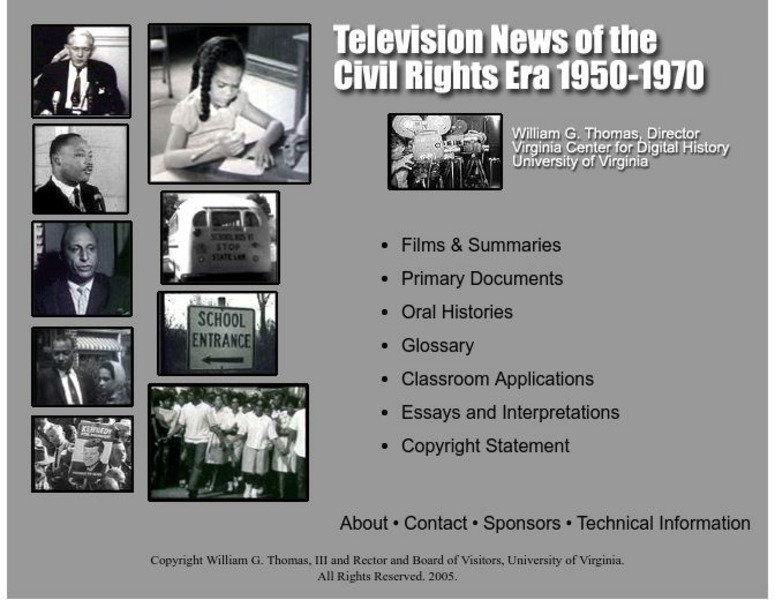
Virginia Center for Digital History: Television News of the Civil Rights Era
A rich collection of streaming video samples of television news footage from 1950 to 1970, along with an assortment of primary source documents, first-person accounts, a glossary of terms, and essays and analysis for learning about the...
Smithsonian Institution
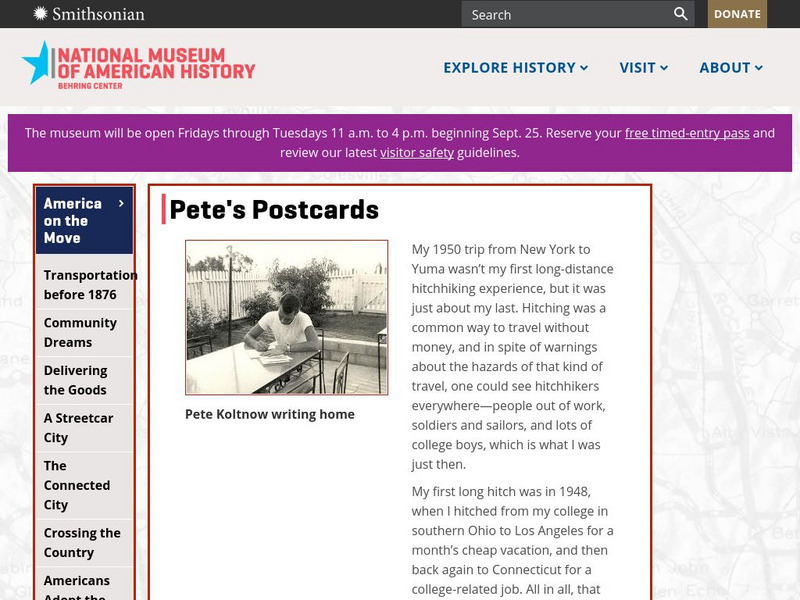
National Museum of American History: Themes: Pete's Postcard
Journey through America's past with Pete as he hitchhikes across the country while viewing the postcards written to his then fiance Dot that highlight his adventures on the road.
Library of Congress
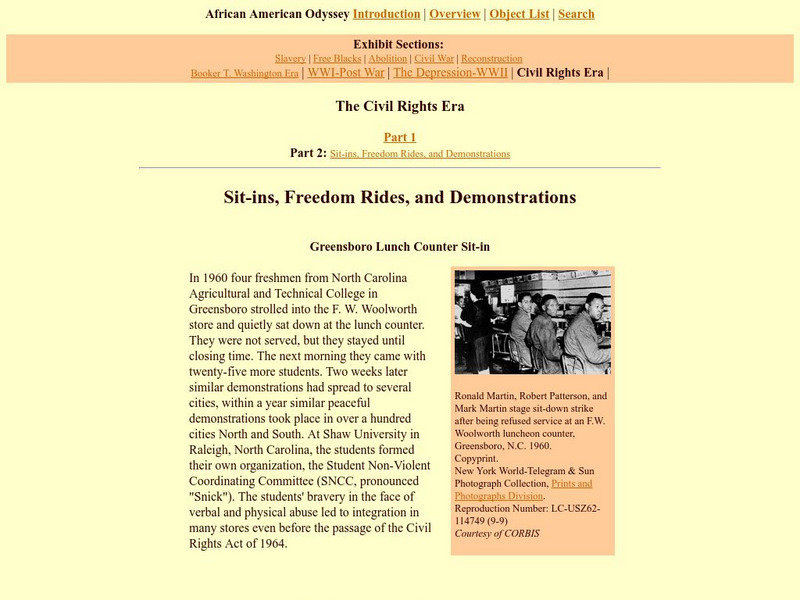
Loc: African American Odyssey: Sit Ins, Freedom Rides, and Demonstrations
The Civil Rights Era explores African American history in the 1960s, the fight against racial discrimination and segregation, and the search for justice through "freedom rides," boycotts, sit-ins, legislation, and marches.
University of Groningen
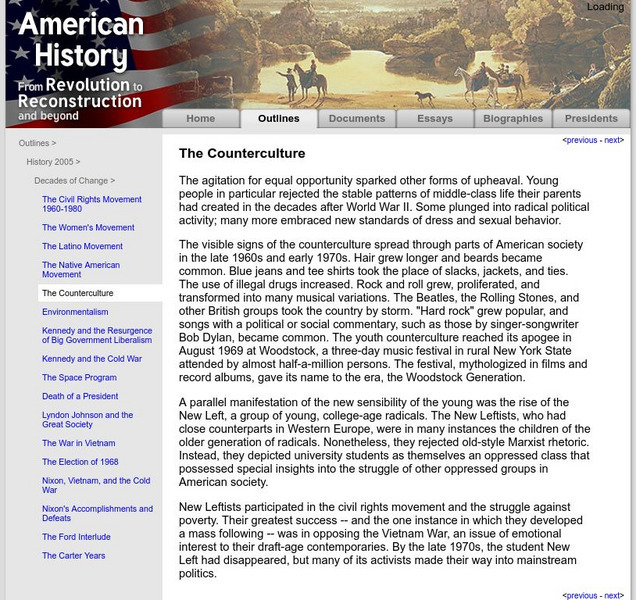
American History: Outlines: The Counterculture
Section overview on the Counterculture and anti-war movement of the late 1960s and early 1970s and its impact on a new social and political order.
University of Groningen
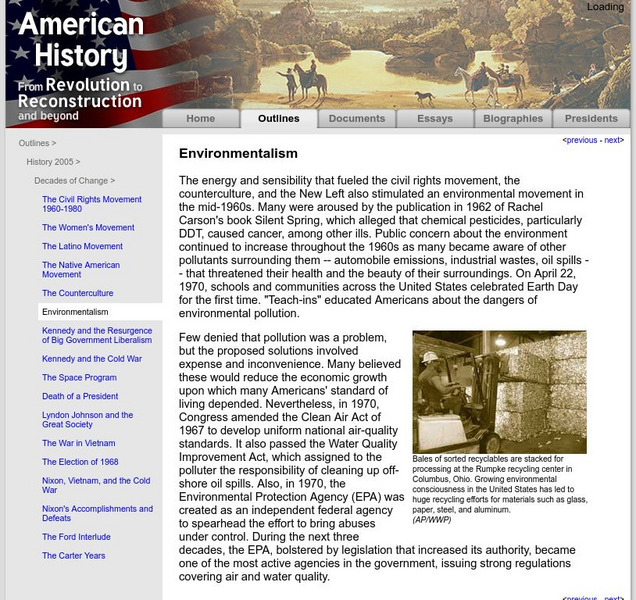
American History: Outlines: Environmentalism
Brief overview of the Environmental Movement and the growing concern about the environment spurred on by the mid 1960s push for civil rights in America.
Digital History
Digital History: The Struggle Continues
This resource addresses the discrimination issues still in the air following the significant progress made between 1960's-1990's.
University of Pennsylvania
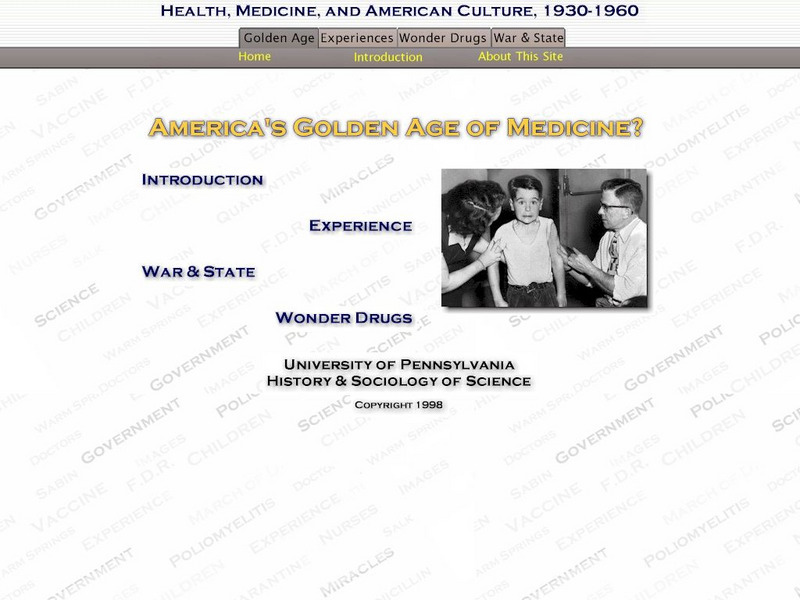
History and Sociology of Science: America's Golden Age of Medicine?
Examine the history of the Golden Age of Medicine in America from the 1930s through the 1960s. Use photographs, primary sources, essays, and the suggested questions to trace the advances made in drugs, technology, and the delivery of...
![Freshman Academy: New Approaches to Civil Rights [Pdf] Website](https://static.lp.lexp.cloud/images/attachment_defaults/resource/large/FPO-knovation.png "Freshman Academy: New Approaches to Civil Rights [Pdf] Website")
Other
Freshman Academy: New Approaches to Civil Rights [Pdf]
This section from an American History book covers the extension of the application of civil rights that were legislated in the 1960s. Read about busing, affirmative action, disability rights movement, and the Native American protest...
Digital History
Digital History: Watts: The Ghetto Erupts [Pdf]
This site is from a unit called 'African-Americans in the Land of Equality.' It looks at the causes, events, and aftermath of the Watts Riots in 1965.
Digital History
Digital History: Discrimination in Public Accommodations [Pdf]
Segregation and Jim Crow laws codified a color line in the United States. African-Americans began pushing back against segregation in the 1950s and 1960s. Read about the non-violent actions taken and how these actions resulted in the...
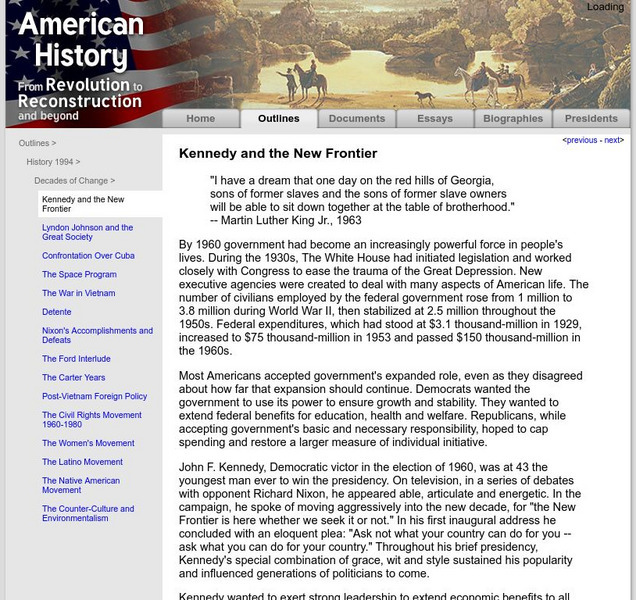
University of Groningen
American History: Outlines: Kennedy and the New Frontier
This site, compiled in hypertext format by student teams at the University of Groningen, The Netherlands, from U.S. Information Agency publications, takes a brief look at Kennedy's administration, the "New Frontier."

Khan Academy
Khan Academy: The Election of 1968
Richard Nixon was elected president during a tumultuous year in American history. Examine his campaign through this summary, references for further reading, questions for analysis, and a question/answer section from the community.
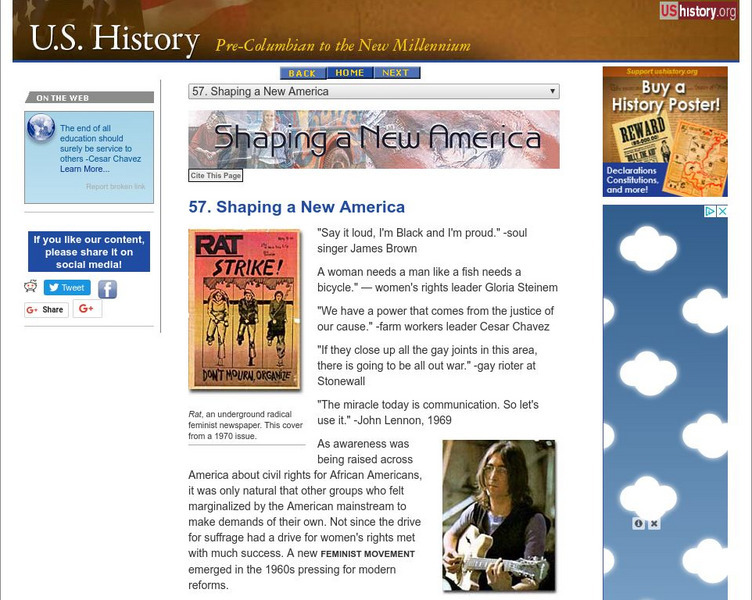
Independence Hall Association
U.s. History: Shaping a New America
A brief overview of the protest movements in the 1960s and 1970s.
Rock and Roll Hall of Fame
Rock & Roll Hall of Fame: Sti Lesson 25: Vietnam Revisited
Using music, videos, and interviews are effective ways to study the Vietnam War era. The music from the late 1960s and early 1970s offers wonderful insights into how many Americans felt about the times. Through the use of personal...

Independence Hall Association
U.s. History: The Long, Hot Summer
The "long, hot summer" in reality spread over several years of summers in the mid-1960s. Read about the Watts riots in 1965, and the reasons behind racial upheaval in hundreds of American cities over the next three years.
Digital History
Digital History: Entering a New Century
As the U.S. approached the new century, it was an appropriate time to reflect on the accomplishments and failures of the 1900s both within the country and internationally.
Rock and Roll Hall of Fame
Rock & Roll Hall of Fame: The Four Seasons
American vocal group of the 1960s who kept their popularity despite the invasion of the Beatles and other British groups. They've had over two dozen Top Forty hits. 1990 inductees into the Rock & Roll Hall of Fame.
Khan Academy
Khan Academy: The Cuban Missile Crisis
In October 1962, Americans "peered into the abyss of nuclear destruction". Investigate how America got this close to nuclear war by reading the following summary, answering critical thinking questions, using the bibliography for further...

Academy of American Poets
Poets.org: A Brief Guide to Concrete Poetry
Concise explanation of the term "concrete poetry." It's mainly a discussion of the 1960s poetic movement, but it also includes the history of the term before and after.