Hi, what do you want to do?






Internet History Sourcebooks Project
Fordham University: Medieval Sourcebook: History Through Primary Sources
This site from the Medieval Sourcebook answers the question: Why Study History Through Primary Sources? It provides complete information, a list of review questions, and bibliography information.
US National Archives
Docsteach: Lewis & Clark's Expedition to the Complex West
This activity can be used as an introduction or for a closer study of the Lewis & Clark Expedition. Students will learn that the United States purchased the Louisiana Territory in 1803 and President Thomas Jefferson sent Lewis and...
US National Archives
Docsteach: Assimilation of American Indians
In this activity, students will analyze primary sources to determine the role and activities the federal government undertook in an attempt to 'Americanize' or assimilate Native Americans.

Other
University of California: Hard Times
Lesson in which students analyze primary source photos and answer questions based on photos and informational text to learn about life during the Great Depression.
University of California
History Project: The Debate Over the Philippines, 1898 1900
Lesson on U.S. Imperialism and Revolution in which students analyze primary source text to understand the debate over the Philippines, 1898-1900.
Other
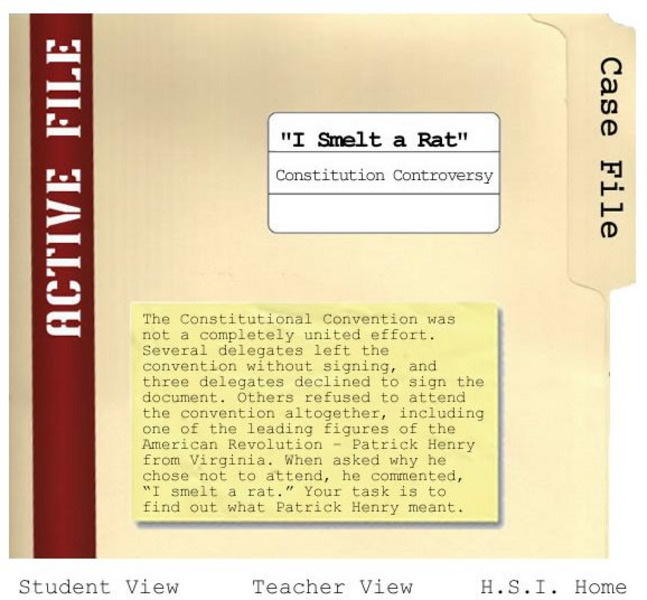
Historical Scene Investigation: Hsi: I Smell a Rat: Constitution Controversy
Activity in which students act as detectves to investigate an historical issue. In this activity students analyze primary source material to learn about controversy surrounding the U.S. Constitution when they are asked to find out what...
US National Archives
National Archives: Confronting Work Place Discrimination on the Wwii Homefront
African Americans were not able to take advantage of the booming industries as Americans were mobilizing for WWII. The FEPC was established to make sure Roosevelt's executive order providing for equal opportunities in defense industries...
Other
Teaching Tolerance: Pre Wwii European Jewish Life Photo Project
This set of lessons - comprised of five 45-minute sessions - will engage students in researching and understanding how individual Jewish communities and lives were affected by the Holocaust. By researching and analyzing family...
US National Archives
Docsteach: Benjamin Franklin: Politician and Diplomat
In this activity, students will review and analyze the founding documents of the United States and understand Benjamin Frankin's contributions and connections to these founding documents. Franklin was the only man to help shape all of...
US National Archives
Docsteach: Indian Nations vs. Settlers on the American Frontier: 1786 1788
In this activity, learners will compare and contrast two documents from the Revolutionary period written by 1) a combined group of Native American tribes and 2) an American territorial governor, Arthur St. Clair. Students will analyze...
US National Archives
National Archives: Lesson Plans Congress, the President, and the War Powers
Examine the power of Congress to make war by studying primary source documents from various wars throughout U.S. history. Young scholars will analyze how the balance of authority between the legislative branch and executive branch has...
US National Archives
National Archives: Exploring the Western Frontier With the Records of Congress
Students will analyze the impact of the frontier on American life and the role Congress played in settling the frontier. Included are worksheets, Turner's Thesis, and reflection questions. Primary sources provided are petitions for...
Other
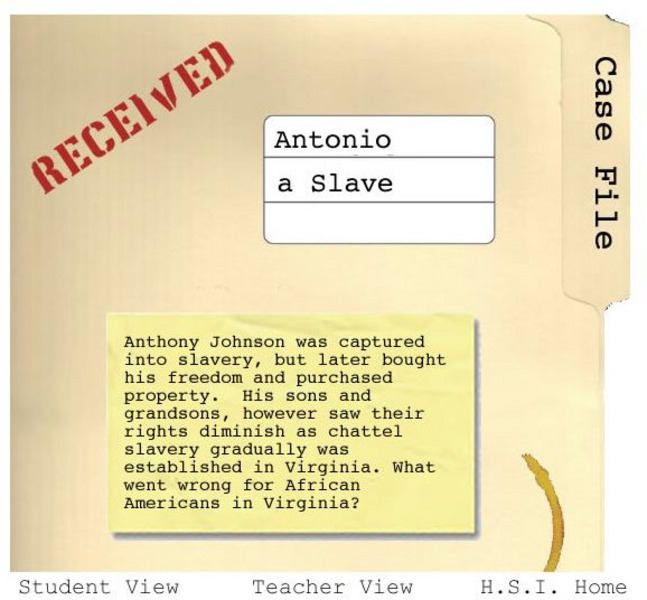
Historical Scene Investigation: Hsi: Antonio a Slave
Activity in which students play the role of detective and follow the life story of a slave to investigate changing slave laws and conditions in the 1600s. Through their investigation, students read and analyze the evidence in the form of...
PBS
Now With Bill Moyers: Whose God? (Lesson Plan in Religious Pluralism)
A lesson in analyzing historical documents on religious freedom and in assessing the historic impact of diverse religious groups on the United States. Pupils examine current separation-of-church-and-state issues and decide if diverse...
University of California
The History Project: Ideology of the New Left
The early 1960s saw a rising tide of criticism of American society, mainly by college students. They criticized repression, corruption and racism as basic flaws in the entire structure of American government and society. This lesson plan...
University of California
History Project: Fdr and Courtpacking
This lesson provides the background for the decision by President Roosevelt to attempt to expand the number of Supreme Court justices from nine to twelve. Students are to use sections from provided primary source documents to analyze the...