Hi, what do you want to do?





University of Groningen
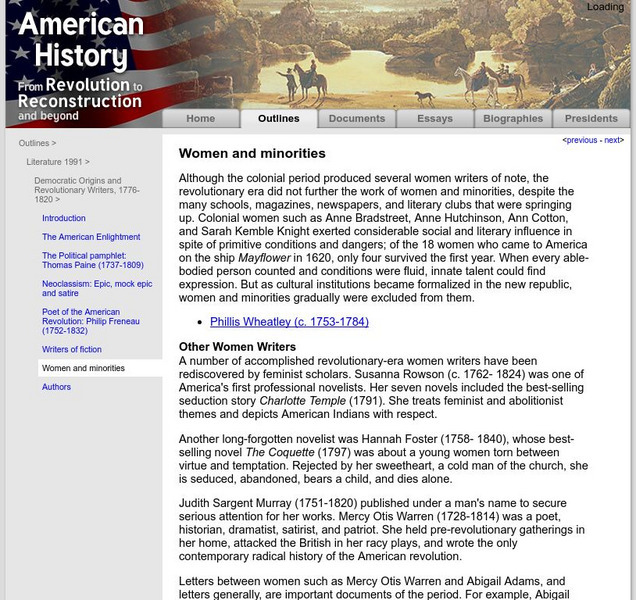
American History: Outlines: Women and Minorities
Although the colonial period produced several women writers of note, the revolutionary era did not further the work of women and minorities, despite the many schools, magazines, newspapers, and literary clubs that were springing up....
Independence Hall Association
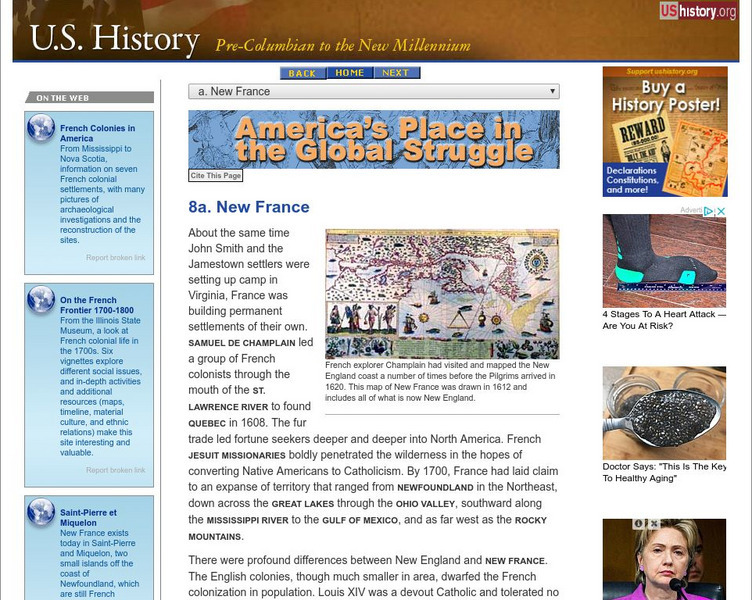
U.s. History: New France
This site has a good description of the differences between the French settlements in New France and the British colonies in America. Read about the rights of the French colonists as opposed to those of the English colonists.
University of Groningen
American History: Outlines: Democratic Origins Introduction
The hard-fought American Revolution against Britain (1775-1783) was the first modern war of liberation against a colonial power. The triumph of American independence seemed to many at the time a divine sign that America and her people...
Other
Organization of American States: Simon Bolivar
An informative exploration of the life of Simon Bolivar, the man known in South America as the "Liberator," because he led revolutions against Spanish colonial overlords in Venezuela, Ecuador, Peru, and Colombia.

Other
Polytechnic School: u.s. History Outlines
This site, as a companion to a high school A.P. U.S. History course, offers a lengthy series of outlines and charts timelining U.S. history, from America's colonial beginnings to the Watergate scandal of the 1970s. By providing the...
![Tom richey.net: Native American Cultures 1491 1607 [Ppt] PPT](https://statictemp.lp.lexp.cloud/images/attachment_defaults/resource/large/FPO-knovation.png "Tom richey.net: Native American Cultures 1491 1607 [Ppt] PPT")
Tom Richey
Tom richey.net: Native American Cultures 1491 1607 [Ppt]
Presents key ideas for examining the cultures of Native American tribes that lived in North America in early colonial times. Discusses the major groups, the way of life of each group, and where they lived.
Independence Hall Association
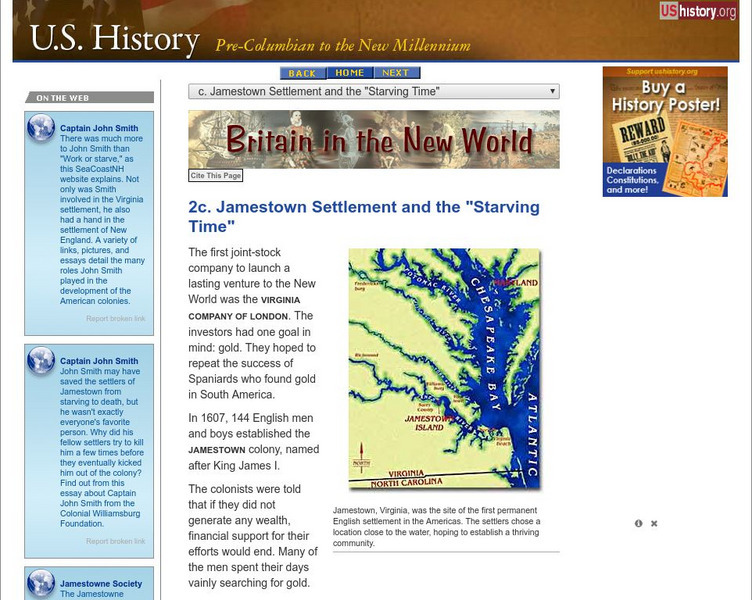
U.s. History: Britain in the New World: Jamestown Settlement
Jamestown, although not a financial sucess, was the first succesful English colony in North America. Find out how the colony was financed, what the first colonists hoped to find, how the colony was governed, and the hardships that were...
Bill of Rights Institute
Bill of Rights Institute: John Adams
Short, overweight, and quick-tongued, John Adams hardly fits the model of the typical Founder. But Adams's contributions to American independence and the formation of the United States government were great. Adams penned defenses of...
Other
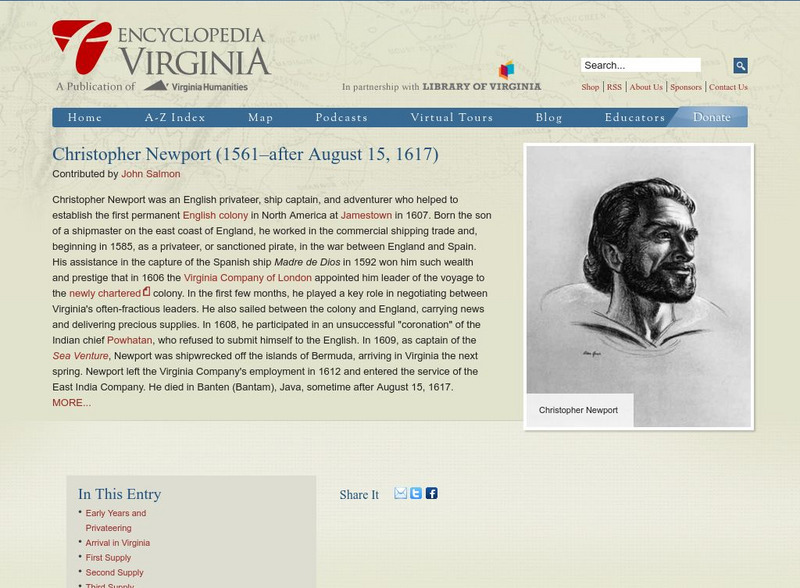
Encyclopedia Virginia: Christopher Newport
Biographical information about English explorer, Christopher Newport, who commanded the first fleet sent by the Virginia Company to America, and who helped the colonists found Jamestown colony. A timeline outlines his active sailing career.
Council for Economic Education
Econ Ed Link: Where's the Beef?
Students explore meat consumption statistics, an indicator of a nation's relative prosperity and standard of living. They do a survey of a family's meat consumption and compare their results to statistics from Colonial and modern- day...
American-Israeli Cooperative Enterprise
Jewish Virtual Library: American Jewish Women
From the Jewish Virtual Library, historical facts about Jewish women in America starting with the pre-colonial period through the twentieth century.
CommonLit
Common Lit: Chief Powhatan's Address to Captain John Smith (1609)
The Powhatan are Native American people from Virginia who share an Algonquian language. In 1607, the Jamestown settlement in the Virginia colony became the first permanent English settlement in the Americas. At the initial arrival of the...

Khan Academy
Khan Academy: Transatlantic Trade
An overview of the Transatlantic Trade whereby Europe, Africa, and the America's engaged in a network of people, raw materials, finished goods, merchants, and sailors bringing wealth to colonial empires. The consequences of the...
A&E Television
History.com: What Did the Three Continental Congresses Do?
During the Revolutionary War, the Continental Congress became America's de facto government. Over a period of 15 years, from 1774 to 1789, the Continental Congress underwent a profound evolution. Starting out as a temporary group that...
National Humanities Center
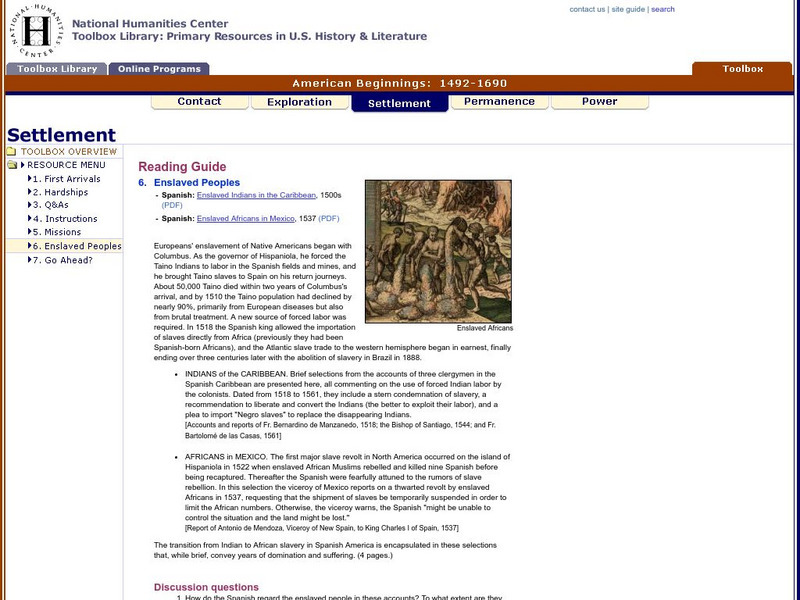
National Humanities Center: Toolbox Library: Enslaved Peoples, American Beginnings: 1492 1690
Two Spanish accounts of enslaved Indians in the Caribbean and enslaved Africans in Mexico and statements of the difficulty of maintaining slavery and the lurking threat of a slave revolt.
National Humanities Center
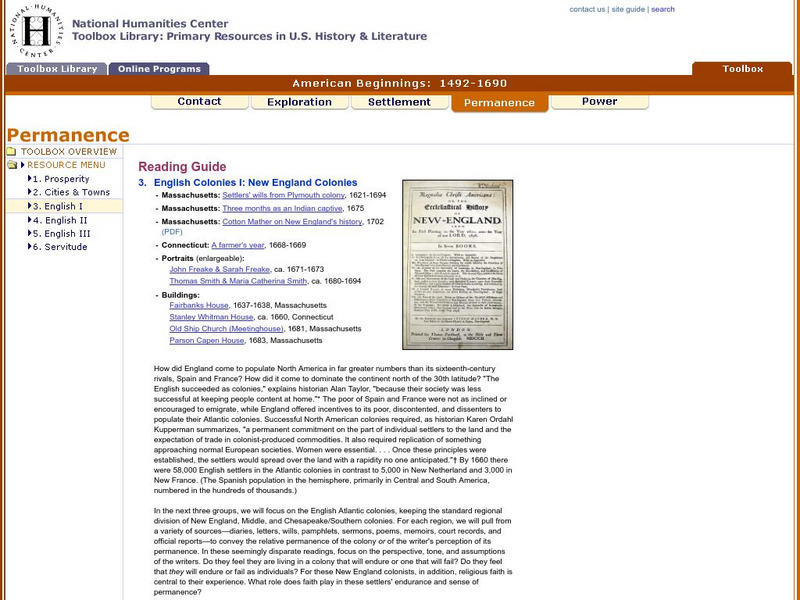
National Humanities Center: Toolbox Library: English I, American Beginnings: 1492 1690
Portraits of early New Englanders as well as four buildings from seventeenth-century New England that accompany accounts in those British colonies of struggles, Indian hostilities, and economic success.
National Humanities Center
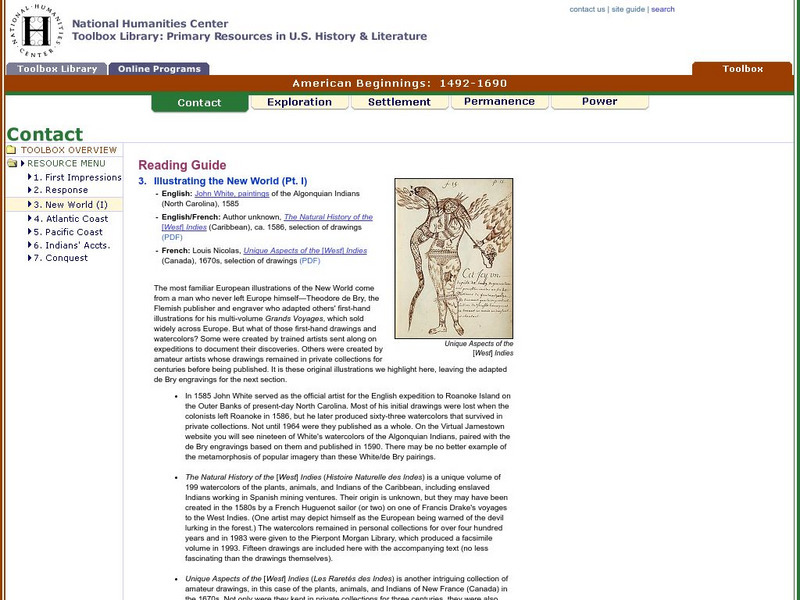
National Humanities Center: Toolbox Library: New World: Part I: American Beginnings: 1492 1690
A variety of paintings and drawings that display European images of their first encounters with the land, plants, animals, and native peoples of the western hemisphere. With questions for discussion.
National Humanities Center
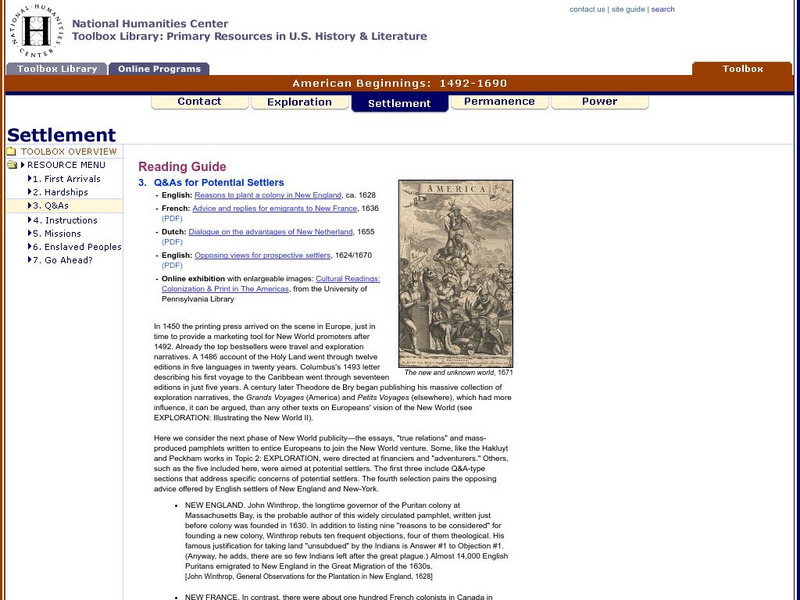
National Humanities Center: Toolbox Library: Questions & Answers, American Beginnings: 1492 1690
An online exhibition of images of European settlement to accompany two English, a French, and a Dutch set of promotional accounts that offer advice, encouragement, and occasional warning to prospective immigrants to newly settled areas...
National Humanities Center
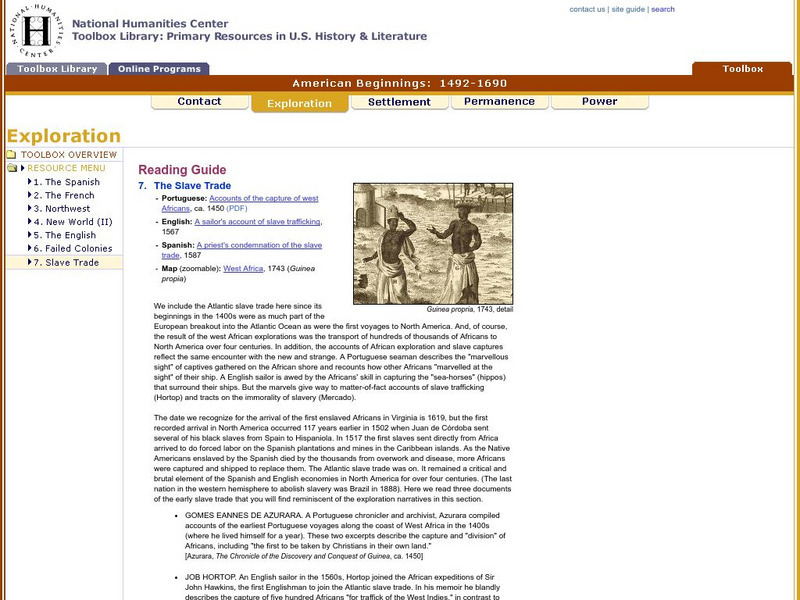
National Humanities Center: Toolbox Library: Slave Trade, American Beginnings: 1492 1690
A West African map and three accounts of the development of slave acquisition display the process and the brutality of the Atlantic slave trade.
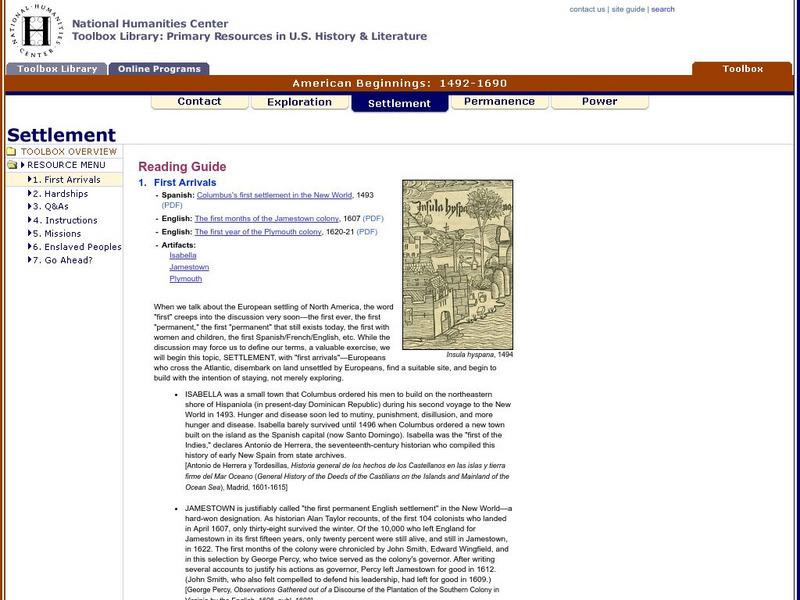
National Humanities Center
National Humanities Center: Toolbox Library: First Arrivals, American Beginnings: 1492 1690
Numerous visual images of artifacts from English settlements at Jamestown and at Plymouth, and from Spanish settlement in Hispaniola, and three original accounts of each of those early settlements that describe the possibilities and the...
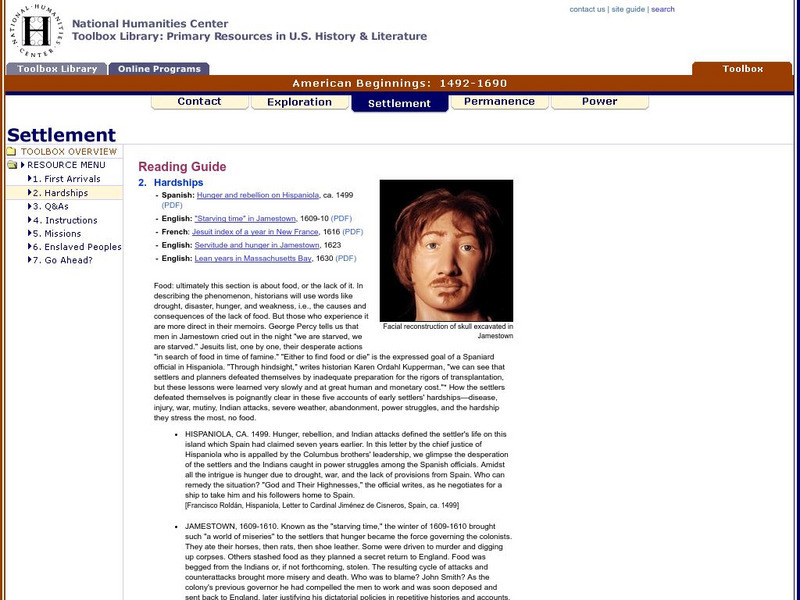
National Humanities Center
National Humanities Center: Toolbox Library: Hardships, American Beginnings: 1492 1690
Three English, a French, and a Spanish primary account of the staggering losses, misery, and deprivation that characterized early European settlement as well as the resilience needed to overcome those challenges.
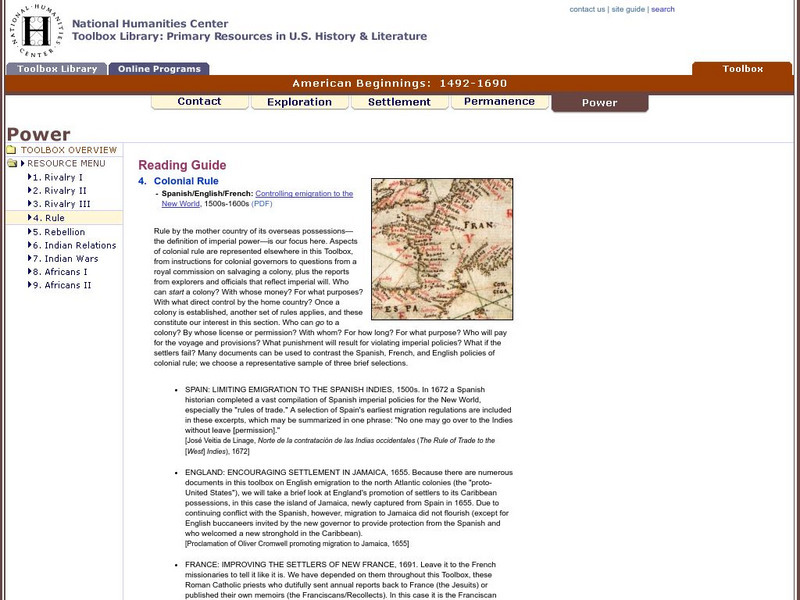
National Humanities Center
National Humanities Center: Toolbox Library: Rule, American Beginnings: 1492 1690
Three documents reflecting official views of how to rule and regulate a successful colony in New France, Jamaica, and the Spanish Indies. Includes teacher reasources for framing discussion.

Other
New Netherland Institute: New Amsterdam Kitchen: Domestic Life in New Netherland
Provides information about the foods eaten by settlers in New Amsterdam and how they prepared it. Describes the different utensils and dishes that were used for cooking and for food consumption.
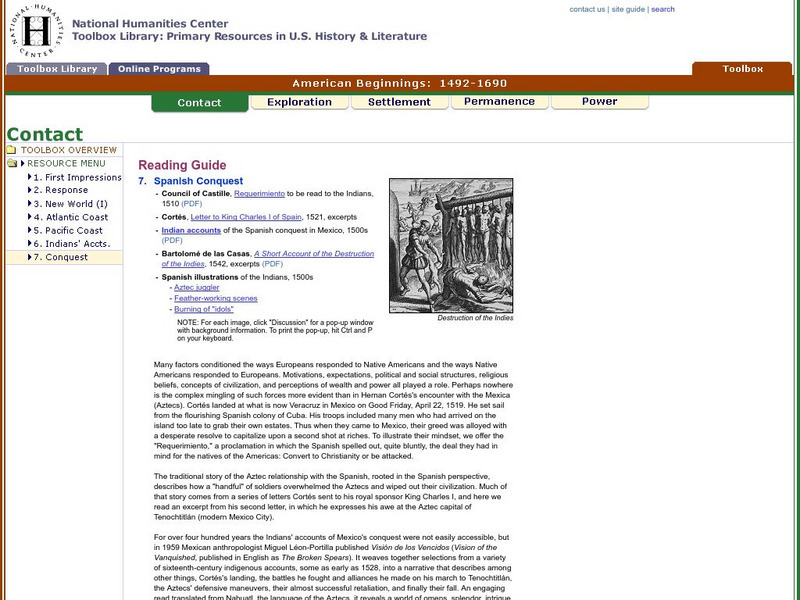
National Humanities Center
National Humanities Center: Toolbox Library: Conquest, American Beginnings: 1492 1690
A series of illustrations and accounts of Spanish conquest of Indians that reflect the fascination with and the brutality directed against native cultures.
Other popular searches
- Life in Colonial America
- Colonial America Worksheets
- Colonial America Crossword
- Clip Art Colonial America
- Clipart Colonial America
- Colonial America Barter
- Regions of Colonial America
- Colonial American Literature
- American Colonial Government
- Colonial America Art
- Colonial America and Math
- Colonial America Homemaker