Hi, what do you want to do?






Curated OER
Where Should We Place Archaeopteryx?
Pupils classify Archaeopteryx using pictures of actual fossils and scientist representations of how the animal might have looked. They compare Archaeopteryx's characteristics to those of the five extant vertebrate groups to...

Curated OER
Model Organisms: The Genes We Share
In this genetics worksheet, students access a website to learn about how human genes mutate to cause heritable disorders such as Huntington disease. Students use the information on this website to complete 12 short answer questions.
Google
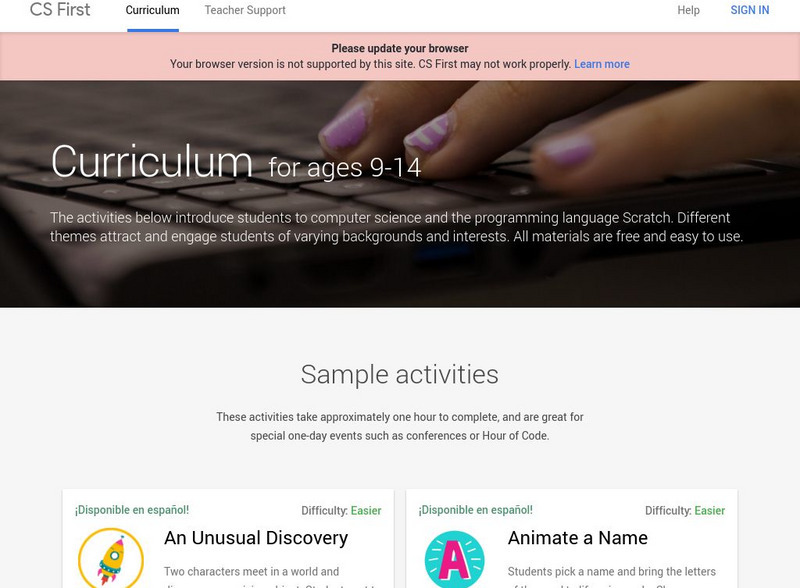
Cs Education at Google: Cs First: Curriculum for Ages 9 14
Activities that teach learners basic computer science concepts using the programming language Scratch. Includes lots of additional supports for teachers. All materials are free and teachers sign in to create a class.
Computer History Museum
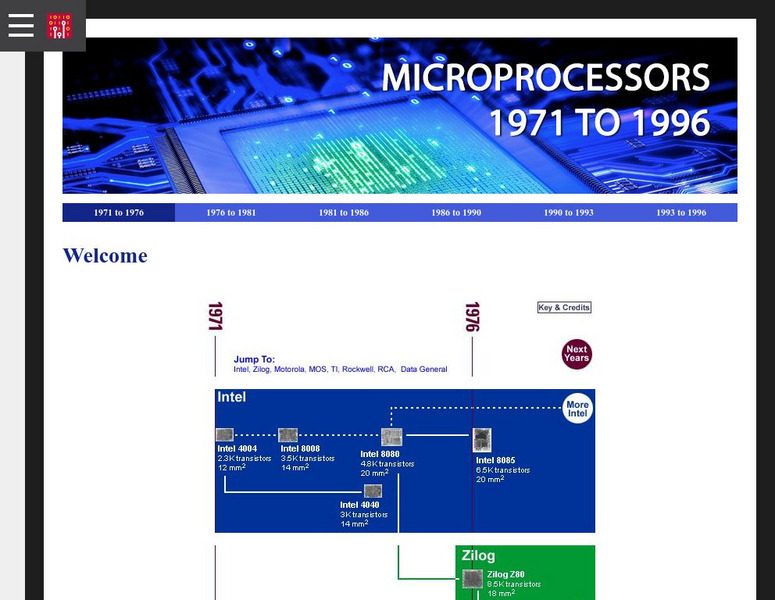
Computer History Museum: Microprocessors
The invention of the microprocessor is a very important milestone in the digital age. This site presents a timeline that illustrates the history of the microprocessor from 1971 through 1996.

Computer History Museum
Computer History Museum: Ada Lovelace
Explore the life and work of Ada Lovelace who has been referred to as the 'prophet of the computer age'.
PBS
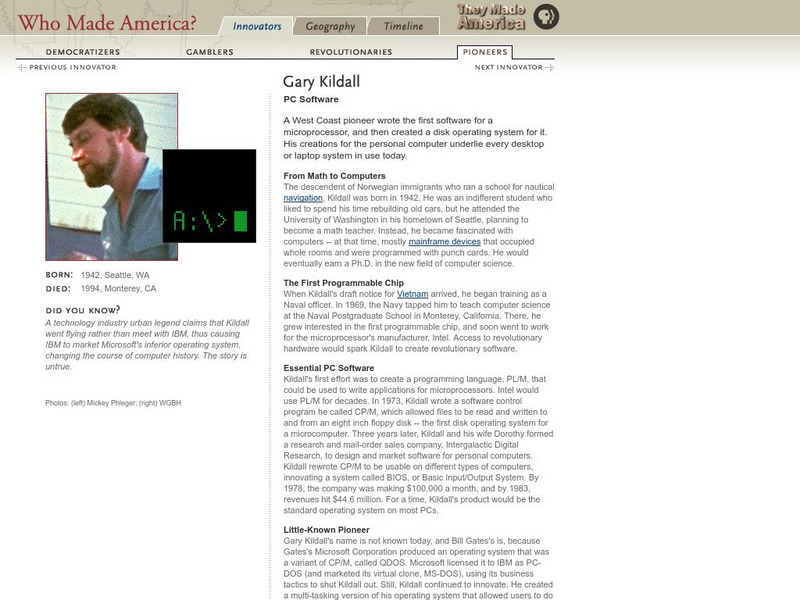
Pbs: Who Made America?: Innovators: Gary Kildall
One-page profile of influential innovator, Gary Kildall, a pioneer in the computer age whose vision and ideas created the first disc operating system for a microcomputer.
Computer History Museum
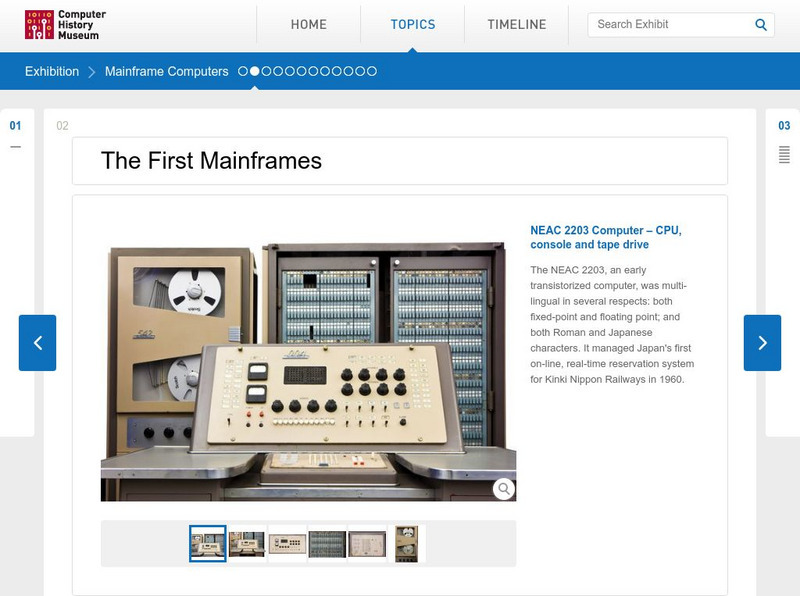
Computer History Museum: Model 7094 Console
Brief description of the Model 7094 Console, a transistor computer used in the NASA Apollo space program. The machine is on display at the Computer History Museum. This site provides a glimpse into the development of the information age...
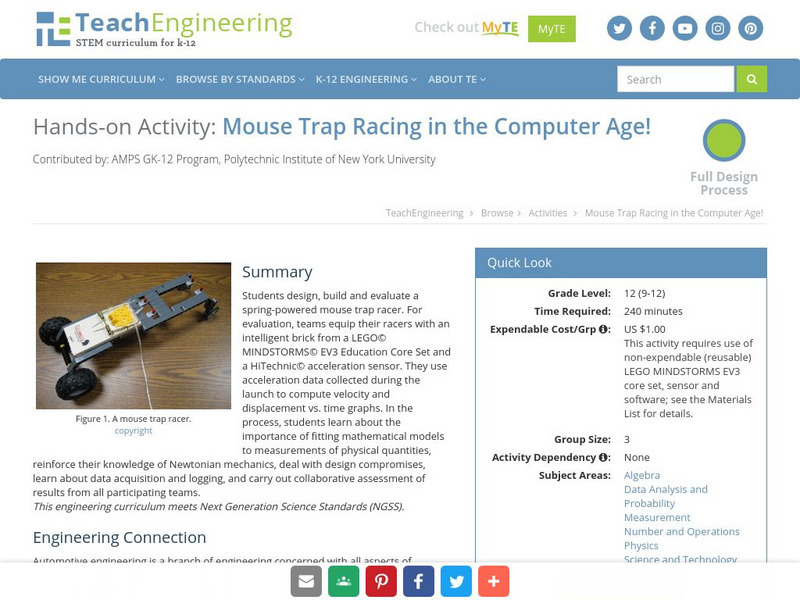
TeachEngineering
Teach Engineering: Mouse Trap Racing in the Computer Age!
Students design, build and evaluate a spring-powered mouse trap racer. For evaluation, teams equip their racers with an intelligent brick from a LEGO MINDSTORMS NXT Education Base Set and a HiTechnic acceleration sensor. They use...
Smithsonian Institution
National Museum of American History: Information Age
This exhibition surveys the history of information technology and its relation to society from the origin of the telegraph to the present. Its emphasis is as much on social as technical change. This support page contains background...
Other
Waste Age: Computing the Damage
This article chronicles the problems of disposing obsolete computers and other electronics, the harmful substances they add to landfills here and abroad, and projections for the future.

Computer History Museum
Computer History Museum: Williams Tube Memory
Brief description of Williams Tube Memory, the first randam-access memory used by many first generation computers. The various memory artifacts are on display at the Computer History Museum. This site provides a glimpse into the...
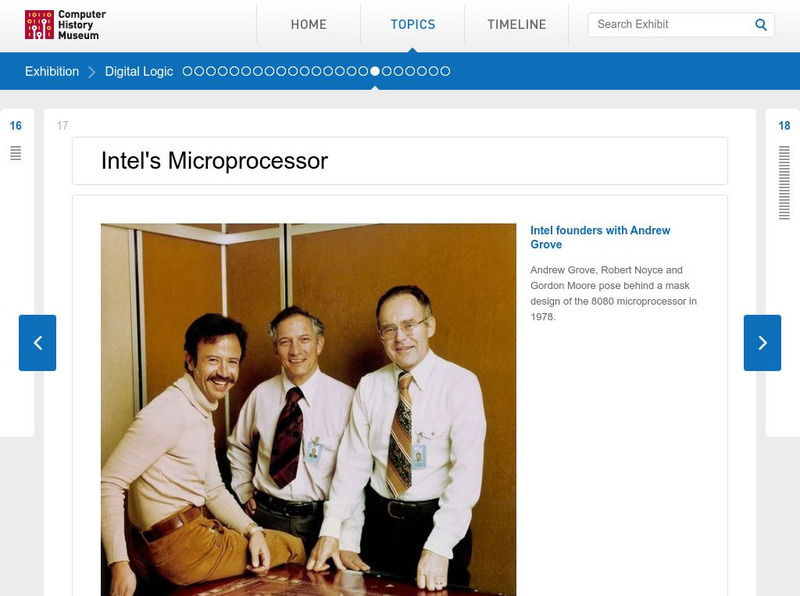
Computer History Museum
Computer History Museum: I Cs, Microprocessors, & Memory
Brief description of ICs, Microprocessors, and Memory, describing the breakthroughs in technology design that dramatically reduced the size, power requirements, and cost of a computer. The various Integrated Circuit artifacts are on...

Computer History Museum
Computer History Museum: Core Memory
Brief description of Core Memory, a reliable high-speed storage device developed during the 1950s. The various memory artifacts are on display at the Computer History Museum. This site provides a glimpse into the development of the...
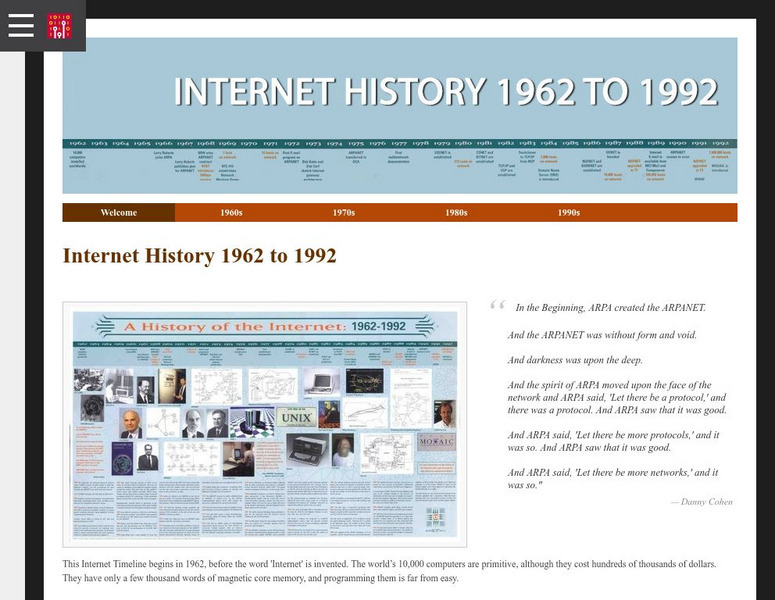
Computer History Museum
Computer History Museum: The Origin of the Internet
The origin of the Internet can be traced back to the ARPANET project allowing scientists to share information between computers. As the popularity grew advancements were made in usability. This site provides a glimpse into the...
ReadWriteThink
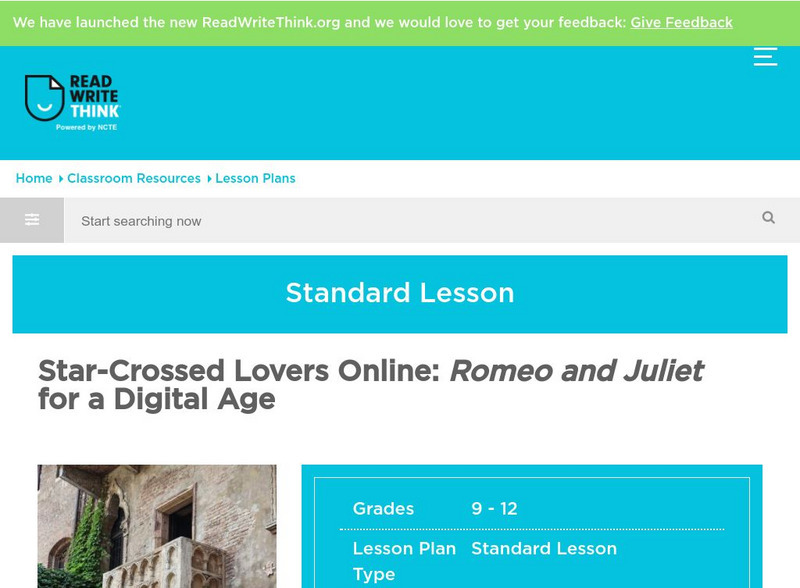
Read Write Think: Romeo and Juliet for a Digital Age
Interesting instructional activity which allows young scholars to relate more fully to this work of Shakespeare by rewriting and recreating scenes with modern, digital devices in mind (cell phones, computers, etc.). Excellent and...

Computer History Museum
Computer History Museum: Magnetic Tapes
A brief history covering Magnetic Tapes, initially used in the 1950s to replace punched cards, and used primarily today as a backup device. The artifact is on display at the Computer History Museum. This site provides a glimpse into the...

Computer History Museum
Computer History Museum: Delay Line Memory
Brief description of Delay Line Memory, a slower serial based design. This site provides a glimpse into the development of the information age from their large collection warehoused in the Computer History Museum located in Mountain...
Computer History Museum
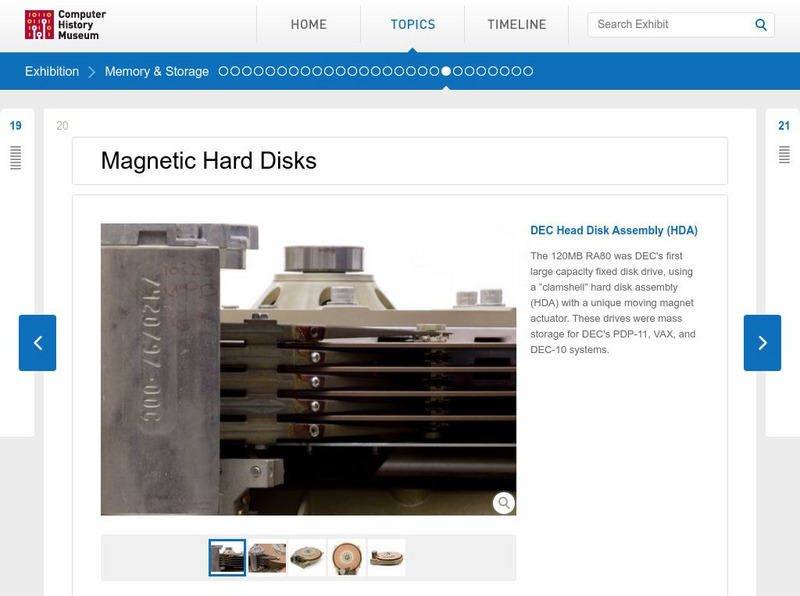
Computer History Museum: Magnetic Disks
A brief history covering magnetic disks, developed as efficient random access memory device. Additionally, a discussion on how a disk drive works is provided. The artifacts are on display at the Computer History Museum. This site...
Computer History Museum
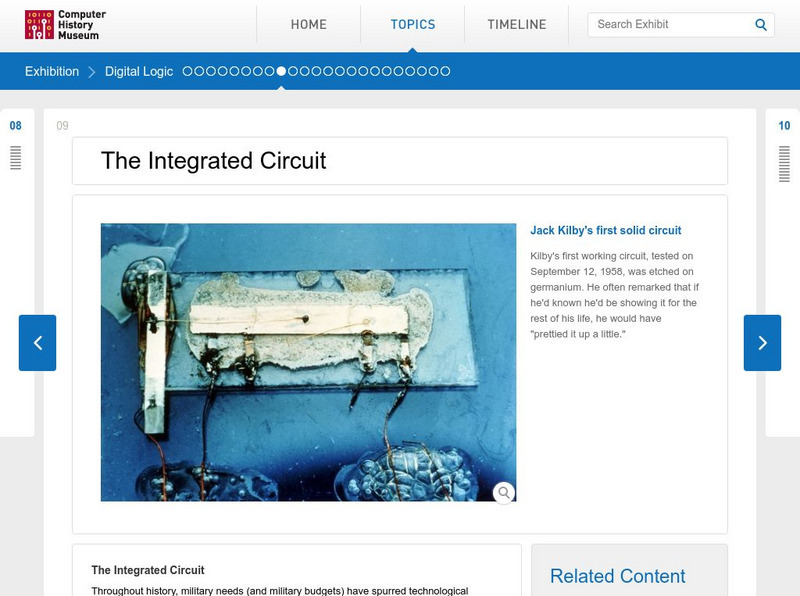
Computer History Museum: Integrated Circuits
Brief description on the design of Integrated Circuits along with images showcasing the assorted types. The various Integrated Circuit artifacts are on display at the Computer History Museum. This site provides a glimpse into the...
Other
Exploring Computer Science: Scratch: Programming for All [Pdf]
A review of how the computer programming game, Scratch, has appealed to people who hadn't previously imagined themselves as programmers. It is an easy interactive activity for everyone of all ages, backgrounds, and interests, to program...
Other
Csta: Computational Thinking: A Digital Age Skill for Everyone [Pdf]
The National Science Foundation asked a group of thought leaders to bring the concepts of computational thinking to the K-12 classroom.

National High Magnetic Field Laboratory
Magnet Academy: Magnetic Core Memory 1949
At the dawn of the computer age, magnetic core memory helped make data storage possible, and showed surprising staying power in a field where components are constantly being replaced by new and improved products.
Other
College Vine: The Importance of Face to Face Communication in the Digital Age
Just because we may have computers and smartphones readily available to us, this does not mean that we should abandon face-to-face communication. Find out some cases in which it makes more sense.
Pew Research Center
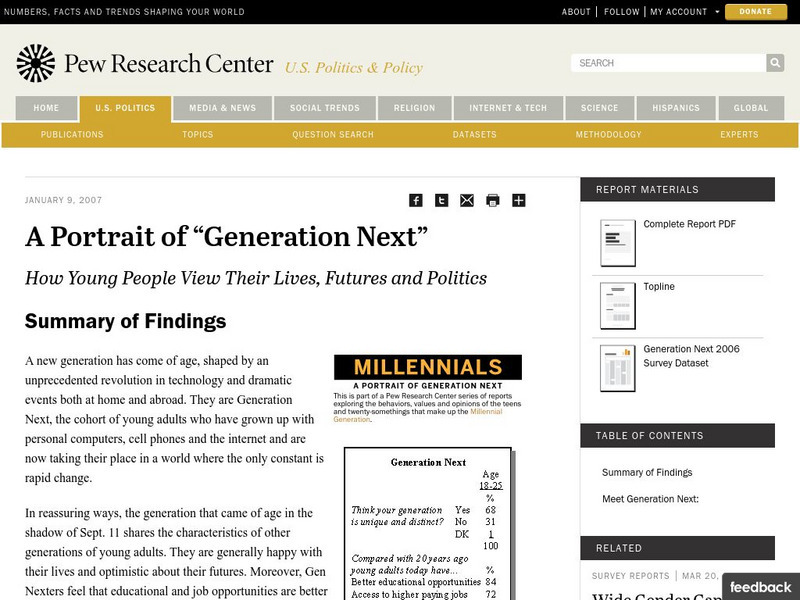
A Portrait of "Generation Next"
A report on how "Generation Next", those of age 18-25 "view their lives, futures and politics." Find out who this new generation is and what defines it as a group.