Hi, what do you want to do?





TeachEngineering
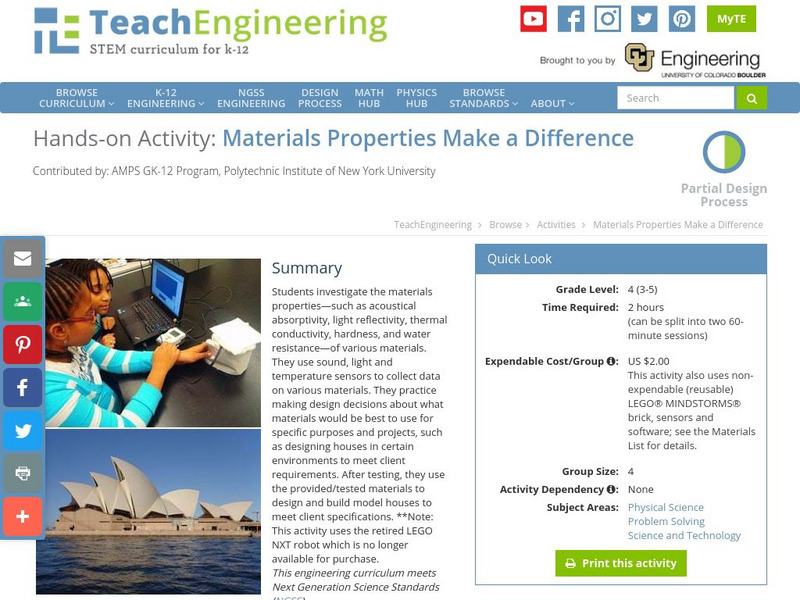
Teach Engineering: Materials Properties Make a Difference
Students investigate the materials properties-such as acoustical absorptivity, light reflectivity, thermal conductivity, hardness, and water resistancea-of various materials. They use sound, light and temperature sensors to collect data...

University of Florida
University of Florida: Department of Materials Science and Engineering
Website for the University of Florida's Department of Materials Science and Engineering. The site has links to information on programs, research, faculty, and facilities.

Massachusetts Institute of Technology
Mit: Dept of Materials Science and Engineering
Webpage for MIT's Department of Materials Science and Engineering. The site includes links to academics, research, people, and news.
Iowa State University
Iowa State University: Materials Science and Engineering
Learn about Iowa State University's department of Materials Science and Engineering, including news, academics, people, research, and general information.
TeachEngineering
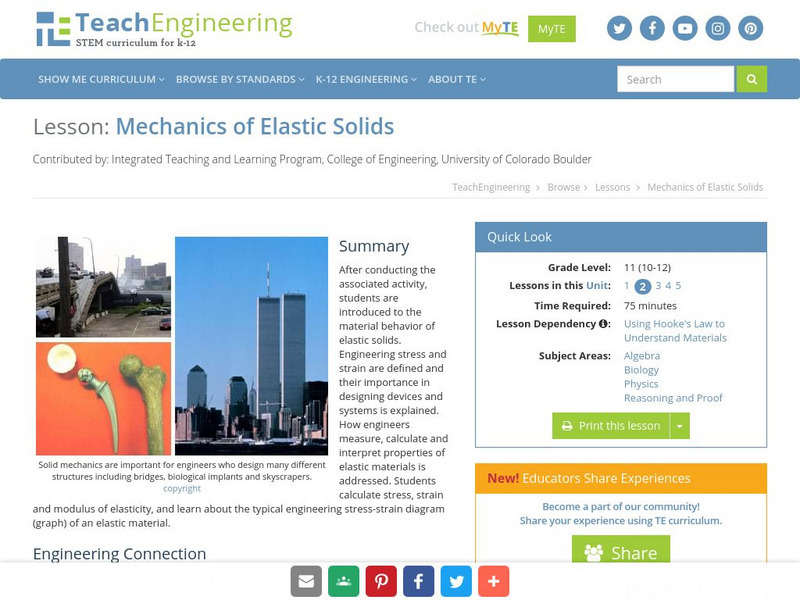
Teach Engineering: Mechanics of Elastic Solids
After conducting the associated activity, students are introduced to the material behavior of elastic solids. Engineering stress and strain are defined and their importance in designing devices and systems is explained. How engineers...
TeachEngineering
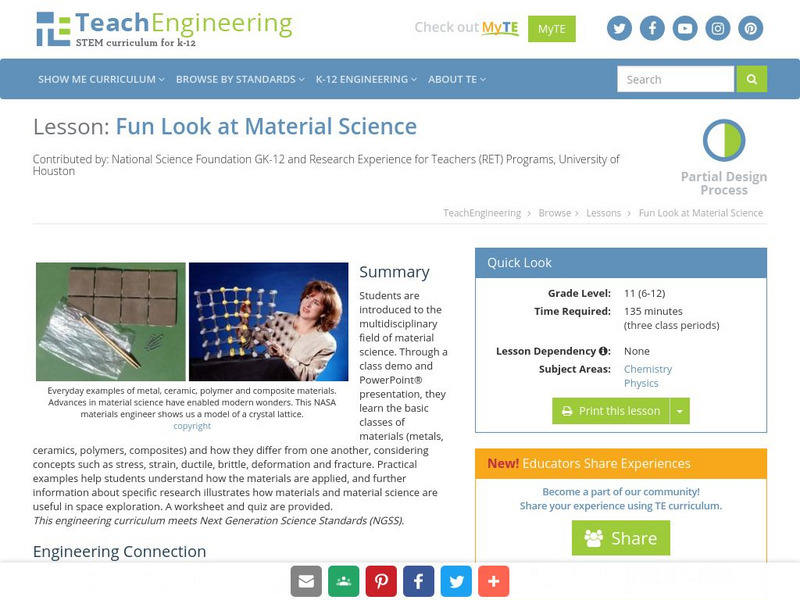
Teach Engineering: Fun Look at Material Science
Students are introduced to the multidisciplinary field of material science. Through a class demo and PowerPoint presentation, they learn the basic classes of materials (metals, ceramics, polymers, composites) and how they differ from one...

Massachusetts Institute of Technology
Mit: Open Courseware: Fundamentals of Materials Science
Provides entire curriculum for the Fundamental of Materials Science course taught at MIT, which "focuses on the fundamentals of structure, energetics, and bonding that underpin materials science." Includes lecture notes, assignments, and...
TeachEngineering
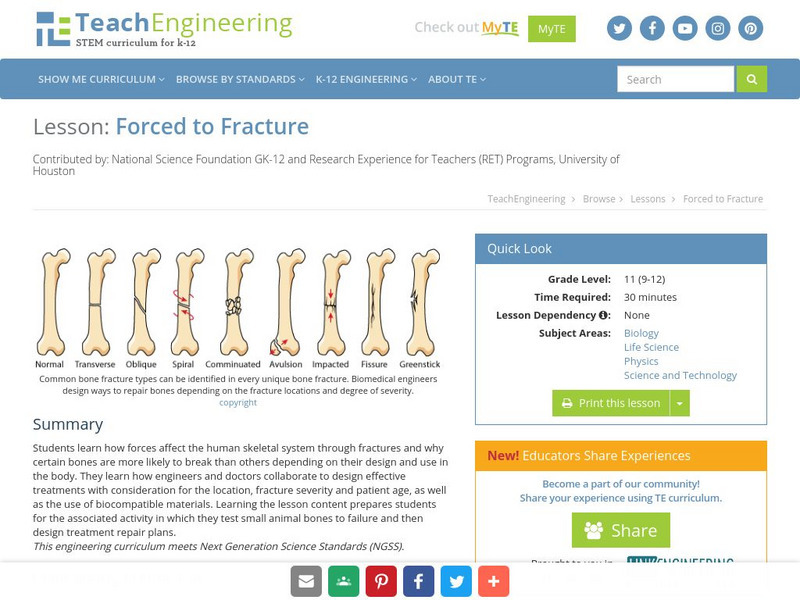
Teach Engineering: Forced to Fracture
Learners learn how forces affect the human skeletal system through fractures, and why certain bones are more likely to break than others depending on their design and use in the body. They learn how engineers and doctors collaborate to...
TeachEngineering
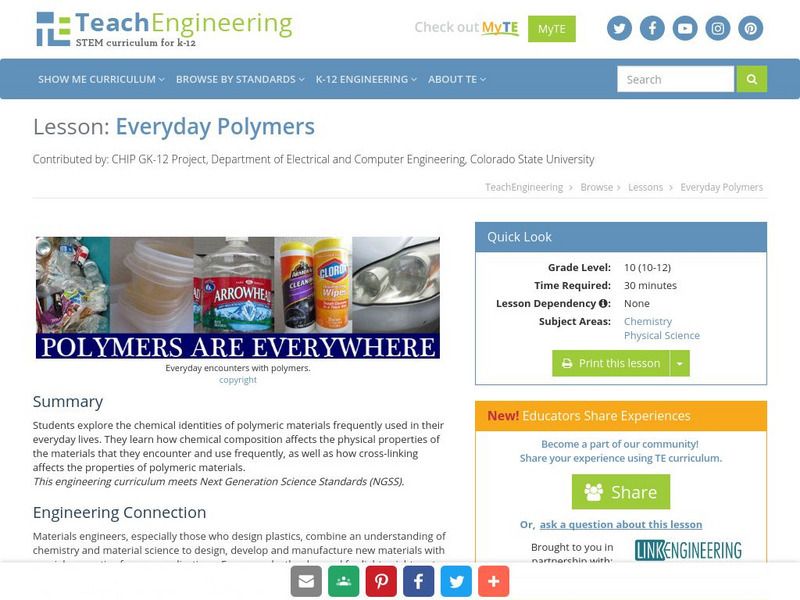
Teach Engineering: Everyday Polymers
Students explore the chemical identities of polymeric materials frequently used in their everyday lives. They learn how chemical composition affects the physical properties of the materials that they encounter and use frequently, as well...
TeachEngineering
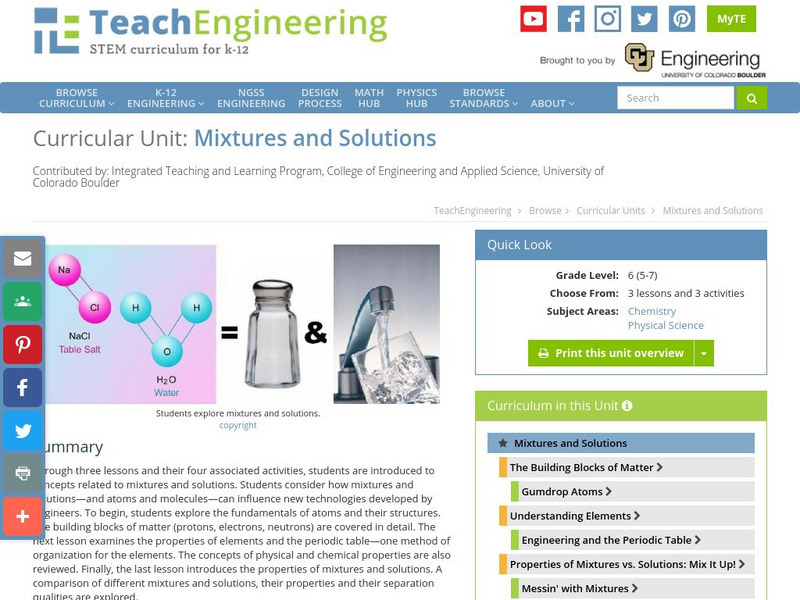
Teach Engineering: Mixtures and Solutions
This unit covers introductory concepts of mixtures and solutions. Students think about how mixtures and solutions, and atoms and molecules can influence new technologies developed by engineers. The first lesson explores the fundamentals...
TeachEngineering
Teach Engineering: Design Packing to Safely Mail Raw Spaghetti
Students will use their creative skills to determine a way to mail raw spaghetti. The students will need to choose a way to safely package their raw spaghetti using only the materials provided. To test the packing designs, the spaghetti...
TeachEngineering
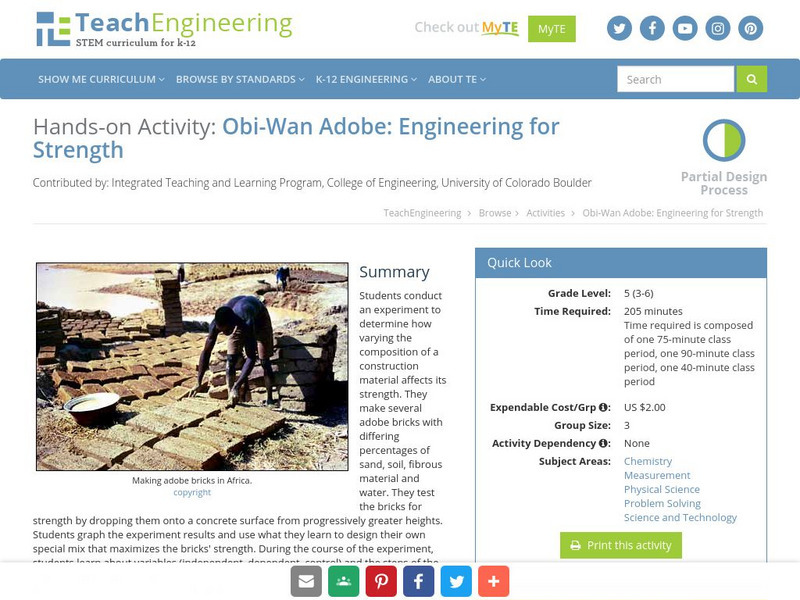
Teach Engineering: Obi Wan Adobe: Engineering for Strength
Students conduct an experiment to determine how varying the composition of a construction material affects its strength. They make several adobe bricks with differing percentages of sand, soil, fibrous material and water. They test the...
TeachEngineering
Teach Engineering: Intro to Engineering
Students are introduced to the basic principles behind engineering and the types of engineering while learning about a popular topic - the Olympics. The involvement of engineering in modern sports is amazing and pervasive. Students learn...
TeachEngineering
Teach Engineering: Hot Potato, Cool Foil
Students explore material properties by applying some basic principles of heat transfer. They use calorimeters to determine the specific heat of three substances: aluminum, copper and another of their choice. Each substance is cooled in...
TeachEngineering
Teach Engineering: Recycled Towers
Students learn about material reuse by designing and building the strongest and tallest towers they can, using only recycled materials. They follow design constraints and build their towers to withstand earthquake and high wind simulations.
TeachEngineering
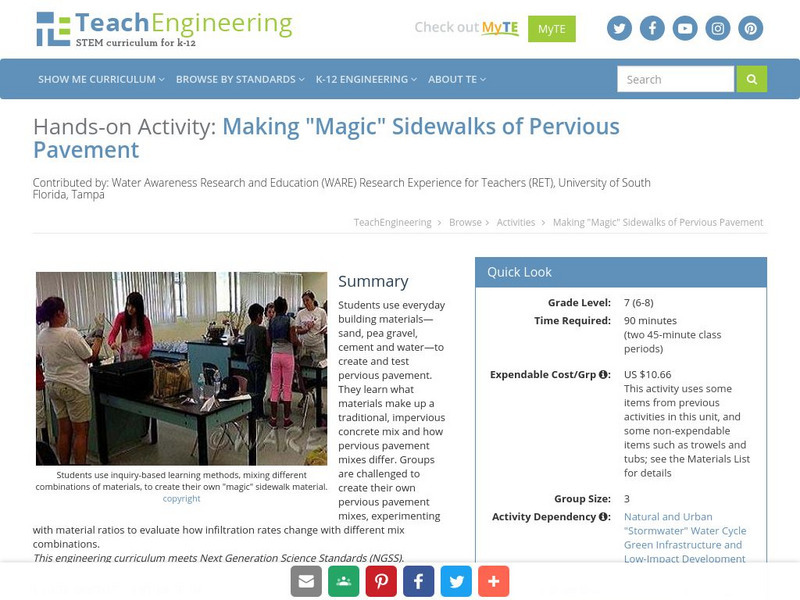
Teach Engineering: Making "Magic" Sidewalks of Pervious Pavement
Students use everyday building materials- sand, pea gravel, cement and water- to create and test pervious pavement. Groups are challenged to create their own pervious pavement mixes, experimenting with material ratios to evaluate how...

TeachEngineering
Teach Engineering: Teaching the Engineering Design Process
Students follow the steps of the engineering design process (EDP) while learning about assistive devices and biomedical engineering. They first go through a design-build-test activity to learn the steps of the cyclical engineering design...
TeachEngineering
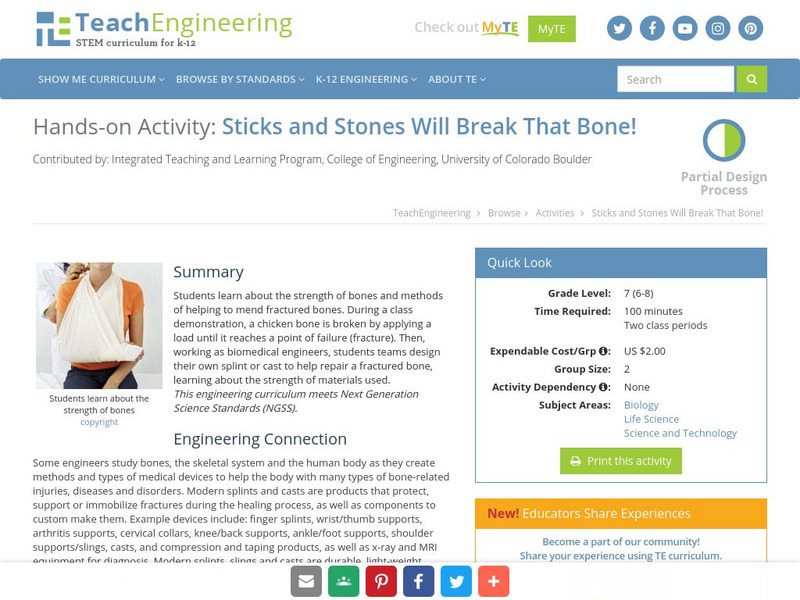
Teach Engineering: Sticks and Stones Will Break That Bone!
Students learn about the strength of bones and methods of helping to mend fractured bones. During a class demonstration, a chicken bone is broken by applying a load until it reaches a point of failure (fracture). Then, working as...
TeachEngineering
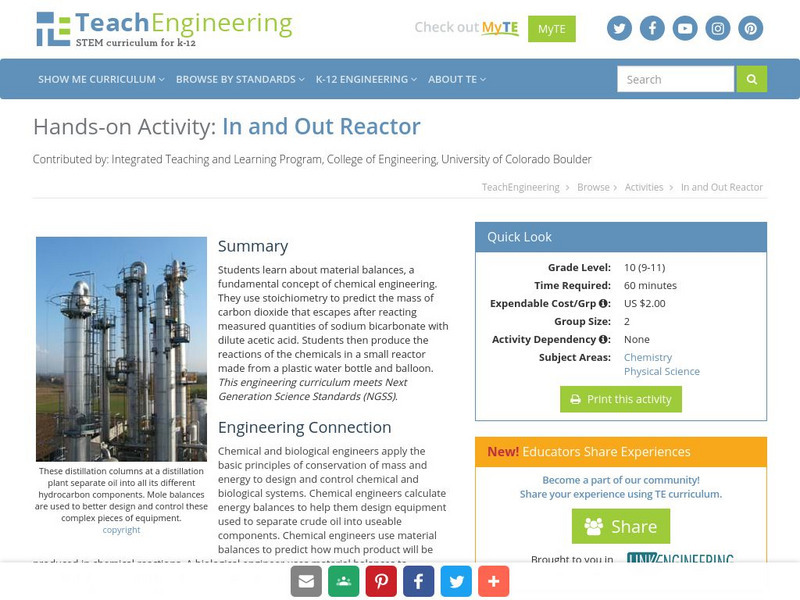
Teach Engineering: In and Out Reactor
Students learn about material balances, a fundamental concept of chemical engineering. They use stoichiometry to predict the mass of carbon dioxide that escapes after reacting measured quantities of sodium bicarbonate with dilute acetic...
TeachEngineering
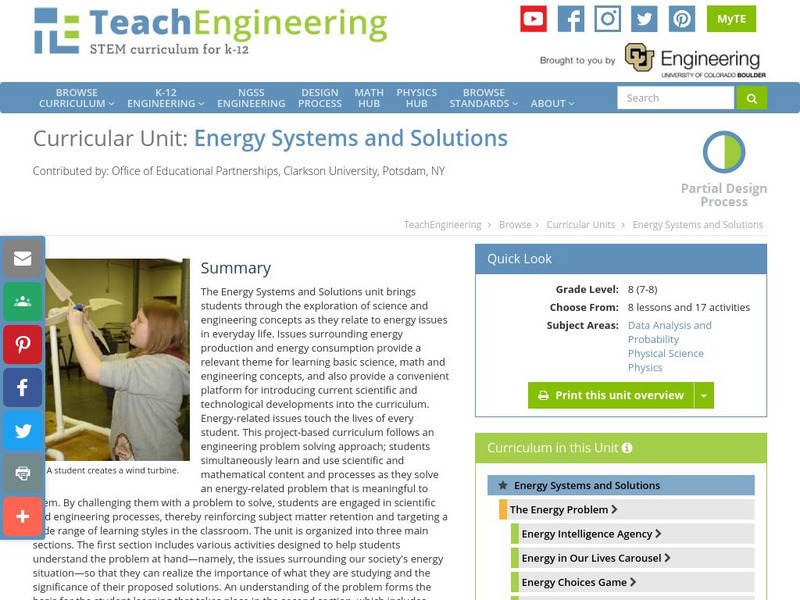
Teach Engineering: Energy Systems and Solutions
The Energy Systems and Solutions unit brings students through the exploration of science and engineering concepts as they relate to energy issues in everyday life. Issues surrounding energy production and energy consumption provide a...
TeachEngineering
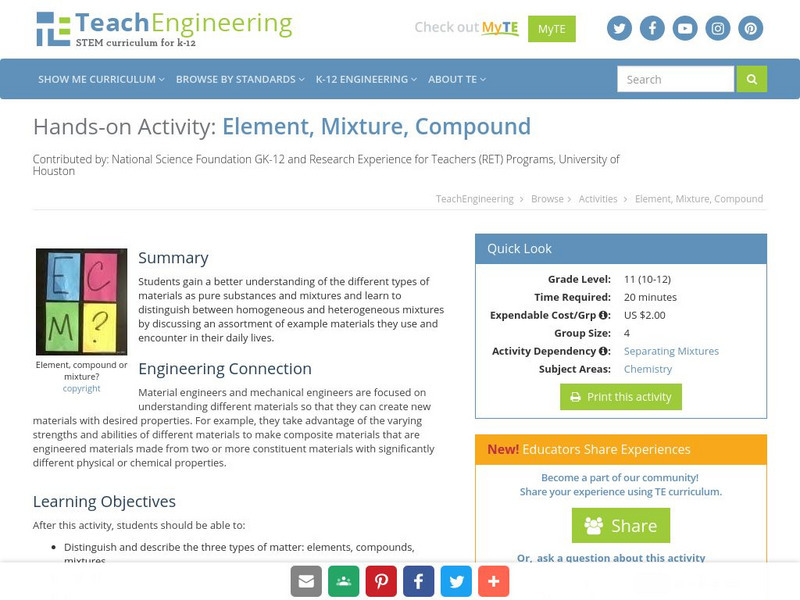
Teach Engineering: Element, Mixture, Compound
This hands-on activity will help the students have a better understanding of different types of materials as pure substances and mixtures and distinguishes the homogeneous and heterogeneous mixtures by discussing some material they use...
TeachEngineering
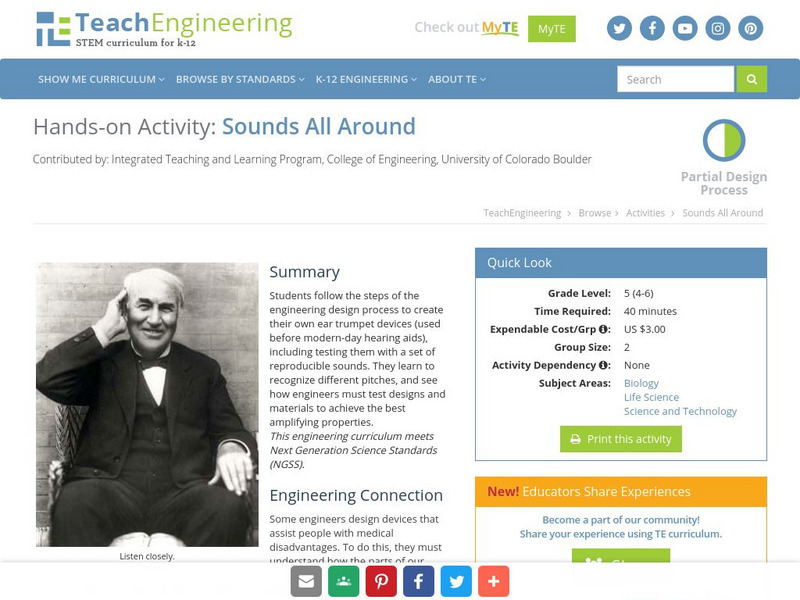
Teach Engineering: Sounds All Around
Students follow the steps of the engineering design process to create their own ear trumpet devices (used before modern-day hearing aids), including testing them with a set of reproducible sounds. They learn to recognize different...
TeachEngineering
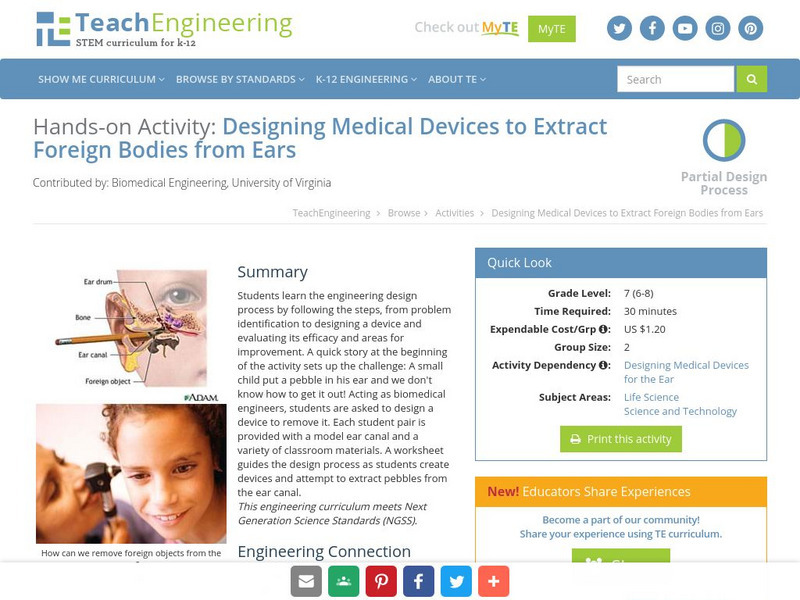
Teach Engineering: Designing a Medical Device
Students learn the engineering design process by following the steps, from problem identification to designing a device and evaluating its efficacy and areas for improvement. A quick story at the beginning of the activity sets up the...
TeachEngineering
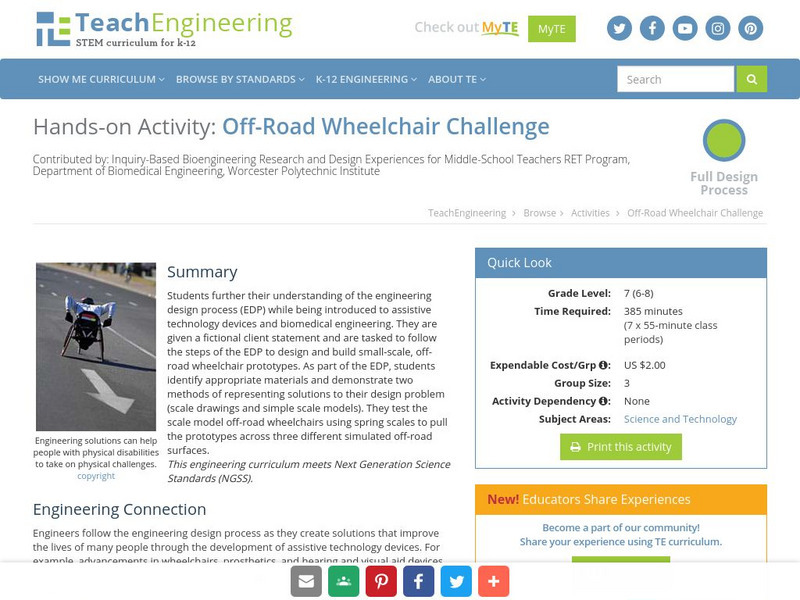
Teach Engineering: Off Road Wheelchair Challenge
Students further their understanding of the engineering design process (EDP) while being introduced to assistive technology devices and biomedical engineering. They are given a fictional client statement and are tasked to follow the...