Hi, what do you want to do?





TeachEngineering
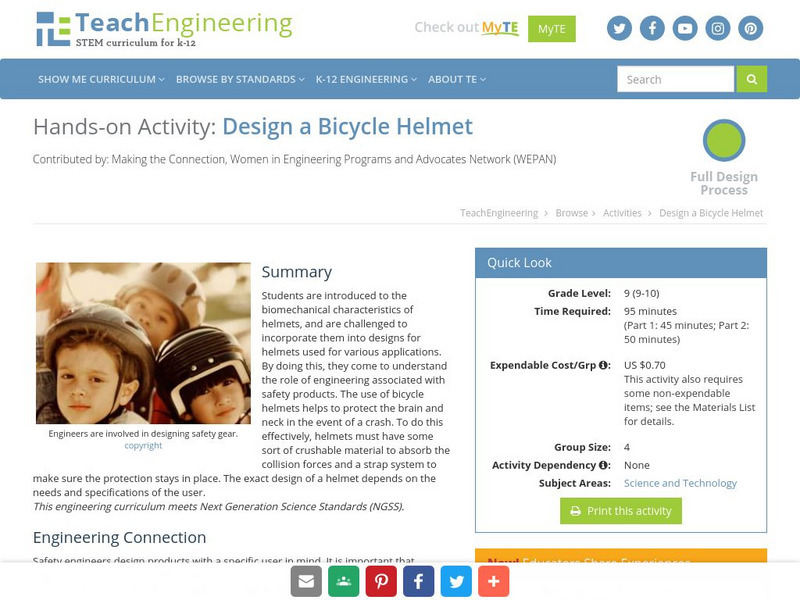
Teach Engineering: Design a Bicycle Helmet
The goal of the activities is for students to understand the basics of engineering associated with safety products. Using a bicycle helmet helps to protect the brain and neck during a crash. In order to do this effectively, helmets must...
TeachEngineering
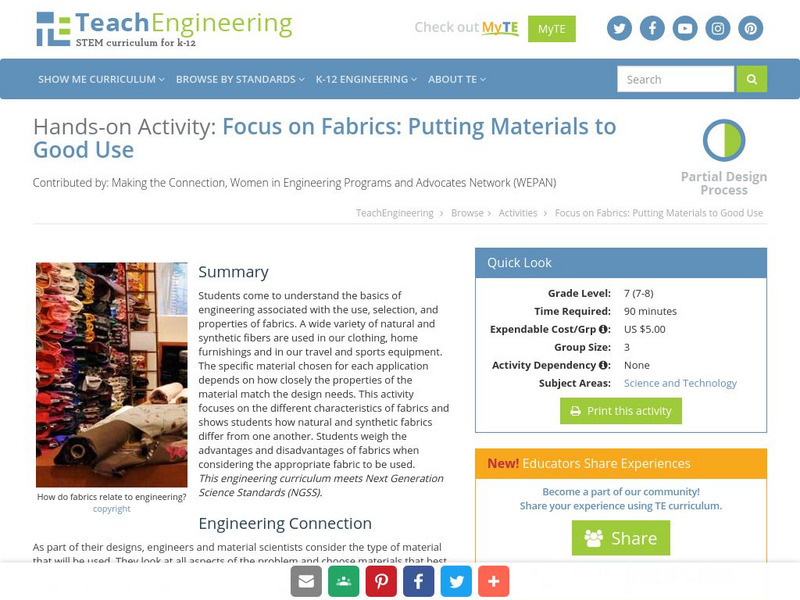
Teach Engineering: Focus on Fabrics: Putting Materials to Good Use
The goal is for students to understand the basics of engineering associated with the use, selection, and properties of fabrics. A wide variety of natural and synthetic fibers are used in our clothing, home furnishings and in our travel...
TeachEngineering
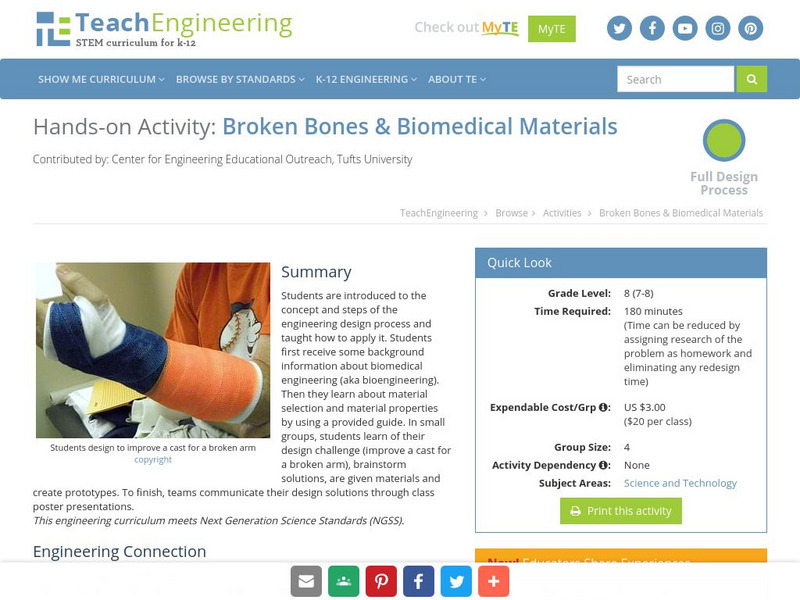
Teach Engineering: Broken Bones
The purpose of this activity is to introduce students to the concept of the engineering design process and to teach them how to apply it. In "Broken Bones," students will explore the steps of the engineering design process. They will...
TeachEngineering
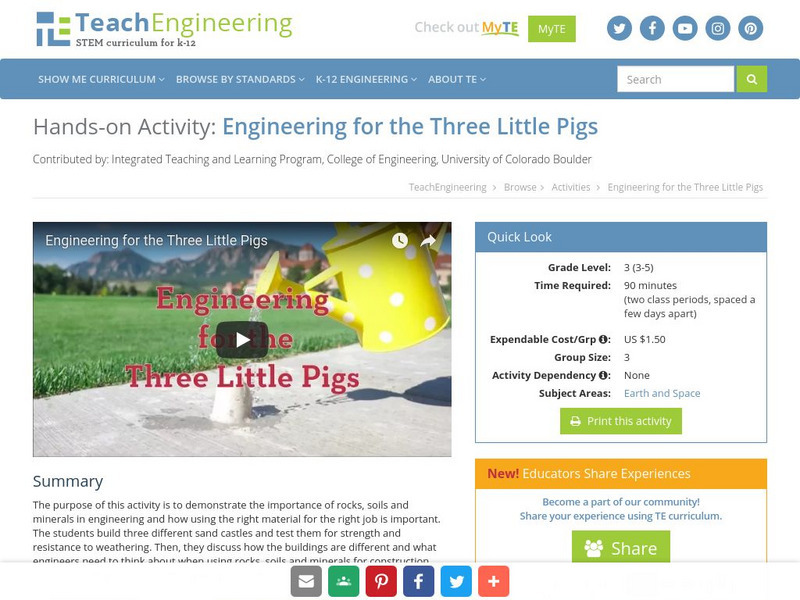
Teach Engineering: Engineering for the 3 Little Pigs
The purpose of this activity is to demonstrate the importance of rocks, soils and minerals in engineering and how using the right material for the right job is important. The students build three different sand castles and test them for...
TeachEngineering
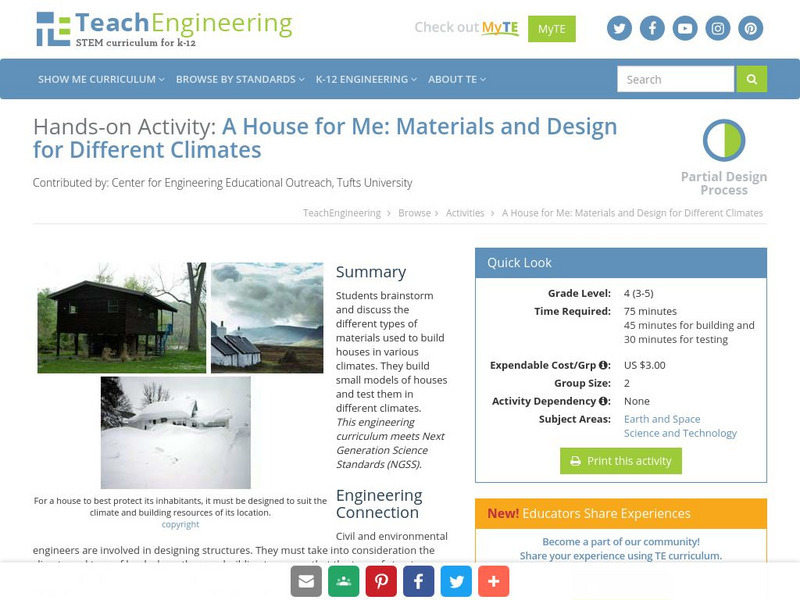
Teach Engineering: A House Is a House for Me
Students brainstorm and discuss the different types of materials used to build houses in various climates. Small models of houses are built and tested against different climates.
TeachEngineering
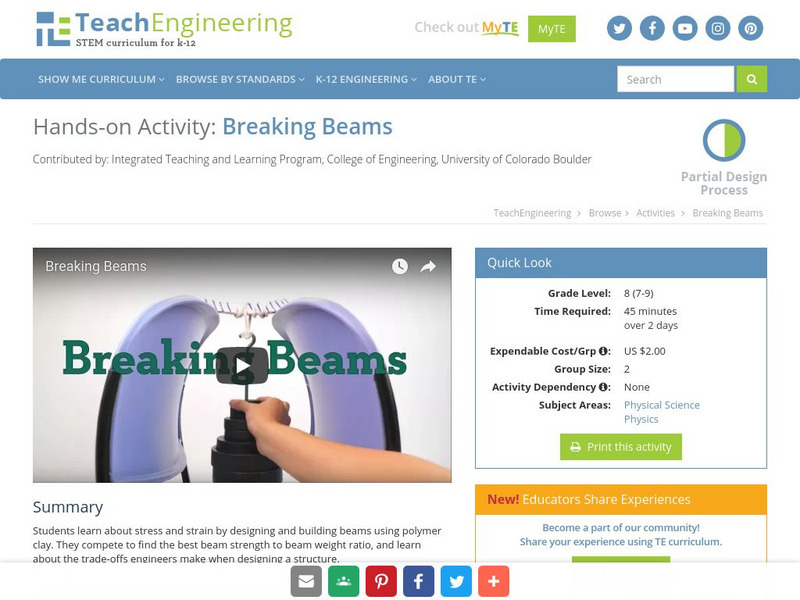
Teach Engineering: Breaking Beams
Students learn about stress and strain by designing and building beams using polymer clay. They compete to find the best beam strength to beam weight ratio, and learn about the trade-offs engineers make when designing a structure.
TeachEngineering
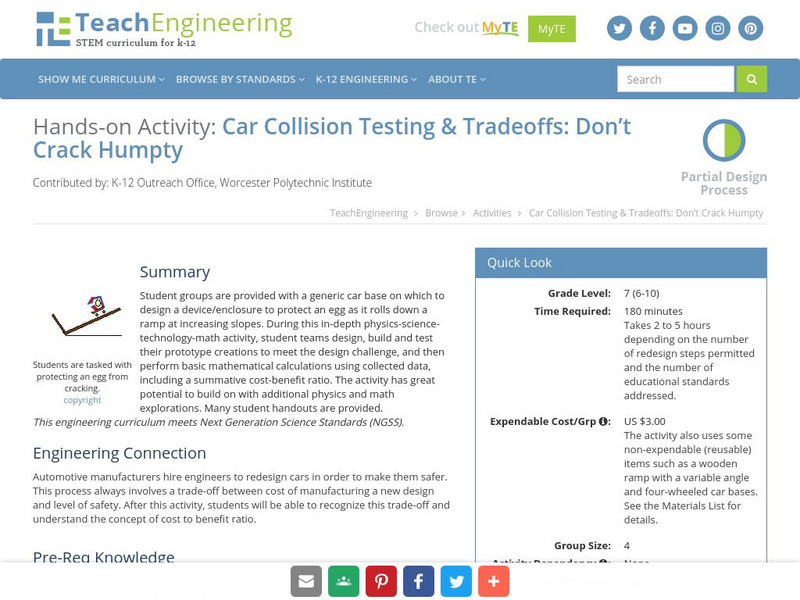
Teach Engineering: Car Collision Testing & Tradeoffs: Don't Crack Humpty
Student groups are provided with a generic car base on which to design a device/enclosure to protect an egg as it rolls down a ramp at increasing slopes. During this activity, student teams design, build and test their prototype...

Technovation
Curiosity Machine: Challenges: Engineer a Flow Control System
In this engineering challenge, students will build a system that controls the movement of material and shuts off automatically. This site includes tips, a lesson plan, and a place for students to document their design process.
TeachEngineering
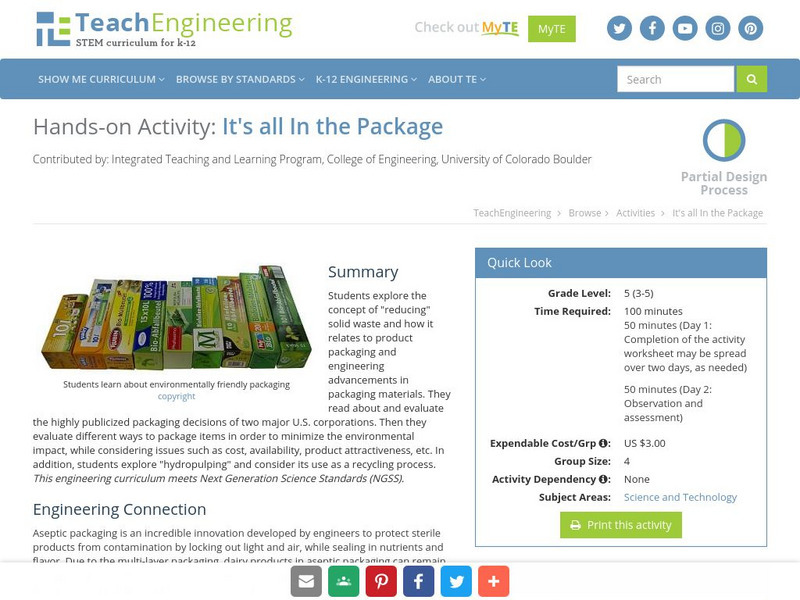
Teach Engineering: It's All in the Package
In this activity, students explore the concept of "reducing" solid waste and how it relates to product packaging and engineering advancements in packaging materials. Students read about and evaluate the highly publicized packaging...
TeachEngineering
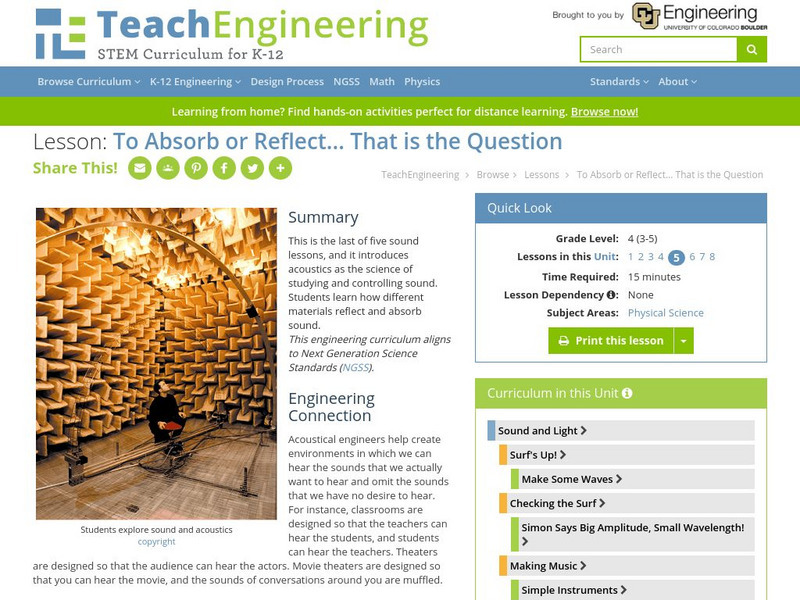
Teach Engineering: To Absorb or Reflect, That Is the Question
This is the last of five sound lessons, and it introduces acoustics as the science of studying and controlling sound. Learners learn how different materials reflect and absorb sound.
TeachEngineering
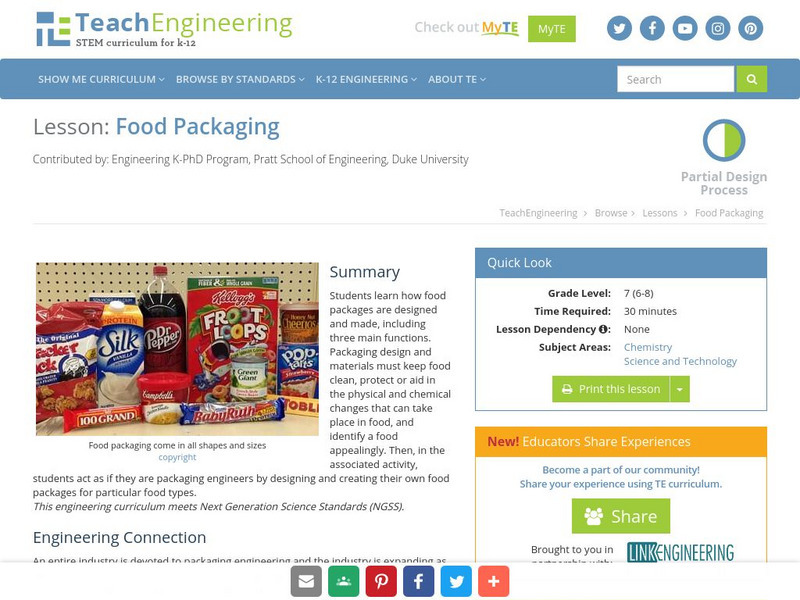
Teach Engineering: Food Packaging
This lesson focuses on how food packages are designed and made. Students will learn three of the main functions of a food package. They will learn what is necessary of the design and materials of a package to keep food clean, protect or...
Technovation
Curiosity Machine: Challenges: Engineer a Communication Network
Using some everyday household materials, students are challenged to design and build a network to send communication signals in multiple directions to multiple people. To help students accomplish this challenge there are tips, a lesson...
TeachEngineering
Teach Engineering: Engineer a Sneaker
The goal is for students to understand the basics of engineering that go into the design of a sneaker. The bottom or sole of a sneaker provides support, cushioning, and traction. In addition the sole is flexible and can have some fashion...
TeachEngineering
Teach Engineering: Strength of Materials
Students learn about the variety of materials used by engineers in the design and construction of modern bridges. They also find out about the material properties important to bridge construction and consider the advantages and...
TeachEngineering
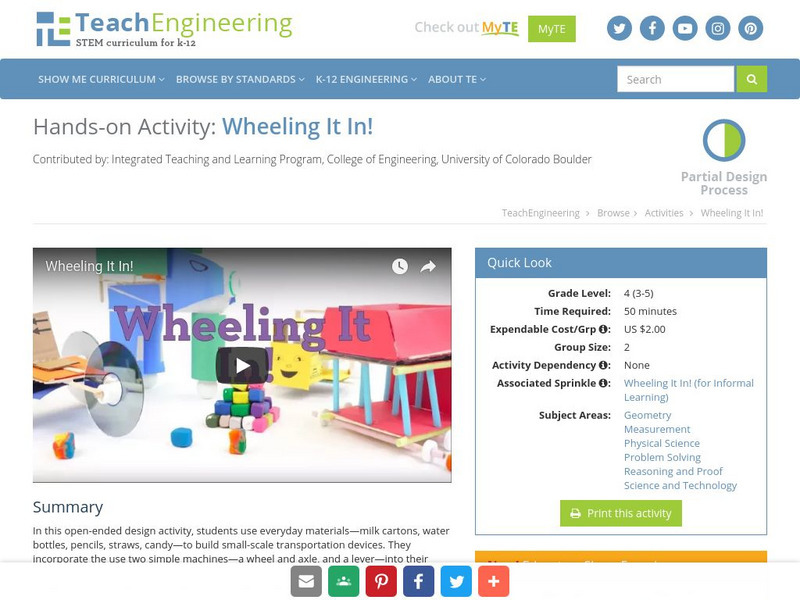
Teach Engineering: Wheeling It In!
In an open-ended design activity, students use everyday materials (milk cartons, water bottles, pencils, straws, candy) to build a small-scale transportation device. They incorporate the use of a wheel and axle, and lever into their...
TeachEngineering
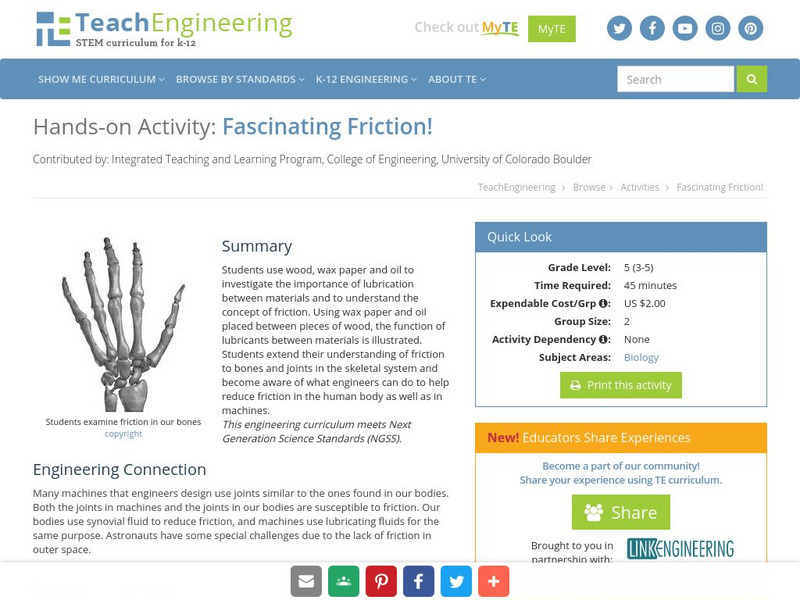
Teach Engineering: Fascinating Friction!
In this activity, students use wood, wax paper and oil to investigate the importance of lubrication between materials and to understand the concept of friction. Using wax paper and oil placed between pieces of wood, the function of...

TeachEngineering
Teach Engineering: Solid, Liquid or Gas?
Students are given a variety of materials and asked to identify if each material as a solid, liquid or gas. They use their five senses - sight, sound, smell, texture and taste - to identify the other characteristics of each item.
TeachEngineering
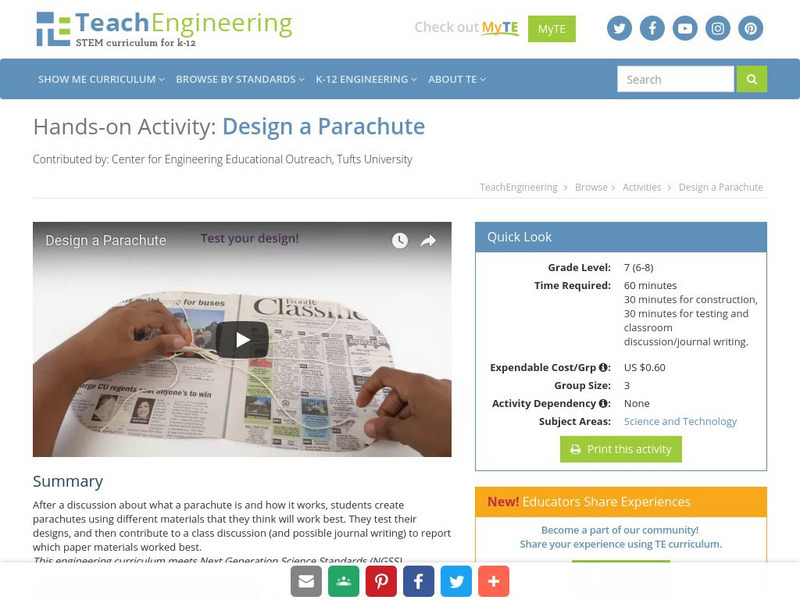
Teach Engineering: Design a Parachute
After a discussion about what a parachute is and how it works, students will create a parachute using different materials that they think will work best. The students will test their designs, which will be followed by a class discussion...
TeachEngineering
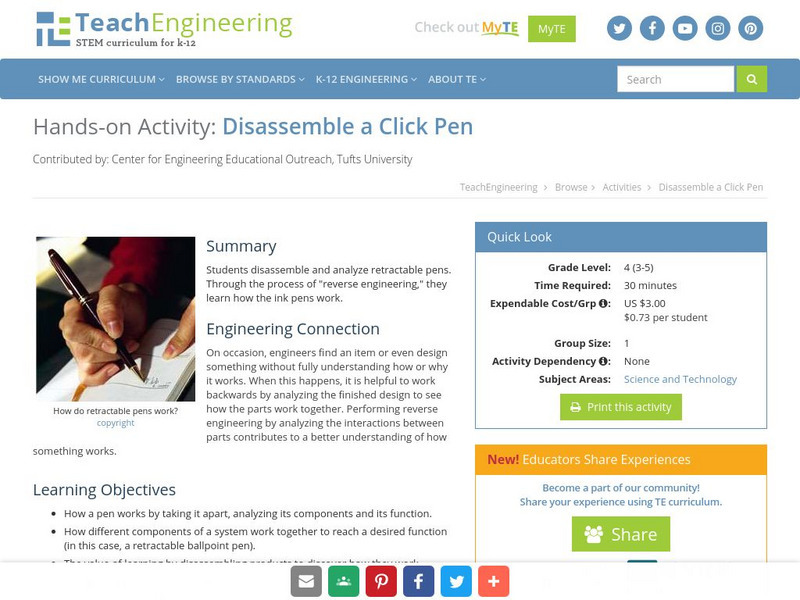
Teach Engineering: Disassemble a Click Pen
In this activity students will disassemble and analyze a click pen. By performing such reverse engineering by analyzing the interactions between parts, students gain a better understanding of how this every day item works
TeachEngineering
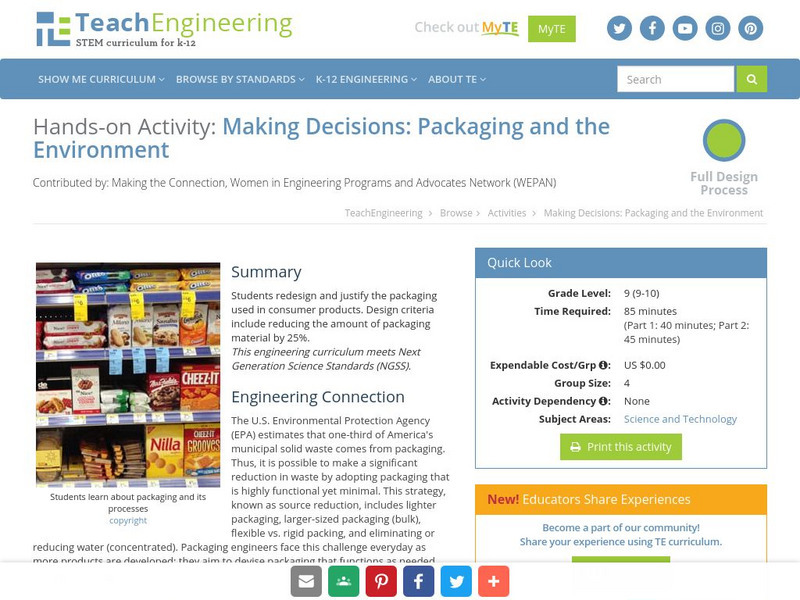
Teach Engineering: Making Decisions: Packaging and the Environment
This activity has students redesign and justify the packaging currently used in some consumer products. Design criteria include reducing the amount of packaging material by 25%.
TeachEngineering
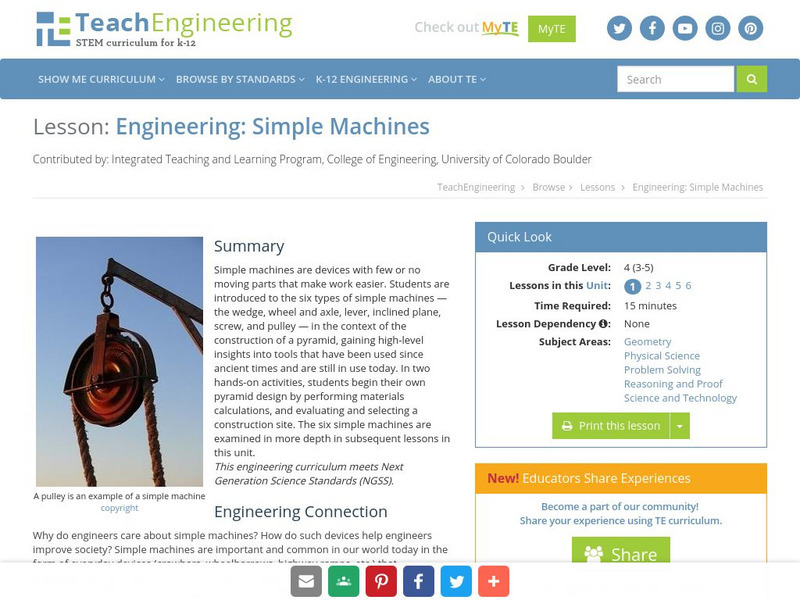
Teach Engineering: Engineering: Simple Machines
Simple machines are devices with few or no moving parts that make work easier. Students are introduced to the six types of simple machines - the wedge, wheel and axle, lever, inclined plane, screw, and pulley - in the context of the...
TeachEngineering
Teach Engineering: Get Charged!
Students are introduced to the idea of electrical energy. They learn about the relationships between charge, voltage, current and resistance. They discover that electrical energy is the form of energy that powers most of their household...
TeachEngineering
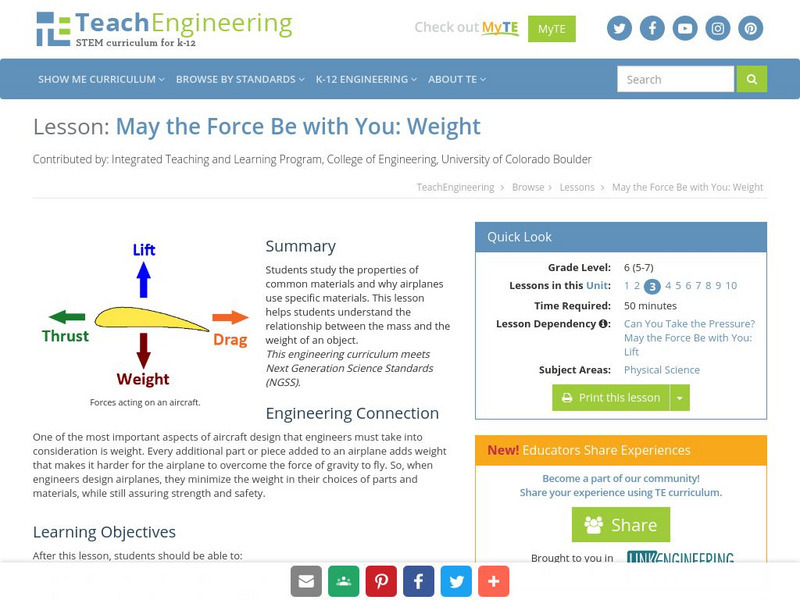
Teach Engineering: May the Force Be With You: Weight
The purpose of this lesson is to help learners understand the relationship between the mass and the weight of an object. Students will study the properties of common materials and why airplanes use specific materials.

TeachEngineering
Teach Engineering: Do Different Colors Absorb Heat Better?
Students test whether the color of a material affects how much heat it absorbs. Students will place an ice cube in a box made of colored paper (one box per color; white, yellow, red and black), which they will place in the sun. The...