Hi, what do you want to do?






Environmental Education for Kids
Eek!: Habitats: Wetlands
Wetland ecosystems are extremely valuable to wildlife, supporting a greater number of animals than any other type of habitat. Wetlands also absorb flood waters; filter chemicals, sediments, and other impurities out of drinking water;...
US Department of Agriculture
China's Agricultural Water Policy Reforms [Pdf]
"This report documents the problem of water scarcity in parts of northern China and describes China's agricultural water management policies as well as reforms underway to encourage water conservation." (USDA) (PDF Format)
Science Education Resource Center at Carleton College
Serc: Investigating the Water Cycle: Using Plants to Study Evaporation
In this science activity, students investigate the water cycle by testing the water evaporated from leaves (transpiration). They investigate concepts of evaporation and the movement of water through the different states of the water...
Encyclopedia of Earth
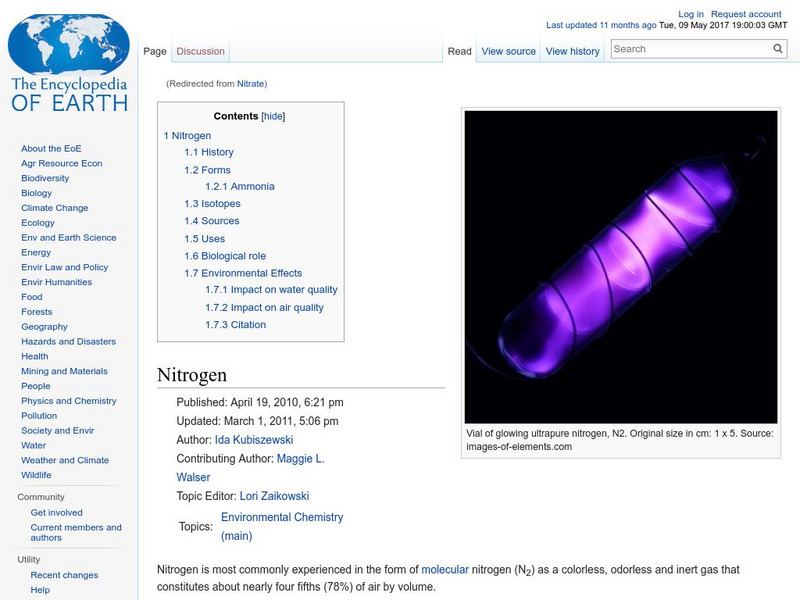
Encyclopedia of Earth: Physics & Chemistry: Nitrate
Discusses the chemistry of nitrate, the negative agricultural effects of too much nitrate in soil and in water sources, its toxicity to plants and livestock, and the impact on human health.
US Geological Survey
U.s. Geological Survey: Nutrients and Pesticides
The first two sections provide a general overview of findings on nutrients and pesticides and their implications for water-resource management and protection. More detailed technical discussions of the sources, distributions, and...
US Geological Survey
Usgs: Water Science for Schools Water Science Storytime!
This U.S. Geological Survey website features a fictious town, Dryville, and uses it to illustrate every aspect of water management that you might encounter. Click Home to access the site in Spanish.
US Geological Survey
Usgs: Water Science for Schools Activities Center
This website offers three activity centers: Questionnaires, Opinion Surveys, and Challenge Questions. Take a look at these interesting water research activities from the US Geological Survey. Click Home to access the site in Spanish.
US Geological Survey
Us Geological Survey: Bioremediation: Nature's Way to a Cleaner Environment[pdf]
Excellent information provided by the U.S. Geological Survey.
TeachEngineering
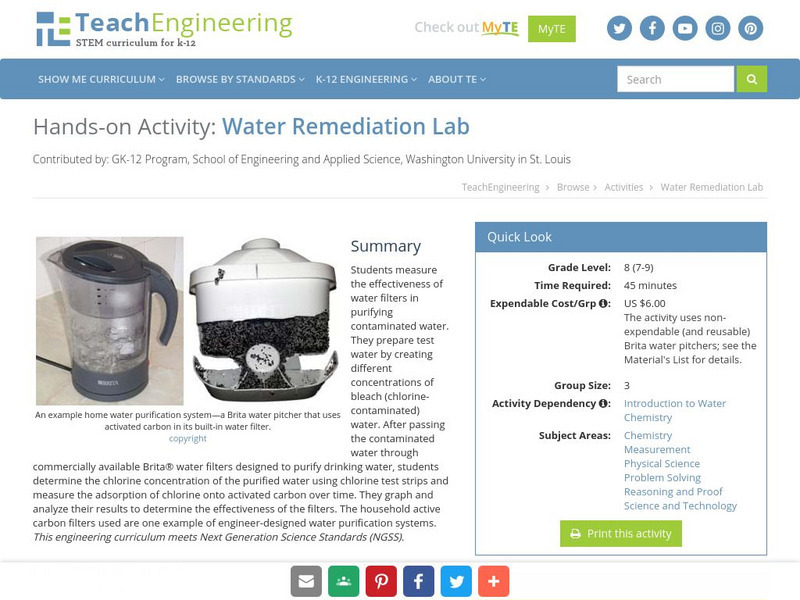
Teach Engineering: Water Remediation Lab
Students measure the effectiveness of water filters in purifying contaminated water. They prepare test water by creating different concentrations of bleach (chlorine-contaminated) water. After passing the contaminated water through...
TeachEngineering
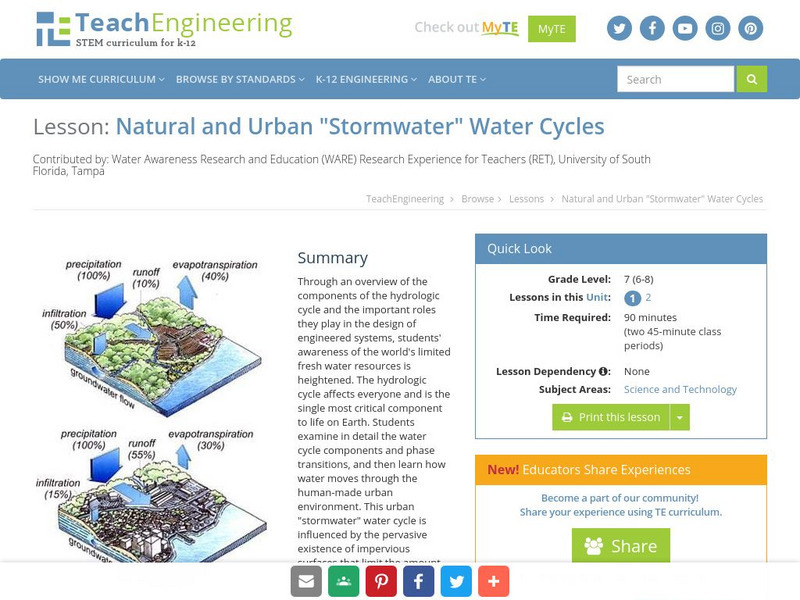
Teach Engineering: Natural and Urban Stormwater Water Cycles
Through an overview of the components of the hydrologic cycle and the important roles they play in the design of engineered systems, students' awareness of the world's limited fresh water resources is heightened. The instructional...
University of Arizona
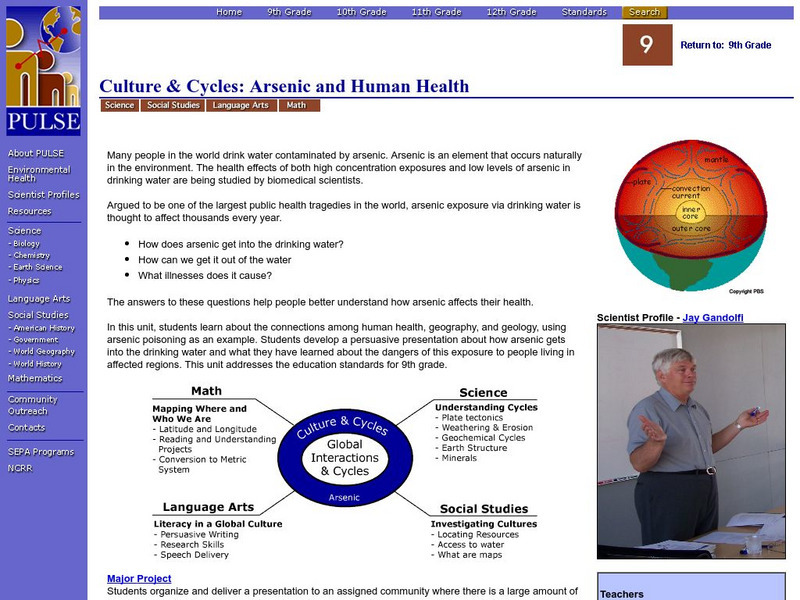
University of Arizona: Pulse: Cultures and Cycles: Arsenic and Human Health
Interdisciplinary unit about the risk of exposure to arsenic in public drinking water. Math, language arts, social studies, and science are incorporated into the lessons.
US Geological Survey
Usgs: Water Science Glossary of Terms
The United States Geological Survey offers a complete look at water science in glossary form. Take advantage of the topic guides at the top of the site. You'll find great maps, clipart and activities centers. Click Home to access the...
Other
Pipeline: Soil Characteristics Demystifying Dirt [Pdf]
Soil is the foundation of conventional on site wastewater treatment.The drainfields used with on site systems work because the soil around the trenches acts as a filter and removes organic matter, some of the nutrients present in...
CK-12 Foundation
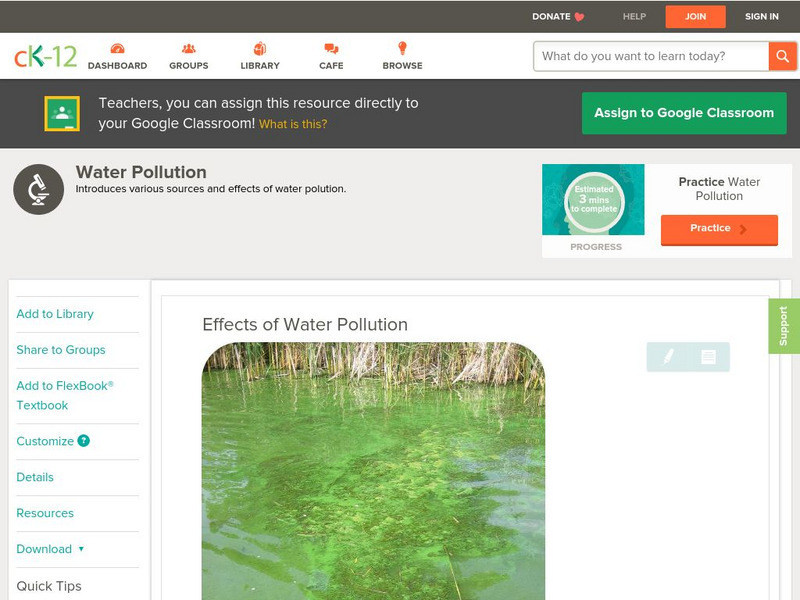
Ck 12: Life Science: Effects of Water Pollution
[Free Registration/Login may be required to access all resource tools.] Water pollutants can have an effect on both the ecology of ecosystems and on humans. As a result of water pollution, humans may not be able to use a waterway for...
Cornell Lab of Ornithology
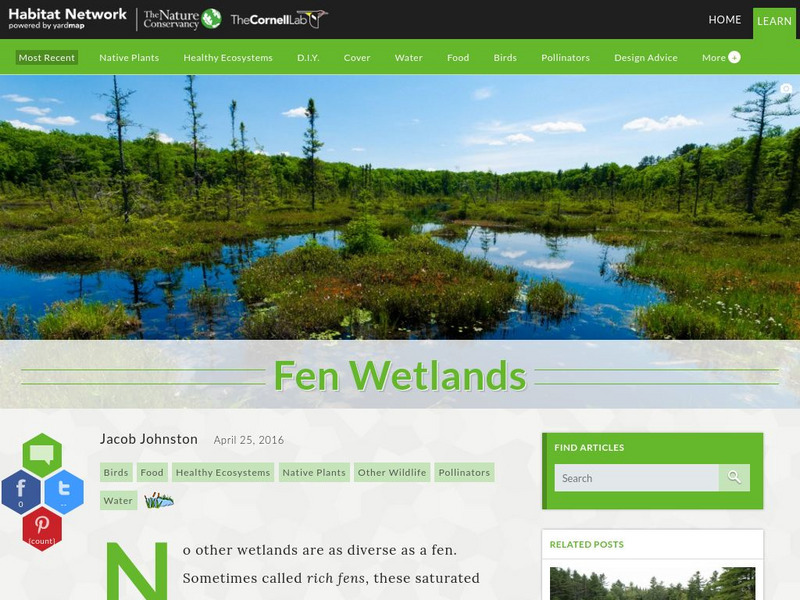
Habitat Network: Fen Wetlands
Sometimes called rich fens, find out about these saturated environments that are fed with mineral-rich groundwater and occur at low points or slopes in the landscape where the soil surface is intercepted by the water table.
PBS
Pbs Learning Media: The Water Planet
75% of our earth is covered by water. Water can be found in oceans, lakes, rivers, groundwater, and sea ice. View these captivating photos of our earth showing the different water sources and images of our earth taken by NASA. Background...
University of Illinois
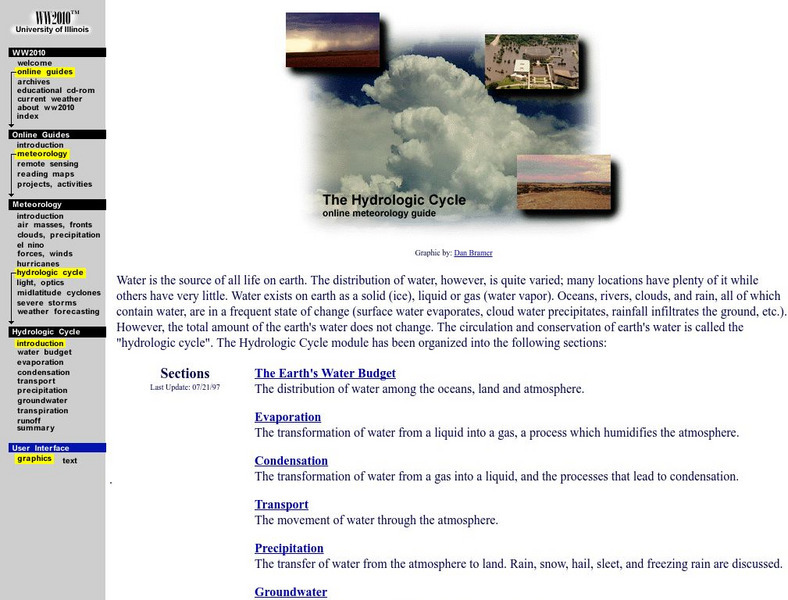
University of Illinois Urbana Champaign: The Hydrologic Cycle
Water is the source of life on earth. It exists in many forms and is constantly changing. The circulation and conservation of earth's water is called the hydrologic (or water) cycle. Find out how water evaporates, condensates,...
Georgia Department of Education
Ga Virtual Learning: Ap Environmental Science: Water Pollution and Treatment
Students learn about water management, treatment and purification- global issues that must be addressed to ensure a continued supply of safe water for the growing human population and for the organisms with which we share this planet.
TeachEngineering
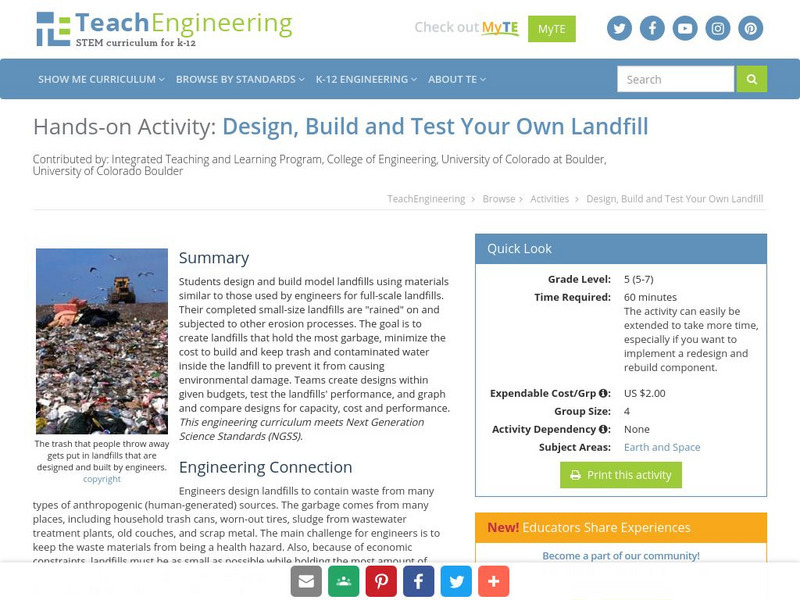
Teach Engineering: Design, Build and Test Your Own Landfill
Students design and build model landfills using materials similar to those used by engineers for full-scale landfills. Their completed small-size landfills are "rained" on and subjected to other erosion processes. The goal is to create...
TeachEngineering
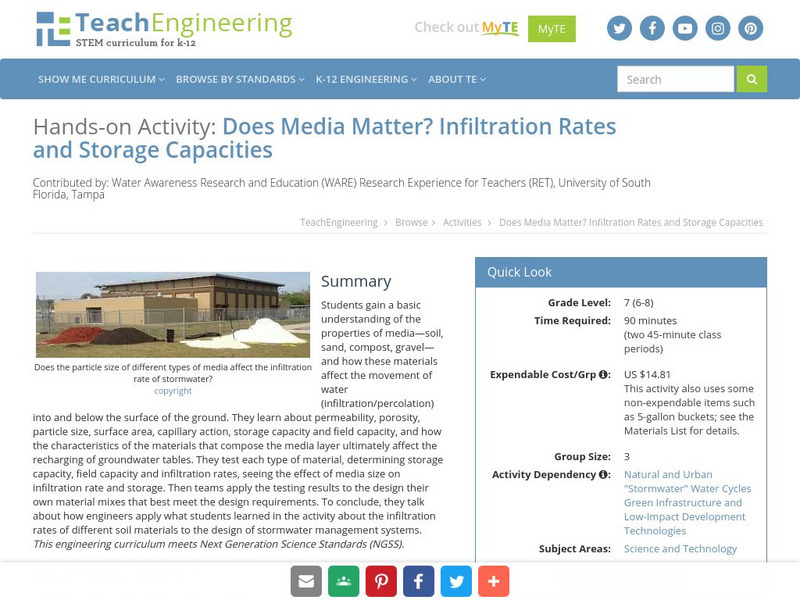
Teach Engineering: Does Media Matter? Infiltration Rates and Storage Capacities
Students gain a basic understanding of the properties of media- soil, sand, compost, gravel- and how these materials affect the movement of water (infiltration/percolation) into and below the surface of the ground.
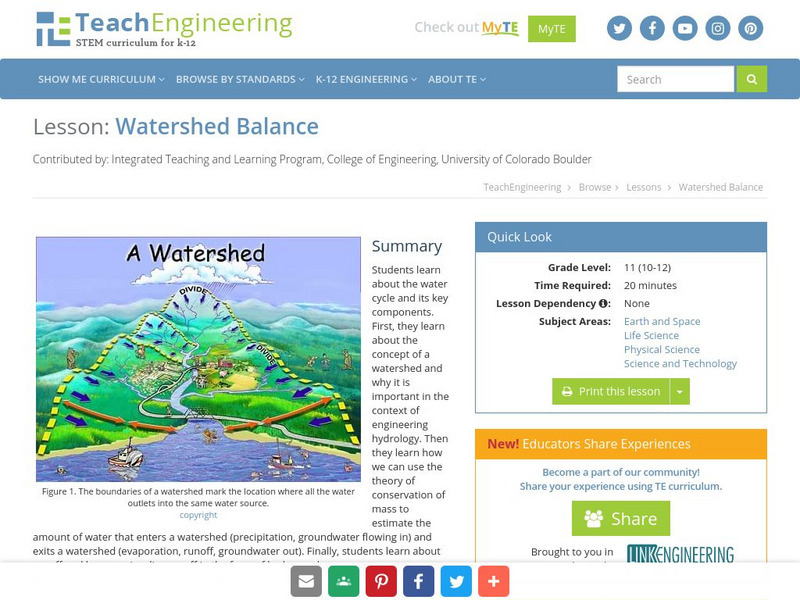
TeachEngineering
Teach Engineering: Watershed Balance
This lesson teaches the concept of a watershed and why it is important in the context of engineering hydrology. Learners learn about runoff and how we visualize runoff in the form of hydrographs.
Texas Education Agency
Texas Gateway: Human Impact
This tutorial provides some insight to the study of human impacts on water supplies.
US Environmental Protection Agency
Epa: Water Resources: Water Bodies
Learn about EPA's work to protect and manage water resources and what you can do to help.
US Environmental Protection Agency
Epa: Private Drinking Water Wells
Provides information on what to do after a flood to protect well water from contamination, the testing of private well water, and protecting private well water.
Other popular searches
- Ground Water Pollution
- Groundwater Contamination
- Ground Water Pollution Lab
- Aquifer Ground Water
- Groundwater Pollution
- Groundwater Movement
- Ground Water Pollution Model
- Ground Water Contamination
- Ground Water Quality
- Groundwater Flow
- Ground Water and Sinkholes
- Ground Water Flow