Hi, what do you want to do?





TeachEngineering
Teach Engineering: How Do You Make a Program Wait?
Building on the programming basics learned so far in a corresponding Robotics unit, students learn how to program using sensors rather than by specifying exact durations. Working with the LEGO MINDSTORMS NXT robots and software, they...
TeachEngineering
Teach Engineering: Storing Android Accelerometer Data: App Design
Students work through an online tutorial on MIT's App Inventor to learn how to create Android applications. Using those skills, they create their own applications and use them to collect data from an Android device accelerometer and...
TeachEngineering
Teach Engineering: Our Bodies Have Computers and Sensors
Students learn about the human body's system components, specifically its sensory systems, nervous system and brain, while comparing them to robot system components, such as sensors and computers. The unit's life sciences-to-engineering...
TeachEngineering
Teach Engineering: How Do Human Sensors Work?
This lesson highlights the similarities between human sensors and their engineering counterparts. Taking this approach enables students to view the human body as a system, that is, from the perspective of an engineer. Humans have...
TeachEngineering
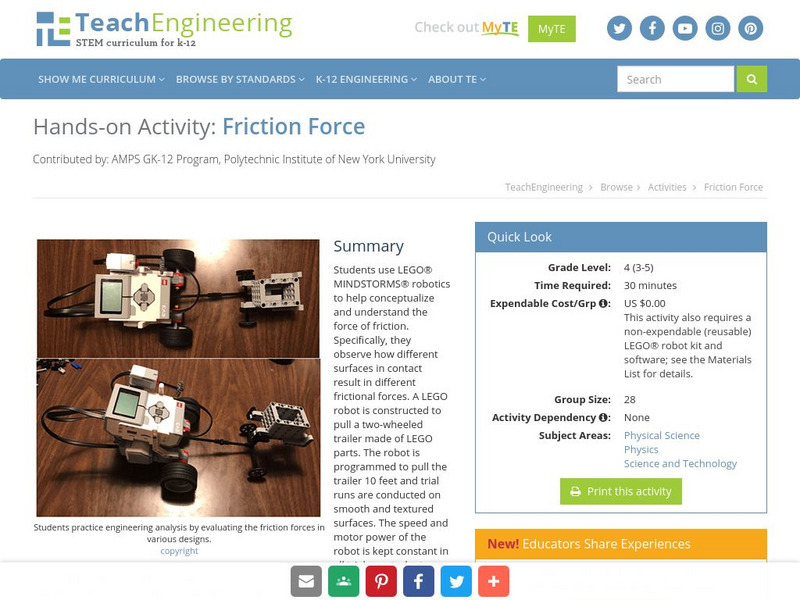
Teach Engineering: Friction Force
Students use LEGO MINDSTORMS robotics to help conceptualize and understand the force of friction. Specifically, they observe how different surfaces in contact result in different frictional forces. A LEGO robot is constructed to pull a...
TeachEngineering
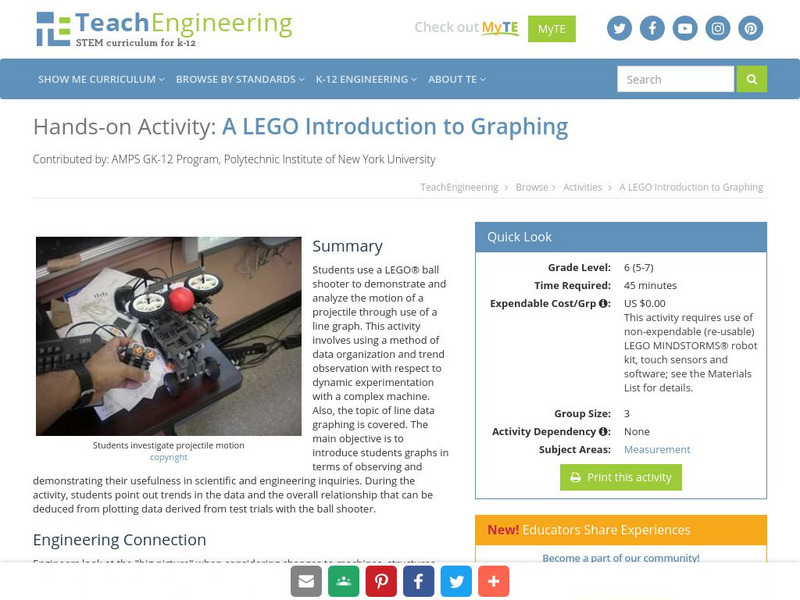
Teach Engineering: A Lego Introduction to Graphing
Students use a LEGO ball shooter to demonstrate and analyze the motion of a projectile through use of a line graph. This activity involves using a method of data organization and trend observation with respect to dynamic experimentation...
TeachEngineering
Teach Engineering: Rock, Paper, Scissors Probability!
Students learn about probability through a LEGO MINDSTORMS NTX-based activity that simulates a game of "rock-paper-scissors." The LEGO robot mimics the outcome of random game scenarios in order to help students gain a better...
TeachEngineering
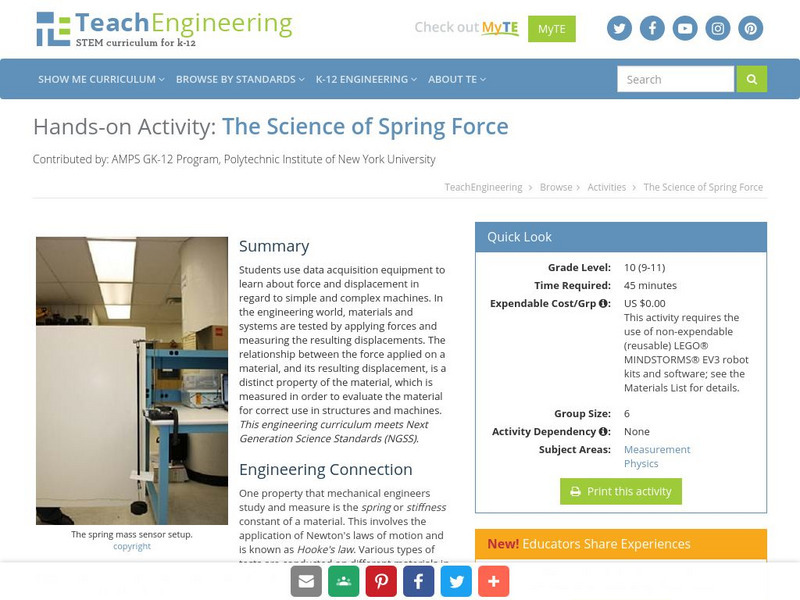
Teach Engineering: The Science of Spring Force
Students use data acquisition equipment to learn about force and displacement in regard to simple and complex machines. In the engineering world, materials and systems are tested by applying forces and measuring the resulting...
TeachEngineering
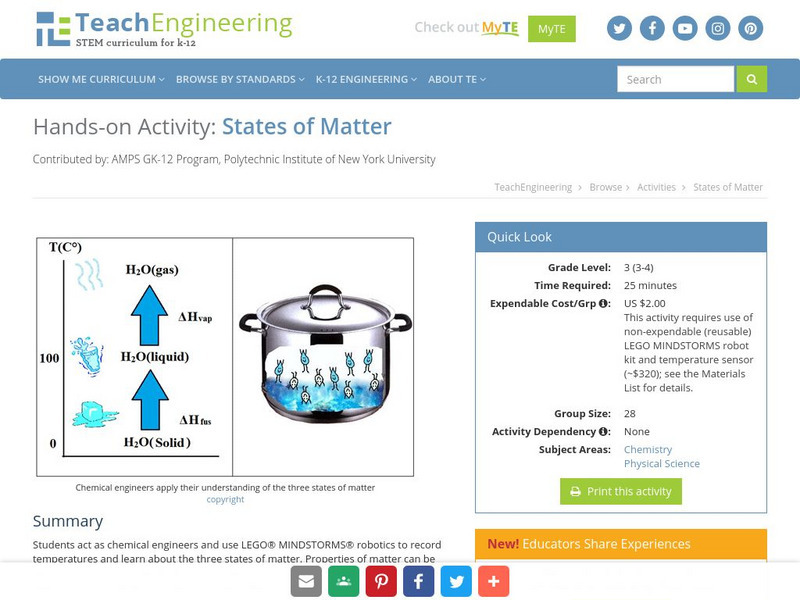
Teach Engineering: States of Matter
Students act as chemical engineers and use LEGO MINDSTORMS NXT robotics to record temperatures and learn about the three states of matter. Properties of matter can be measured in various ways, including volume, mass, density and...
TeachEngineering
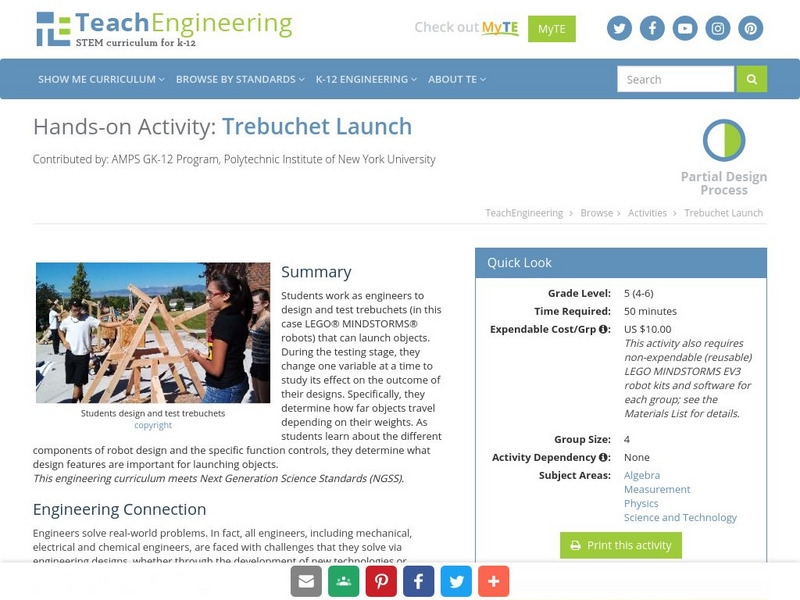
Teach Engineering: Trebuchet Launch
Students work as engineers to design and test trebuchets (in this case LEGO MINDSTORMS robots) that can launch objects. During the testing stage, they change one variable at a time to study its effect on the outcome of their designs....
TeachEngineering
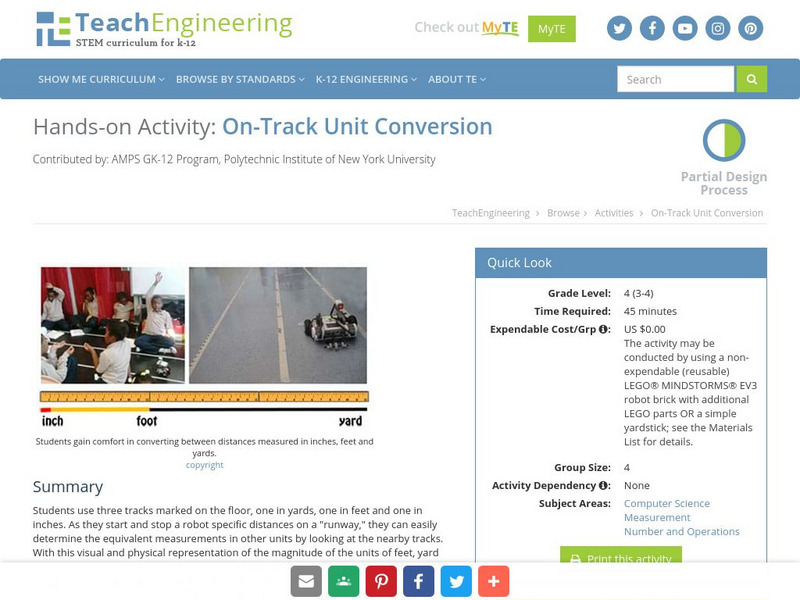
Teach Engineering: On Track Unit Conversion
Students use three tracks marked on the floor, one in yards, one in feet and one in inches. As they start and stop a robot specific distances on a "runway," they can easily determine the equivalent measurements in other units by looking...
TeachEngineering
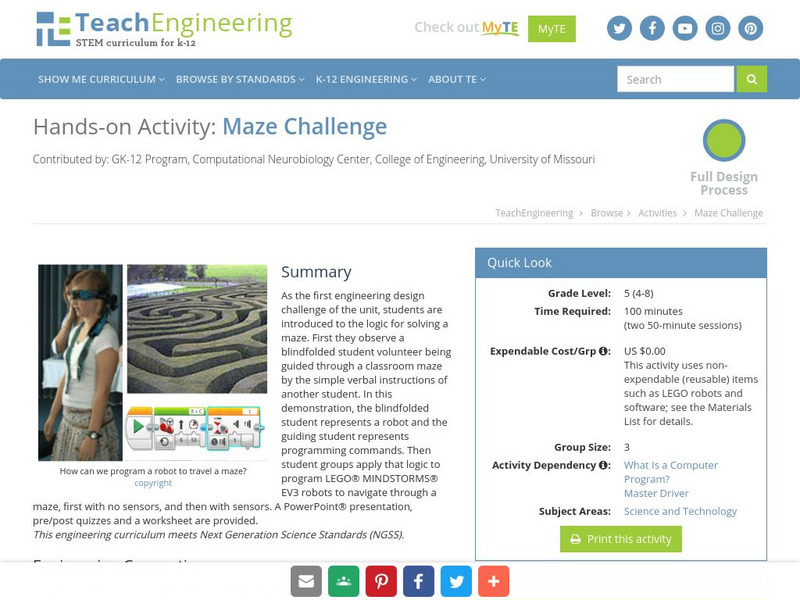
Teach Engineering: Maze Challenge
As the first engineering design challenge of the unit, students are introduced to the logic for solving a maze. student groups apply that logic to program LEGO MINDSTORMS NXT robots to navigate through a maze, first with no sensors, and...
TeachEngineering
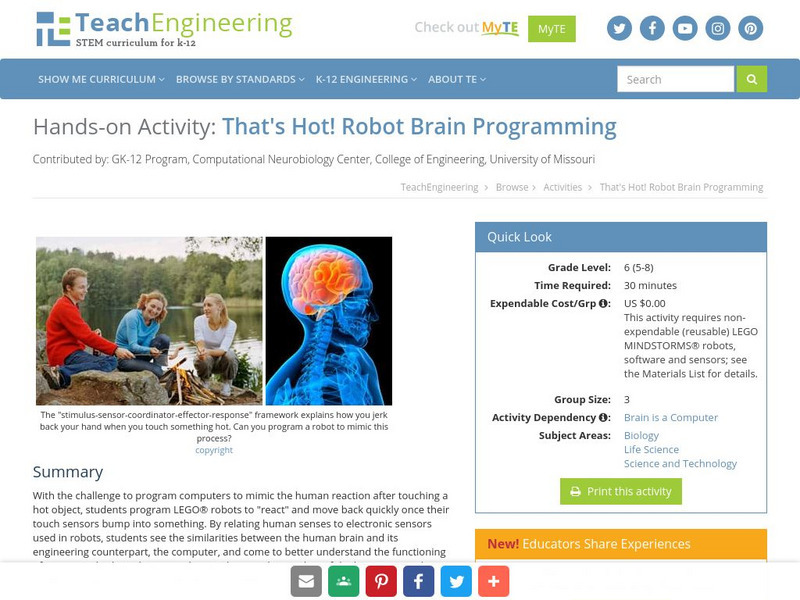
Teach Engineering: That's Hot! Robot Brain Programming
With the challenge to program computers to mimic the human reaction after touching a hot object, students program LEGO robots to "react" and move back quickly once their touch sensors bump into something. By relating human senses to...
TeachEngineering
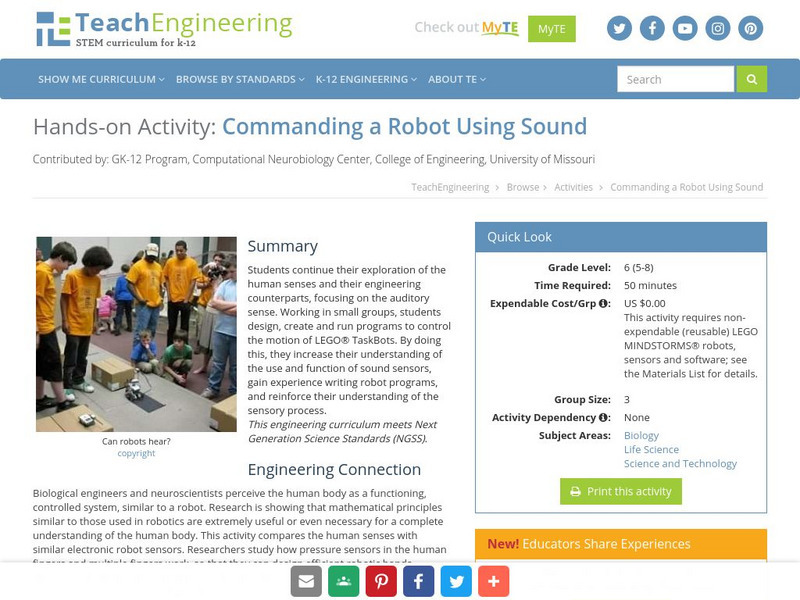
Teach Engineering: Commanding a Robot Using Sound
Students continue their exploration of the human senses and their engineering counterparts, focusing on the auditory sense. Working in small groups, students design, create and run programs to control the motion of LEGO TaskBots. By...
TeachEngineering
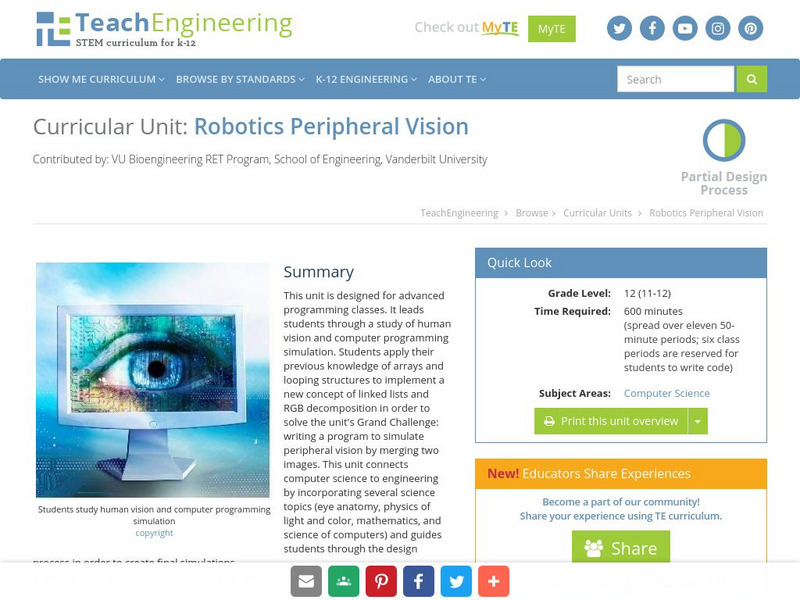
Teach Engineering: Robotics Peripheral Vision
This unit is designed for advanced programming classes. It leads students through a study of human vision and computer programming simulation. Students apply their previous knowledge of arrays and looping structures to implement a new...
TeachEngineering
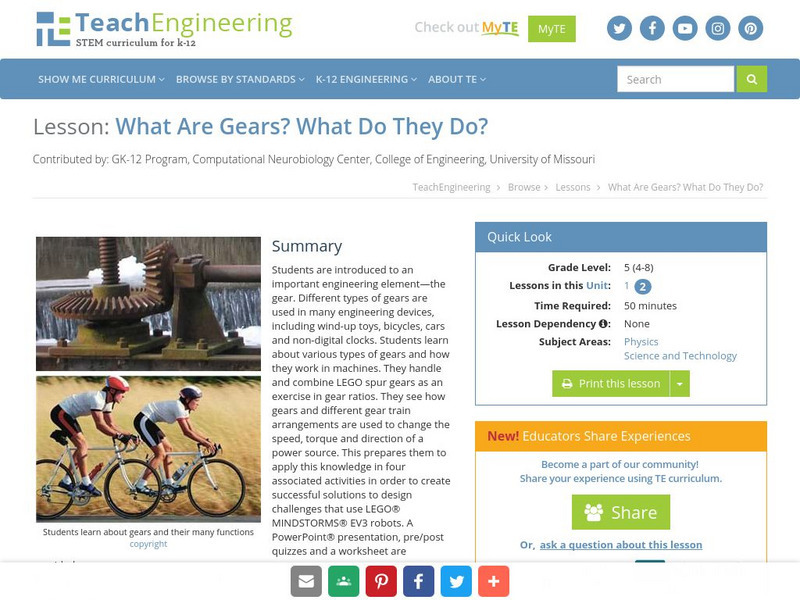
Teach Engineering: What Are Gears? What Do They Do?
Students are introduced to an important engineering element- the gear. This prepares them to apply this knowledge in four associated activities in order to create successful solutions to design challenges that use LEGO MINDSTORMS NXT...
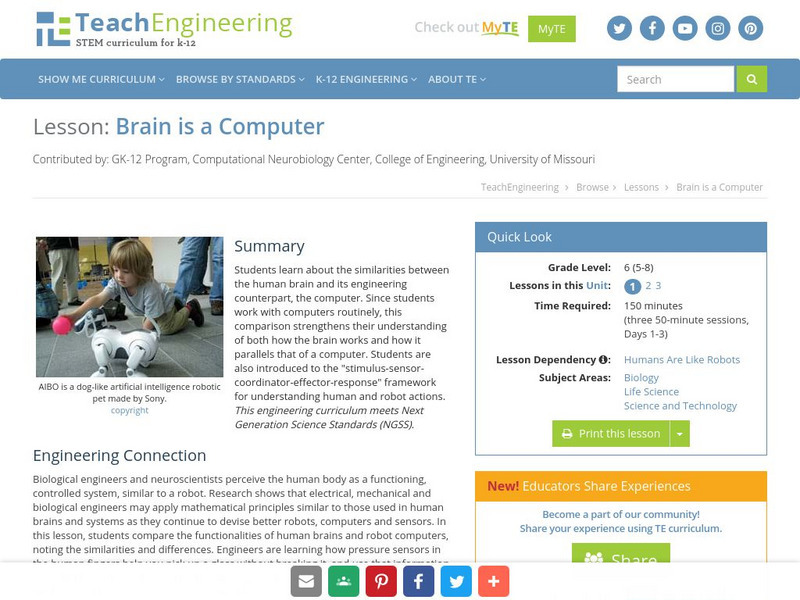
TeachEngineering
Teach Engineering: Brain Is a Computer
Students learn about the similarities between the human brain and its engineering counterpart, the computer. Since students work with computers routinely, this comparison strengthens their understanding of both how the brain works and...
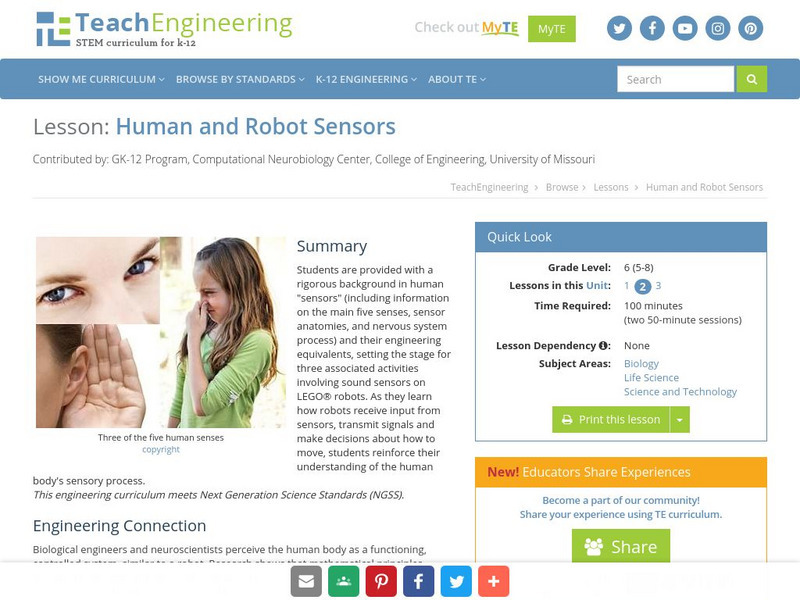
TeachEngineering
Teach Engineering: Human and Robot Sensors
Students are provided with a rigorous background in human "sensors" (including information on the main five senses, sensor anatomies, and nervous system process) and their engineering equivalents, setting the stage for three associated...
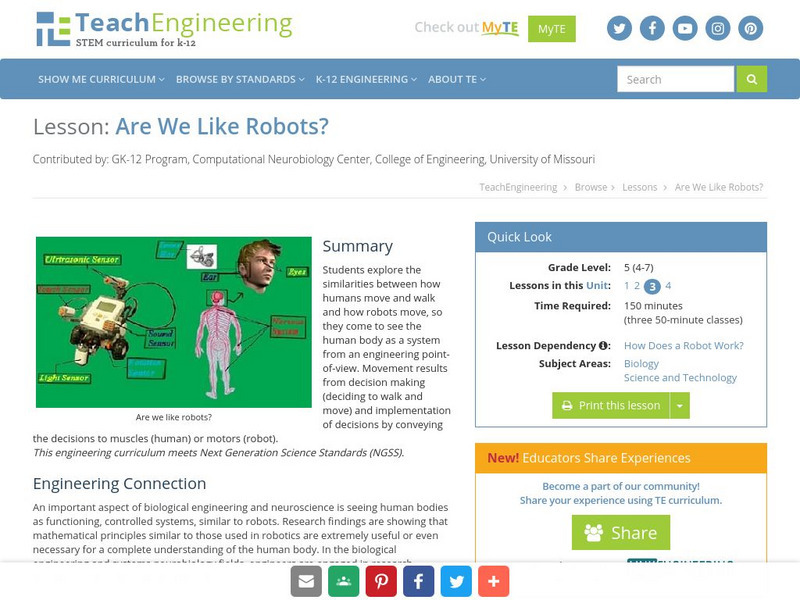
TeachEngineering
Teach Engineering: Are We Like Robots?
Students explore the similarities between how humans move and walk and how robots move, so they come to see the human body as a system from an engineering point-of-view. Movement results from decision making (deciding to walk and move)...
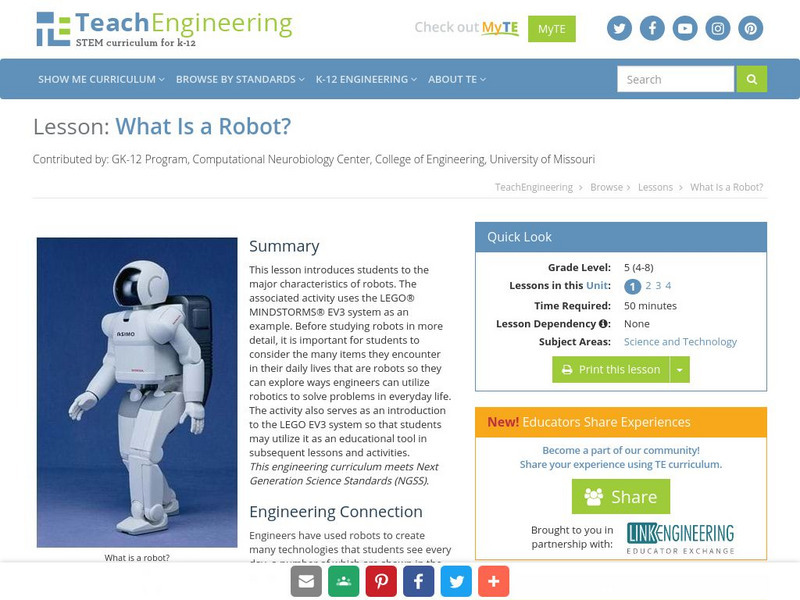
TeachEngineering
Teach Engineering: What Is a Robot?
This lesson introduces students to the major characteristics of robots. The associated activity uses the LEGO MINDSTORMS NXT system as an example. Before studying robots in more detail, it is important for students to consider the many...
TeachEngineering
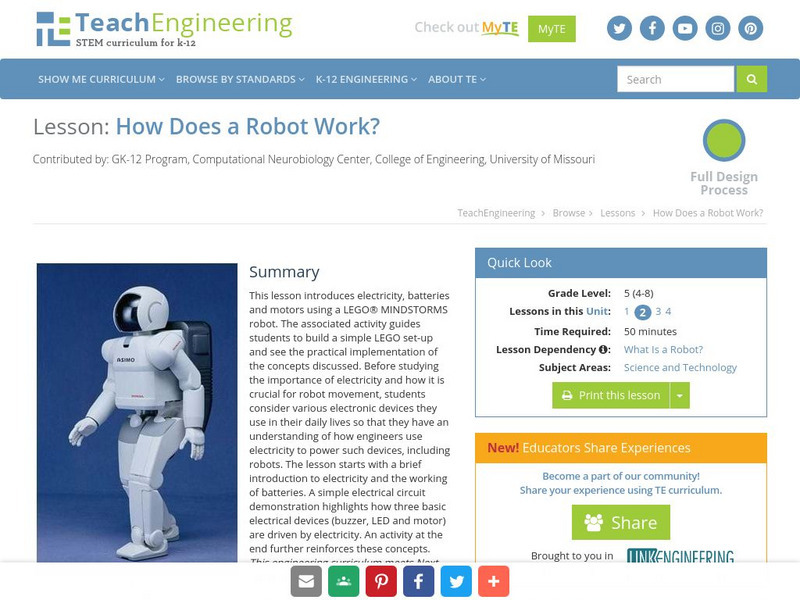
Teach Engineering: How Does a Robot Work?
This lesson plan introduces electricity, batteries and motors using a LEGO MINDSTORMS NXT robot. The associated activity guides students to build a simple LEGO NXT set-up and see the practical implementation of the concepts discussed....
TeachEngineering
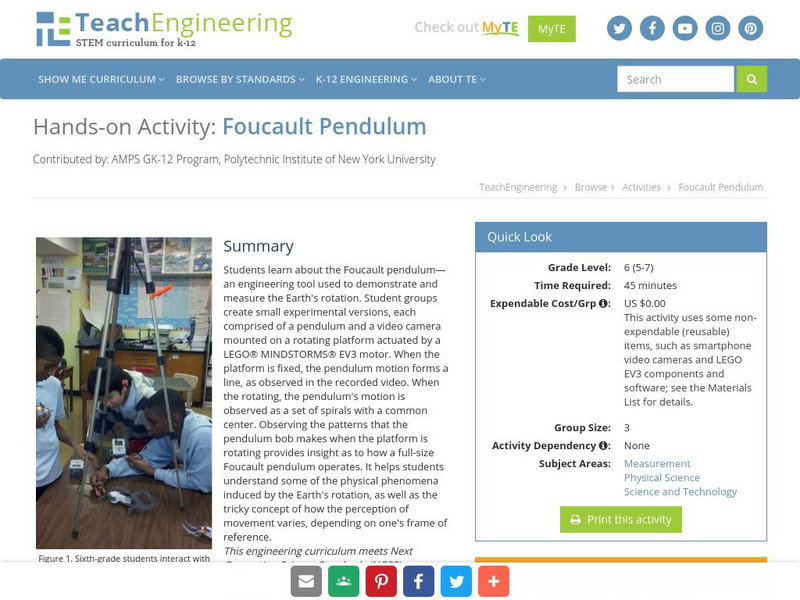
Teach Engineering: Foucault Pendulum
Students learn about the Foucault pendulum, an engineering tool used to demonstrate and measure the Earth's rotation. Student groups then create small experimental versions, each comprised of a pendulum and a video camera mounted on a...

TeachEngineering
Teach Engineering: Wide World of Gears
In an interactive and game-like manner, students learn about the mechanical advantage that is offered by gears. By virtue of the activity's mechatronics presentation, students learn to study a mechanical system as a dynamic system under...
TeachEngineering
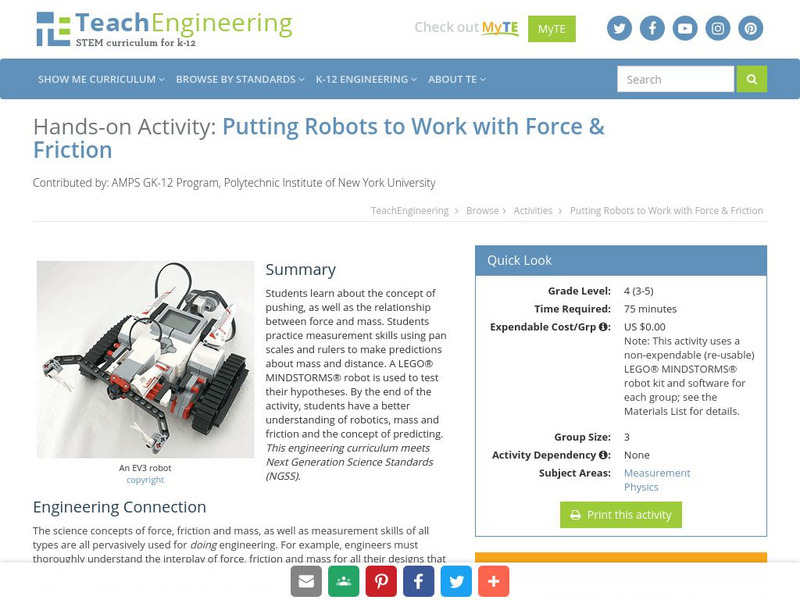
Teach Engineering: Putting Robots to Work With Force & Friction
Students learn about the concept of pushing, as well as the relationship between force and mass. Students practice measurement skills using pan scales and rulers to make predictions about mass and distance. A LEGO MINDSTORMS NXT robot is...