Hi, what do you want to do?





Science Buddies
Science Buddies: Career Profile: Sound Engineering Technician
Sound engineering technicians have opportunities to work in many venues, from radio stations to Broadway shows. Find out about the education needed for this career and read about the life of a sound technician who freelances for live...
TeachEngineering
Teach Engineering: Competing Evolved & Engineered Digital Organisms
Students engineer and evolve digital organisms with the challenge to produce organisms with the highest fitness values in a particular environment. They do this through use of the free Avida-ED digital evolution software application. The...
TeachEngineering
Teach Engineering: Introduction to Evolutionary Computation
Young scholars are introduced to the concepts of evolution by natural selection and digital evolution software. They learn about the field of evolutionary computation, which applies the principles of natural selection to solve...
TeachEngineering
Teach Engineering: Using J Unit
Students focus on the testing phase of the design process by considering how they have tested computer programs in the past and learning about a new method called JUnit to test programs in the future. JUnit is a testing method that is...
TeachEngineering
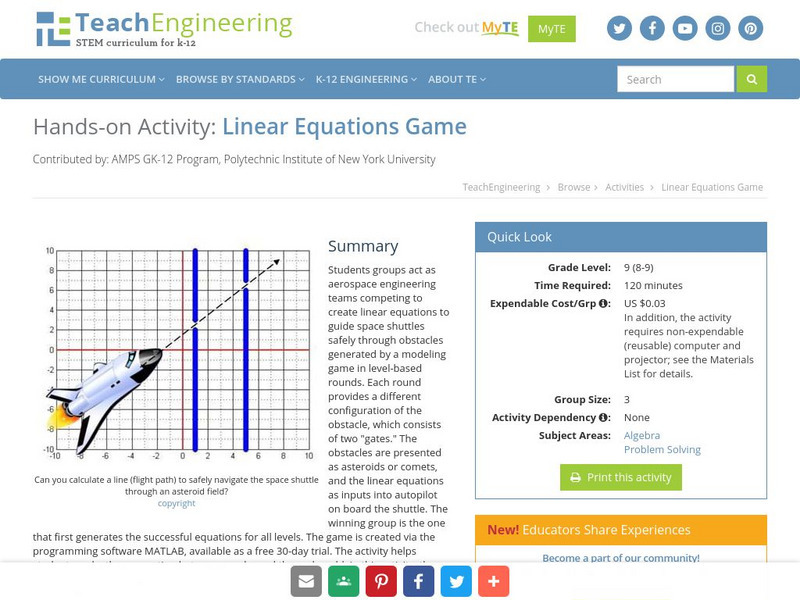
Teach Engineering: Linear Equations Game
Students groups act as aerospace engineering teams competing to create linear equations to guide space shuttles safely through obstacles generated by a modeling game in level-based rounds. Each round provides a different configuration of...
TeachEngineering
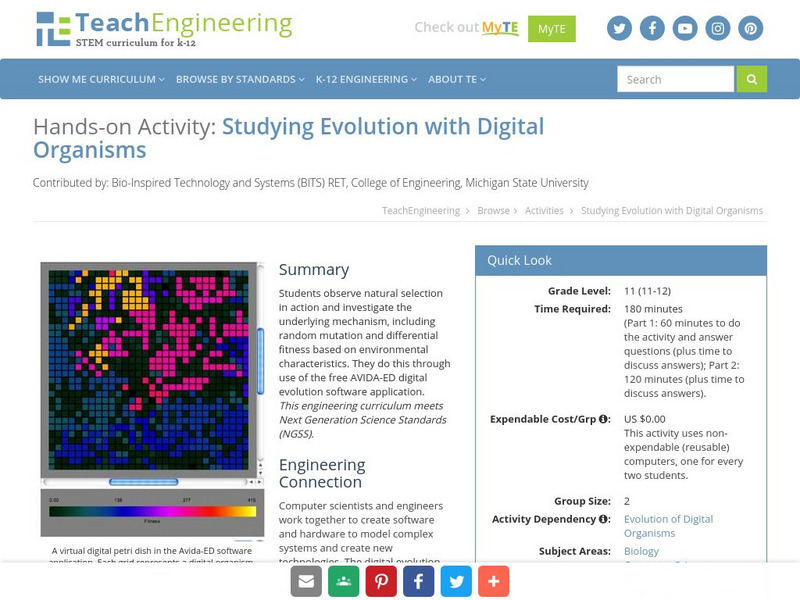
Teach Engineering: Studying Evolution With Digital Organisms
Students observe natural selection in action and investigate the underlying mechanism, including random mutation and differential fitness based on environmental characteristics. They do this through use of the free AVIDA-ED digital...
TeachEngineering
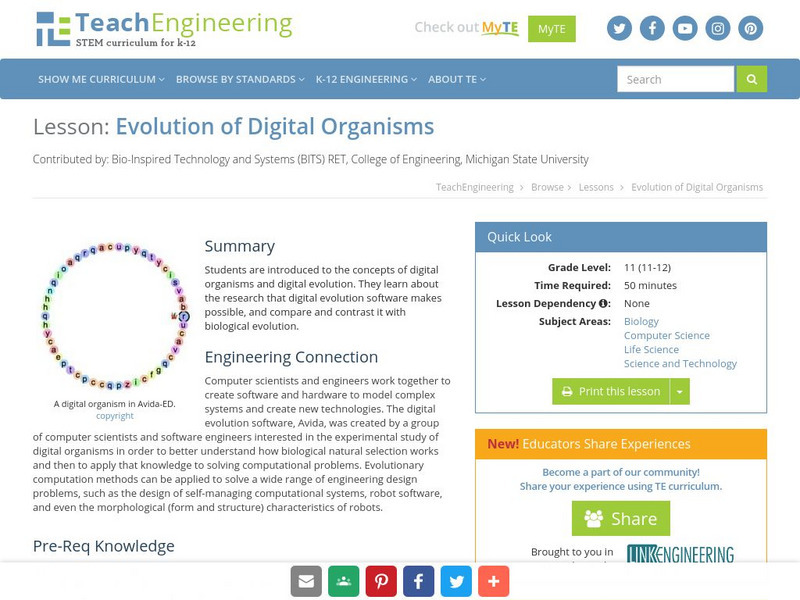
Teach Engineering: Evolution of Digital Organisms
Students are introduced to the concepts of digital organisms and digital evolution. They learn about the research that digital evolution software makes possible, and compare and contrast it with biological evolution.
TeachEngineering
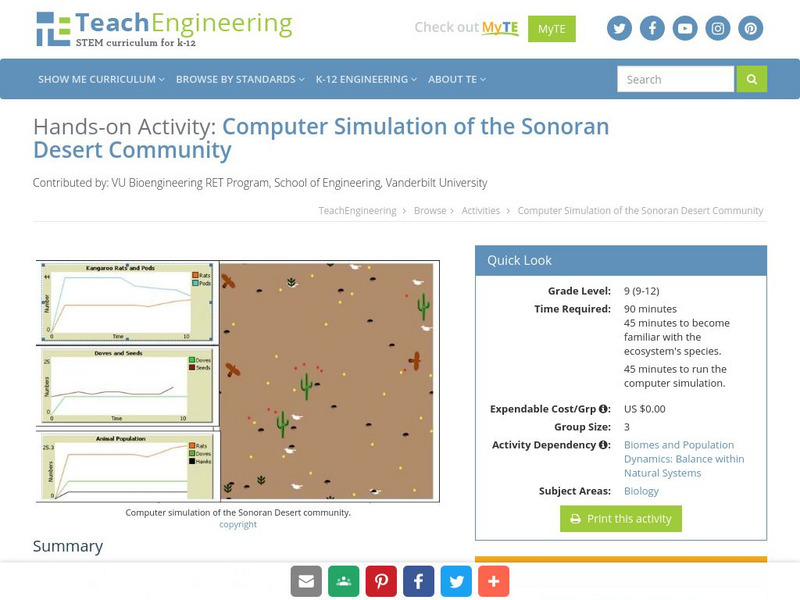
Teach Engineering: Computer Simulation of the Sonoran Desert Community
The computer program's simulation of a Sonoran desert community should ultimately strengthen the student's comprehension of what is required for a natural ecosystem to sustain itself (remain in balance). This computer simulation program...
Other
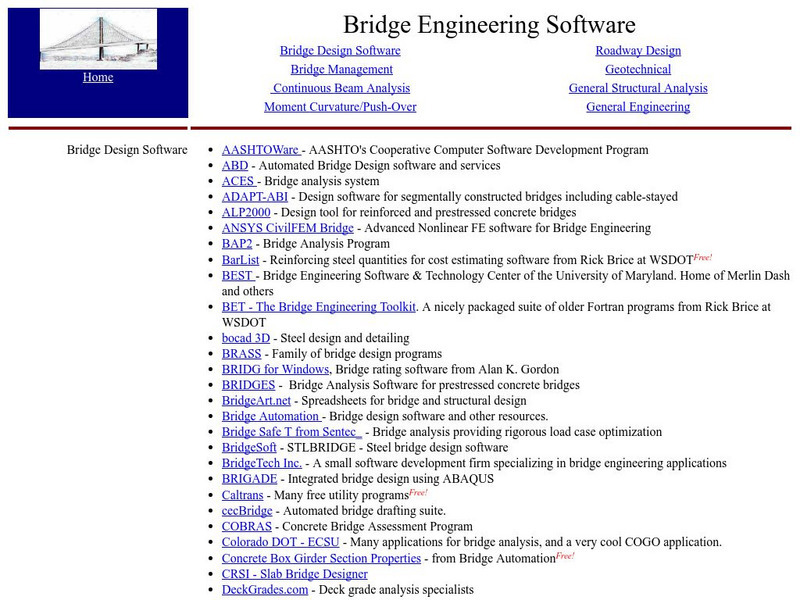
Bridge Sight Software: The Bridge Site: Software
This resource provides links to a wide variety of Bridge Engineering Software. Click on the link to learn about the software.
TeachEngineering
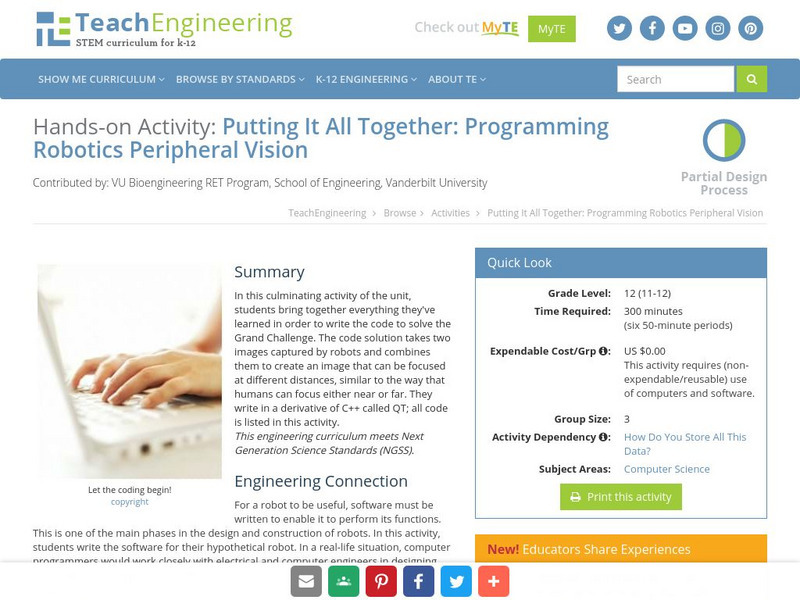
Teach Engineering: Putting It All Together: Peripheral Vision
In this culminating activity of the unit, students bring together everything they've learned in order to write the code to solve the Grand Challenge. The code solution takes two images captured by robots and combines them to create an...
TeachEngineering
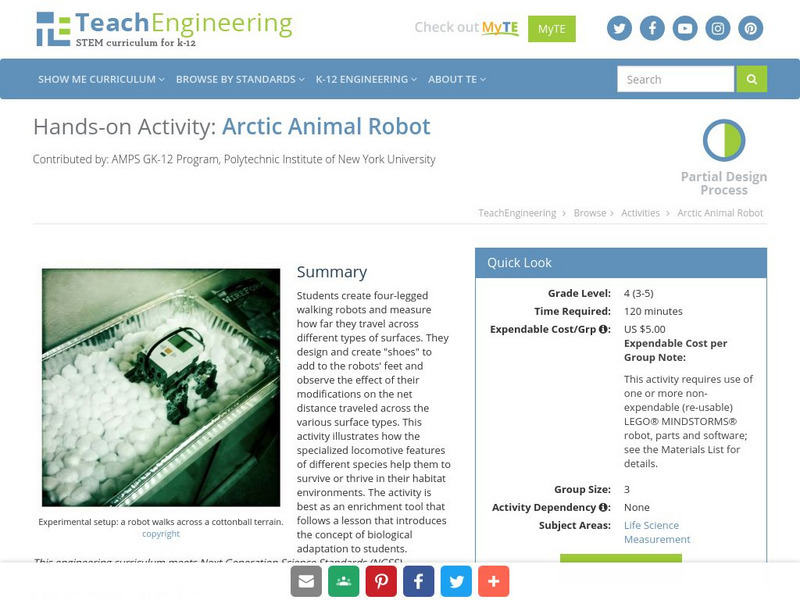
Teach Engineering: Arctic Animal Robot
Students create four-legged walking robots and measure how far they travel across different types of surfaces. They design and create "shoes" to add to the robots' feet and observe the effect of their modifications on the net distance...
TeachEngineering
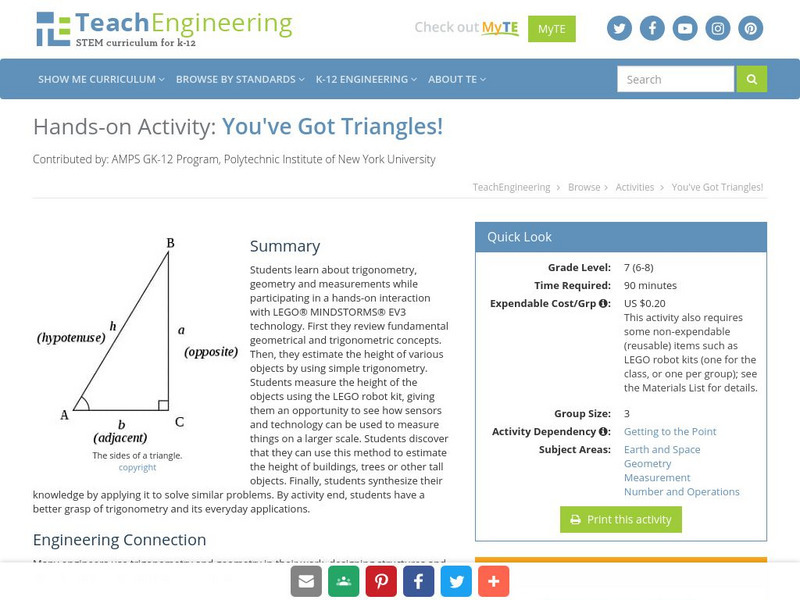
Teach Engineering: You've Got Triangles!
Students learn about trigonometry, geometry and measurements while participating in a hands-on interaction with LEGO MINDSTORMS NXT technology. First they review fundamental geometrical and trigonometric concepts. Then, they estimate the...
TeachEngineering
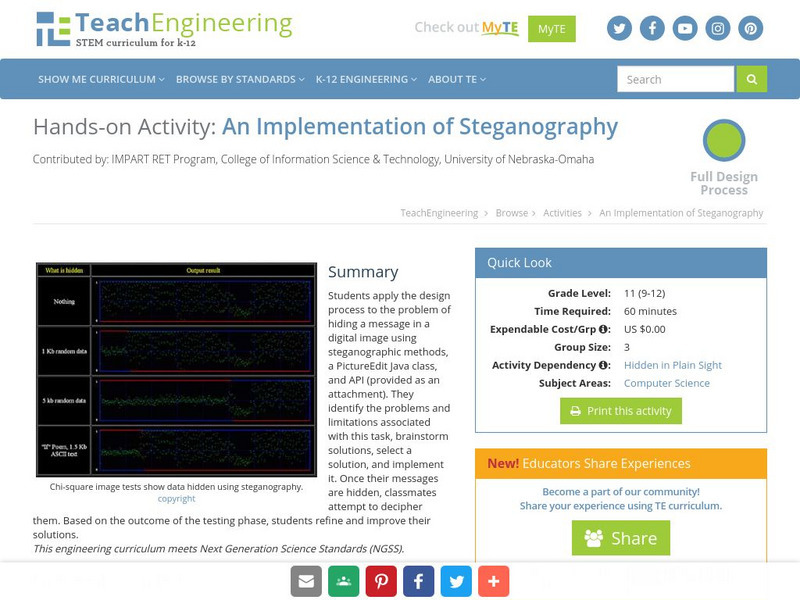
Teach Engineering: An Implementation of Steganography
Students apply the design process to the problem of hiding a message in a digital image using steganographic methods, a PictureEdit Java class, and API (provided as an attachment). They identify the problems and limitations associated...
TeachEngineering
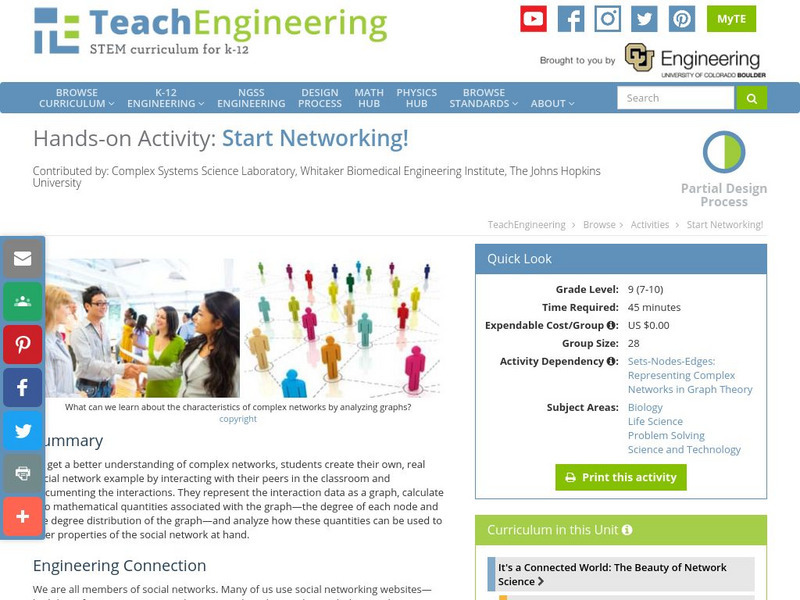
Teach Engineering: Start Networking!
To get a better understanding of complex networks, students create their own, real social network example by interacting with their peers in the classroom and documenting the interactions. They represent the interaction data as a graph,...
TeachEngineering
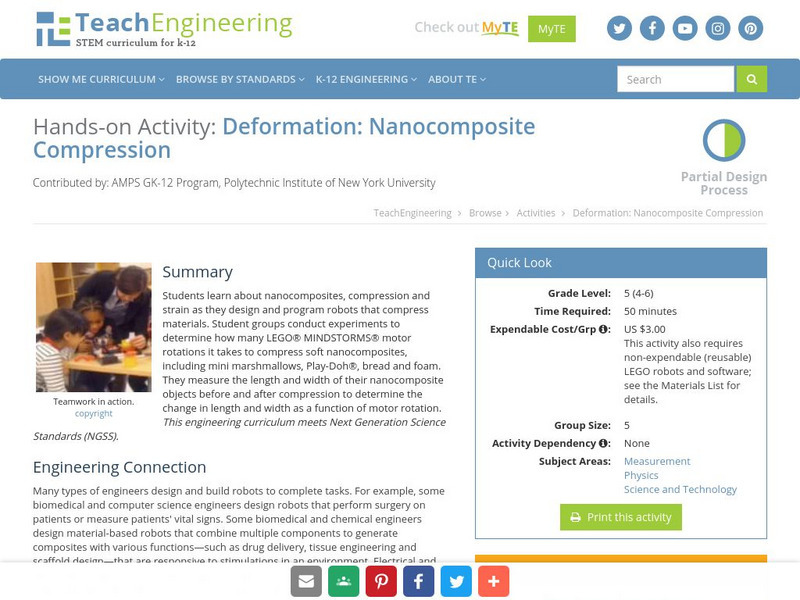
Teach Engineering: Deformation: Nanocomposite Compression
Students learn about nanocomposites, compression and strain as they design and program robots that compress materials. Student groups conduct experiments to determine how many LEGO MINDSTORMS NXT motor rotations it takes to compress soft...
TeachEngineering
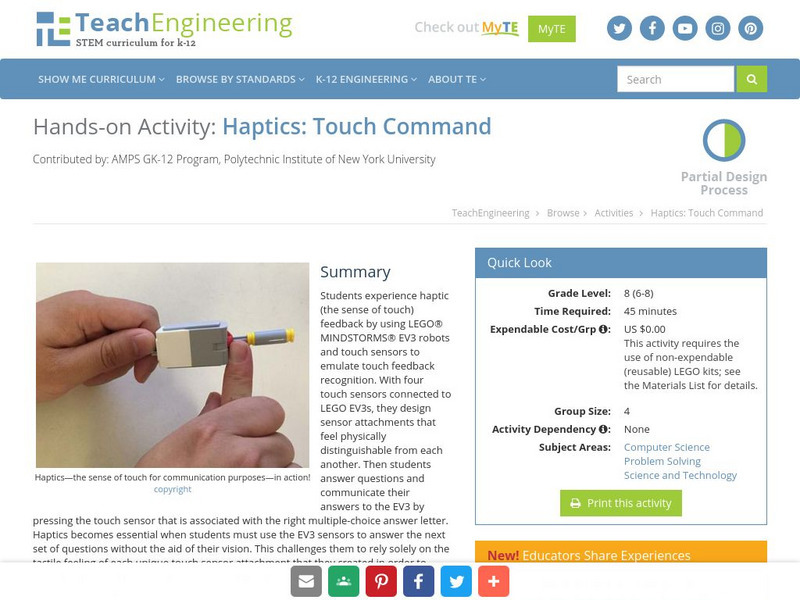
Teach Engineering: Haptics: Touch Command
Students experience haptic (the sense of touch) feedback by using LEGO MINDSTORMS NXT robots and touch sensors to emulate touch feedback recognition. With four touch sensors connected to LEGO NXTs, they design sensor attachments that...

TeachEngineering
Teach Engineering: Means, Modes, and Medians
Students experience data collection, analysis and inquiry in this LEGO MINDSTORMS NXT -based activity. They measure the position of an oscillating platform using a ultrasonic sensor and perform statistical analysis to determine the mean,...
TeachEngineering
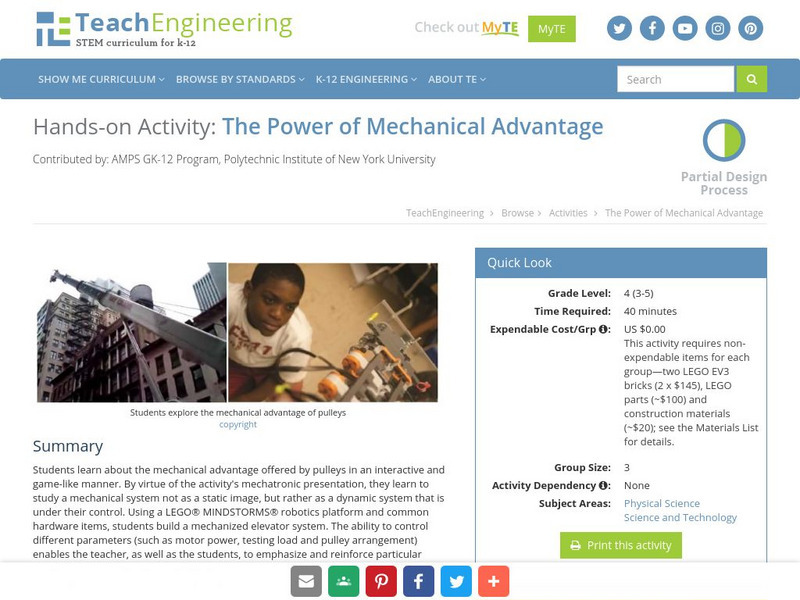
Teach Engineering: The Power of Mechanical Advantage
Students learn about the mechanical advantage offered by pulleys in an interactive and game-like manner. By virtue of the activity's mechatronic presentation, they learn to study a mechanical system not as a static image, but rather as a...
TeachEngineering
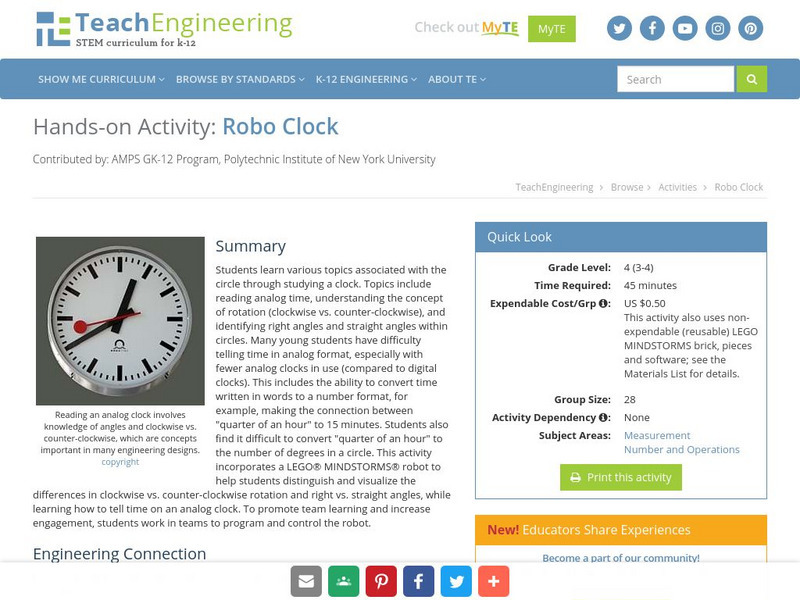
Teach Engineering: Robo Clock
Students learn various topics associated with the circle through studying a clock. Topics include reading analog time, understanding the concept of rotation (clockwise vs. counter-clockwise), and identifying right angles and straight...
TeachEngineering
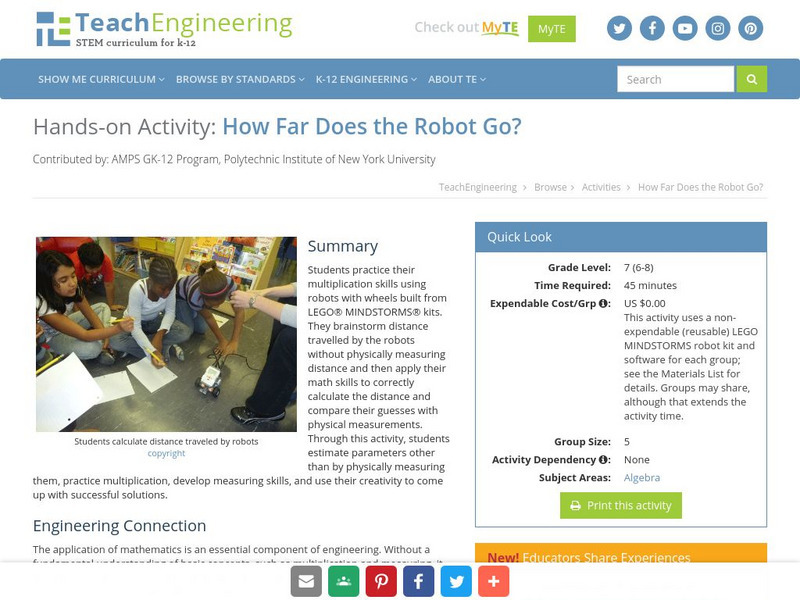
Teach Engineering: How Far Does the Robot Go?
Students practice their multiplication skills using robots with wheels built from LEGO MINDSTORMS NXT kits. They brainstorm distance travelled by the robots without physically measuring distance and then apply their math skills to...
TeachEngineering
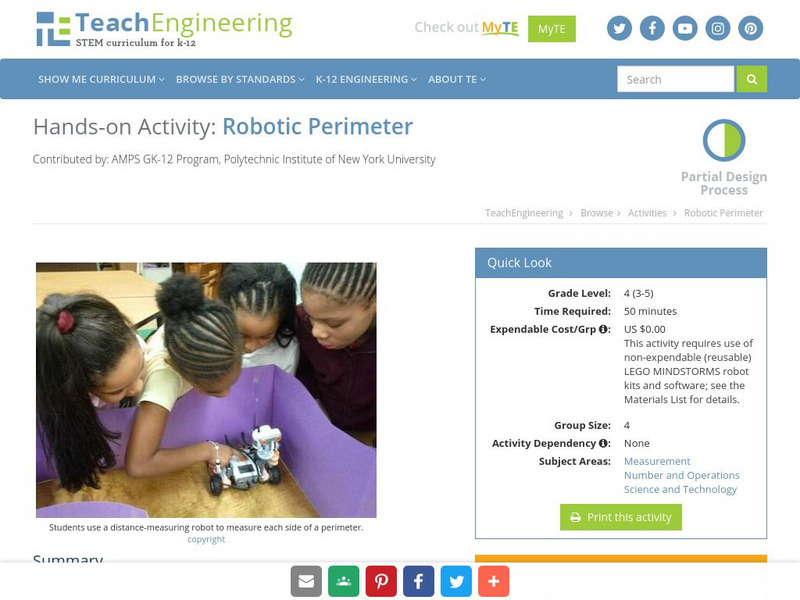
Teach Engineering: Robotic Perimeter
Students learn and practice how to find the perimeter of a polygonal shape. Using a ruler, they measure model rooms made of construction paper walls. They learn about other tools, such as a robot, that can help them take measurements....
TeachEngineering
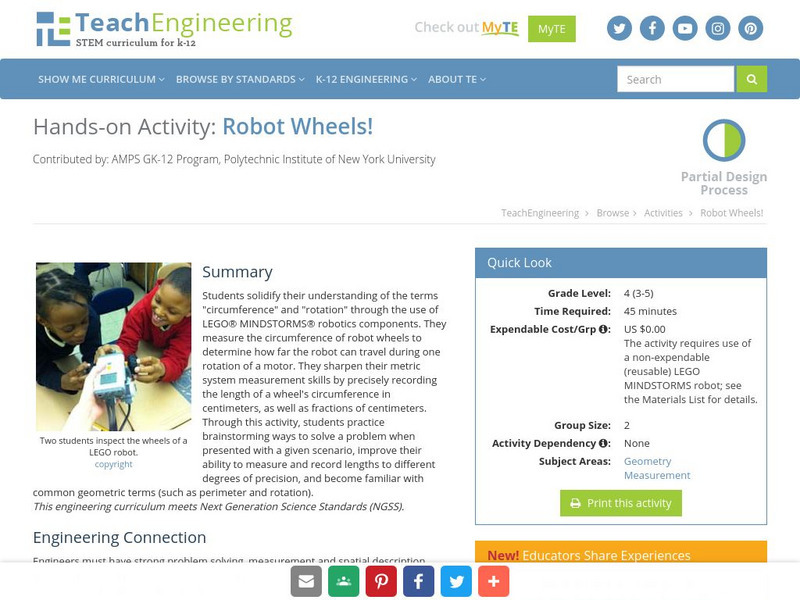
Teach Engineering: Robot Wheels!
Students solidify their understanding of the terms "circumference" and "rotation" through the use of LEGO MINDSTORMS NXT robotics components. They measure the circumference of robot wheels to determine how far the robot can travel during...
TeachEngineering
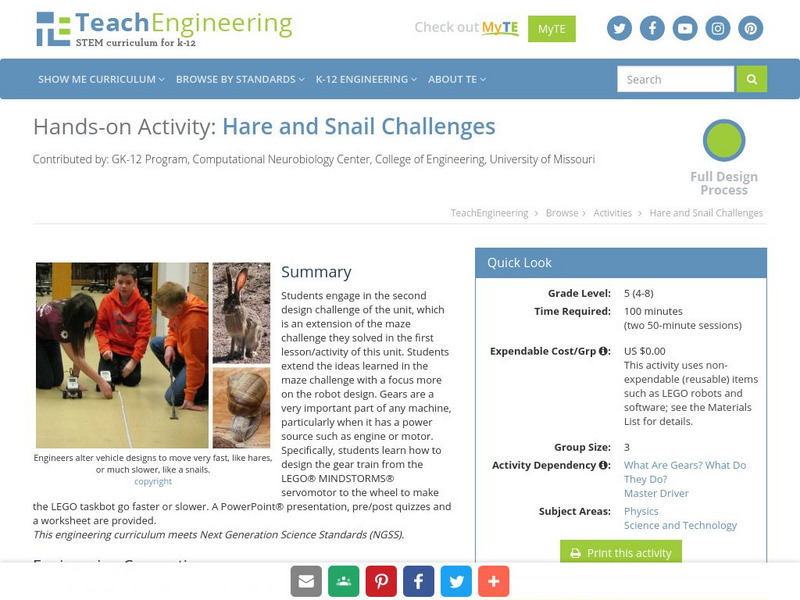
Teach Engineering: Hare and Snail Challenges
Students extend the ideas learned in the maze challenge in this unit with a focus more on the robot design. They learn how to design the gear train from the LEGO MINDSTORMS NXT servomotor to the wheel to make the LEGO taskbot go faster...
TeachEngineering
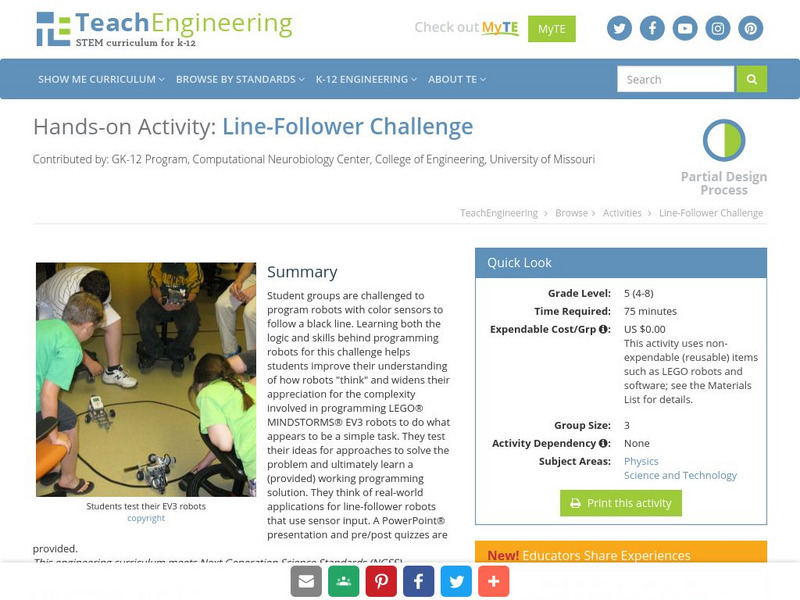
Teach Engineering: Line Follower Challenge
Student groups are challenged to program robots with light sensors to follow a black line. Learning both the logic and skills behind programming robots for this challenge helps students improve their understanding of how robots work, and...