Hi, what do you want to do?





American Rhetoric
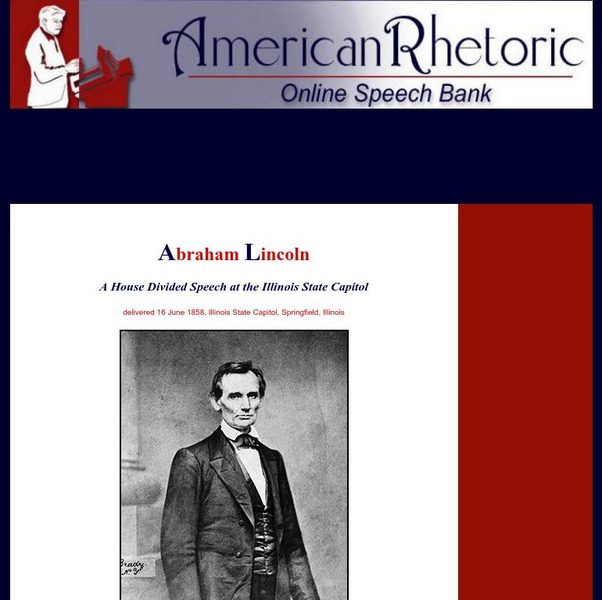
American Rhetoric: Abraham Lincoln: "A House Divided"
This is the text of Abraham Lincoln's famous speech, "A House Divided" concerning the issue of slavery it was delivered on June 16, 1858, in Springfield, Illinois. It includes his famous quote: "A house divided against itself cannot...
Other
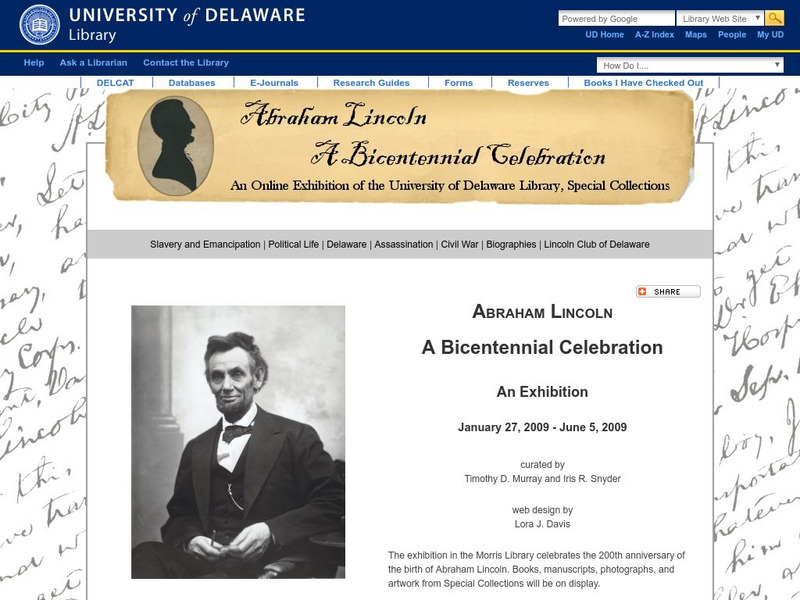
University of Delaware: Abraham Lincoln: A Bicentennial Celebration
Commemorating Abraham Lincoln's 200th birthday, this exhibition provides several documents and photographs remembering the President's life. Resources cover his political career, slavery, the civil war and his assassination.

The Newberry Library
Newberry Library: Lincoln, the North, and the Question of Emancipation
This learning module explores Lincoln's arguments against slavery as well as public feelings and concerns about emancipation as expressed through art and literature of the day.

CommonLit
Common Lit: Speech on Slavery
A learning module that begins with "Speech on Slavery" by Abraham Lincoln, accompanied by guided reading questions, assessment questions, and discussion questions. The text can be printed as a PDF or assigned online through free teacher...
Digital History
Digital History: The Lincoln Douglas Debates
Historic debates, both in substance and form, were held between Abraham Lincoln and Stephen A. Douglas in the Illinois Senate race in 1858. Read about the debates, where tht two men stood on the issue of slavery, and its place in the...
PBS
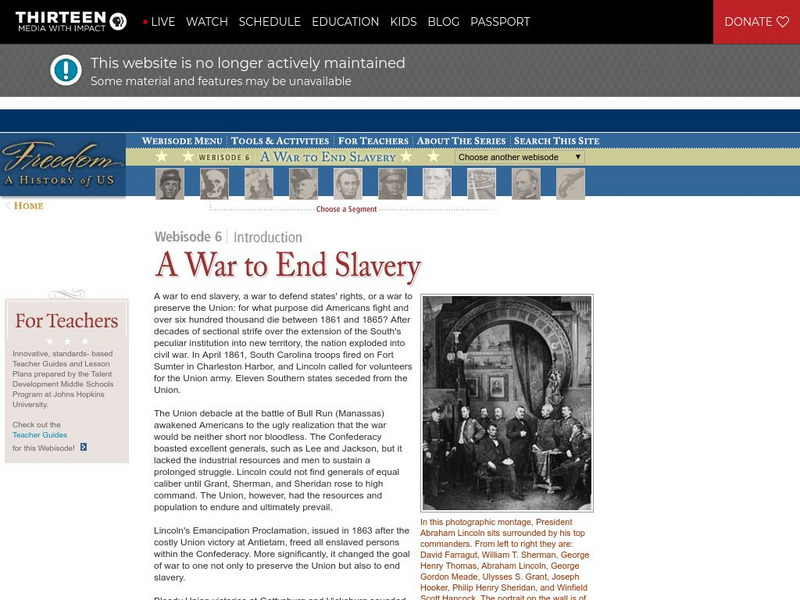
Wnet: Thirteen: Freedom: A History of Us: A War to End Slavery Webisode 6
A wonderful, interactive site covering many aspects of the Civil War. See photographs, primary sources, and find interesting tidbits about the war. Included are links to lesson plans, teacher guides, resources, activities, and tools.
Other
Wwhp: American Anti Slavery Society
A good review of the evolution of the support for the abolition of slavery from the first anti-slavery organization formed by the Quakers to the support for Abraham Lincoln as president. Focus is on the American Anti-Slavery Society and...
C3 Teachers
C3 Teachers: Inquiries: Emancipation
A learning module on the emancipation of African American slaves after the Civil War. It includes several supporting questions accompanied by formative tasks and source materials, followed by a summative performance task. Students will...
US National Archives
Nara: The Emancipation Proclamation
The U.S. National Archives and Records Administration (NARA) provides an elaborate overview of Abraham Lincoln's Emancipation Proclamation. Content includes detailed background information behind the document, photos of the original...
University of Groningen
American History: Outlines: Peace Democrats, Copperheads, and Draft Riots
Abraham Lincoln did not have universal backing in the conduct of the Civil War. Read about the opposition, mainly from the Democrats, who opposed emancipation of the slaves and waging a war to reunited the country.
US Department of State
Bureau of International Information Programs: History Outline: Sectionalism
Article reviews several conditions of American society that sowed the seeds of civil war, particularly slavery and sectional conflict.

Siteseen
Siteseen: American Historama: Emancipation Proclamation Facts
Provides an overview and ten facts about Abraham Lincoln's Emancipation Proclamation, a war measure freeing the slaves in states still in rebellion against the Union.
US National Archives
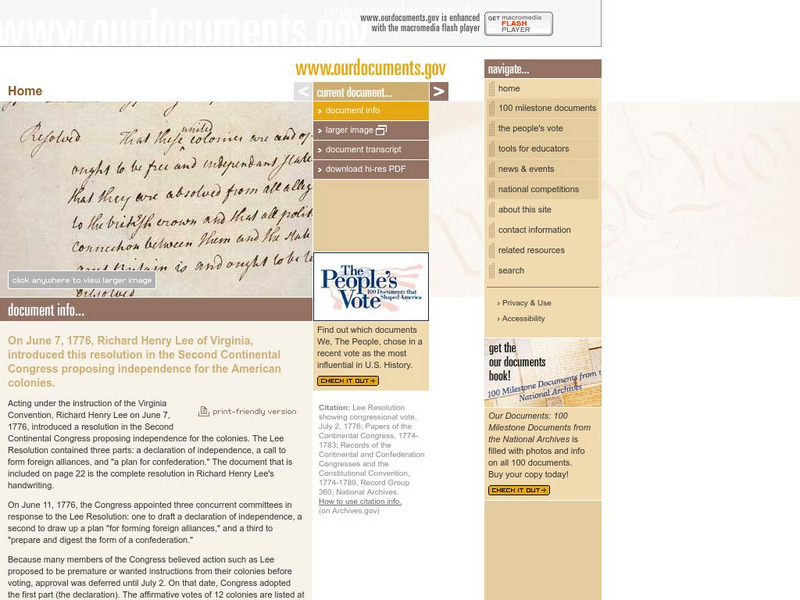
Our Documents: Emancipation Proclamation (1863)
Image of handwritten copy of Lincoln's Emancipation Proclamation, accompanied by an explanation of the speech's purpose, impact, and role in American history.
Other
Juneteenth.com: History of Juneteenth
Juneteenth.com discusses what Juneteenth is, its history, and its celebration. Content includes a look at why June 19, 1865, signifies the end of slavery in America, as opposed to Lincoln's Emancipation Proclamation of January 1, 1863.
University of Groningen
American History: Outlines: A Divided Nation
This page from the American Revolution Project of the University of Groningen discusses how the 1850s were a time of conflicting ideas between North and South regarding the expansion of slavery. Scroll down to the third paragraph and...
US National Archives
Nara: Teaching With Documents: Lincoln's Spot Resolutions
This "Teaching with Documents" lesson on Lincoln's spot resolutions explores the Mexican War, Lincoln's questioning of the propriety of the war, and the power of the U.S. President at that time. Content includes extensive historical...
Pennsylvania Historical and Museum Comission
Explore Pa History: Pennsylvania Democrats
A good look at the views of the Democratic Party in Pennsylvania just prior to and during the Civil War. Read about Democratic president from Pennsylvania, James Buchanan, and his views about the importance of slavery in the national...
University of Chicago
Special Collections Library: Stephen A. Douglas and the American Union
Provides information about the Great Debate between Stephen A. Douglas and Abraham Lincoln.
US Government Publishing Office
Ben's Guide to u.s. Government: About the Emancipation Proclamation
Ben's Guide is a fun way to present U.S. Government to students grades K-12. This site presents a history of the Emancipation Proclamation. Links to related sites are available.
Digital History
Digital History: The Dred Scott Decision
The Dred Scott decision caused a ripple throughout the country. Read a summary of Supreme Court Justice Roger B. Taney's proslavery decision, and see how it intensified the rancor between the North and the South.